For the 2025 year-end tax settlement, the income limit for dependents is annual income of at most 1 million won. If wages are their only income, they qualify with gross pay of at most 5 million won. For rent and loans, check how many homes your household owns at year-end. For medical expenses, subtract any amounts you were reimbursed.
The figures and examples are based on the National Tax Service's guide to common mistakes in the 2025 year-end tax settlement, released on January 23, 2026.
Income requirements for the basic dependent deduction
A dependent's income is assessed for all of 2025. If they sold land, any capital gains from the sale also count. In the National Tax Service example, the spouse had 2 million won in capital gains from selling land. This amount alone exceeds 1 million won, so the taxpayer cannot claim the basic deduction for the spouse.
| Family circumstances in 2025 | Eligibility for the deduction |
|---|---|
| Wages are the only income and gross pay is exactly 5 million won | Meets the income requirement for the basic deduction |
| The family member has capital gains as well as wages | Include capital gains when checking whether annual income is at most 1 million won |
| Brothers support the same father | Only one brother who meets the requirements can claim the basic deduction for their father |
Family members who exceed the income limit also do not qualify for the additional deductions for seniors or people with disabilities. Also exclude card spending and donations in that family member's name. You cannot deduct protection insurance premiums or general education expenses you paid for them either.
Medical expenses for family members who exceed the income limit
The medical expense tax credit does not apply the age or income requirements for dependents. Even if your spouse's capital gains make you ineligible for the basic deduction, medical expenses you paid for your spouse may still qualify for the credit. However, if an older brother claims his mother for the basic deduction, his younger brother cannot claim the credit for medical expenses he paid for her.
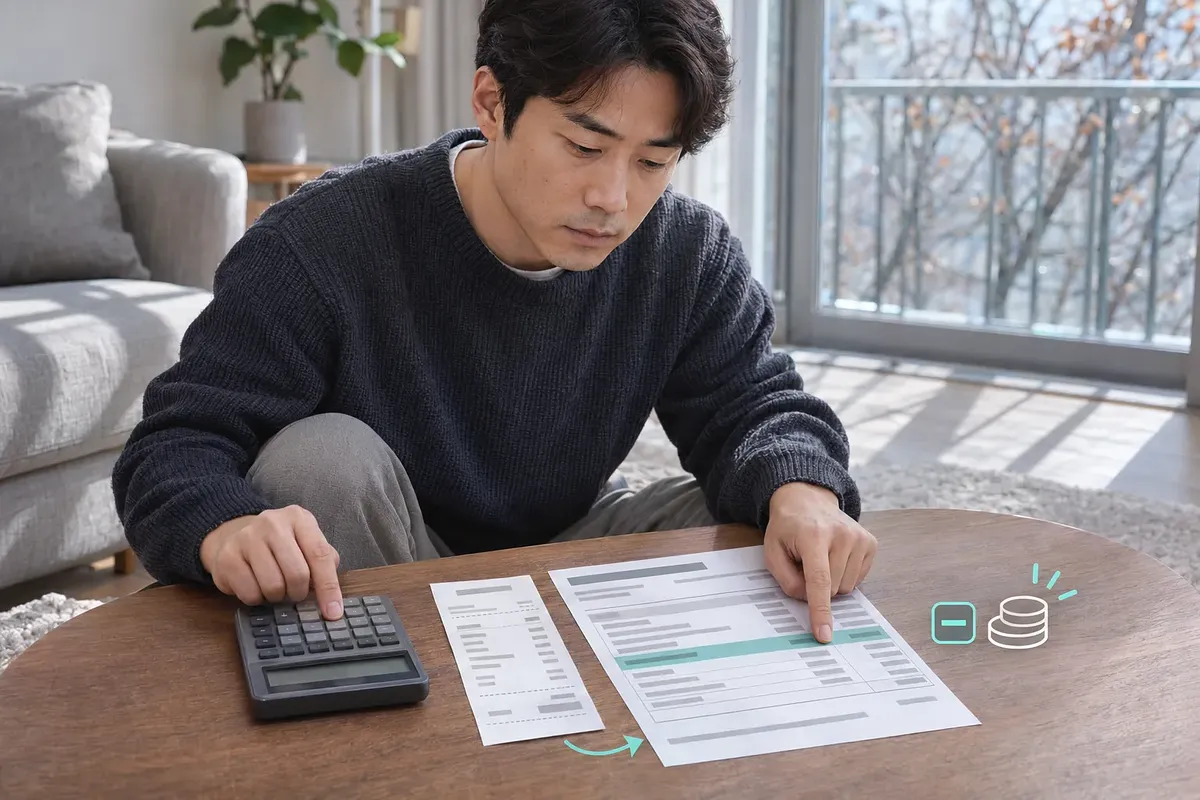
Subtract reimbursements from the medical expenses eligible for a tax credit in the year you paid them.
Address and occupancy requirements for the monthly rent tax credit
To claim the rent tax credit, your household must not own a home as of December 31, 2025. The employee claiming the credit must register their address at the rented home and actually live there. If parents pay rent for an officetel in another area where their college student child is the only resident, the parents cannot claim the rent tax credit.
To claim the rent tax credit, the address on the employee's resident registration record must match the address on the lease.
National Tax Service, “Common Year-End Tax Settlement Mistakes! Our Guide to Getting Them Right”
| Requirement to check | Rules for the 2025 tax year |
|---|---|
| Income | Gross pay of at most 80 million won and comprehensive income of at most 70 million won |
| Who in the household can claim the credit | Generally, the head of a household that owns no home. If the head does not claim a housing finance deduction or the monthly rent tax credit, another household member who meets the requirements can claim the credit |
| Name on the lease | The employee or someone who qualifies for the employee's basic deduction |
| Rented home | No larger than the national housing size limit or with a standard market value of at most 400 million won when the lease was signed. Residential officetels and goshiwon also qualify |
To document rent payments, provide a copy of your resident registration record, a copy of the lease, and a record of rent payments. Compare the registration record and the lease side by side to make sure the addresses match. You can verify the amounts paid with bank transfer receipts or bank deposit slips.
Comparing deduction rules for jeonse loans and mortgages
For jeonse loans, both principal and interest repayments count toward the income deduction. For long-term mortgages used to buy a home, only interest payments count. Both deductions are based on the total number of homes owned by the household as of December 31, 2025.
| Item to check | Jeonse deposit loan | Mortgage |
|---|---|---|
| Number of homes owned at year-end | Household owns no home | Household owns no more than one home |
| What qualifies for the deduction in 2025 | 40% of principal and interest payments on a qualifying home rental loan | Interest payments on a qualifying long-term home mortgage |
| Housing requirements | A rented home no larger than the national housing size limit. Residential officetels are included | For homes acquired on or after January 1, 2024, a standard market value of at most 600 million won at the time of acquisition. Officetels are excluded |
| Whose name must be on the documents | Both the lease and the loan must be in the employee's name | The employee claiming the deduction must be both the homeowner and the borrower |
If the head of the household does not claim the housing finance or home purchase savings deductions, another household member who meets the requirements can claim the deduction. To deduct mortgage interest, that household member must actually live in the home. Even if spouses jointly own the home, if the loan is in only one spouse's name, the other spouse cannot deduct the interest.
Buying a home before year-end after renting under a jeonse lease
In the National Tax Service example, the employee bought a home on November 30, 2025, and owned it through year-end. The principal and interest paid on the loan while the employee was renting under a jeonse lease are also excluded from that year's income deduction. If the new home's standard market value at the time of purchase and the mortgage each meet the requirements, the employee can deduct the interest on that loan.
Example of how to calculate the medical expense tax credit
To calculate eligible medical expenses, subtract any reimbursement for the treatment from the amount you paid the hospital. In the National Tax Service example, the employee paid 1 million won in medical expenses in June 2025. In July of the same year, the employee received 700,000 won from their medical expense insurance.
Subtracting 700,000 won from 1 million won leaves 300,000 won in medical expenses to use in the credit calculation. This step does not determine how much tax you will get back. For general medical expenses, a 15% tax credit applies to the portion of annual eligible medical expenses that exceeds 3% of gross pay.
Which dates should you check for each deduction or credit?
For dependents, you look at income for the full year. For housing and medical expenses, the relevant dates differ even for records from the same year. For example, if you receive a medical reimbursement later, check the reimbursement notice for the year you originally paid the medical bill. You may need to correct the medical expense tax credit you claimed for that year.
| Record to check | Relevant date or period | What to determine |
|---|---|---|
| Dependent's income records | January through December 2025 | Use annual income even if the dependent does not appear on the list of people over the income limit in the Hometax simplified year-end tax settlement service |
| Household homeownership records | December 31, 2025 | Whether the household meets the no-home requirement for rent and jeonse loans and the limit on the number of homes for mortgages |
| Standard market value of the mortgaged home | When the home was acquired | Whether the home meets the 600 million won limit for homes acquired on or after January 1, 2024 |
| Records of later reimbursements under the out-of-pocket expense cap | The year the reimbursed medical expenses were paid | If a reimbursement received in 2025 covers medical expenses paid in 2024, recalculate the 2024 credit |
In the second half of each year, the National Tax Service reviews filings from employees suspected of claiming excessive deductions or credits. If an excessive claim caused you to underpay your taxes, you may owe additional tax and penalties. No penalty applies if you file an amended return to correct your medical expense tax credit because of a reimbursement under the out-of-pocket expense cap that arose after the year-end tax settlement.