Skip to content
Injoys
Trends

From Advertising to Content: The 2026 Marketing Landscape and Incrementality Measurement

In 2026, marketing is moving toward connecting UGC, creators, branded content, and owned media within a single operating system rather than treating paid advertising and content separately. This article explains everything from content portfolio design to the proper interpretation of incremental impact and marketing mix modeling.

Views 6 17 min read KO EN JA ES

Listen or read this article

Listen, or read the text only.

From Advertising to Content: The 2026 Marketing Landscape and Incrementality Measurement

Kokoro 82M AI-generated voice

0:00 27:04

Advertisement

Download audio

File name
2026-content-marketing-landscape-incrementality-en.mp3
Format
MP3 (audio/mpeg)
Duration
27:04
File size
18.6 MB
Engine
Kokoro 82M

This audio was generated by AI.

You may download and use it freely for personal use.

From Advertising to Content: The 2026 Marketing Landscape and Incrementality Measurement

17 min read

From Advertising to Content: The 2026 Marketing Landscape and Incrementality Measurement
In 2026, marketing is moving toward connecting UGC, creators, branded content, and owned media within a single operating system rather than treating paid advertising and content separately. This article explains everything from content portfolio design to the proper interpretation of incremental impact and marketing mix modeling.
UGC, influencer content, and branded content do not form a simple quality hierarchy; they are distinct content types with different reach, levels of control, production costs, and roles.
Rather than focusing on follower counts, marketers should also evaluate target audience composition, actual reach, view retention, engagement quality, and contribution to conversions.
Owned media should prioritize information that customers return to repeatedly, the brand development process, the founder's perspective, and customer experiences over product promotion.
Monthly sales differences are a starting point for exploring incremental impact, but they cannot be deemed causal effects without controlling for seasonality, pricing, promotions, and distribution changes.
A sophisticated measurement system combines platform attribution analysis, holdout and geographic experiments, brand research, and marketing mix modeling according to their intended purposes.
As the boundary between paid advertising and content weakens, brands must design recurring content experiences across multiple touchpoints rather than relying on a single advertisement. UGC becomes advertising creative, creator videos are repurposed across brand channels and paid media, and posts on owned media also attract new customers through search and communities.
The “2026 marketing landscape” discussed in this article is not a definitive market forecast but a practical framework for responding to the changing channel environment. The key is not to stop advertising, but to operate advertising, content, communities, and owned channels as a single portfolio and verify each one’s incremental contribution.
Why the Boundary Between Paid Advertising and Content Is Blurring
Traditionally, advertising was defined as the activity of paying to purchase exposure, while content was intended to earn organic interest and sharing. In actual operations, however, a single video can perform multiple roles simultaneously.
· Customer-created reviews can be used as advertising creative with permission. · Creator posts can be used on brand accounts, product detail pages, and in paid advertising. · Useful explanatory content produced by a brand can generate organic traffic from search and communities. · High-performing content can connect to retargeting ads and sales pages.
Therefore, the following questions matter more than whether something is “advertising or content.”
· What customer problem or interest does it address? · At which stage of the customer journey is it used? · Who is the speaker, and why should customers trust that person? · Where will it be distributed, and under what rights can it be reused? · Which should be measured: exposure, interest, purchase, or repeat purchase?
The Structure and Role of the Content Pyramid
The content pyramid is not a hierarchy in which content automatically becomes better as it moves from bottom to top. It is more accurate to understand the bottom as a broad range of content for rapidly testing different messages, and the top as flagship content that communicates the brand’s core narrative in a focused way.
Type | Primary role | Common strengths | Key risks | Metrics to check first UGC | Test many usage contexts and messages | Relatability, specific usage scenes, rapid variations | Excessive staging, unsecured rights, omitted advertising disclosures | Early drop-off rate, view retention rate, saves and comments, conversion rate Influencer content | Borrow trust to reach a specific interest group | Target communities, professional production, explanatory power | Fake engagement, audience mismatch, one-time exposure | Actual reach, target fit, engagement quality, lift in searches and sales Branded content | Deliver the brand narrative and impression in a focused way | High production quality, integrated messaging, long-term use | High production costs, conflict between creator and brand perspectives | Completion rate, brand searches, ad recall, brand preference Owned media | Accumulate knowledge and relationships over the long term | Recurring touchpoints, search assets, direct communication | Lack of consistency, promotion focused on internal stories | Return visits, subscriptions, organic traffic, assisted conversions Community | A space where questions, reviews, and reputation circulate | Search visibility, peer trust, discovery of customer language | Opinion manipulation, excessive intervention, suppression of negative opinions | Mention volume, sentiment changes, question types, reasons for recommendations or non-recommendations
Production costs vary significantly depending on the format, participants, scope of use, and market. Therefore, rather than defining a specific type by a fixed price range, brands should calculate the production cost per item together with approval and management costs, paid distribution costs, and the period during which it can be reused.
Principles to Establish Before Producing UGC at Scale
UGC may refer both to content voluntarily created by actual customers and to creator-style UGC produced in exchange for payment or products from a brand. Because these two types have different trust signals and disclosure obligations, they should also be distinguished in internal data.
Effective Production Guidelines
Rather than controlling the entire script, brands should clearly specify only the following elements.
· Product facts that must be accurate and prohibited claims · Actual usage situations to be shown · One core message to validate in each video · Video length, specifications, and delivery files · Number of revisions and approval process · Publishing channels, whether the content will be converted into advertising, and the usage period
UGC retains its natural advantages only when creators are given autonomy over how they express themselves, their tone of voice, and the context in which they film. Conversely, information that could cause misunderstanding, such as efficacy or price, should be reviewed by the brand.
Rights and Disclosures
If there is product provision, compensation, revenue sharing, or another economic relationship, the advertising and endorsement disclosure rules of the relevant market must be checked. Some jurisdictions, such as those following the guidelines of the U.S. Federal Trade Commission, require economic relationships to be disclosed in a conspicuous and easily understandable manner. Detailed standards vary by country and platform.
It is safest to specify the following items in the contract.
· Rights to publish on brand channels · Rights to use the content as paid advertising creative · Rights to edit, add subtitles, translate, and use excerpts · Countries, channels, and periods in which the content may be used · Rights covering the participant’s face, voice, music, and third-party copyrighted works · How existing posts and advertisements will be handled after the contract ends
Evaluate Influencers by Fit Rather Than Follower Count
Follower count represents only potential scale and does not guarantee actual reach or influence on purchases. The following factors should be reviewed together.
· Audience fit: Do the audience’s region, language, age, interests, and purchasing power align with the target customer? · Reach quality: Are actual views and reach stable relative to follower count? · Engagement quality: Do comments include specific questions and experiences, or are there many repetitive phrases and irrelevant reactions? · Content fit: Can the product be explained naturally within the themes and tone of existing posts? · Brand safety: Do past content and collaboration history meet the brand’s standards? · Measurability: Can the impact be observed through unique links, codes, posting times, regions, or surveys?
Engagement rates vary depending on the denominator. Follower-based engagement rates, reach-based engagement rates, and view-based engagement rates should not be used interchangeably.
· Reach-based engagement rate = Number of engagements ÷ Number of users reached × 100 · View-based engagement rate = Number of engagements ÷ Number of views × 100
Rather than aggregating likes alone, it is useful to examine saves, shares, meaningful comments, link clicks, and changes in brand searches separately. When comparing multiple candidates, the same period and calculation formula should be applied.
Branded Content Creates a Flagship Narrative
Branded content is not simply a video with a large production budget. It is a format that communicates the brand’s perspective on a problem, its people, or the product experience within the broader context of the content. In addition to upper-funnel awareness, it can be reused over the long term for product explanations, recruitment, distribution consultations, retargeting creative, and other purposes.
For effective collaboration, separate the areas the brand will control from those entrusted to the creator.
· What the brand decides: target customers, core claims, fact-checking, legal restrictions, and the impression that must remain · What is decided jointly: story structure, participants, disclosure method, and performance metrics · What is entrusted to the creator: tone of voice, scene composition, humor, editing rhythm, and expressions suited to the community
Once performance has been verified, a one-time production fee agreement can be converted into a long-term partnership or revenue-linked arrangement. However, profitability should be reviewed only after defining discount costs, returns, taxes, platform fees, and the attribution period for revenue sharing.
Four Topics Owned Media Should Cover
Owned media refers to websites, newsletters, Instagram, YouTube, and other official channels controlled by the brand. The purpose of maintaining these channels is not to fill a posting quota, but to accumulate information and perspectives that customers will repeatedly seek out.
1. Industry and Trends
Explain industry changes, new use cases, consumer questions, and related data. Rather than merely summarizing news, add why the brand considers the change important and how it affects customer choices.
2. Development Process and Brand Philosophy
Reveal how the product or service is created, failed attempts, decision-making criteria, and the improvement process. Authenticity comes from showing what was learned and how things changed rather than listing only success stories.
3. Perspectives of Founders and Practitioners
In markets with many products offering similar features, who creates and sells the product and by what standards can become a point of differentiation. There is no need to insist that only the founder speak; researchers, designers, customer support representatives, and others involved in actual decision-making can serve as speakers.
4. Customer Voices
Instead of listing review quotes, document in interview form what problems customers experienced, what criteria they used to make their choice, and what changed after use. In addition to representative positive cases, recurring complaints and questions should be used as data for product improvements and follow-up content.
Principles for Operating Community and Search Channels
Communities connected to search results, such as Naver cafés and blogs, are representative examples in the Korean market, but the same principles also apply to Reddit, forums, professional communities, and regional search platforms.
A brand’s role is not to manufacture artificial praise, but to observe and support the following information.
· The questions and comparison language customers actually use · Recurring concerns and reasons for objection immediately before purchase · Misinformation and areas requiring explanation · Problems that occur during use and how to resolve them · Why loyal customers voluntarily recommend the product
Product trial groups and sponsored posts must clearly disclose economic relationships. Having employees or agencies write as if they were ordinary consumers or suppressing negative opinions is risky from both trust and regulatory perspectives.
Place Content Along the Customer Journey, Not by Channel
Content should be designed according to its role in the customer journey rather than its format.
Customer stage | Customer question | Suitable content | Core metrics Discovery | Why do this problem and brand matter? | Short UGC, trend explanations, creator videos | Qualified reach, view retention, brand searches Exploration | Is it right for me and trustworthy? | Comparisons, usage process, expert and customer interviews | Saves, product detail page visits, exploration behavior Decision | Is it worth the price and risk? | Reviews, FAQ, demos, warranty and return explanations | Conversion rate, new customer cost, cart progression Use | How do I use it properly? | Onboarding, tutorials, troubleshooting content | Reduced inquiries, activation, return rate Retention and advocacy | Why should I continue using or recommending it? | Usage tips, customer stories, community programs | Repeat purchases, retention rate, referrals and voluntary UGC
One core piece of content can be reconfigured into multiple lengths and formats, but avoid duplicating the same video unchanged across every channel. Viewing context, aspect ratio, opening scene, subtitles, and calls to action should be adjusted for each channel.
The Starting Point for Performance Measurement Is the Metric Structure
Looking only at sales misses the early impact content has on customer awareness, while looking only at views fails to connect content with business results. Connect leading indicators and outcome metrics step by step, beginning with the objective.
· Business outcomes: incremental sales, incremental profit, number of new customers, retention rate · Customer behavior: searches, site visits, consultations, carts, purchases, repeat purchases · Content response: qualified reach, view retention rate, saves, shares, meaningful comments · Execution metrics: production volume, production time, approval delays, creative reuse rate
Conversion revenue reported by a platform is calculated according to that platform’s attribution rules. Because multiple platforms may claim credit for the same purchase, the simple sum of these values should not be treated as total incremental sales.
The Difference Between Simple Incremental Estimation and MMM
Marketing Mix Modeling (MMM) is a method that uses sales and channel-level spending and exposure data over a given period to statistically estimate the contribution of each marketing activity. It generally considers trends, seasonality, pricing, promotions, distribution, external economic factors, and the delayed and saturated effects of advertising.
By contrast, “calculating baseline sales and then calculating excess sales during the period of a new activity” is an easy-to-understand incremental estimation method, but it is not sophisticated MMM in itself. It is closer to a before-and-after comparison without a control group or a time-series diagnostic.
A Three-Step Simple Estimation
Consider the following hypothetical monthly sales example.
· The baseline expected from repeat purchases and organic traffic when there are no marketing changes is KRW 25 million. · Existing experiments estimate that always-on advertising generates an average of KRW 15 million in incremental sales. · If actual total sales during the UGC campaign are KRW 50 million, the difference from the existing forecast of KRW 40 million is KRW 10 million.
This can be expressed simply as follows.
Observed difference = Actual sales - Expected sales under existing conditions
However, the entire KRW 10 million cannot immediately be confirmed as the causal effect of UGC. Seasonal demand, discounts, resolved stockouts, expanded retail distribution, competitor activity, price changes, or random fluctuations may have occurred during the same period. It should therefore be recorded as “excess sales observed concurrently with UGC” and then validated further.
Cautions When Designing Phased Campaigns
Adding UGC in August and influencers in September is operationally easy to understand, but seasonality and market conditions also change when the month changes. Where possible, increase comparability through the following methods.
· Leave some similar regions or customer groups as holdouts. · Record changes in prices, discounts, inventory, and distribution as separate variables. · Survey brand awareness and purchase intent using the same questions before and after the campaign. · Vary campaign intensity across multiple points in time and observe repeatedly. · Once sufficient data has accumulated, apply MMM or time-series causal analysis.
Advantages and Disadvantages of Each Measurement Method
Method | Questions it answers well | Strengths | Limitations Platform attribution analysis | What conversions were recorded after clicks or impressions? | Fast and useful for detailed operations | Duplication across platforms, proprietary attribution rules, omission of long-term effects Unique links and coupons | How much trackable direct response occurred? | Relatively simple to implement | Misses customers who purchase without a code and broader brand effects Holdout and regional experiments | How much did results increase compared with having no activity? | Strong for causal inference | Requires sufficient samples, control, and operating costs Brand lift surveys | Did awareness, recall, and preference change? | Can measure the upper funnel | Sensitive to survey bias and sample design MMM | How did all channels contribute to long-term sales? | Integrates online and offline channels and analyzes long-term effects | Requires sufficient time-series data and variability, as well as expert model validation
No single tool can answer every question. Platform data is useful for short-term creative optimization, experiments are strong for confirming causal effects, and MMM is suitable for allocating long-term budgets across multiple channels.
Minimum Data Structure for MMM
Even before building a sophisticated model, consistently accumulating the following data on a weekly or daily basis will improve the quality of future analysis.
Data group | Key items Outcomes | Total sales, orders, sales from new and existing customers, profit, regional performance Media | Spending, impressions, reach, and clicks by channel, campaigns, and creative types Commercial conditions | Prices, discount rates, coupons, shipping fees, inventory, number of sales channels Calendar | Public holidays, paydays, seasonal events, campaign start and end dates External variables | Business-relevant factors such as the economy, weather, and competitor promotions Content | UGC, influencer, and branded classifications; speaker; message; length; usage rights
Rather than indiscriminately including every variable, select items that have a reasonable basis for affecting outcomes and can be collected consistently. Missing data, changes in channel definitions, and inconsistent campaign names can create greater problems than the model itself.
Operational Sequence for Execution in 2026
1. Collect Customer Questions
Gather search queries, customer support records, reasons for returns, comments, and community questions, and classify them by the discovery, exploration, decision, and use stages.
2. Identify Content Gaps
Create a content map showing whether UGC, explanatory content, customer stories, and FAQ exist for each customer question. Before focusing on production volume, first identify whether important questions remain unanswered.
3. Test Messages in Small Units
Use UGC and short creator content to separately test problem framing, usage scenes, speakers, and core claims. If too many variables are changed within one creative, it becomes difficult to determine what produced the effect.
4. Scale Validated Messages
Expand messages that repeatedly receive strong responses into branded content, long-form explanations on owned media, product pages, and advertising creative.
5. Create Measurable Changes
Do not make major changes to every channel simultaneously. Divide changes by region, period, or customer group. Before a campaign begins, document the hypothesis, core metrics, comparison baseline, and stopping conditions.
6. Preserve Learnings as Assets
Do not retain only high-performing videos. Structurally document which customers, messages, speakers, channels, and conditions produced results. This data becomes the foundation for future production and budget allocation.
Changes to Watch in Marketing in 2026
The following changes are not definitive predictions that apply equally to every industry, but directions to examine when developing strategy.
· Content becoming advertising creative: Operations that expand organically successful content through paid distribution will become more important. · Founders and practitioners as primary speakers: Beyond product features, decision-making criteria and human perspectives will become factors in building trust. · Long-term creator partnerships: Relationships that enable recurring exposure and learning will become more valuable than one-time posts. · Expansion of AI-based production: Ideation, subtitles, translation, and variation production will become faster, but fact-checking, copyright, portrait rights, and brand consistency management will become more important. · Measurement centered on incrementality: Rather than focusing only on the last trackable click, it will become more important to ask what outcomes were actually added compared with what would have happened without the advertising. · Increasing value of first-party data: Organizations that consistently retain customer questions, content metadata, prices, inventory, and campaign history will be able to conduct more reliable analysis.
Conclusion
Content marketing in 2026 is not a strategy for replacing advertising with content. It is closer to an integrated operating model that answers customer questions through diverse speakers and formats, then expands validated stories through paid distribution and owned media.
Performance should not be judged solely by the quantity of UGC, influencer follower counts, or branded content production costs. Customer fit, content response, business outcomes, and incremental effects must be examined together. Simple differences in monthly sales may also provide useful early signals, but it is important not to conclude that they represent causal effects without experiments or statistical controls.
0:00 0:00
1 / 100

Advertisement

Download text

File name
2026-content-marketing-landscape-incrementality-en.txt
Format
TXT (text/plain)
Paragraphs
100

Downloads exactly what you see as a text file.

Please cite the source when quoting.

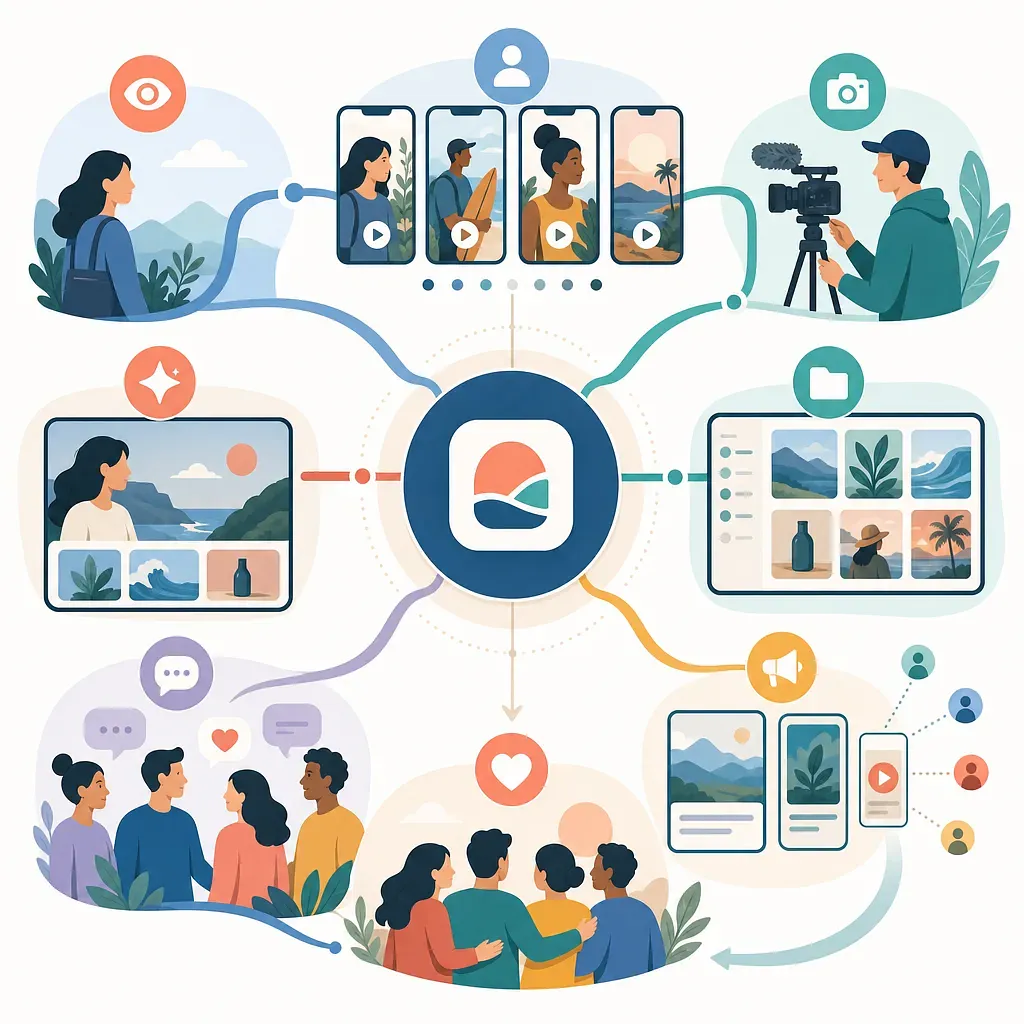
The diagram shows how content connects creation, distribution, advertising, and audience engagement.

Key points

  • UGC, influencer content, and branded content do not form a simple quality hierarchy; they are distinct content types with different reach, levels of control, production costs, and roles.
  • Rather than focusing on follower counts, marketers should also evaluate target audience composition, actual reach, view retention, engagement quality, and contribution to conversions.
  • Owned media should prioritize information that customers return to repeatedly, the brand development process, the founder's perspective, and customer experiences over product promotion.
  • Monthly sales differences are a starting point for exploring incremental impact, but they cannot be deemed causal effects without controlling for seasonality, pricing, promotions, and distribution changes.
  • A sophisticated measurement system combines platform attribution analysis, holdout and geographic experiments, brand research, and marketing mix modeling according to their intended purposes.

As the boundary between paid advertising and content weakens, brands must design recurring content experiences across multiple touchpoints rather than relying on a single advertisement. UGC becomes advertising creative, creator videos are repurposed across brand channels and paid media, and posts on owned media also attract new customers through search and communities.

The “2026 marketing landscape” discussed in this article is not a definitive market forecast but a practical framework for responding to the changing channel environment. The key is not to stop advertising, but to operate advertising, content, communities, and owned channels as a single portfolio and verify each one’s incremental contribution.

Why the Boundary Between Paid Advertising and Content Is Blurring

Traditionally, advertising was defined as the activity of paying to purchase exposure, while content was intended to earn organic interest and sharing. In actual operations, however, a single video can perform multiple roles simultaneously.

  • Customer-created reviews can be used as advertising creative with permission.
  • Creator posts can be used on brand accounts, product detail pages, and in paid advertising.
  • Useful explanatory content produced by a brand can generate organic traffic from search and communities.
  • High-performing content can connect to retargeting ads and sales pages.

Therefore, the following questions matter more than whether something is “advertising or content.”

  1. What customer problem or interest does it address?
  2. At which stage of the customer journey is it used?
  3. Who is the speaker, and why should customers trust that person?
  4. Where will it be distributed, and under what rights can it be reused?
  5. Which should be measured: exposure, interest, purchase, or repeat purchase?

The Structure and Role of the Content Pyramid

The content pyramid is not a hierarchy in which content automatically becomes better as it moves from bottom to top. It is more accurate to understand the bottom as a broad range of content for rapidly testing different messages, and the top as flagship content that communicates the brand’s core narrative in a focused way.

Type Primary role Common strengths Key risks Metrics to check first
UGC Test many usage contexts and messages Relatability, specific usage scenes, rapid variations Excessive staging, unsecured rights, omitted advertising disclosures Early drop-off rate, view retention rate, saves and comments, conversion rate
Influencer content Borrow trust to reach a specific interest group Target communities, professional production, explanatory power Fake engagement, audience mismatch, one-time exposure Actual reach, target fit, engagement quality, lift in searches and sales
Branded content Deliver the brand narrative and impression in a focused way High production quality, integrated messaging, long-term use High production costs, conflict between creator and brand perspectives Completion rate, brand searches, ad recall, brand preference
Owned media Accumulate knowledge and relationships over the long term Recurring touchpoints, search assets, direct communication Lack of consistency, promotion focused on internal stories Return visits, subscriptions, organic traffic, assisted conversions
Community A space where questions, reviews, and reputation circulate Search visibility, peer trust, discovery of customer language Opinion manipulation, excessive intervention, suppression of negative opinions Mention volume, sentiment changes, question types, reasons for recommendations or non-recommendations

Production costs vary significantly depending on the format, participants, scope of use, and market. Therefore, rather than defining a specific type by a fixed price range, brands should calculate the production cost per item together with approval and management costs, paid distribution costs, and the period during which it can be reused.

Principles to Establish Before Producing UGC at Scale

UGC may refer both to content voluntarily created by actual customers and to creator-style UGC produced in exchange for payment or products from a brand. Because these two types have different trust signals and disclosure obligations, they should also be distinguished in internal data.

Effective Production Guidelines

Rather than controlling the entire script, brands should clearly specify only the following elements.

  • Product facts that must be accurate and prohibited claims
  • Actual usage situations to be shown
  • One core message to validate in each video
  • Video length, specifications, and delivery files
  • Number of revisions and approval process
  • Publishing channels, whether the content will be converted into advertising, and the usage period

UGC retains its natural advantages only when creators are given autonomy over how they express themselves, their tone of voice, and the context in which they film. Conversely, information that could cause misunderstanding, such as efficacy or price, should be reviewed by the brand.

Rights and Disclosures

If there is product provision, compensation, revenue sharing, or another economic relationship, the advertising and endorsement disclosure rules of the relevant market must be checked. Some jurisdictions, such as those following the guidelines of the U.S. Federal Trade Commission, require economic relationships to be disclosed in a conspicuous and easily understandable manner. Detailed standards vary by country and platform.

It is safest to specify the following items in the contract.

  • Rights to publish on brand channels
  • Rights to use the content as paid advertising creative
  • Rights to edit, add subtitles, translate, and use excerpts
  • Countries, channels, and periods in which the content may be used
  • Rights covering the participant’s face, voice, music, and third-party copyrighted works
  • How existing posts and advertisements will be handled after the contract ends

Evaluate Influencers by Fit Rather Than Follower Count

Follower count represents only potential scale and does not guarantee actual reach or influence on purchases. The following factors should be reviewed together.

  1. Audience fit: Do the audience’s region, language, age, interests, and purchasing power align with the target customer?
  2. Reach quality: Are actual views and reach stable relative to follower count?
  3. Engagement quality: Do comments include specific questions and experiences, or are there many repetitive phrases and irrelevant reactions?
  4. Content fit: Can the product be explained naturally within the themes and tone of existing posts?
  5. Brand safety: Do past content and collaboration history meet the brand’s standards?
  6. Measurability: Can the impact be observed through unique links, codes, posting times, regions, or surveys?

Engagement rates vary depending on the denominator. Follower-based engagement rates, reach-based engagement rates, and view-based engagement rates should not be used interchangeably.

  • Reach-based engagement rate = Number of engagements ÷ Number of users reached × 100
  • View-based engagement rate = Number of engagements ÷ Number of views × 100

Rather than aggregating likes alone, it is useful to examine saves, shares, meaningful comments, link clicks, and changes in brand searches separately. When comparing multiple candidates, the same period and calculation formula should be applied.

Branded Content Creates a Flagship Narrative

Branded content is not simply a video with a large production budget. It is a format that communicates the brand’s perspective on a problem, its people, or the product experience within the broader context of the content. In addition to upper-funnel awareness, it can be reused over the long term for product explanations, recruitment, distribution consultations, retargeting creative, and other purposes.

For effective collaboration, separate the areas the brand will control from those entrusted to the creator.

  • What the brand decides: target customers, core claims, fact-checking, legal restrictions, and the impression that must remain
  • What is decided jointly: story structure, participants, disclosure method, and performance metrics
  • What is entrusted to the creator: tone of voice, scene composition, humor, editing rhythm, and expressions suited to the community

Once performance has been verified, a one-time production fee agreement can be converted into a long-term partnership or revenue-linked arrangement. However, profitability should be reviewed only after defining discount costs, returns, taxes, platform fees, and the attribution period for revenue sharing.

Four Topics Owned Media Should Cover

Owned media refers to websites, newsletters, Instagram, YouTube, and other official channels controlled by the brand. The purpose of maintaining these channels is not to fill a posting quota, but to accumulate information and perspectives that customers will repeatedly seek out.

Explain industry changes, new use cases, consumer questions, and related data. Rather than merely summarizing news, add why the brand considers the change important and how it affects customer choices.

2. Development Process and Brand Philosophy

Reveal how the product or service is created, failed attempts, decision-making criteria, and the improvement process. Authenticity comes from showing what was learned and how things changed rather than listing only success stories.

3. Perspectives of Founders and Practitioners

In markets with many products offering similar features, who creates and sells the product and by what standards can become a point of differentiation. There is no need to insist that only the founder speak; researchers, designers, customer support representatives, and others involved in actual decision-making can serve as speakers.

4. Customer Voices

Instead of listing review quotes, document in interview form what problems customers experienced, what criteria they used to make their choice, and what changed after use. In addition to representative positive cases, recurring complaints and questions should be used as data for product improvements and follow-up content.

Principles for Operating Community and Search Channels

Communities connected to search results, such as Naver cafés and blogs, are representative examples in the Korean market, but the same principles also apply to Reddit, forums, professional communities, and regional search platforms.

A brand’s role is not to manufacture artificial praise, but to observe and support the following information.

  • The questions and comparison language customers actually use
  • Recurring concerns and reasons for objection immediately before purchase
  • Misinformation and areas requiring explanation
  • Problems that occur during use and how to resolve them
  • Why loyal customers voluntarily recommend the product

Product trial groups and sponsored posts must clearly disclose economic relationships. Having employees or agencies write as if they were ordinary consumers or suppressing negative opinions is risky from both trust and regulatory perspectives.

Place Content Along the Customer Journey, Not by Channel

Content should be designed according to its role in the customer journey rather than its format.

Customer stage Customer question Suitable content Core metrics
Discovery Why do this problem and brand matter? Short UGC, trend explanations, creator videos Qualified reach, view retention, brand searches
Exploration Is it right for me and trustworthy? Comparisons, usage process, expert and customer interviews Saves, product detail page visits, exploration behavior
Decision Is it worth the price and risk? Reviews, FAQ, demos, warranty and return explanations Conversion rate, new customer cost, cart progression
Use How do I use it properly? Onboarding, tutorials, troubleshooting content Reduced inquiries, activation, return rate
Retention and advocacy Why should I continue using or recommending it? Usage tips, customer stories, community programs Repeat purchases, retention rate, referrals and voluntary UGC

One core piece of content can be reconfigured into multiple lengths and formats, but avoid duplicating the same video unchanged across every channel. Viewing context, aspect ratio, opening scene, subtitles, and calls to action should be adjusted for each channel.

The Starting Point for Performance Measurement Is the Metric Structure

Looking only at sales misses the early impact content has on customer awareness, while looking only at views fails to connect content with business results. Connect leading indicators and outcome metrics step by step, beginning with the objective.

  • Business outcomes: incremental sales, incremental profit, number of new customers, retention rate
  • Customer behavior: searches, site visits, consultations, carts, purchases, repeat purchases
  • Content response: qualified reach, view retention rate, saves, shares, meaningful comments
  • Execution metrics: production volume, production time, approval delays, creative reuse rate

Conversion revenue reported by a platform is calculated according to that platform’s attribution rules. Because multiple platforms may claim credit for the same purchase, the simple sum of these values should not be treated as total incremental sales.

The Difference Between Simple Incremental Estimation and MMM

Marketing Mix Modeling (MMM) is a method that uses sales and channel-level spending and exposure data over a given period to statistically estimate the contribution of each marketing activity. It generally considers trends, seasonality, pricing, promotions, distribution, external economic factors, and the delayed and saturated effects of advertising.

By contrast, “calculating baseline sales and then calculating excess sales during the period of a new activity” is an easy-to-understand incremental estimation method, but it is not sophisticated MMM in itself. It is closer to a before-and-after comparison without a control group or a time-series diagnostic.

A Three-Step Simple Estimation

Consider the following hypothetical monthly sales example.

  1. The baseline expected from repeat purchases and organic traffic when there are no marketing changes is KRW 25 million.
  2. Existing experiments estimate that always-on advertising generates an average of KRW 15 million in incremental sales.
  3. If actual total sales during the UGC campaign are KRW 50 million, the difference from the existing forecast of KRW 40 million is KRW 10 million.

This can be expressed simply as follows.

Observed difference = Actual sales - Expected sales under existing conditions

However, the entire KRW 10 million cannot immediately be confirmed as the causal effect of UGC. Seasonal demand, discounts, resolved stockouts, expanded retail distribution, competitor activity, price changes, or random fluctuations may have occurred during the same period. It should therefore be recorded as “excess sales observed concurrently with UGC” and then validated further.

Cautions When Designing Phased Campaigns

Adding UGC in August and influencers in September is operationally easy to understand, but seasonality and market conditions also change when the month changes. Where possible, increase comparability through the following methods.

  • Leave some similar regions or customer groups as holdouts.
  • Record changes in prices, discounts, inventory, and distribution as separate variables.
  • Survey brand awareness and purchase intent using the same questions before and after the campaign.
  • Vary campaign intensity across multiple points in time and observe repeatedly.
  • Once sufficient data has accumulated, apply MMM or time-series causal analysis.

Advantages and Disadvantages of Each Measurement Method

Method Questions it answers well Strengths Limitations
Platform attribution analysis What conversions were recorded after clicks or impressions? Fast and useful for detailed operations Duplication across platforms, proprietary attribution rules, omission of long-term effects
Unique links and coupons How much trackable direct response occurred? Relatively simple to implement Misses customers who purchase without a code and broader brand effects
Holdout and regional experiments How much did results increase compared with having no activity? Strong for causal inference Requires sufficient samples, control, and operating costs
Brand lift surveys Did awareness, recall, and preference change? Can measure the upper funnel Sensitive to survey bias and sample design
MMM How did all channels contribute to long-term sales? Integrates online and offline channels and analyzes long-term effects Requires sufficient time-series data and variability, as well as expert model validation

No single tool can answer every question. Platform data is useful for short-term creative optimization, experiments are strong for confirming causal effects, and MMM is suitable for allocating long-term budgets across multiple channels.

Minimum Data Structure for MMM

Even before building a sophisticated model, consistently accumulating the following data on a weekly or daily basis will improve the quality of future analysis.

Data group Key items
Outcomes Total sales, orders, sales from new and existing customers, profit, regional performance
Media Spending, impressions, reach, and clicks by channel, campaigns, and creative types
Commercial conditions Prices, discount rates, coupons, shipping fees, inventory, number of sales channels
Calendar Public holidays, paydays, seasonal events, campaign start and end dates
External variables Business-relevant factors such as the economy, weather, and competitor promotions
Content UGC, influencer, and branded classifications; speaker; message; length; usage rights

Rather than indiscriminately including every variable, select items that have a reasonable basis for affecting outcomes and can be collected consistently. Missing data, changes in channel definitions, and inconsistent campaign names can create greater problems than the model itself.

Operational Sequence for Execution in 2026

1. Collect Customer Questions

Gather search queries, customer support records, reasons for returns, comments, and community questions, and classify them by the discovery, exploration, decision, and use stages.

2. Identify Content Gaps

Create a content map showing whether UGC, explanatory content, customer stories, and FAQ exist for each customer question. Before focusing on production volume, first identify whether important questions remain unanswered.

3. Test Messages in Small Units

Use UGC and short creator content to separately test problem framing, usage scenes, speakers, and core claims. If too many variables are changed within one creative, it becomes difficult to determine what produced the effect.

4. Scale Validated Messages

Expand messages that repeatedly receive strong responses into branded content, long-form explanations on owned media, product pages, and advertising creative.

5. Create Measurable Changes

Do not make major changes to every channel simultaneously. Divide changes by region, period, or customer group. Before a campaign begins, document the hypothesis, core metrics, comparison baseline, and stopping conditions.

6. Preserve Learnings as Assets

Do not retain only high-performing videos. Structurally document which customers, messages, speakers, channels, and conditions produced results. This data becomes the foundation for future production and budget allocation.

Changes to Watch in Marketing in 2026

The following changes are not definitive predictions that apply equally to every industry, but directions to examine when developing strategy.

  • Content becoming advertising creative: Operations that expand organically successful content through paid distribution will become more important.
  • Founders and practitioners as primary speakers: Beyond product features, decision-making criteria and human perspectives will become factors in building trust.
  • Long-term creator partnerships: Relationships that enable recurring exposure and learning will become more valuable than one-time posts.
  • Expansion of AI-based production: Ideation, subtitles, translation, and variation production will become faster, but fact-checking, copyright, portrait rights, and brand consistency management will become more important.
  • Measurement centered on incrementality: Rather than focusing only on the last trackable click, it will become more important to ask what outcomes were actually added compared with what would have happened without the advertising.
  • Increasing value of first-party data: Organizations that consistently retain customer questions, content metadata, prices, inventory, and campaign history will be able to conduct more reliable analysis.

Conclusion

Content marketing in 2026 is not a strategy for replacing advertising with content. It is closer to an integrated operating model that answers customer questions through diverse speakers and formats, then expands validated stories through paid distribution and owned media.

Performance should not be judged solely by the quantity of UGC, influencer follower counts, or branded content production costs. Customer fit, content response, business outcomes, and incremental effects must be examined together. Simple differences in monthly sales may also provide useful early signals, but it is important not to conclude that they represent causal effects without experiments or statistical controls.

Images

The diagram shows how content connects creation, distribution, advertising, and audience engagement.
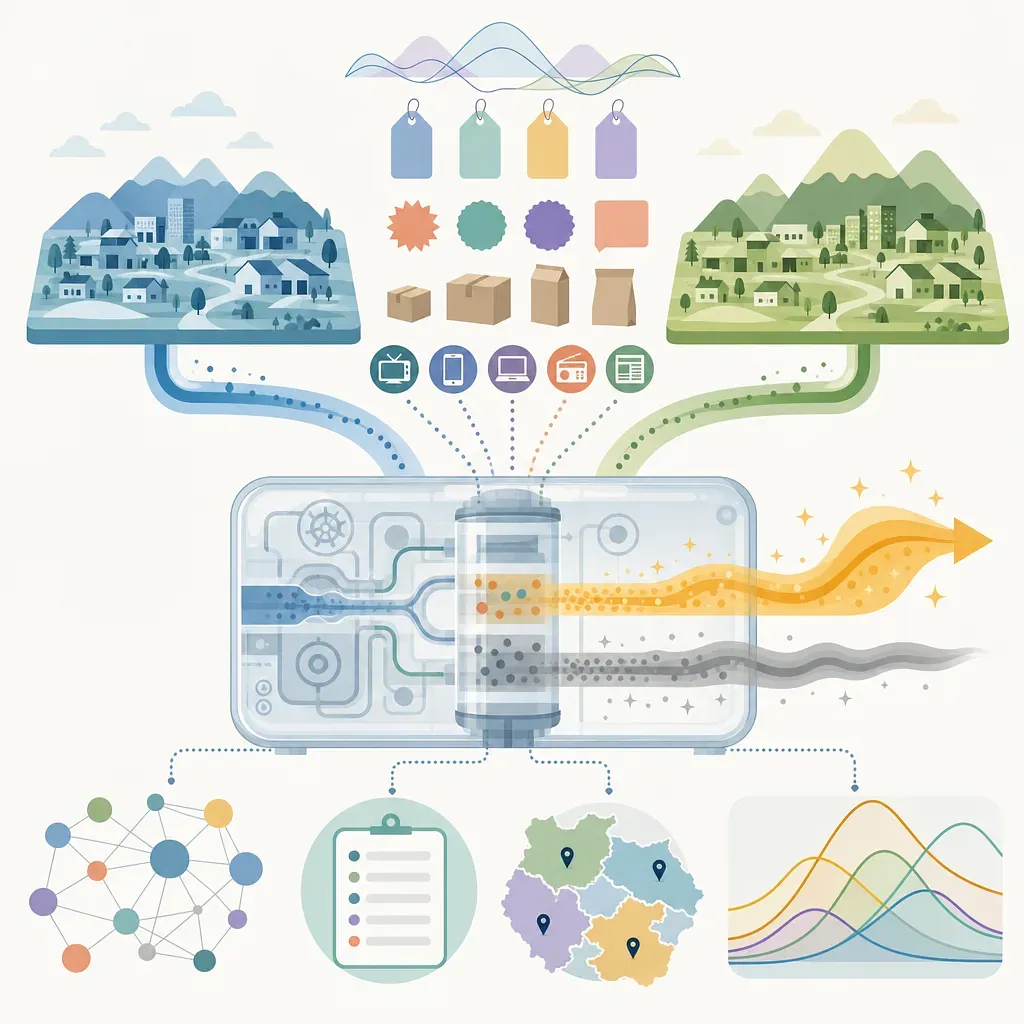
The diagram shows multichannel data being integrated and filtered into network, list, regional, and trend analyses.

FAQ

How is UGC different from influencer content?

UGC emphasizes ordinary users' natural experiences and ways of expressing themselves, while influencer content leverages the channel influence of creators who have a specific audience and content creation capabilities. However, the two categories may overlap, as with paid UGC, so it is advisable to record the type of creator, compensation arrangement, publishing channel, and usage rights separately.

Do advertising relationships need to be disclosed even if only sponsored products are provided?

If free products, discounts, commissions, or other benefits could influence content creation, they may constitute a financial relationship. Specific disclosure obligations and labeling methods vary by country and platform, so you should check the laws and platform policies applicable in the relevant region.

How do you calculate an influencer's engagement rate?

The result varies depending on whether the number of engagements is divided by followers, reach, or views. When comparing candidates, use the same period and denominator, and evaluate saves, shares, substantive comments, clicks, and conversions separately, rather than considering only likes.

Does branded content require a large production budget?

No. The key to branded content is not a high production budget, but ensuring that the content's central narrative consistently conveys the brand's perspective on the issue and its experience. Production costs vary depending on the format, participants, distribution scope, rights, and reuse period.

Should products not be promoted on owned media?

Product information is also necessary, but if every post is direct promotion, audiences may have less reason to return. It is advisable to focus on industry information that answers customer questions, the development process, practitioners' perspectives, and actual customer experiences, while placing product descriptions at appropriate points in the customer journey.

If monthly sales increase after a campaign, is the difference incremental sales?

It can be viewed as excess sales that occurred concurrently with the campaign, but it cannot immediately be confirmed as causal incremental sales. Further validation is needed by controlling for seasonality, pricing, promotions, inventory, distribution changes, and competitor activity, or through holdout experiments and similar methods.

Is a simple before-and-after comparison also marketing mix modeling?

Generally, no. MMM uses long-term time-series data and multiple control variables to statistically estimate each channel's contribution, lagged effects, saturation, and other factors. A simple before-and-after comparison is useful for initial diagnosis but has greater limitations in causal interpretation than MMM.

Can't content performance be measured with ROAS?

ROAS can be used for content that drives direct conversions, but it does not capture all effects on branded search, awareness, repeat visits, and long-term purchases. It is advisable to use platform attribution, unique links, brand studies, experiments, and MMM together as appropriate for the objective.

Why is it difficult to measure results when all marketing channels are changed at once?

Because when multiple activities change simultaneously, it is difficult to isolate which change produced the results. Where possible, changes should be divided by time period, region, or customer segment, and other conditions should be recorded to ensure comparability.

Can AI quickly fill out the content pyramid by producing content at scale?

Idea generation, captioning, translation, and format conversion can become faster, but quantity alone does not guarantee customer value. Fact-checking, copyright and portrait rights, duplicate content, brand expression, and the authenticity of actual customer experiences must be managed separately.

Sources

Data formats

This content is available in several machine-friendly formats.

Data-only languages (machine translated, files only)

Indonesian JSON MD Portuguese JSON MD Chinese (Traditional) JSON MD Deutsch JSON MD

Reuse & AI usage

Search indexing and AI citation with attribution are welcome. See the license policy for details.

CC BY · License

Loading…

Loading…

Related content