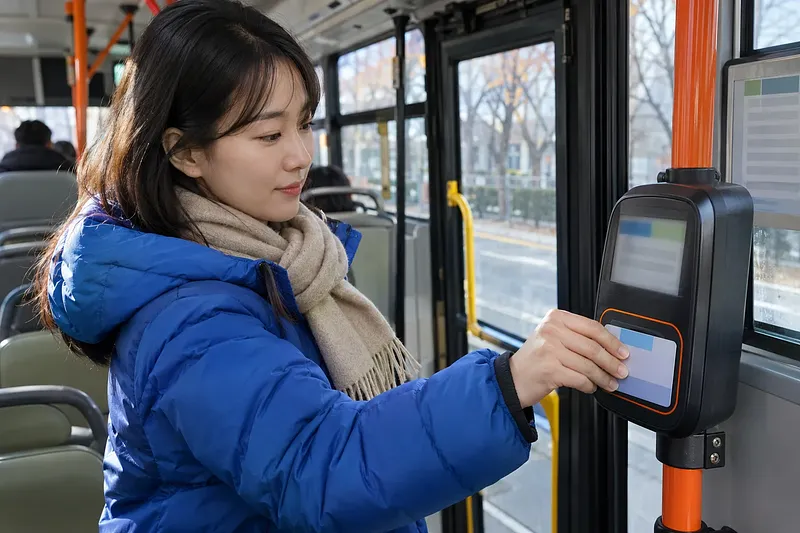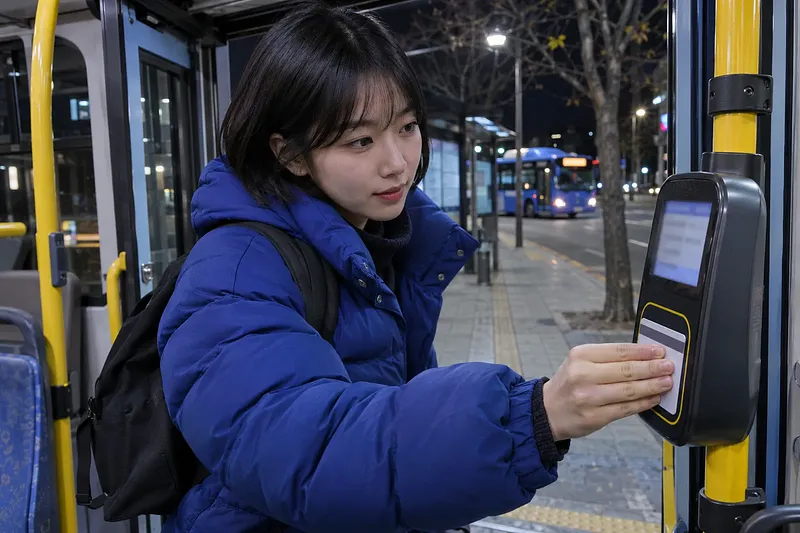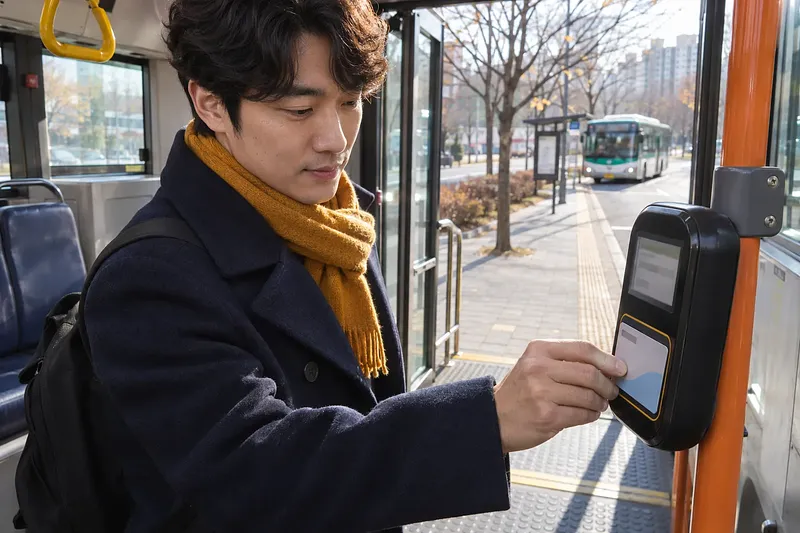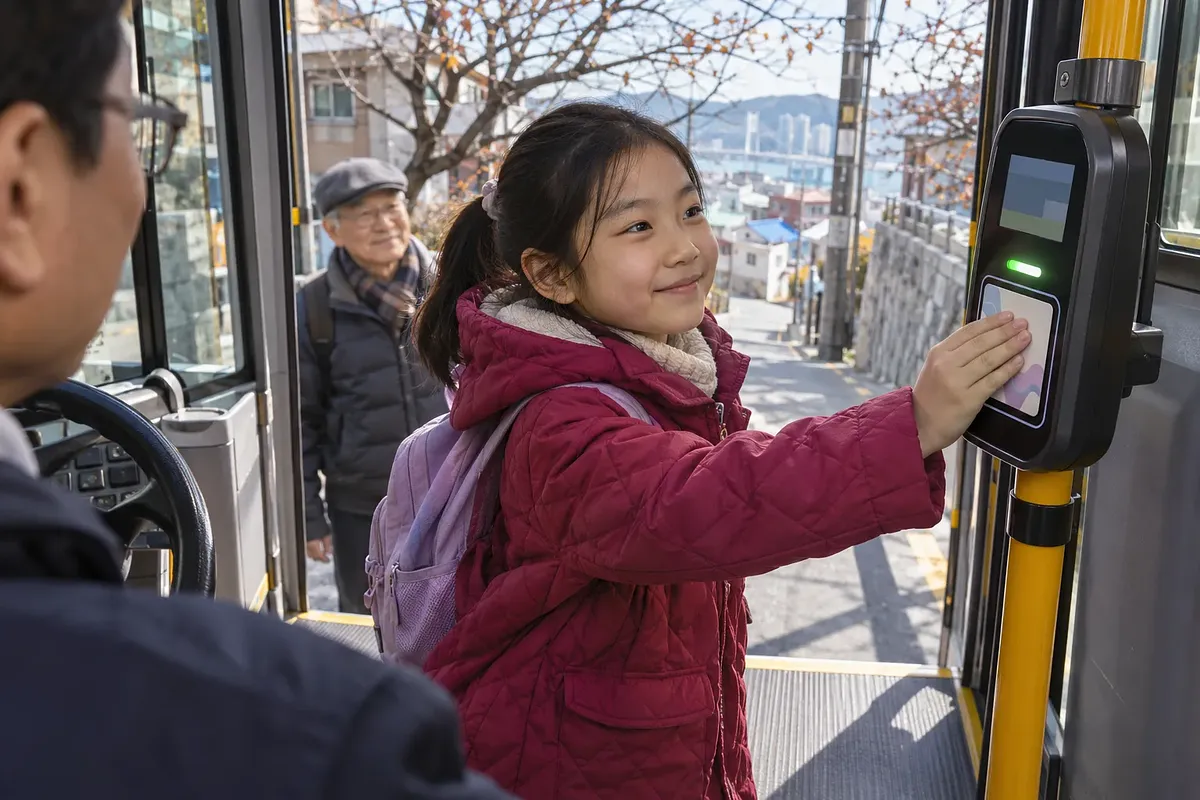
Use “Find a Neighborhood Bus” on the left side of this site to search by neighborhood name or a route number such as Busanjin-gu6. The standard card fare is 1,480 won, except on Geumjeong-gu7. Tap your card when you get off to get a discount on up to 2 transfers to other routes within 30 minutes.
Routes and fares are based on information from the Ministry of Land, Infrastructure and Transport’s TAGO and the City of Busan, checked on November 11, 2026.
How to find Busan neighborhood bus routes and arrival times
If you know the route number, enter it with the district or county name. If you don’t know the number, search by neighborhood name. The route name Busanjin-gu6 combines Busanjin-gu with the number 6. For Saha-gu1-1 and Gangseo-gu9-1, check the number after the hyphen too. For Gijang-gun2(Hak-ri), check the place name in parentheses as well.
- Use “Find a Neighborhood Bus” on the left side of this site to search by neighborhood or route number.
- Choose the direction that serves your drop-off stop. You can check the first and last bus times and how often buses run on each route here.
- Select your boarding stop to see when the next bus is expected to arrive.
- To find out how long the ride will take, check the estimated travel time between your boarding and drop-off stops.
How to check Busan bus information online and by phone
Busan’s Bus Information Management System (BIMS) lets you search by route, stop, or starting point and destination. If you’re waiting at a stop, check the direction the bus is heading in the stop search results. To get arrival information by phone, you’ll need the 5-digit stop number shown on the bus stop sign.
- Call Busan’s automated bus information line (ARS) at 1588-2902.
- Enter the 5-digit number for the stop where you’ll board.
- Follow the voice prompts to enter the route number and hear the estimated arrival time.
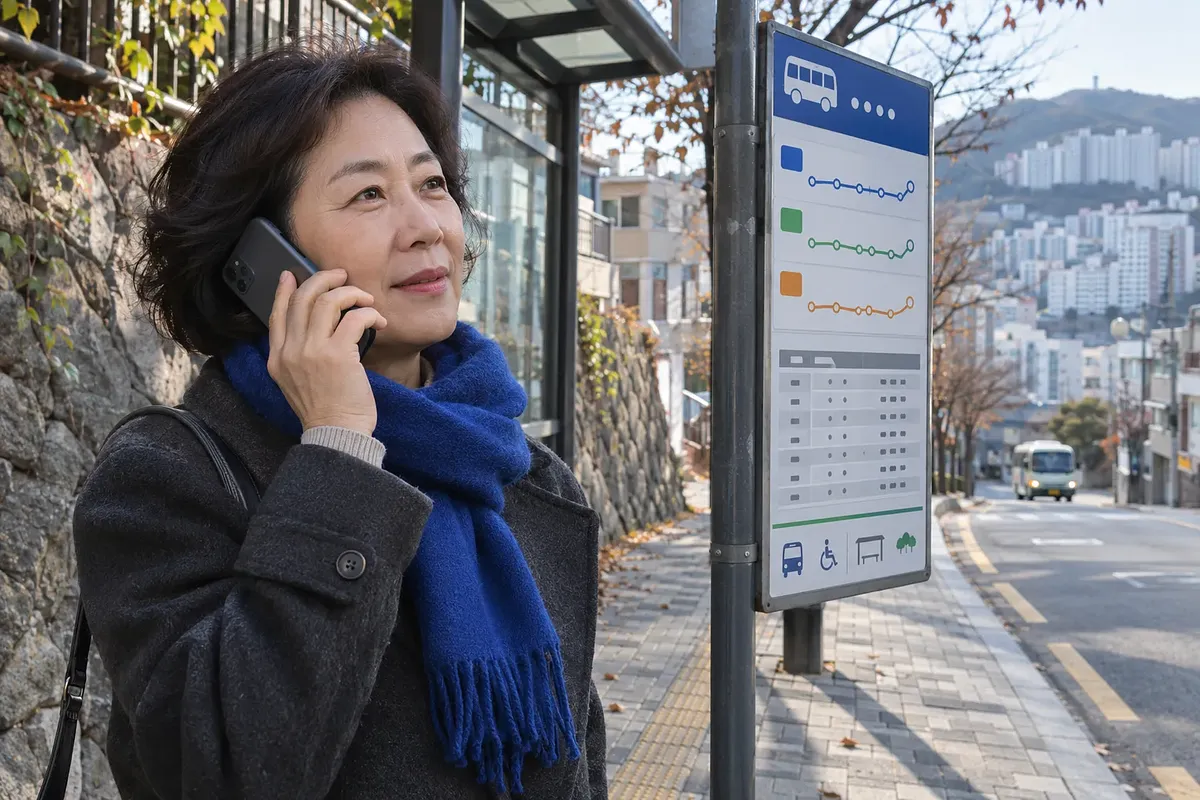
Select your direction of travel to check the expected arrival time at your stop.
Transit card and cash fares and when children ride free
The standard fare on Busan neighborhood buses is 1,480 won by transit card or 1,600 won in cash. On Geumjeong-gu7, standard-fare riders pay 1,400 won by card or 1,500 won in cash. The fares below were announced by the City of Busan and took effect on October 6, 2023.
| Passenger or route | Transit card | Cash |
|---|---|---|
| Standard, except Geumjeong-gu7 | 1,480 won | 1,600 won |
| Standard, Geumjeong-gu7 | 1,400 won | 1,500 won |
| Youth | 750 won | 900 won |
| Child | Free (card registered for a child) | 300 won |
Children ages 6 through 12 can ride Busan neighborhood buses for free with a transit card registered with their date of birth. When buying a transit card at a convenience store, you can ask to have the child’s date of birth registered. Children who pay in cash pay 300 won on neighborhood buses.
Children ride free on city and neighborhood buses registered with the City of Busan and on the Busan Metro. Free rides do not apply to the Donghae Line. For the child fare on bus route 2000, check the City of Busan’s fare table separately for the part of the route within the city and the part outside it.
Transfer rules within 30 minutes of getting off
In Busan, you can make up to 2 transfers between neighborhood buses, city buses, and the metro. Including the first leg, that’s up to three rides. For each transfer, board with the same card within 30 minutes of getting off your previous ride.
| Situation | Does the transfer discount apply? |
|---|---|
| You tap your card when getting off and board a different route within 30 minutes | Yes, if you have transfers left |
| You don’t tap your card when getting off the bus | No discount on the next ride |
| You pay in cash when boarding | No discount |
| You board the same bus route you rode earlier | No discount when you reboard that route, even if you take another bus or the metro in between |
| You pay for at least 2 people with one card | Only the cardholder gets the transfer discount |
If you pay in cash, you do not get a transfer discount.
Busan Bus Information Management System, “General Transfer Guide”
Example fare when transferring from a neighborhood bus to a city bus
If you meet the transfer rules, you pay only the highest base fare among the services you use. Suppose a standard-fare rider transfers from Busanjin-gu6 to a regular Busan city bus. Here’s how the fare works out using the card fares that took effect on October 6, 2023.
| Ride order | Standard base fare by card | Amount paid at boarding |
|---|---|---|
| First ride on Busanjin-gu6 | 1,480 won | 1,480 won |
| Transfer to a regular city bus | 1,550 won | 70 won difference |
| Total for both rides | 1,550 won |
Regional transfer fares for Busan, Gimhae, and Yangsan
Since September 19, 2025, there has been no regional transfer surcharge between Busan, Gimhae, and Yangsan. You can make up to 2 transfers between eligible buses, metro services, and light rail services. You still have to pay any difference in base fares and any separate fares for specific segments.
Refund eligibility for Dongbaek Pass and Everyone’s Card
Fares paid on neighborhood buses registered with the City of Busan count toward Dongbaek Pass refunds. Dongbaekjeon transit card users age 19 or older can sign up for the standard Dongbaek Pass. After your card is issued, you must sign up for Dongbaek Pass separately for your fares to qualify for a refund.
| Enrollment option | Effective date | Refund rules for Busan neighborhood bus rides |
|---|---|---|
| Standard Dongbaek Pass | From August 1, 2023 | Monthly spending over 45,000 won is refunded the following month as Dongbaekjeon public subsidy funds, with a monthly refund limit of 45,000 won |
| Enrollment in both Dongbaek Pass and K-Pass (Everyone’s Card) | From April 1, 2026 | Busan residents who meet the requirements for linking the two passes are refunded the portion of eligible monthly transit spending over 45,000 won |
Busan’s advertised “unlimited rides for 45,000 won a month” means you pay for each ride when you board and get the excess back later. Existing Dongbaek Pass users can sign up for K-Pass with the Dongbaekjeon transit card they already use. Even if buses registered in Gimhae or Yangsan are eligible for regional transfers, fares paid on those buses don’t count as spending on Busan-registered buses for Dongbaek Pass.
Route counts by district and county and Busan’s official operating figures
A search of the Ministry of Land, Infrastructure and Transport’s TAGO by district or county name and route number on November 11, 2026, found 139 Busan neighborhood bus routes. The City of Busan’s official figures list 135 routes as of December 2024. At that time, there were 61 operators and 571 vehicles, of which 505 were in regular service and 66 were spares.
| District or county | Routes found in TAGO (November 11, 2026) | Official Busan route count (December 2024) |
|---|---|---|
| Gangseo-gu | 24 | 18 |
| Saha-gu | 15 | 15 |
| Busanjin-gu | 14 | 15 |
| Sasang-gu | 12 | 13 |
| Gijang-gun | 11 | 8 |
| Geumjeong-gu | 10 | 10 |
| Dongnae-gu | 9 | 11 |
| Buk-gu | 9 | 10 |
| Nam-gu | 7 | 7 |
| Haeundae-gu | 7 | 7 |
| Seo-gu | 6 | 6 |
| Yeonje-gu | 5 | 5 |
| Yeongdo-gu | 4 | 4 |
| Dong-gu | 3 | 3 |
| Suyeong-gu | 2 | 2 |
| Jung-gu | 1 | 1 |
| All of Busan | 139 | 135 |
The counts are from different dates, so the difference can’t readily be interpreted as the number of new routes. You also need to check how each count treated branch routes. Before using a route marked as suspended, ask the relevant district or county office or Busan’s Public Transportation Division (051-888-3975) whether service has resumed.