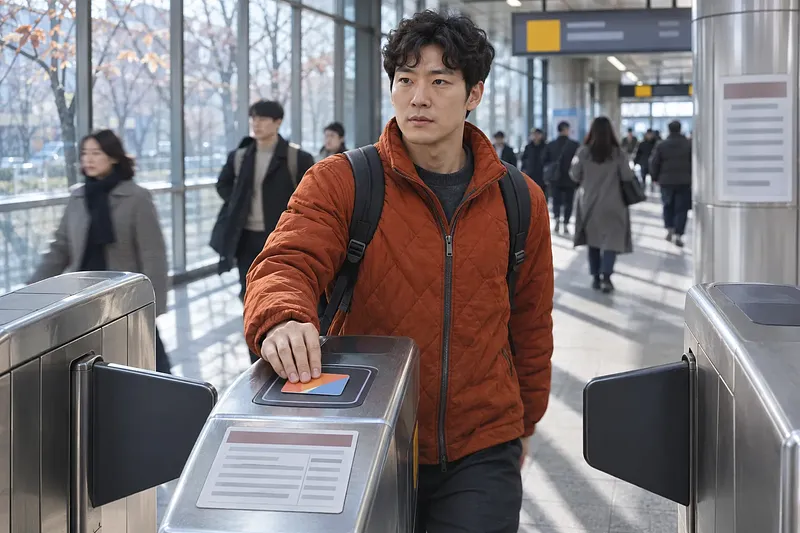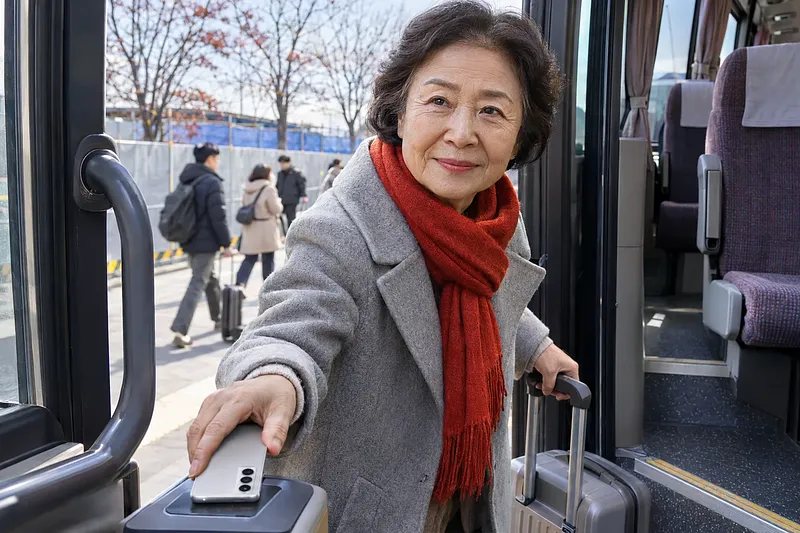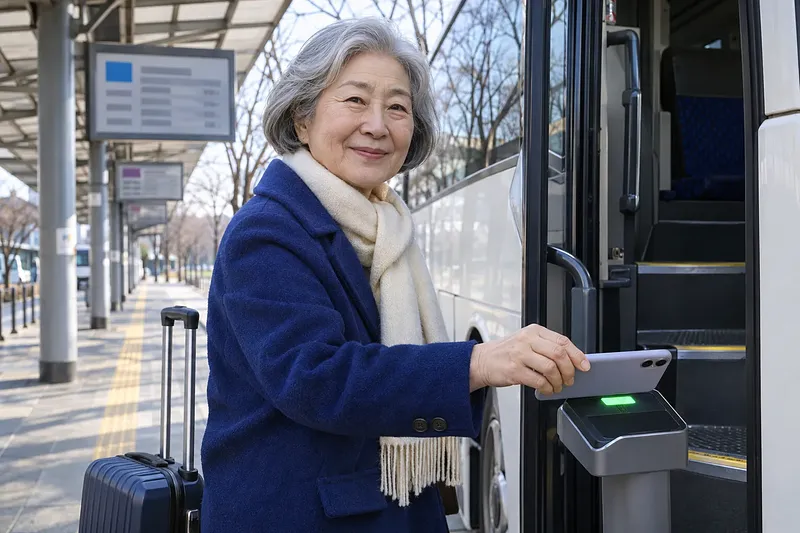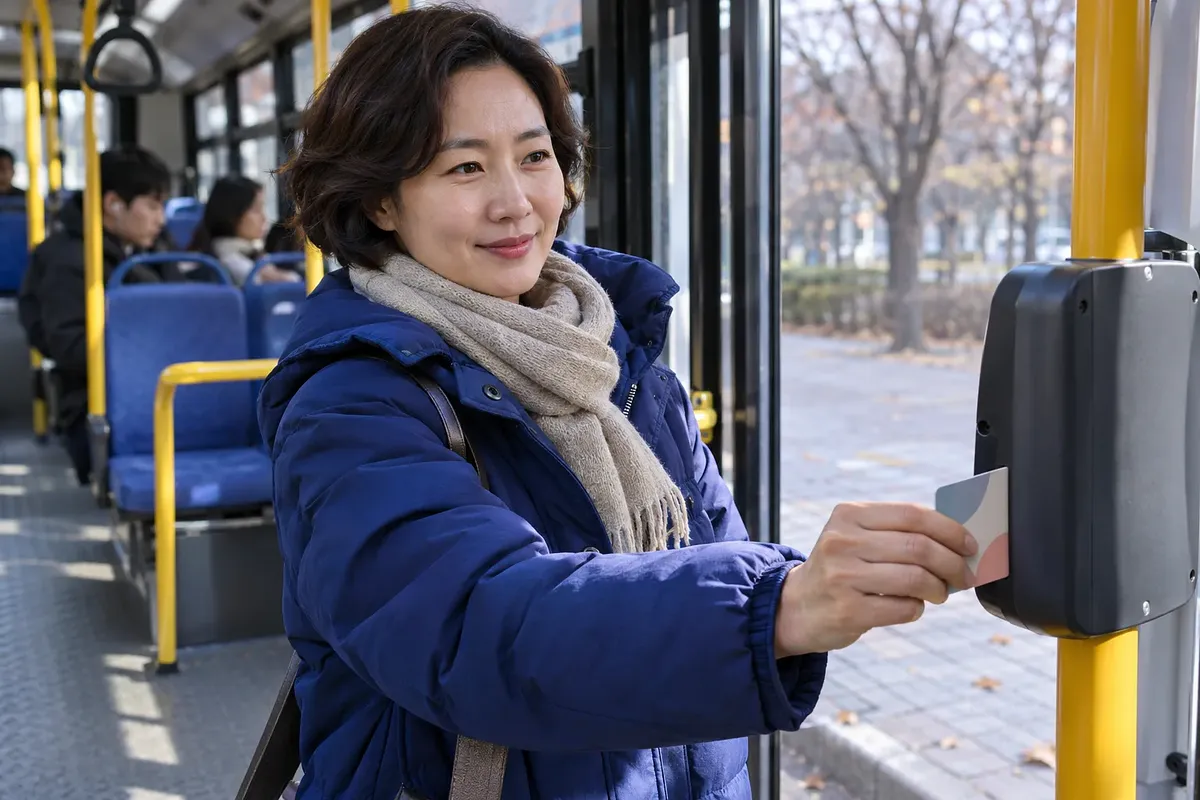
Have a transit card ready when taking city buses in Busan, Daegu, Gwangju, Daejeon, and Ulsan. When transferring, you must tap off with the same card. Anyone aged 19 or older who is eligible for transit fare refunds should first check their Modu Card enrollment.
Figures and service changes are based on records checked on November 9, 2026, and official guidance.
Steps for Taking Buses and Registering for Refunds
Check the current route, then check your transit card and refund registration status. You do not need to join a refund program to board a bus. To receive refunds, the card you use must be eligible.
- Open “Find Subway and Bus Routes” on the left side of this site. Check the route by city and route number.
- Check your departure stop and direction of travel. You can also check first and last buses, service intervals, and expected arrivals in the same menu.
- Check that your transit card is ready to use. For prepaid cards, check the balance.
- If you want Modu Card refunds, check the enrollment requirements. Get an eligible card, then register it on the official website.
- Check your enrollment in any additional local support programs. After traveling, check the credits and refunds for your registered card.
Modu Card is generally available to people aged 19 or older. Check detailed requirements, such as residence in a participating area, on the enrollment screen. Refund conditions vary by the number of monthly trips and the month of use.

Check your enrollment in additional local benefits and your refund details the following month.
Regular, Express, and Seated Bus Fares by City
The amounts below are standard adult fares paid with a transit card. Fares vary by bus type even within the same city. Before leaving, check the current fare information for your route again.
Busan City Bus Fares
The regular bus fare with a transit card is 1,550 won. Seated buses cost 2,100 won. The regular night bus fare is 2,000 won. The seated night bus fare is 2,500 won.
These fares took effect on October 6, 2023. Separate fares apply to the out-of-city section of route 2000. Free travel for children requires a child transit card. For detailed categories, see the Busan City Bus Fare Guide.
Daegu City Bus Fares
The regular bus fare with a transit card is 1,500 won. Express and direct buses cost 1,950 won. When transferring from a regular bus to an express or direct bus, you pay the difference. The rules are listed in Daegu City’s Transportation Guide.
Gwangju City Bus Fares
The regular bus fare with a transit card is 1,250 won. Direct routes 1001 and 1002 charge the seated bus fare of 1,700 won. After the reorganization, regular bus fares apply to the remaining 113 routes.
These categories follow Gwangju BIS’s 2026 reorganization notice. Direct routes 1001 and 1002 replaced the former seated route 02. Check additional fares for sections crossing city boundaries separately.
Daejeon City Bus Fares
The standard city bus fare with a transit card is 1,500 won. The standard urban rail fare with a transit card is 1,550 won. These are the fares that took effect on January 1, 2024. The current guidance from the Daejeon Bus Transport Association lists the same amounts.
We do not assume fares simply because we have not found a separate fare increase notice. Check Daejeon Traffic Information again for the fare on your travel date. You must also check section fares when traveling beyond city boundaries.
Ulsan City Bus Fares
The adult regular bus fare with a transit card is 1,500 won. Feeder and village buses cost 1,000 won. The direct seated bus fare is 2,300 won.
The out-of-city fare table for direct buses lists 2,900 won. The adult limousine bus fare with a transit card is 3,900 won. The child transit card fare is 0 won. Check the applicable routes in the Ulsan Traffic Management Center Fare Table.
Comparison of Transfer Times and Limits
Transfer discounts require boarding and alighting records made with the same transit card. Tapping off means holding your card against the reader when you get off. Allowed transfer times and limits differ by city.
| City | Standard transfer window | Transfer limit | Coverage and conditions to check |
|---|---|---|---|
| Busan | Within 30 minutes after getting off the previous service | 2 transfers | Buses, urban rail, village buses, etc.; excludes boarding a bus with the same route number again |
| Daegu | Within 30 minutes after getting off | 2 transfers | Includes urban rail, the Daegyeong Line, and buses in participating cities and counties; 60 minutes for city buses outside Daegu |
| Gwangju | Within 30 minutes after the first alighting | No limit | City buses, urban rail, and village buses; excludes the same route |
| Daejeon | Normally 30 minutes after getting off; 60 minutes for some routes | 3 transfers | Time window depends on the weekday service interval of the next bus |
| Ulsan | Normally within 40 minutes after getting off the first bus | No limit | 60 minutes for some routes; discount based on the first boarding fare |
Daegu City’s “Transportation Guide” explains the card-use requirement as follows.
You must use the same card when boarding and getting off to receive transfer benefits.
In Busan, you can take a total of 3 rides, including 2 transfers. Any fare difference is based on the highest fare among the services used. For the Busan-Gimhae Light Rail and Donghae Line, also check which combinations qualify. Exceptions are listed in the Busan Transportation Corporation Transfer Guide.
Gwangju’s unlimited transfers do not mean there is no time limit. Transfers must be made within 30 minutes of the first alighting. Check regional transfer rules separately for rural buses in neighboring cities and counties. The rules are explained in the Gwangju Transportation Corporation Transfer FAQ.
Daejeon sets the transfer window by the next bus’s weekday service interval. For routes with intervals of at most 15 minutes, transfers are allowed for up to 30 minutes. Routes with intervals of at least 16 minutes have a 60-minute window. Check route-specific rules in the Daejeon Bus Transport Association Transfer Guide.
Ulsan calculates the time from when you get off the first bus. The standard adult discount is up to 1,500 won. You must tap off every time you get off. For routes with exceptions, see Ulsan City’s Transfer Discount Guide.
Examples of Transfer Fare Differences
Even when a transfer qualifies, you pay the difference if you switch to a more expensive service. The following calculations use standard adult transit card fares. They apply only when the time, transfer limit, and tap-off requirements are met.
- When transferring from a regular bus to an express or direct bus in Daegu, the difference is 1,950 won - 1,500 won = 450 won. The total cost is 1,950 won.
- When transferring from a city bus to urban rail in Daejeon, the difference is 1,550 won - 1,500 won = 50 won. The total cost is 1,550 won.
The differences above are calculated using official fares. There is no additional fare when transferring from Daejeon urban rail to a bus. Transfers between buses and urban rail in Daejeon are free for teenagers and children. These rules follow Daejeon City’s Fare Adjustment Guide.
Checking 2025~2026 Route Reorganizations and Changed Numbers
If an old route number returns no results, find the current number in the reorganization notice. Stops may change even if the number stays the same. Check the direction of travel even for routes you used to commute on.
- Busan adjusted 40 routes starting with the first buses on July 5, 2025. There were 6 new routes, 20 changed routes, 8 discontinued routes, and 6 other changes. Urban express buses were also introduced.
- Daegu reorganized its routes on February 24, 2025. The implementation date is also confirmed in Suseong-gu’s official district news. We do not state a definitive number of reorganized routes here.
- Gwangju implemented its reorganization on October 31, 2026. Seated route 02 became direct routes 1001 and 1002. The BIS notice dated October 28 also announced expanded routes beyond city boundaries.
- In Daejeon, check the individual change notice for the route you plan to use. The information verified for this article does not establish a single reorganization date.
- Ulsan implemented phase 1 of its reorganization on October 3, 2026. It included the restoration of route 123. Phase 2 in December 2026 was a planned change at the time of the announcement.
Check routes before and after changes in the following order.
- Enter the current number in this site’s “Find Subway and Bus Routes.”
- If there are no results, check the reorganization notice on the city’s BIS.
- Compare the old number and your departure and arrival stops.
- Search again with the changed number and check the direction of travel.
The opening date of Gwangju Urban Rail Line 2 is separate from the bus reorganization date. Do not use reports about an opening delay as current service information. Check Gwangju Transportation Corporation notices for when the line will actually be available.