New Labeling Standards for Decaffeinated Coffee Effective in 2028
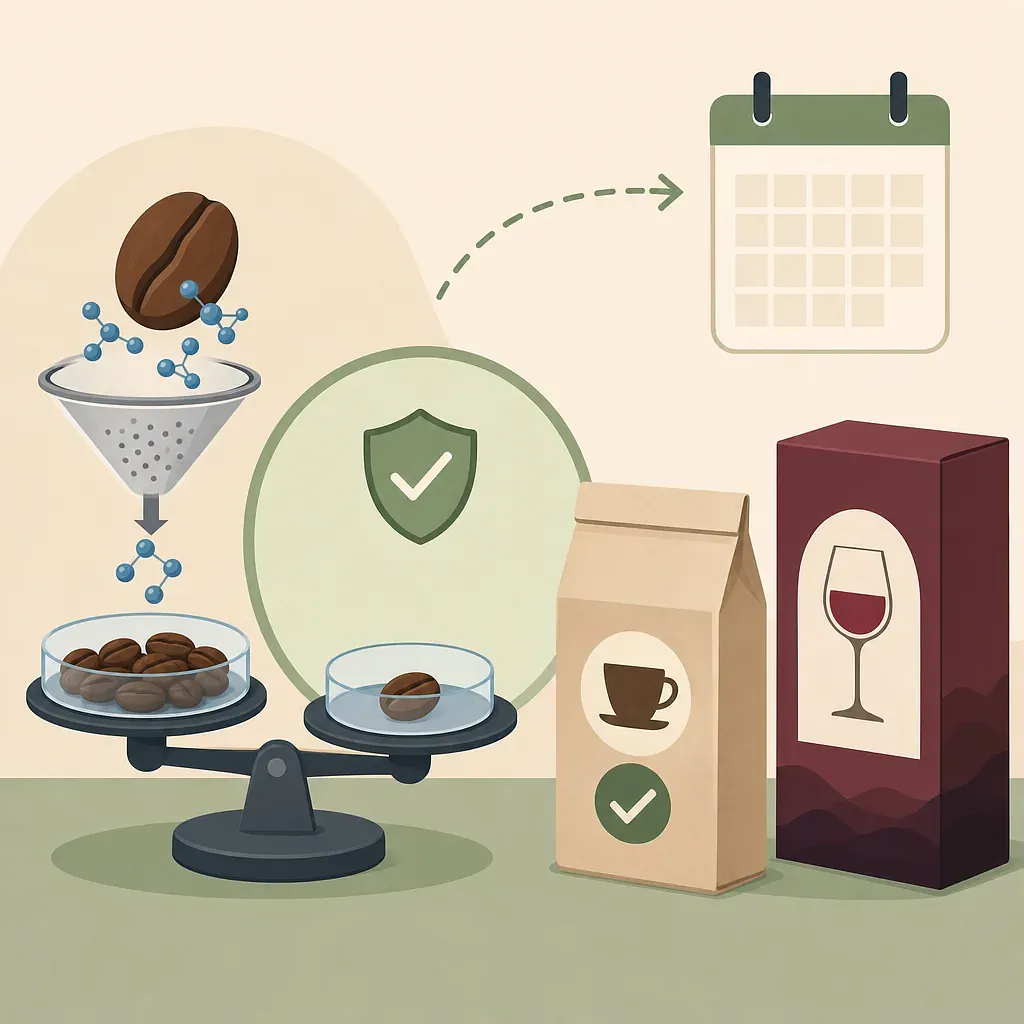
Due to revisions to the Ministry of Food and Drug Safety’s labeling standards, effective January 1, 2028, coffee beans may be labeled as “decaffeinated” only if their residual caffeine content is 0.1% or less based on dry matter. Collaborative products between alcoholic beverages and general foods must also display the words “alcohol” or “alcoholic beverage” on the primary label so that consumers can easily identify them as alcoholic beverages.
Effective January 1, 2028, products may be labeled as “decaffeinated coffee” only if the residual caffeine content in the raw coffee beans is 0.1% or less, based on dry matter.
Previously, products with more than 90% of their caffeine removed could be labeled as “decaffeinated,” but going forward, the actual remaining caffeine level will be assessed more directly.
Expressions such as “decaffeinated,” “decaf,” “made with decaffeinated beans,” and “made with decaf beans” are affected by the new standards.
Collaborative products between alcoholic beverages and general food items must include the words “alcohol” or “alcoholic beverage” on the main label to minimize consumer confusion.
The new standards will take effect on January 1, 2028, but companies may choose to implement them voluntarily before that date.
Overview
With the Ministry of Food and Drug Safety’s revision and promulgation of the “Labeling Standards for Foods, etc.,” the labeling standards for “decaffeinated” coffee have become clearer. The key point is that the standard is based not simply on how much caffeine has been removed, but on how much caffeine actually remains in the coffee beans used as raw materials.
According to the revised standards, labels such as “decaffeinated,” “decaf,” “made with decaffeinated beans,” “Made with decaffeinated beans,” or similar labels may be used.
Additionally, products resulting from collaborations between alcoholic beverages and general food items must display the phrase “alcohol” or “beverage” on the main label so that consumers can easily identify them as alcoholic beverages. The revised standards will take effect on January 1, 2028.
What’s Changing?
Key Changes to Decaffeinated Labeling Standards
The previous standards focused on whether “90% or more of the caffeine had been removed.” However, if the coffee beans themselves have a high caffeine content, the amount of caffeine remaining—even after removing 90% or more—may exceed consumer expectations.
To address this limitation, the new standards introduce a residual caffeine content standard. In other words, for the coffee beans used in a product to be labeled as decaffeinated, the percentage of remaining caffeine must be 0.1% or less, based on dry matter.
Category | Previous Standards | Revised Standards
Assessment Method | Focused on caffeine removal rate | Focused on residual caffeine content
Conditions for “Decaffeinated” Labeling | Removal of 90% or more of caffeine | Residual caffeine content in the raw coffee beans must be 0.1% or less based on solids
Implications from a Consumer Perspective | Even with a high removal rate, the actual residual amount may be relatively high | A standard that better aligns with the expectation of “coffee with almost no caffeine”
Effective Date | Currently in effect | Mandatory enforcement starting January 1, 2028
What does “0.1% or less based on solids” mean?
“Based on solids” means that the content is calculated based on the solid components, excluding moisture such as water. For foods where moisture content can vary—such as coffee beans or coffee extracts—the solid matter basis may be more suitable for comparing ingredient content than a simple weight basis.
The standard referred to in this amendment can be understood as follows:
· Applicable product: Coffee beans used as raw materials
· Ingredient: Residual caffeine
· Standard: 0.1% or less on a solid matter basis
· Permitted labeling terms: “decaffeinated,” “decaf,” “made with decaffeinated beans,” “made with decaf beans,” etc.
However, the actual amount of caffeine in a single cup of coffee consumed by a consumer may vary depending on the amount of coffee beans used, the extraction method, the beverage volume, and the manufacturing process. Therefore, the new standard clarifies the basic requirements for labeling; it does not mean that the caffeine content of all decaffeinated beverages is exactly the same.
Why are the standards being changed?
1. To reduce the gap between consumer expectations and labeling standards
Many consumers understand “decaffeinated coffee” to mean coffee that contains almost no caffeine or very little caffeine. However, under the previous “90% or more removed” standard, the final residual amount could vary depending on how much caffeine was originally present in the coffee beans.
For example, if the original coffee beans had a high caffeine content, a relatively large amount of caffeine could remain even after applying a high removal rate. Consequently, from the consumer’s perspective, relying solely on the “decaffeinated” label could lead to a discrepancy between their expectations and the actual amount of caffeine consumed.
2. To Enhance the Objectivity of Labeling
The new standard focuses on directly verifying “how much remains” rather than “how much has been removed.” This makes the labeling standards more objective and improves the comparability of products.
3. To Help Protect Caffeine-Sensitive Consumers
Pregnant women, nursing mothers, adolescents, people sensitive to caffeine, and those with sleep disorders can now manage their caffeine intake more carefully. Clarifying the labeling standards for decaffeinated products will help reduce misunderstandings when these consumers choose products.
Which Expressions Are Affected?
The revised standards apply to labeling expressions that could be interpreted by consumers as meaning “decaffeinated.”
Typical examples include the following:
· Decaffeinated
· Caffeine-free
· Made with decaffeinated beans
· Made with caffeine-free beans
In other words, if a product name or packaging label uses a term that consumers might interpret as “coffee with caffeine removed,” the beans used must meet the new standards.
What Consumers Need to Know
Decaffeinated Does Not Mean “0 Caffeine”
Decaffeinated generally refers to coffee from which caffeine has been removed or reduced, but it does not necessarily mean the coffee is completely caffeine-free. This revision is based on a standard of “0.1% or less by dry matter,” not a “0%” standard.
People who are highly sensitive to caffeine should check product labels, information provided by the manufacturer, and nutrition and ingredient lists together.
Products released before the new standard takes effect may be labeled according to the existing standards
The new standard takes effect on January 1, 2028. Until then, products labeled according to the existing standards may remain on the market. However, companies may voluntarily apply the new standards early.
The actual caffeine content of beverages served in stores may vary depending on preparation conditions
Even when decaffeinated beans are used, the actual caffeine intake from a beverage can be influenced by the following factors:
· Amount of coffee beans used
· Extraction time
· Extraction method
· Beverage volume
· Number of shots
· Whether the beverage is blended
Therefore, consumers who need to limit their caffeine intake should not rely solely on the “decaffeinated” label; it is safer to check the caffeine content information provided by the store or manufacturer whenever possible.
Points for Businesses to Check
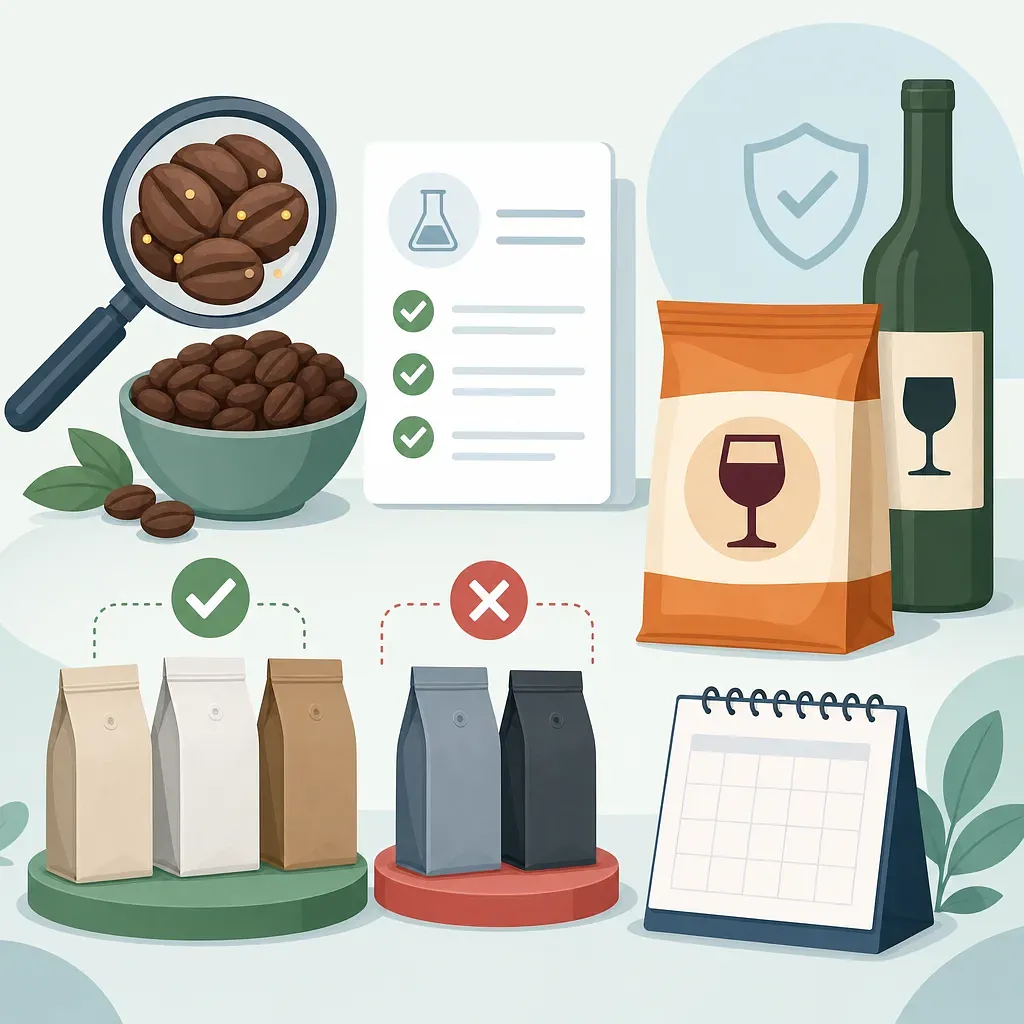
Food manufacturers and processors, coffee bean importers and distributors, coffee shop franchises, and on-site manufacturing and processing businesses need to review their labeling and ingredient management practices to ensure compliance with the new standards.
Checklist
Inspection Item | What to Check
Raw Material Standards | Verify that the residual caffeine content of coffee beans labeled as “decaffeinated” is 0.1% or less based on dry matter
Labeling | Verify that relevant expressions such as “decaffeinated,” “caffeine-free,” or “made with decaffeinated beans” comply with the standards
Supporting Documentation | Maintain verifiable records such as test reports from coffee bean suppliers and raw material specifications
Packaging | Review whether packaging text needs to be updated in time for the 2028 effective date
In-Store Information | Conduct a comprehensive review of all display media, including menus, online sales pages, and product names on delivery apps
Early Adoption | Consider whether to voluntarily adopt the standards before the effective date
Labeling for Alcohol-Collaboration Products Will Also Change
In addition to the coffee standards, this revision includes labeling standards for collaborative products between alcoholic beverages and general foods. With the recent launch of collaborative products between alcohol brands and snacks, ice cream, beverages, and ready-to-eat meals, concerns have been raised that consumers might be confused as to whether these products are alcoholic beverages or general foods.
Going forward, collaborative products involving alcoholic beverages must display the phrase “alcohol” or “alcoholic beverage” on the primary display panel so that consumers can easily identify them.
What Is the Primary Display Panel?
The primary display panel refers to the main part of the packaging that consumers see first when purchasing a product. Generally, this refers to the front of the package, where the product name, brand name, and main images are displayed.
This standard is significant in reducing consumer confusion and, in particular, helping minors and non-drinking consumers more clearly understand the nature of the product.
Effective Date and Implementation Schedule
Item | Details
Amendments | Revision of labeling standards for decaffeinated coffee and alcoholic beverage collaboration products
Mandatory Effective Date | January 1, 2028
Early Adoption | Voluntary adoption by individual companies
Impact on Consumers | Improved reliability of decaffeinated labeling and enhanced identifiability of alcoholic beverages
Impact on Businesses | Requires verification of raw material standards, revision of labeling text, and management of packaging and online labeling
Summary
The core objective of this amendment is to ensure that food labeling better aligns with consumers’ general expectations. Going forward, decaffeinated coffee will be labeled based on the actual residual caffeine content, rather than simply the removal rate. Additionally, alcoholic co-branded products must more clearly indicate the nature of the product by including the terms “alcohol” or “alcoholic beverage” on the label.
Starting in 2028, consumers will be able to understand decaffeinated labeling under clearer standards, and businesses must systematically review their ingredient documentation and labeling text before the effective date.
 Injoys