Injoys
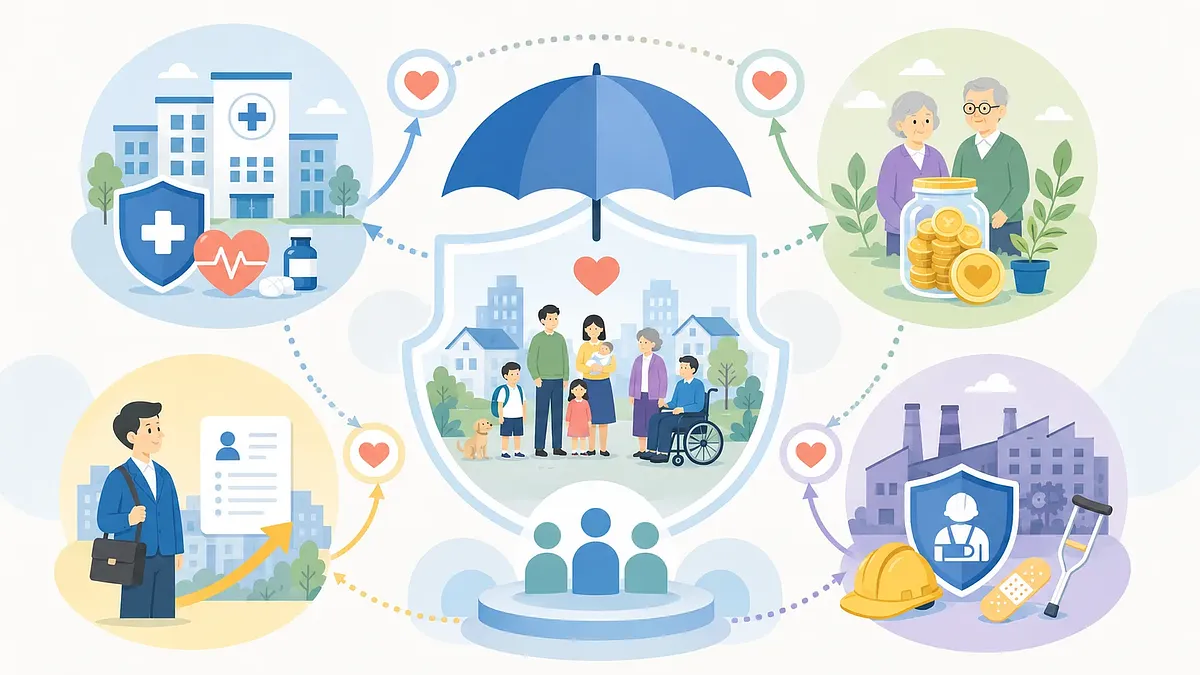
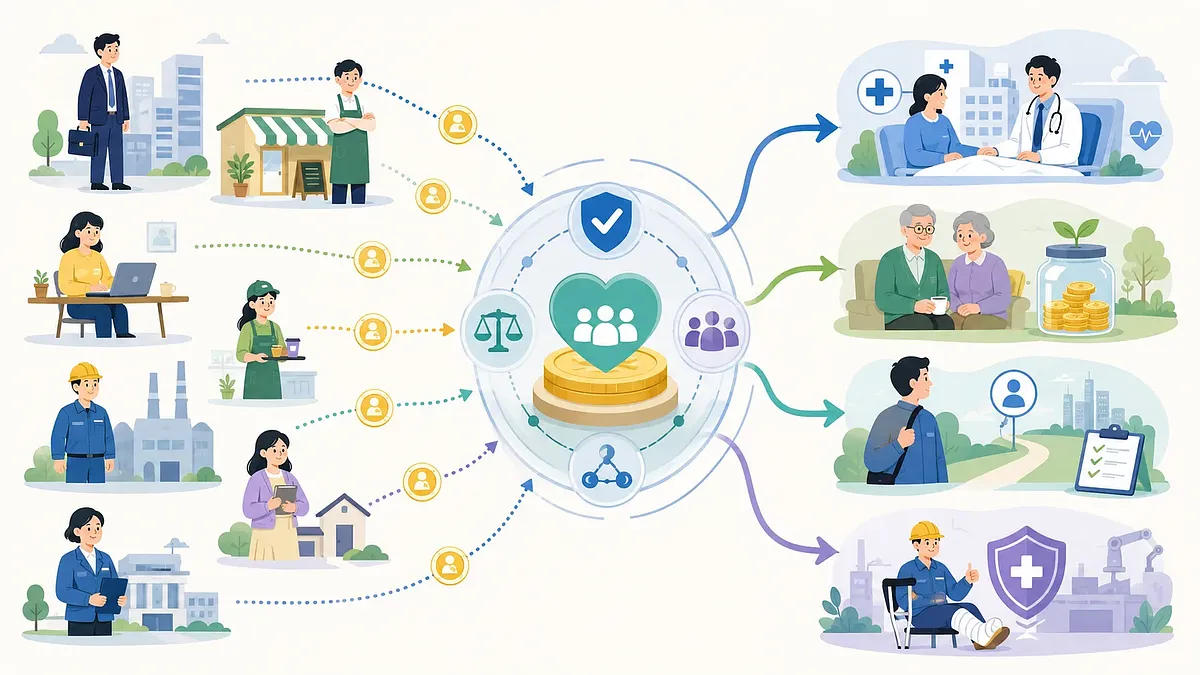
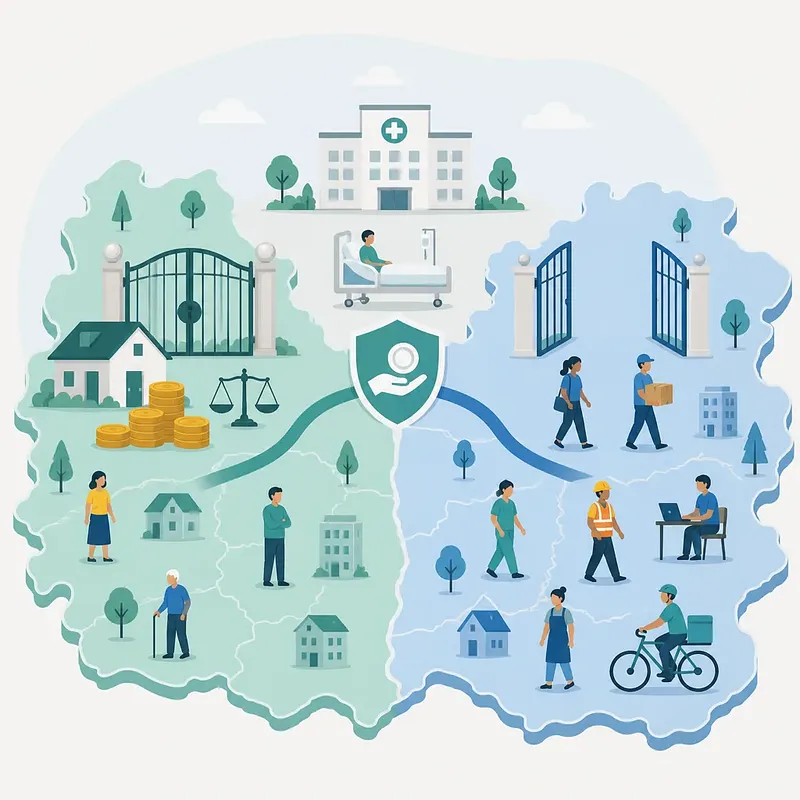
The Four Major Social Insurance Programs are a core social security system in Korea, in which society as a whole shares the risks—such as illness, old age, unemployment, and work-related injuries—that individuals would find difficult to bear on their own through an insurance system. To put it simply, individuals and businesses that fall under the statutory enrollment criteria are, in principle, required to enroll. However, not everyone enrolls in the four insurance programs in the same way; the eligibility criteria vary depending on status and employment type, such as workplace enrollees, regional enrollees, dependents, business-based enrollees, self-employed individuals, labor providers, and public officials.
One-Line Conclusion: For most eligible individuals, it is not a “choice” but an “obligation”
The four major social insurance programs are not products that individuals can choose based on their needs, like private insurance. Eligibility for National Health Insurance, National Pension, Employment Insurance, and Workers’ Compensation Insurance is determined by law, and if you fall under the eligible category, you are obligated to pay premiums and file reports.
However, this does not mean that “you must enroll in all four without exception.” For example, civil servants, military personnel, and private school faculty may be covered by a separate occupational pension system instead of the National Pension, and Employment Insurance may also have exemptions or separate criteria that differ from those for general workers. Students and full-time homemakers with no income, very part-time workers, self-employed individuals, foreign nationals, and labor providers must also review the specific criteria.
The Role of Social Insurance in the Social Security System
South Korea’s Framework Act on Social Security defines social security as comprising social insurance, public assistance, and social services. Social insurance is a system that safeguards citizens’ health and income by addressing social risks they may face through an insurance-based approach.
| Category | Primary Target | Funding Structure | Representative Examples | Key Functions |
|---|---|---|---|---|
| Social Insurance | All individuals subject to statutory enrollment and coverage | Primarily funded by premiums from subscribers and employers, with partial government support | National Health Insurance, National Pension, Employment Insurance, Workers’ Compensation Insurance | Shared burden of risks related to illness, old age, unemployment, and accidents |
| Public Assistance | Low-income individuals struggling to make ends meet | Tax-funded | National Basic Livelihood Security, Medical Aid | Guarantee of a minimum standard of living and support for self-reliance |
| Social Services | Citizens in need of assistance with care, rehabilitation, health, employment, housing, etc. | A mix of taxes, user fees, and public funds | Care services for the elderly, people with disabilities, and children | Improving quality of life and supporting social participation |
Korea’s Four Major Social Insurance Programs at a Glance
| System | Primary Risks Covered | Main Eligibility Criteria | Premium Structure | Key Functions |
|---|---|---|---|---|
| National Health Insurance | Illness, injury, and medical expenses | Generally covers residents of South Korea, with exceptions for Medical Aid recipients, etc. | Employers and employees share the cost for workplace enrollees; regional enrollees are assessed based on income and assets | Alleviates the burden of medical expenses, provides health screenings, and ensures access to medical services |
| National Pension | Loss of income due to old age, disability, or death | Generally covers citizens residing in Korea who are 18 years of age or older but under 60, with exceptions for those enrolled in other public pension plans | Workplace subscribers split the cost equally between the employee and the employer; regional subscribers bear the full cost | Old-age pensions, disability pensions, survivor pensions |
| Employment Insurance | Unemployment, re-employment, vocational training, and job retention | In principle, mandatory coverage applies to businesses with one or more employees, with exceptions for certain businesses and workers | Unemployment insurance premiums are shared between employers and employees, while premiums for employment stability and vocational training are borne by the employer | Job-seeking allowances, employment promotion, vocational training, and maternity and childcare-related benefits |
| Workers’ Compensation Insurance | Work-related accidents, illnesses, disabilities, and death | Applies, in principle, to all businesses or workplaces that employ workers | Employers generally bear the full cost, with rates varying based on industry-specific risk levels | Medical treatment benefits, temporary disability benefits, disability benefits, survivor benefits, and rehabilitation support |
National Health Insurance: A System for Sharing Medical Cost Risks
National Health Insurance is a social insurance program designed to ensure that individuals or households do not have to bear the burden of medical expenses arising from illness or injury alone. While coverage under private insurance varies depending on premium levels and contract terms, the National Health Insurance provides benefits based on statutory standards, prioritizing medical necessity regardless of the premium burden.
There are three key features of the National Health Insurance system.
- Mandatory Enrollment: All residents of South Korea are enrolled as health insurance subscribers or dependents, unless they fall under statutory exceptions.
- Premiums Based on Ability to Pay: Premiums for workplace subscribers are calculated based on salary, while those for regional subscribers are calculated based on factors such as income and assets.
- Benefits Based on Medical Need: The system does not provide broader statutory benefits to those who pay higher premiums; rather, it guarantees necessary medical services in accordance with laws, regulations, and benefit criteria.
The health insurance premium rate for 2026 has been set at 7.19%. The Long-Term Care Insurance premium, levied alongside the Health Insurance premium, is set at 0.9448% of income and 13.14% of the Health Insurance premium for 2026. Since premium rates are subject to annual change, you must check the official notice for the relevant year and the National Health Insurance Service’s calculation results to determine the actual amount deducted from your pay or the regional insurance premium.
National Pension: A Public Pension System to Prepare for Income Gaps After Retirement
The National Pension is a system where individuals pay premiums while they are earning an income, and pension benefits are provided to guarantee a basic income when income decreases due to old age, disability, or death. In principle, Korean citizens residing in the country who are at least 18 years of age but under 60 are eligible to enroll. However, those covered by other public pension systems—such as civil servants, military personnel, private school faculty and staff, and employees of special post offices—are generally excluded from the National Pension.
National Pension subscribers are broadly categorized as follows:
| Enrollment Type | Description | Mandatory |
|---|---|---|
| Workplace Members | Employees and employers at workplaces | Mandatory in principle |
| Regional Members | Self-employed individuals, farmers, fishermen, and other income-earners who are not workplace members | Mandatory in principle |
| Voluntary Members | Individuals who are not subject to mandatory enrollment but choose to enroll | Optional |
| Voluntary Continued Enrollees | Individuals who continue enrollment after age 60 to extend their enrollment period | Optional |
The National Pension premium rate for 2026 is 9.5% of monthly income. For workplace enrollees, employees and employers each bear half of the cost, while regional enrollees bear the full cost themselves. Furthermore, the National Pension is not simply a savings plan where individuals receive back exactly what they paid in. The benefit calculation formula incorporates the average income of all subscribers, providing a relatively greater income replacement effect for low-income subscribers. It also includes an intergenerational sharing structure, where funds contributed by the current working-age generation are used to pay benefits to the current beneficiary generation.
Employment Insurance: More Than Just Unemployment Benefits—It’s a “Safety Net for Re-employment”
Employment insurance is a system designed to alleviate livelihood insecurity when workers lose their jobs and to assist with re-employment and vocational skills development. In principle, any business with one or more employees is automatically subject to employment insurance. However, certain small-scale unincorporated businesses in agriculture, forestry, and fisheries; household employment; and small-scale construction projects may be exempt, and workers with very short working hours—those with a low monthly scheduled working time—may also be exempt under certain criteria.
Unemployment benefits, the primary benefit under Employment Insurance, are not automatically paid simply because premiums have been paid. They are paid only when an insured event—unemployment—occurs, eligibility requirements are met, and active job-search efforts are recognized. For workers who left their jobs on or after October 1, 2019, unemployment benefits are calculated based on 60% of their average wage prior to termination, and the number of benefit days ranges from a minimum of 120 to a maximum of 270, depending on age and the duration of Employment Insurance enrollment.
Employment Insurance serves the following functions:
- Income protection for the unemployed during their job search
- Promotion of re-employment and support for vocational training
- Support for businesses to maintain employment and ensure job stability
- Benefits to support work-life balance, such as maternity leave and parental leave