Skip to content
Case Study

Frederick Douglass's 1845 Autobiography: Background

Frederick Douglass's 1845 autobiography was a response to audiences who doubted that he had been enslaved. Linking the risk of recapture from revealing real names with his later lectures and newspaper work, this account explains the significance of the abolitionist movement.

Listen or read this article

19:05

Listen, or read the text only.

Frederick Douglass's 1845 Autobiography: Background

Kokoro 82M AI-generated voice 20 min read

0:00 19:05

Advertisement

Download audio

File name
frederick-douglass-1845-autobiography-and-abolition-en.mp3
Format
MP3 (audio/mpeg)
Duration
19:05
File size
13.1 MB
Engine
Kokoro 82M

This audio was generated by AI.

You may download and use it freely for personal use.

Advertisement

Frederick Douglass's 1845 Autobiography: Background

12 min read

Frederick Douglass's 1845 Autobiography: Background
Frederick Douglass's 1845 autobiography was a response to audiences who doubted that he had been enslaved. Linking the risk of recapture from revealing real names with his later lectures and newspaper work, this account explains the significance of the abolitionist movement.
Frederick Douglass escaped in 1838 but remained at risk of recapture.
His 1845 autobiography named real people and places, making his testimony about life in slavery more concrete.
Douglass did not reveal his escape methods in the autobiography to protect others who escaped.
The North Star, which he published after returning home in 1847, was an abolitionist newspaper run directly by someone who had been enslaved.
The autobiography's first edition was published in 1845, while the digital version linked by the Library of Congress is the 1849 edition.
Frederick Douglass escaped from slavery in 1838. At risk of recapture, he published his 1845 autobiography. The book turned his experiences into testimony for the abolitionist movement.
This article draws on records from the U.S. National Park Service and the Library of Congress, checked in November 2026.
Why He Published His Autobiography in 1845
The autobiography aimed to substantiate his life story and expose the injustice of slavery. Douglass was already an abolitionist speaker before its publication. Some audience members doubted that he had actually been enslaved. The specific experiences in his autobiography answered those doubts.
He named the people who had held power over him and the places where he had lived. Readers could connect his testimony to specific people and locations. Yet the same information also gave clues to those seeking to capture him. Publication made his testimony more persuasive while increasing the risks of revealing his identity. U.S. National Park Service biography
Item | Details Title | Narrative of the Life of Frederick Douglass, an American Slave First publication | 1845 First edition's place of publication and publisher | Boston, Anti-Slavery Office Type of account | An autobiography describing life in slavery and after his escape Purpose | To substantiate his life story and argue for the abolition of slavery
Arizona State University's commentary on the work also confirms the first edition's bibliographic details and the purpose of writing it. The commentary distinguishes between substantiating his personal history and criticizing the institution. Explaining the book's publication solely as a way to gain fame therefore leaves out its political purpose. Commentary on the work and its first edition
His Life in Slavery and the Meaning of Education
The oppression Douglass experienced went beyond forced labor and physical violence. Separation from his family also shaped his childhood. He was denied the opportunity to attend school as well. Slavery controlled both his living conditions and his opportunities to gain knowledge.
He developed his reading and writing skills in Baltimore. The National Park Service timeline describes how he learned his letters from Sophia Auld. Later, he taught himself writing and arithmetic. Reading speeches and writings about rights gave him the language to criticize slavery. National Park Service timeline
Education did not immediately grant him legal freedom. It expanded his ability to understand his circumstances and explain them to others. He used this ability to turn his experiences under slavery into public arguments.
The autobiography conveyed these experiences in the form of a slave narrative. A slave narrative is an account written by someone who experienced slavery. Douglass's work shows the connection between this genre and the abolitionist movement. Literary scholarship also recognizes it as a major work of African American literature. Cambridge University Press literary history commentary
Timeline from Escape to Newspaper Publication
His escape in 1838 and his acquisition of legal freedom in 1846 were separate events. Public speaking and the publication of his autobiography came between them. With the launch of his newspaper in 1847, he continued publishing testimony regularly.
Year or date | Event | Source September 3, 1838 | Escaped from slavery and traveled north | National Park Service timeline 1841 | Worked as a speaker for the Massachusetts Anti-Slavery Society | Library of Congress life timeline 1845 | Published the first edition of his autobiography | Library of Congress, In His Own Words 1845 | Began giving abolitionist lectures in Britain and Ireland | Library of Congress life timeline December 12, 1846 | Gained legal freedom when his manumission papers were registered with the court | National Park Service timeline 1847 | Returned to the United States and settled in Rochester | Library of Congress life timeline December 3, 1847 | Launched The North Star | Library of Congress newspaper collection December 6, 1865 | The Thirteenth Amendment to the U.S. Constitution was ratified | U.S. National Archives and Records Administration
This timeline distinguishes his movements from changes in his legal status. The expansion of his publishing activities is another separate development. The sequence of events was checked against records from the National Park Service and the Library of Congress. National Park Service timeline, Library of Congress life timeline
Why He Revealed Real Names but Concealed His Escape Method
Douglass distinguished between information that would substantiate his past and information that would endanger others escaping slavery. He included real names and places in his autobiography. But he did not reveal how he escaped. He explained the reason directly in Chapter 11.
I want to keep ruthless slaveholders entirely unaware of the methods enslaved people use to escape. Frederick Douglass, Narrative of the Life of Frederick Douglass, an American Slave, 1845 edition, Chapter 11.
Information | Disclosed? | Purpose evident in the account Names and places from his life in slavery | Yes | To substantiate his life story and experiences with specific details Specific method of escape | No | To avoid giving slaveholders information they could use to track escapees
This distinction helps explain his selection of information for the autobiography. Bearing witness to his experiences did not mean revealing every detail. The National Humanities Center's commentary also explains his protection of escape secrets. Douglass criticized other authors for revealing escape methods as well. Commentary on slave narrative scholarship
Treating later accounts of his escape as content from the 1845 book blurs the context of that edition. The Library of Congress also holds a draft about his escape from a later autobiography. That draft describes his use of a free Black sailor's papers. Information initially concealed must be distinguished from information disclosed later. Library of Congress description of a later autobiographical draft
How His Journey to Britain and The North Star Changed His Work
His time abroad gave him an opportunity to continue abolitionist work while avoiding recapture. Douglass lectured in Britain and Ireland. His autobiography also circulated there. His testimony thus reached audiences outside the United States.
Supporters in Britain raised funds to secure his legal freedom. His manumission papers were registered with the court on December 12, 1846. He returned to the United States in 1847. After returning, he made Rochester his base. National Park Service timeline
The North Star was launched on December 3, 1847. The Library of Congress explains the principle of self-directed publishing expressed in its inaugural statement. The idea was for oppressed people to control and publish their own newspaper. The paper focused on the abolition of slavery and Black equality. Library of Congress newspaper collection commentary
Medium | Activities documented in the records | Differences in how testimony was conveyed Public speaking | Abolitionist meetings and lecture tours | Testifying directly to audiences in person Autobiography | Writing and publishing an account of life in slavery | Conveying experiences in a record that could be read repeatedly Newspaper | Editing and publishing The North Star | Addressing issues continuously from the perspective of those affected
This table interprets the documented activities by grouping them by medium. It is not a quantitative comparison of each medium's effect on public opinion. The U.S. National Archives and Records Administration also connects his speeches, autobiography, and newspapers in its account of his work. Frederick Douglass Papers commentary
How Personal Freedom Differs from the Abolition of Slavery
Douglass's escape did not mean the abolition of slavery in the United States. His manumission in 1846 also concerned a change in his own legal status. The institution that held others in slavery continued to exist. This is why he continued his abolitionist work after gaining personal freedom.
The Thirteenth Amendment to the U.S. Constitution was ratified on December 6, 1865. It prohibited slavery and involuntary servitude in the United States. However, it made an exception for punishment for a crime of which a person had been duly convicted. An accurate reading must therefore include the exception in its text. U.S. National Archives and Records Administration commentary and text of the Thirteenth Amendment
Even after the institution was abolished, equal civil rights remained a separate task. Douglass demanded rights and protection for formerly enslaved people. Reading his life solely as a successful escape story leaves out this continuing task. National Park Service biography
Records and Interpretation
The autobiography's account must be distinguished from later scholars' assessments. Bibliographic information can confirm the year of publication. The work's influence is assessed through scholarship and historical commentary. This does not establish exactly how much one book contributed to institutional change.
What the Records Confirm
The first edition was published in 1845. The Library of Congress's In His Own Words identifies the linked digital text as the 1849 edition. If that digital text was consulted, the edition cited is therefore the 1849 edition. The work's original publication year must be stated separately. Library of Congress edition information
Category | Information to record Publication background of the work | First edition published in 1845 Edition linked by the Library of Congress | 1849 edition Location of a passage | Chapter and page number in the edition actually consulted Information from later autobiographies | Cite the source separately from the 1845 autobiography
Assessments Widely Accepted in Scholarship
The book is recognized as a literary work that influenced the abolitionist movement. The U.S. National Endowment for the Arts explains its role in the movement's history. The Cambridge University Press literary history also treats it as a major work of Black literature. These assessments do not, however, mean that the book brought about abolition on its own. U.S. National Endowment for the Arts introduction to the work, Cambridge University Press literary history commentary
Debates and Limits of Interpretation
Douglass's interpretation of the Constitution changed during his lifetime. Initially, like William Lloyd Garrison, he viewed it as a document favorable to slavery. He later moved toward an antislavery interpretation of the Constitution. His perspective in 1845 cannot explain all of his later political work. Arizona State University commentary
Scholarship also addresses the problem of generalizing his experiences to all life under slavery. The National Humanities Center explains differences between his work and women's slave narratives. Douglass's account alone cannot represent the experiences of people of every gender and circumstance. Nor can the sources consulted for this article quantify the scale of changes in public opinion. Commentary on comparative slave narrative scholarship
Why Read It in History and Literature Classes Today?
This autobiography shows how personal experience can serve as evidence about a social institution. In history classes, readers can distinguish events from changes in legal status. In literature classes, they can analyze the selection of information that shapes testimony. It also leaves readers with specific questions to ask when examining historical records.
· Which experiences did the person describe firsthand? · What role did revealing names and places play in the testimony? · Why was the escape method concealed? · Which year's edition is the book being read now? · When did personal freedom and the abolition of the institution each occur?
Frequently Asked Questions
Could He Still Have Been Recaptured When He Wrote the Autobiography?
He was still at risk of recapture when the book was published in 1845. His escape in 1838 did not amount to legal emancipation. Publishing the book increased that risk by revealing real names and places.
Did Learning to Read and Write Mean He Had Gained Freedom?
The ability to read and write did not itself grant legal freedom. Literacy was a means of understanding and criticizing slavery. He later used it to communicate his experiences through speeches and writing.
Why Did He Not Describe His Escape in Detail?
He wanted to prevent escape methods from being used to track people. Chapter 11 of the autobiography explains his reasons for withholding this information. This choice took other escapees into account.
Are the 1845 and 1849 Editions Different Autobiographies?
The 1849 edition is a later edition of the autobiography first published in 1845. The digital text linked by the Library of Congress's In His Own Words is the 1849 edition. Citations should distinguish the year of first publication from the edition consulted.
Did One Autobiography Abolish Slavery in the United States?
That conclusion cannot be drawn. The autobiography is recognized as a work that contributed testimony and persuasive force to the abolitionist movement. The constitutional turning point for nationwide abolition was the ratification of the Thirteenth Amendment in 1865.
How Is The North Star Connected to the Autobiography?
It was a form of self-directed publishing that followed the autobiography. Douglass founded the newspaper after returning to the United States in 1847. The paper continuously addressed the abolition of slavery and equality.
0:00 0:00
1 / 65

Advertisement

Download text

File name
frederick-douglass-1845-autobiography-and-abolition-en.txt
Format
TXT (text/plain)
Paragraphs
65

Downloads exactly what you see as a text file.

Please cite the source when quoting.

Advertisement

Large text

Makes the text larger and the colors clearer. Turn it on if the text feels too small.

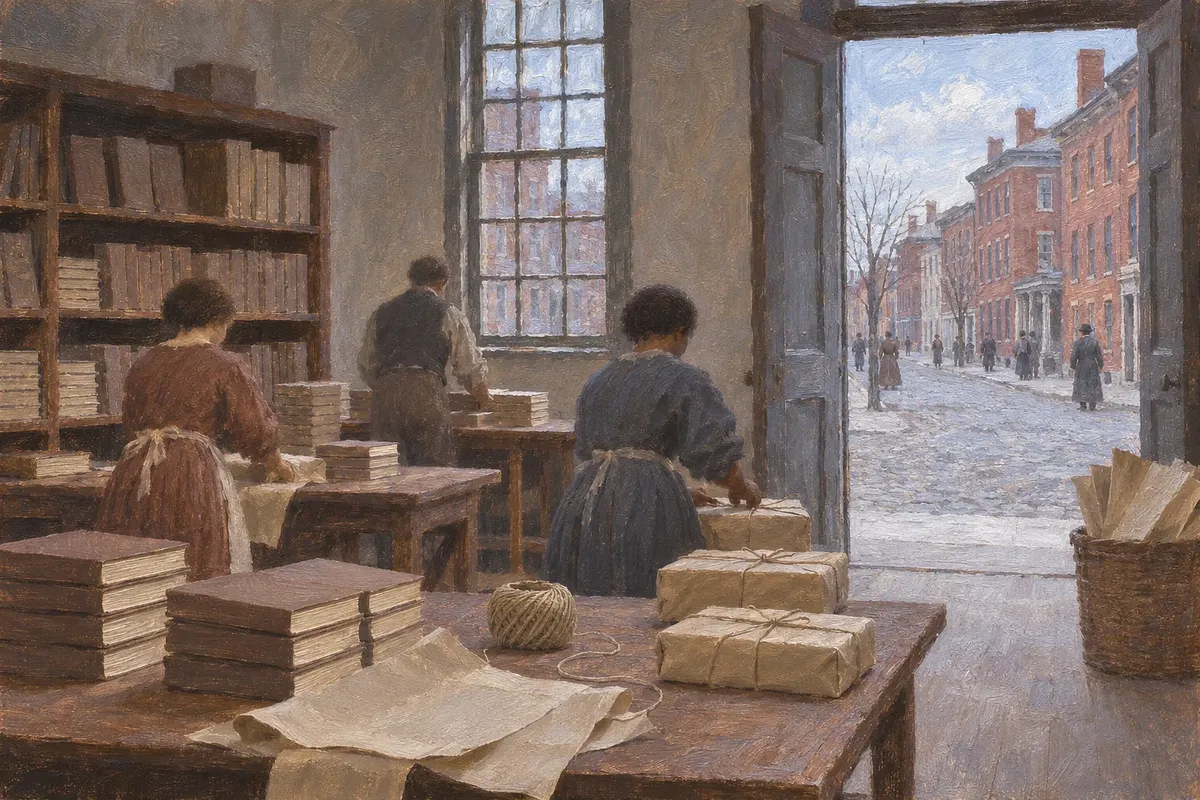
Douglass’s 1845 autobiography answered doubts about his life in slavery through firsthand testimony.AI-generated image

Key points

  • Frederick Douglass escaped in 1838 but remained at risk of recapture.
  • His 1845 autobiography named real people and places, making his testimony about life in slavery more concrete.
  • Douglass did not reveal his escape methods in the autobiography to protect others who escaped.
  • The North Star, which he published after returning home in 1847, was an abolitionist newspaper run directly by someone who had been enslaved.
  • The autobiography's first edition was published in 1845, while the digital version linked by the Library of Congress is the 1849 edition.

Frederick Douglass escaped from slavery in 1838. At risk of recapture, he published his 1845 autobiography. The book turned his experiences into testimony for the abolitionist movement.

This article draws on records from the U.S. National Park Service and the Library of Congress, checked in November 2026.

Why He Published His Autobiography in 1845

The autobiography aimed to substantiate his life story and expose the injustice of slavery. Douglass was already an abolitionist speaker before its publication. Some audience members doubted that he had actually been enslaved. The specific experiences in his autobiography answered those doubts.

He named the people who had held power over him and the places where he had lived. Readers could connect his testimony to specific people and locations. Yet the same information also gave clues to those seeking to capture him. Publication made his testimony more persuasive while increasing the risks of revealing his identity. U.S. National Park Service biography

Item Details
Title Narrative of the Life of Frederick Douglass, an American Slave
First publication 1845
First edition's place of publication and publisher Boston, Anti-Slavery Office
Type of account An autobiography describing life in slavery and after his escape
Purpose To substantiate his life story and argue for the abolition of slavery

Arizona State University's commentary on the work also confirms the first edition's bibliographic details and the purpose of writing it. The commentary distinguishes between substantiating his personal history and criticizing the institution. Explaining the book's publication solely as a way to gain fame therefore leaves out its political purpose. Commentary on the work and its first edition

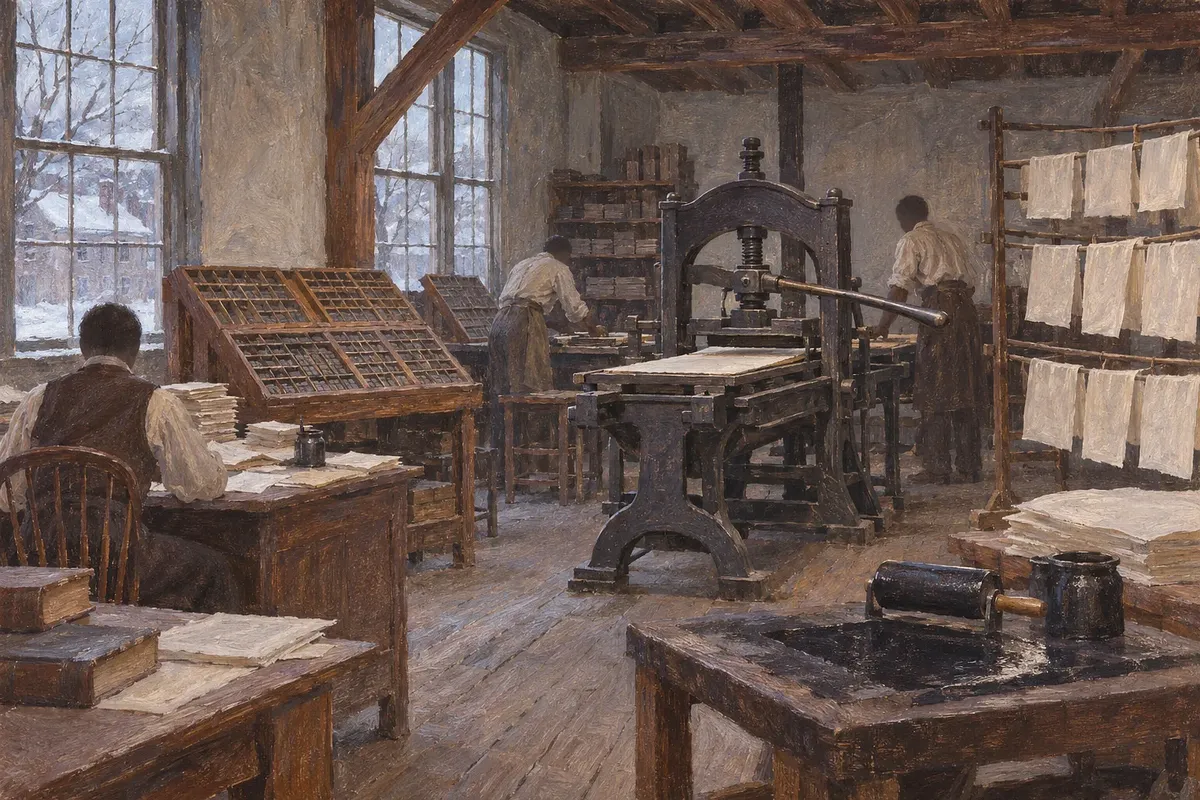
In 1847, Douglass continued his abolitionist work by publishing The North Star himself.AI-generated image

His Life in Slavery and the Meaning of Education

The oppression Douglass experienced went beyond forced labor and physical violence. Separation from his family also shaped his childhood. He was denied the opportunity to attend school as well. Slavery controlled both his living conditions and his opportunities to gain knowledge.

He developed his reading and writing skills in Baltimore. The National Park Service timeline describes how he learned his letters from Sophia Auld. Later, he taught himself writing and arithmetic. Reading speeches and writings about rights gave him the language to criticize slavery. National Park Service timeline

Education did not immediately grant him legal freedom. It expanded his ability to understand his circumstances and explain them to others. He used this ability to turn his experiences under slavery into public arguments.

The autobiography conveyed these experiences in the form of a slave narrative. A slave narrative is an account written by someone who experienced slavery. Douglass's work shows the connection between this genre and the abolitionist movement. Literary scholarship also recognizes it as a major work of African American literature. Cambridge University Press literary history commentary

Timeline from Escape to Newspaper Publication

His escape in 1838 and his acquisition of legal freedom in 1846 were separate events. Public speaking and the publication of his autobiography came between them. With the launch of his newspaper in 1847, he continued publishing testimony regularly.

Year or date Event Source
September 3, 1838 Escaped from slavery and traveled north National Park Service timeline
1841 Worked as a speaker for the Massachusetts Anti-Slavery Society Library of Congress life timeline
1845 Published the first edition of his autobiography Library of Congress, In His Own Words
1845 Began giving abolitionist lectures in Britain and Ireland Library of Congress life timeline
December 12, 1846 Gained legal freedom when his manumission papers were registered with the court National Park Service timeline
1847 Returned to the United States and settled in Rochester Library of Congress life timeline
December 3, 1847 Launched The North Star Library of Congress newspaper collection
December 6, 1865 The Thirteenth Amendment to the U.S. Constitution was ratified U.S. National Archives and Records Administration

This timeline distinguishes his movements from changes in his legal status. The expansion of his publishing activities is another separate development. The sequence of events was checked against records from the National Park Service and the Library of Congress. National Park Service timeline, Library of Congress life timeline

Why He Revealed Real Names but Concealed His Escape Method

Douglass distinguished between information that would substantiate his past and information that would endanger others escaping slavery. He included real names and places in his autobiography. But he did not reveal how he escaped. He explained the reason directly in Chapter 11.

I want to keep ruthless slaveholders entirely unaware of the methods enslaved people use to escape.

Frederick Douglass, Narrative of the Life of Frederick Douglass, an American Slave, 1845 edition, Chapter 11.

Information Disclosed? Purpose evident in the account
Names and places from his life in slavery Yes To substantiate his life story and experiences with specific details
Specific method of escape No To avoid giving slaveholders information they could use to track escapees

This distinction helps explain his selection of information for the autobiography. Bearing witness to his experiences did not mean revealing every detail. The National Humanities Center's commentary also explains his protection of escape secrets. Douglass criticized other authors for revealing escape methods as well. Commentary on slave narrative scholarship

Treating later accounts of his escape as content from the 1845 book blurs the context of that edition. The Library of Congress also holds a draft about his escape from a later autobiography. That draft describes his use of a free Black sailor's papers. Information initially concealed must be distinguished from information disclosed later. Library of Congress description of a later autobiographical draft

How His Journey to Britain and The North Star Changed His Work

His time abroad gave him an opportunity to continue abolitionist work while avoiding recapture. Douglass lectured in Britain and Ireland. His autobiography also circulated there. His testimony thus reached audiences outside the United States.

Supporters in Britain raised funds to secure his legal freedom. His manumission papers were registered with the court on December 12, 1846. He returned to the United States in 1847. After returning, he made Rochester his base. National Park Service timeline

The North Star was launched on December 3, 1847. The Library of Congress explains the principle of self-directed publishing expressed in its inaugural statement. The idea was for oppressed people to control and publish their own newspaper. The paper focused on the abolition of slavery and Black equality. Library of Congress newspaper collection commentary

Medium Activities documented in the records Differences in how testimony was conveyed
Public speaking Abolitionist meetings and lecture tours Testifying directly to audiences in person
Autobiography Writing and publishing an account of life in slavery Conveying experiences in a record that could be read repeatedly
Newspaper Editing and publishing The North Star Addressing issues continuously from the perspective of those affected

This table interprets the documented activities by grouping them by medium. It is not a quantitative comparison of each medium's effect on public opinion. The U.S. National Archives and Records Administration also connects his speeches, autobiography, and newspapers in its account of his work. Frederick Douglass Papers commentary

How Personal Freedom Differs from the Abolition of Slavery

Douglass's escape did not mean the abolition of slavery in the United States. His manumission in 1846 also concerned a change in his own legal status. The institution that held others in slavery continued to exist. This is why he continued his abolitionist work after gaining personal freedom.

The Thirteenth Amendment to the U.S. Constitution was ratified on December 6, 1865. It prohibited slavery and involuntary servitude in the United States. However, it made an exception for punishment for a crime of which a person had been duly convicted. An accurate reading must therefore include the exception in its text. U.S. National Archives and Records Administration commentary and text of the Thirteenth Amendment

Even after the institution was abolished, equal civil rights remained a separate task. Douglass demanded rights and protection for formerly enslaved people. Reading his life solely as a successful escape story leaves out this continuing task. National Park Service biography

Records and Interpretation

The autobiography's account must be distinguished from later scholars' assessments. Bibliographic information can confirm the year of publication. The work's influence is assessed through scholarship and historical commentary. This does not establish exactly how much one book contributed to institutional change.

What the Records Confirm

The first edition was published in 1845. The Library of Congress's In His Own Words identifies the linked digital text as the 1849 edition. If that digital text was consulted, the edition cited is therefore the 1849 edition. The work's original publication year must be stated separately. Library of Congress edition information

Category Information to record
Publication background of the work First edition published in 1845
Edition linked by the Library of Congress 1849 edition
Location of a passage Chapter and page number in the edition actually consulted
Information from later autobiographies Cite the source separately from the 1845 autobiography

Assessments Widely Accepted in Scholarship

The book is recognized as a literary work that influenced the abolitionist movement. The U.S. National Endowment for the Arts explains its role in the movement's history. The Cambridge University Press literary history also treats it as a major work of Black literature. These assessments do not, however, mean that the book brought about abolition on its own. U.S. National Endowment for the Arts introduction to the work, Cambridge University Press literary history commentary

Debates and Limits of Interpretation

Douglass's interpretation of the Constitution changed during his lifetime. Initially, like William Lloyd Garrison, he viewed it as a document favorable to slavery. He later moved toward an antislavery interpretation of the Constitution. His perspective in 1845 cannot explain all of his later political work. Arizona State University commentary

Scholarship also addresses the problem of generalizing his experiences to all life under slavery. The National Humanities Center explains differences between his work and women's slave narratives. Douglass's account alone cannot represent the experiences of people of every gender and circumstance. Nor can the sources consulted for this article quantify the scale of changes in public opinion. Commentary on comparative slave narrative scholarship

Why Read It in History and Literature Classes Today?

This autobiography shows how personal experience can serve as evidence about a social institution. In history classes, readers can distinguish events from changes in legal status. In literature classes, they can analyze the selection of information that shapes testimony. It also leaves readers with specific questions to ask when examining historical records.

  • Which experiences did the person describe firsthand?
  • What role did revealing names and places play in the testimony?
  • Why was the escape method concealed?
  • Which year's edition is the book being read now?
  • When did personal freedom and the abolition of the institution each occur?

Questions checked against the record

Could He Still Have Been Recaptured When He Wrote the Autobiography?

He was still at risk of recapture when the book was published in 1845. His escape in 1838 did not amount to legal emancipation. Publishing the book increased that risk by revealing real names and places.

Did Learning to Read and Write Mean He Had Gained Freedom?

The ability to read and write did not itself grant legal freedom. Literacy was a means of understanding and criticizing slavery. He later used it to communicate his experiences through speeches and writing.

Why Did He Not Describe His Escape in Detail?

He wanted to prevent escape methods from being used to track people. Chapter 11 of the autobiography explains his reasons for withholding this information. This choice took other escapees into account.

Are the 1845 and 1849 Editions Different Autobiographies?

The 1849 edition is a later edition of the autobiography first published in 1845. The digital text linked by the Library of Congress's In His Own Words is the 1849 edition. Citations should distinguish the year of first publication from the edition consulted.

Did One Autobiography Abolish Slavery in the United States?

That conclusion cannot be drawn. The autobiography is recognized as a work that contributed testimony and persuasive force to the abolitionist movement. The constitutional turning point for nationwide abolition was the ratification of the Thirteenth Amendment in 1865.

How Is The North Star Connected to the Autobiography?

It was a form of self-directed publishing that followed the autobiography. Douglass founded the newspaper after returning to the United States in 1847. The paper continuously addressed the abolition of slavery and equality.

Open the link

Opens in a new window.

Advertisement

Sign-in required

Sign in with your Google or Apple account to like, comment, and save highlights.

FAQ

Why did Frederick Douglass publish his autobiography in 1845?

He wanted to respond with a detailed account to audiences who doubted that he had been enslaved. He also aimed to expose the injustice of slavery and support the abolitionist movement.

Why did he disclose real names and places in his autobiography?

He wanted to connect his experiences to specific people and places. That same information also revealed his identity and increased the risk of recapture.

Was he legally free after his escape in 1838?

Escape alone did not give him legal freedom. His emancipation was arranged with help from British supporters. The National Park Service timeline records December 12, 1846, as the date his emancipation documents were registered.

What did the ability to read and write mean to Douglass?

It was a way to understand his circumstances and acquire the language to criticize slavery. His literacy later led to public speaking and writing his autobiography.

Does the autobiography explain in detail how he escaped?

He did not disclose his method of escape in the 1845 autobiography. Chapter 11 states his intention to prevent that information from reaching slaveholders.

Why did he go to Britain after publishing his autobiography?

He wanted to avoid the risk of recapture while continuing his abolitionist work. Abroad, he pursued this work through lectures and the distribution of his autobiography.

When was The North Star founded?

The Library of Congress records its founding date as December 3, 1847. It was an abolitionist newspaper founded and edited by Douglass.

Is the Library of Congress digital edition of the autobiography the 1845 first edition?

The digital edition linked from In His Own Words is the 1849 edition. It should be distinguished from 1845, the year the work was first published.

How does Douglass's attainment of freedom differ from the abolition of slavery in the United States?

His attainment of legal freedom was a change in his individual status. The institutional turning point in the United States was the ratification of the 13th Amendment in 1865. Its text includes an exception for punishment following a lawful conviction.

Did Douglass consistently view the Constitution as an antislavery document?

His position changed. Initially, he viewed the Constitution as a document favorable to slavery. He later shifted toward an antislavery interpretation.

Why is this autobiography valued in literary history?

It combines a firsthand account of enslavement with the arguments of the abolitionist movement. Literary scholarship treats it as a major work of Black American literature and the slave narrative genre.

Can this autobiography alone explain all experiences of slavery?

Douglass's personal experiences cannot be generalized to everyone. Scholarship also examines differences between his account and enslaved women's narratives. It must be read alongside other firsthand accounts to gain a broader view of these experiences.

Sources

Data formats

This content is available in several machine-friendly formats.

Data-only languages (machine translated, files only)

Indonesian JSON MD Portuguese JSON MD Chinese (Traditional) JSON MD Deutsch JSON MD

Verification

This article was drafted with AI and then reviewed and edited by a person.

Reviewed by 신익희 · 편집장 · 2026-11-18

Figures in this article were checked against the source material during generation. · 2026-11-18

This translation has been cross-checked by AI. · 2026-11-18

Reuse & AI usage

Search indexing and AI citation with attribution are welcome. See the license policy for details.

CC BY · License

Loading…

Loading…

Where this content lives

Related content

From Injoys

Request the content you want and take 70% of what it earns

Just leave the subject. We handle production, review, translation and distribution.

See how revenue sharing works

Comments