Skip to content
Injoys
News

Google TPU 8tx and 8i Max announced, launch date undisclosed

Google announced that it has added TPU 8tx and TPU 8i Max to its 8th-generation TPU lineup. The official information does not confirm the actual availability date, availability in Korea, or pricing and quota terms.

Listen or read this article

6:11

Listen, or read the text only.

Google TPU 8tx and 8i Max announced, launch date undisclosed

Kokoro 82M AI-generated voice 7 min read

0:00 6:11

Advertisement

Download audio

File name
google-tpu-8tx-8i-max-announcement-en.mp3
Format
MP3 (audio/mpeg)
Duration
6:11
File size
4.25 MB
Engine
Kokoro 82M

This audio was generated by AI.

You may download and use it freely for personal use.

Advertisement

Google TPU 8tx and 8i Max announced, launch date undisclosed

4 min read

Google TPU 8tx and 8i Max announced, launch date undisclosed
Google announced that it has added TPU 8tx and TPU 8i Max to its 8th-generation TPU lineup. The official information does not confirm the actual availability date, availability in Korea, or pricing and quota terms.
Google announced TPU 8tx and TPU 8i Max on November 9, 2026.
TPU 8i Max is a system that combines two low-latency TPU 8i chips in a single package.
Google Cloud said TPU 8tx is optimized for secure and confidential inference.
Google Cloud said TPU 8i Max has twice the compute performance, SRAM and HBM bandwidth of TPU 8i.
The actual availability date, availability in Korea and the Seoul region, and pricing and contract terms remain unconfirmed.
Google announced TPU 8tx and 8i Max on November 9, 2026. The announcement was made at 13:00 UTC, or 22:00 in South Korea on the same day. The official description does not confirm who can currently use them or when access actually begins.
This article follows Google's official description and is current as of November 10, 2026.
8tx and 8i Max added to the eighth-generation TPU lineup
Google said it added two systems to its eighth-generation TPU lineup. TPU 8i Max combines two low-latency TPU 8i chips in a single package. Google Cloud described TPU 8tx as optimized for secure and confidential inference.
Product | Features stated by the company TPU 8tx | Optimized for secure and confidential inference TPU 8i Max | Combines two low-latency TPU 8i chips in a single package
Availability in South Korea and access start date not disclosed
The actual access start date and availability in South Korea or the Seoul region are unconfirmed. The official description also does not specify which customers can currently use the systems. The product announcement alone is not enough to conclude that they are immediately available in South Korea.
API identifiers for the new systems are unconfirmed. The published description also does not explain how to provision them by creating resources and having them allocated. This additional information is needed to connect them to development environments in South Korea.
Pricing and minimum contract and quota requirements not disclosed
Pricing and minimum contract and quota requirements for the two systems are unconfirmed. As a result, the published specifications alone are not enough to calculate actual adoption costs. Contract or cost reviews require official confirmation of the following conditions.
· Pricing and billing criteria for each system · Minimum contract requirements · Resource quotas and allocation conditions
8i Max's twofold figures come from the company
Google Cloud compared TPU 8i Max with TPU 8i in three areas. It stated that compute performance, SRAM, and HBM bandwidth are each twice those of TPU 8i. The figures below come from the company's description and were not presented as independent measurements.
Comparison item | TPU 8i Max relative to TPU 8i | Source of figures Compute performance | 2x | Google Cloud description SRAM | 2x | Google Cloud description HBM bandwidth | 2x | Google Cloud description
These multiples are comparisons of individual specifications. They cannot be taken to mean that overall workloads run twice as fast. Independent test results from Artificial Analysis for the two systems could not be confirmed.
Memory capacity and supported context length also unconfirmed
The exact memory capacity and supported context length are unconfirmed. The relative SRAM multiple alone does not reveal its absolute capacity. The HBM bandwidth figure does not indicate memory capacity either.
· Memory capacity: Exact capacity figures unconfirmed · Supported context length: Input length that can be processed unconfirmed · Independent performance evaluation: Independent test results for the two new systems unconfirmed
Conditions to check before adoption in South Korea
When considering adoption in South Korea, first check the available regions and actual terms of access. Memory capacity and input length needed for the work must also be checked. The specification multiples provided by the company should be assessed separately from actual workload performance.
Review item | Details to check in official information Availability | Access start date, eligible users, availability in South Korea or the Seoul region Costs and contracts | Pricing, billing criteria, minimum contract and quota requirements Development environment integration | API identifiers and provisioning methods Workload suitability | Exact memory capacity and supported context length Performance evidence | Measurement conditions for the company's figures and separate independent test results
0:00 0:00
1 / 28

Advertisement

Download text

File name
google-tpu-8tx-8i-max-announcement-en.txt
Format
TXT (text/plain)
Paragraphs
28

Downloads exactly what you see as a text file.

Please cite the source when quoting.

Advertisement

Large text

Makes the text larger and the colors clearer. Turn it on if the text feels too small.

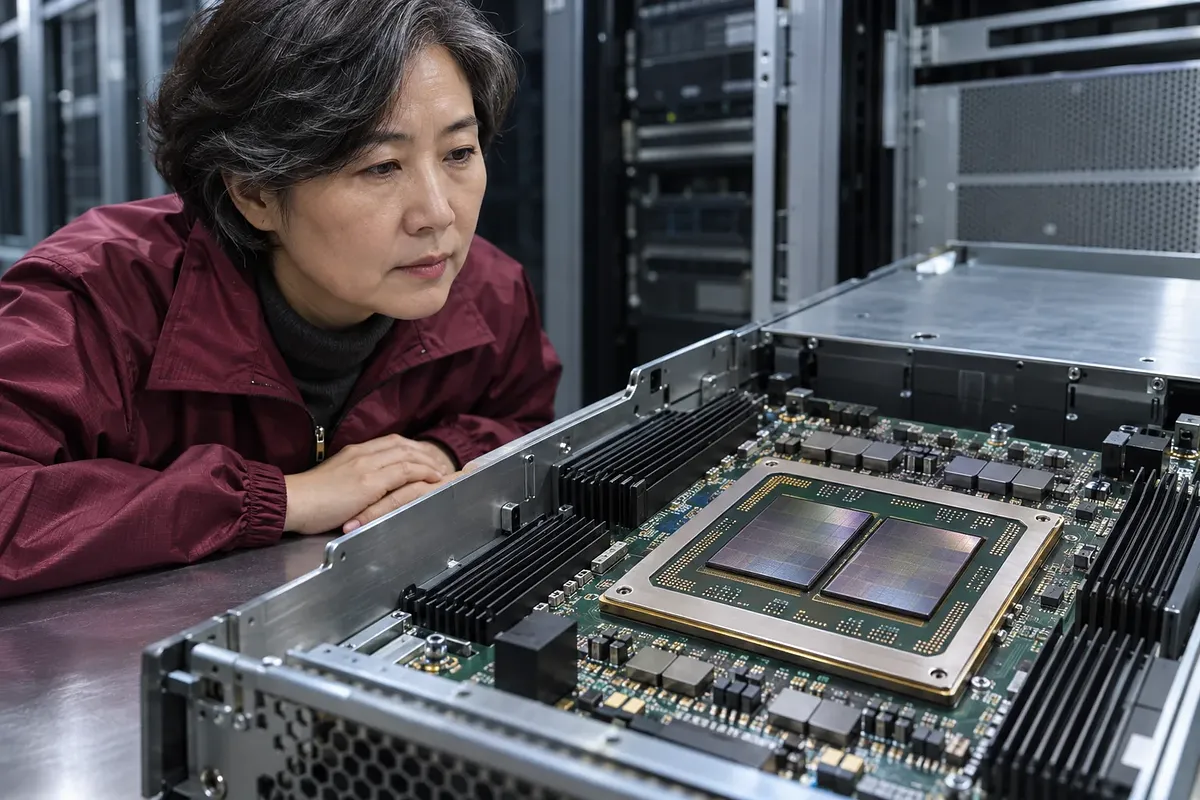
Google says TPU 8i Max doubles TPU 8i’s compute performance and HBM bandwidth.AI-generated image

Key points

  • Google announced TPU 8tx and TPU 8i Max on November 9, 2026.
  • TPU 8i Max is a system that combines two low-latency TPU 8i chips in a single package.
  • Google Cloud said TPU 8tx is optimized for secure and confidential inference.
  • Google Cloud said TPU 8i Max has twice the compute performance, SRAM and HBM bandwidth of TPU 8i.
  • The actual availability date, availability in Korea and the Seoul region, and pricing and contract terms remain unconfirmed.

Google announced TPU 8tx and 8i Max on November 9, 2026. The announcement was made at 13:00 UTC, or 22:00 in South Korea on the same day. The official description does not confirm who can currently use them or when access actually begins.

This article follows Google's official description and is current as of November 10, 2026.

8tx and 8i Max added to the eighth-generation TPU lineup

Google said it added two systems to its eighth-generation TPU lineup. TPU 8i Max combines two low-latency TPU 8i chips in a single package. Google Cloud described TPU 8tx as optimized for secure and confidential inference.

Product Features stated by the company
TPU 8tx Optimized for secure and confidential inference
TPU 8i Max Combines two low-latency TPU 8i chips in a single package
Google Cloud says TPU 8tx is optimized for secure and confidential inference.AI-generated image

Availability in South Korea and access start date not disclosed

The actual access start date and availability in South Korea or the Seoul region are unconfirmed. The official description also does not specify which customers can currently use the systems. The product announcement alone is not enough to conclude that they are immediately available in South Korea.

API identifiers for the new systems are unconfirmed. The published description also does not explain how to provision them by creating resources and having them allocated. This additional information is needed to connect them to development environments in South Korea.

Pricing and minimum contract and quota requirements not disclosed

Pricing and minimum contract and quota requirements for the two systems are unconfirmed. As a result, the published specifications alone are not enough to calculate actual adoption costs. Contract or cost reviews require official confirmation of the following conditions.

  • Pricing and billing criteria for each system
  • Minimum contract requirements
  • Resource quotas and allocation conditions

8i Max's twofold figures come from the company

Google Cloud compared TPU 8i Max with TPU 8i in three areas. It stated that compute performance, SRAM, and HBM bandwidth are each twice those of TPU 8i. The figures below come from the company's description and were not presented as independent measurements.

Comparison item TPU 8i Max relative to TPU 8i Source of figures
Compute performance 2x Google Cloud description
SRAM 2x Google Cloud description
HBM bandwidth 2x Google Cloud description

These multiples are comparisons of individual specifications. They cannot be taken to mean that overall workloads run twice as fast. Independent test results from Artificial Analysis for the two systems could not be confirmed.

Memory capacity and supported context length also unconfirmed

The exact memory capacity and supported context length are unconfirmed. The relative SRAM multiple alone does not reveal its absolute capacity. The HBM bandwidth figure does not indicate memory capacity either.

  • Memory capacity: Exact capacity figures unconfirmed
  • Supported context length: Input length that can be processed unconfirmed
  • Independent performance evaluation: Independent test results for the two new systems unconfirmed

Conditions to check before adoption in South Korea

When considering adoption in South Korea, first check the available regions and actual terms of access. Memory capacity and input length needed for the work must also be checked. The specification multiples provided by the company should be assessed separately from actual workload performance.

Review item Details to check in official information
Availability Access start date, eligible users, availability in South Korea or the Seoul region
Costs and contracts Pricing, billing criteria, minimum contract and quota requirements
Development environment integration API identifiers and provisioning methods
Workload suitability Exact memory capacity and supported context length
Performance evidence Measurement conditions for the company's figures and separate independent test results
Open the link

Opens in a new window.

Advertisement

Sign-in required

Sign in with your Google account to like, comment, and save highlights.

FAQ

Can TPU 8tx and TPU 8i Max be used right away in Korea?

The actual availability date and who can currently use them have not been confirmed. Availability in Korea and the Seoul region is also not specified in the official description.

Have pricing and minimum contract requirements for the two systems been disclosed?

Pricing and minimum contract and quota requirements for the two systems have not been confirmed. The specifications currently available are not enough to calculate the cost of adoption.

Can developers in Korea find information on which API to connect to and how to configure it?

The API identifiers and provisioning methods for the new systems have not been confirmed. To connect them to a development environment, you need to check whether that information has been officially released.

Sources

Data formats

This content is available in several machine-friendly formats.

Data-only languages (machine translated, files only)

Indonesian JSON MD Portuguese JSON MD Chinese (Traditional) JSON MD Deutsch JSON MD

Verification

This article was drafted with AI and then reviewed and edited by a person.

Reviewed by 신익희 · 편집장 · 2026-11-10

Figures in this article were checked against the source material during generation. · 2026-11-10

This translation has been cross-checked by AI. · 2026-11-10

Reuse & AI usage

Search indexing and AI citation with attribution are welcome. See the license policy for details.

CC BY · License

Loading…

Loading…

Loading…

Where this content lives

Related content

From Injoys

Request the content you want and take 70% of what it earns

Just leave the subject. We handle production, review, translation and distribution.

See how revenue sharing works

Comments