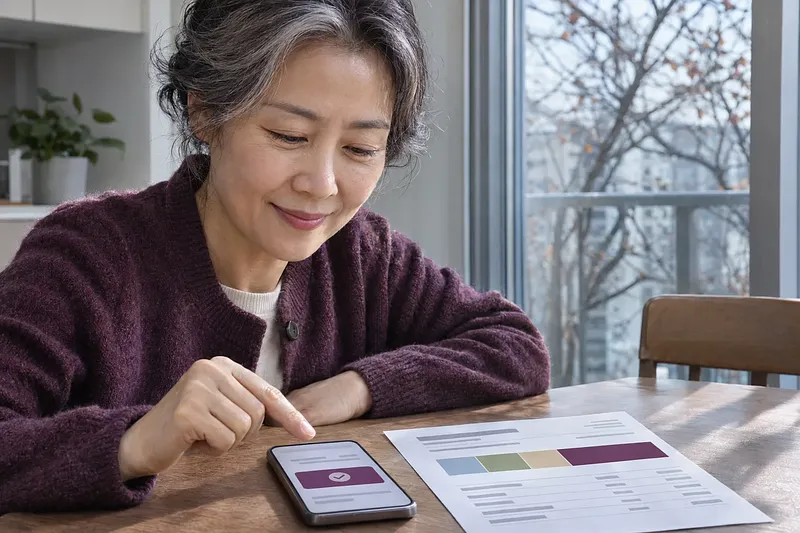
To set your investing rules, start by writing down when you’ll need to spend money from your paycheck and how much you’ll need. Decide how much to invest after setting aside money for those expenses. When choosing a financial product, check under what conditions you could lose money or have to pay more, and how much.
The Financial Services Commission compiled the KOSPI figure as of March 19, 2020.
How to decide how much of your paycheck to invest
How much you can invest depends on what you need to spend before your next income payment arrives. The size of someone else’s assets won’t tell you when your rent is due or how much you owe on your loan. Even with the same paycheck, you’ll have a different amount available to invest if you need to spend a large sum soon.
When assessing financial well-being, the U.S. Consumer Financial Protection Bureau also asks whether you can cover an unexpected expense. You can apply the same test to managing your paycheck. Write down what money you’d use if a large expense came up next month. If selling a fund is the only way to cover it, your investment horizon for that money is shorter than you thought.

Check whether you can withdraw your savings early and how much you’d receive if you do.
How to review one financial product
Open the product guide and contract for one financial product you’ve signed up for. Write down for yourself the terms that govern what you receive and what you pay.
- Write down what the money is for and when you’ll need it. Set aside money separately for living expenses and repayments due before then.
- Find the terms that govern what you receive and what you pay. If you have trouble explaining the limit on losses or any obligation to pay more, ask the financial institution to point out the relevant clauses.
- Use the money left over to decide how much to invest and how often to contribute. If you choose a set percentage of your paycheck, calculate how much will actually come out of your bank account.
- Write down what would prompt you to review the plan. If your income falls or you need the money sooner, you can recalculate your contribution.
Contract terms to check by product
Even if you got the products from the same financial institution, what you should check first depends on the product.
| Product | What to look for in the guide or contract | Question to ask about your situation |
|---|---|---|
| Installment savings account | Interest rate at maturity and interest rate for early withdrawal | How much interest will I earn if I close the account early to cover a planned expense? |
| Insurance | Events that qualify for a payout and exclusions | Under what conditions am I covered for the event I’m worried about? |
| Loan | Terms for rate changes and repayment schedule | If my variable rate goes up, how will my next payment change? |
| Fund | What the fund invests in, risk of losing principal, and date redemption proceeds are paid | When do I need to request a redemption to get my money out? |
Losses when you’re short on dollars under a KIKO contract
In the 2008 KIKO crisis, the term exporters needed to check was how many dollars they had agreed to sell to the bank. When the dollar falls, exporters receive fewer won even if their export proceeds in dollars stay the same. A KIKO contract let them sell dollars at a preset rate as long as the exchange rate stayed within a specified range.
In the Samko case, decided by the Supreme Court on September 26, 2013, the contract also required the company to sell dollars under the opposite conditions. If the exchange rate reached the upper limit set in the contract and the rate at maturity was higher than the agreed rate, the company had to sell dollars. In that case, it had to sell 2 times the amount of dollars it had the right to sell under the contract.
| Dollars on hand on the settlement date | What happens to the company |
|---|---|
| Export proceeds cover the dollars the company has to sell | The company can deliver the dollars at the agreed rate, and the rise in the won value of the dollars it holds can offset the loss on the contract. |
| Export proceeds fall short of the dollars the company has to sell | The company has to buy the shortfall at the higher market rate and deliver the dollars at the lower agreed rate. |
The Supreme Court described the money needed in the second case as follows:
“Additional expenditure to purchase foreign currency on the spot market” (Supreme Court en banc ruling in the KIKO case, Samko)
Individuals can ask the same question about their own contracts. Check whether you could lose even the money you’ve already put in if the price moves against you. If you’re also required to pay more, read the clause that determines how much.