Injoys
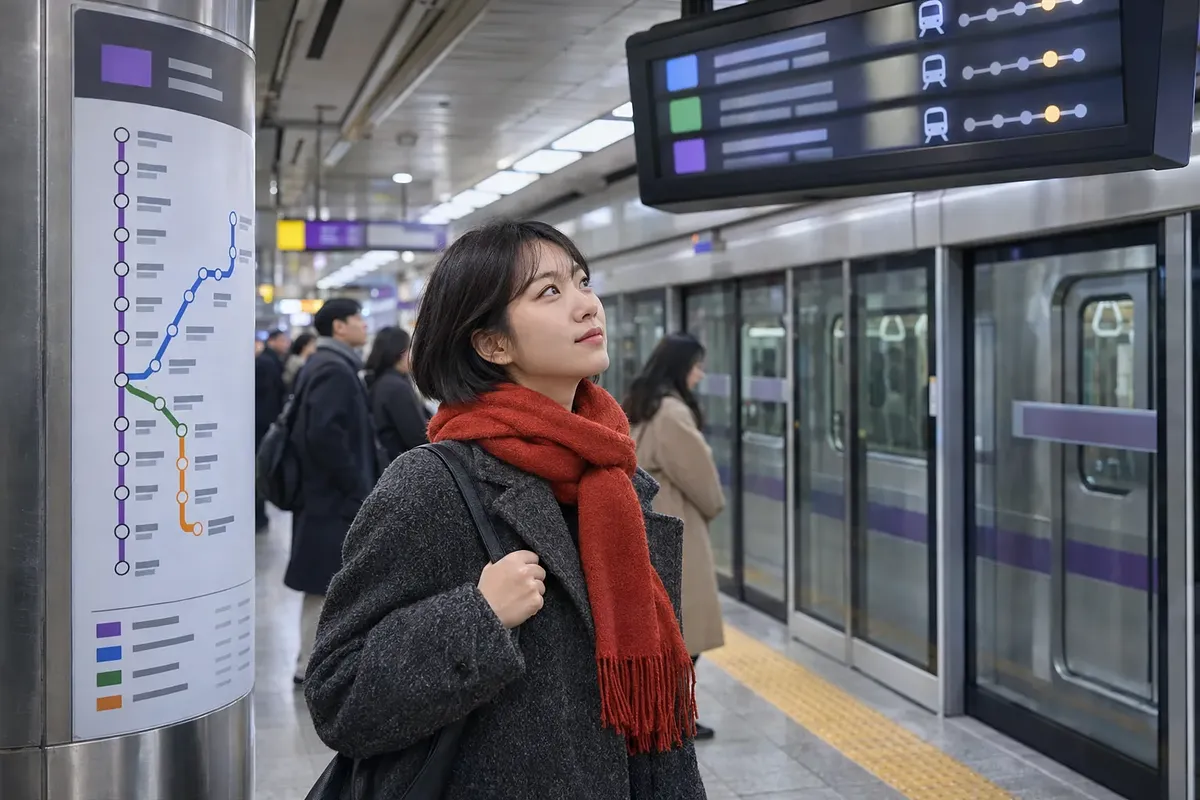
To use Seoul Subway Lines 1~9, first choose your departure and arrival stations. You can check routes and fares using the route finder on the left side of this site. Before boarding, check both the train’s destination and the transfer conditions.
The basic figures in this article are current as of November 9, 2026, when the operators’ information was checked.
How to Check Routes, Fares, and Timetables
Start your search in “Subway and Bus Route Finder” on the left side of this site. Have the names of your departure and arrival stations ready. Before traveling, also check the operators’ service change notices.
- Open “Subway and Bus Route Finder.”
- Select your departure and arrival stations in the Seoul metropolitan area to check routes and fares.
- Select the station you will use to check the first train, last train, and next train.
- Check current train conditions using Seoul’s real-time arrival information.
- On the platform, check the destination and local or express service signs.
Timetables show scheduled service times. Real-time arrival information is used to check current train operations. If you are taking the last train, also check the timetable for any line you will transfer to.
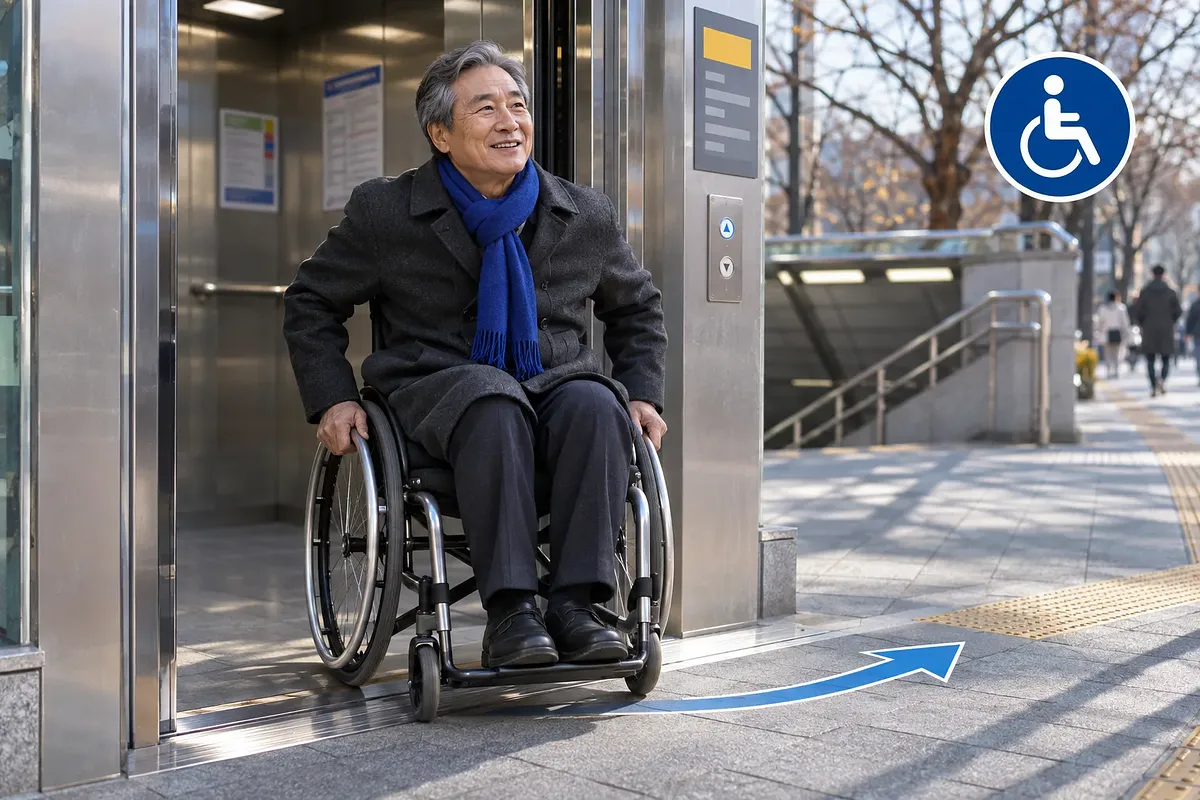
Check the operator’s information for the location and operating status of accessibility facilities you need.
Routes and Features of Lines 1~9
Along with the line number, check how far the train goes. Branches and terminal stations can vary even on the same line. The table below summarizes the routes and features you need when choosing your journey.
| Line | Main Sections and Connections | What to Check Before Boarding |
|---|---|---|
| Line 1 | Seoul Station~Cheongnyangni city-center section, connecting to the Gyeongbu, Janghang, Gyeongin, and Gyeongwon lines | The direction of your destination, such as Incheon, Cheonan, Sinchang, or Yeoncheon, and the train’s terminal station |
| Line 2 | Main loop, Seongsu~Sinseol-dong Seongsu Branch, Sindorim~Kkachisan Sinjeong Branch | Direction around the loop and whether a branch transfer is needed |
| Line 3 | Daehwa~Jichuk~Ogeum | The destination of trains connecting the Ilsan Line and Seoul Metro section |
| Line 4 | Jinjeop~Namtaeryeong~Geumjeong~Oido | Whether the train runs as far as your destination |
| Line 5 | Banghwa~Hanam Geomdansan·Macheon | Whether the train is bound for Hanam Geomdansan or Macheon |
| Line 6 | Eungam Loop~Sinnae | Direction of travel around the Eungam Loop |
| Line 7 | Jangam~Onsu~Seongnam | The route extending west of Onsu and the train’s terminal station |
| Line 8 | Byeollae~Moran | A route that includes the extension to Byeollae |
| Line 9 | Gaehwa~VHS Medical Center | Local or express service and whether it stops at your destination |
The Seoul Metropolitan Subway refers to a broader rail network than the Seoul Subway. Seoul Subway lines also extend beyond Seoul. Do not read Seoul Metro’s operating-section table as showing the full length of each line.
Line 2 Loop and Branches
When choosing a route on Line 2, distinguish between the main loop and the branches. The Seongsu Branch connects Seongsu and Sinseol-dong. The Sinjeong Branch connects Sindorim and Kkachisan. If your destination is on a branch, check the transfer station in the search results.
Line 9 Local and Express Services
Line 9 express trains stop only at selected stations. Local trains stop at every station on the Gaehwa~VHS Medical Center section. Express service runs on the Gimpo International Airport~VHS Medical Center section. You can check whether a train stops at your destination in the Seoul Metro Line 9 Train Guide.
| Choice | Suitable Situation | What to Check |
|---|---|---|
| Local train | Your destination is a station where express trains do not stop | A train destination that takes you as far as that station |
| Express train | Both your departure and arrival stations are express stops | Express arrival time and terminal station |
| Local/express transfer | Your journey uses both express stops and stations where express trains do not stop | Transfer station and next-train arrival information |
Sections of the Same Line with Different Operators
Line numbers and operators are separate classifications. Through-running allows trains to continue across sections run by different operators. If the train goes to your destination, you do not need to get off simply because it crosses an operator’s boundary.
| Line | Section Listed by Seoul Metro | Operator of the Connecting Section |
|---|---|---|
| Line 1 | Seoul Station~Cheongnyangni | KORAIL operates the Gyeongbu, Janghang, Gyeongin, and Gyeongwon lines |
| Line 3 | Jichuk~Ogeum | KORAIL operates the Jichuk~Daehwa Ilsan Line |
| Line 4 | Jinjeop~Namtaeryeong | KORAIL operates the Namtaeryeong~Geumjeong Gwacheon Line and Geumjeong~Oido Ansan Line |
| Line 7 | Jangam~Onsu | Incheon Transit Corporation operates stations on the Kkachiul~Seongnam section |
| Line 9 | Phases 2 and 3, Eonju~VHS Medical Center | Seoul Metro Line 9 Corporation operates Phase 1, Gaehwa~Sinnonhyeon |
You can check the connecting KORAIL sections under Metropolitan Train Routes. Stations operated on the western section of Line 7 are listed in the Incheon Transit Corporation Operations Overview. For station facilities, contact the organization responsible for the station you will use.
You must also distinguish between train operating sections and responsibility for managing station facilities. An operations table alone does not establish who manages every station facility. For facilities on extensions in particular, check the information for the relevant station.
Distance-Based Fares and Early-Morning Discounts
Seoul Subway Lines 1~9 calculate fares by distance traveled. The adult base fare with a transit card is 1,550 won for up to 10km. This base fare took effect on June 28, 2025.
- The youth base fare with a transit card is 900 won for up to 10km.
- The child base fare with a transit card is 550 won for up to 10km.
- The adult single-journey ticket fare is 100 won higher than the transit card fare.
- For adults, 100 won is added for every 5km over 10km and up to 50km.
- For adults, 100 won is added for every 8km beyond 50km.
Additional distance charges also vary by age group. Do not apply adult surcharges directly to youths or children. Check the fare for your actual route using this site’s route finder.
Separate calculation rules apply when you travel continuously onto sections outside the Seoul metropolitan area. When transferring to another line, also check for sections with separate fares. These conditions are explained under Seoul Metro Line 9 Fare System.
Early-Morning Discount Conditions
The early-morning discount applies when you board from the start of service through 06:30. You must use a prepaid or postpaid transit card. The discount is 20% of the base fare.
However, this excludes passengers transferring after first using another mode of transportation.
Seoul Metro Line 9, “Fare System”
If you take a bus first and then transfer to the subway, the exclusion above applies. The early-morning discount does not apply to additional distance charges. Check the boarding time for the first mode of transportation you use.
Early-Morning Discount Calculation Example
Assume an adult travels within 10km and meets the early-morning discount conditions. This calculation uses the transit card base fare of 1,550 won. This example does not apply if you transfer from another mode of transportation.
- Discount calculation: 1,550 won × 20% = 310 won.
- Discounted base fare calculation: 1,550 won - 310 won = 1,240 won.
- If you exceed the base distance, additional distance charges are calculated separately.
This amount is calculated using the published base fare and discount rate. It does not represent the final amount charged for every route. Select your departure and arrival stations to check your actual fare.
Bus Transfer Discount Conditions and Steps
When you transfer between buses and the subway, fares are calculated using the combined travel distance. Additional charges apply if you exceed the usual base distance of 10km. The higher base fare among the modes of transportation you use applies.
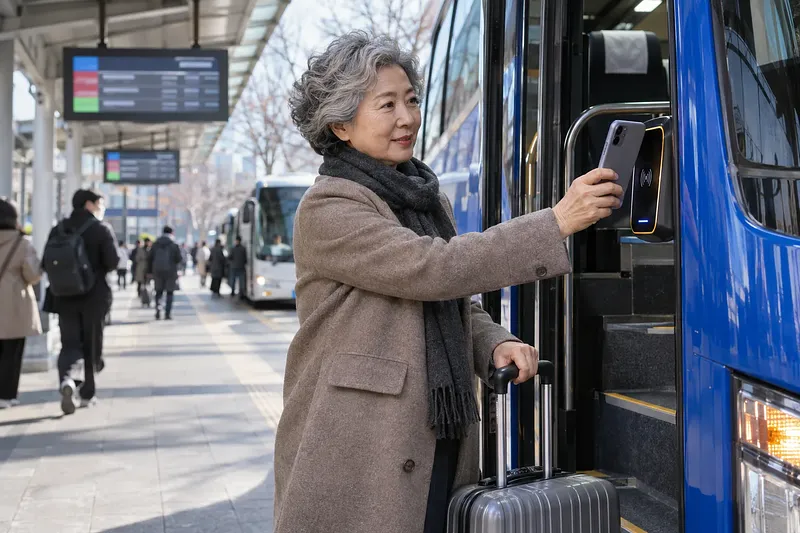
- Have your transit card ready when you first board.
- Tap the same transit card on the reader when getting off.
- Board the next mode of transportation within 30 minutes of getting off.
- From 21:00~07:00 the next day, check the condition allowing transfers within 60 minutes.
- Tap the same card when boarding and getting off the next mode of transportation.
You cannot receive the transfer discount if you do not tap out. Consecutive trips on buses with the same route number are also excluded. Check the detailed conditions in the Seoul Metro Line 9 Transfer Fare Guide.
Metropolitan express and seated-service buses have separate base-distance rules. Do not apply the subway base fare directly to every bus. Transfer discounts do not eliminate additional charges based on distance and mode of transportation.