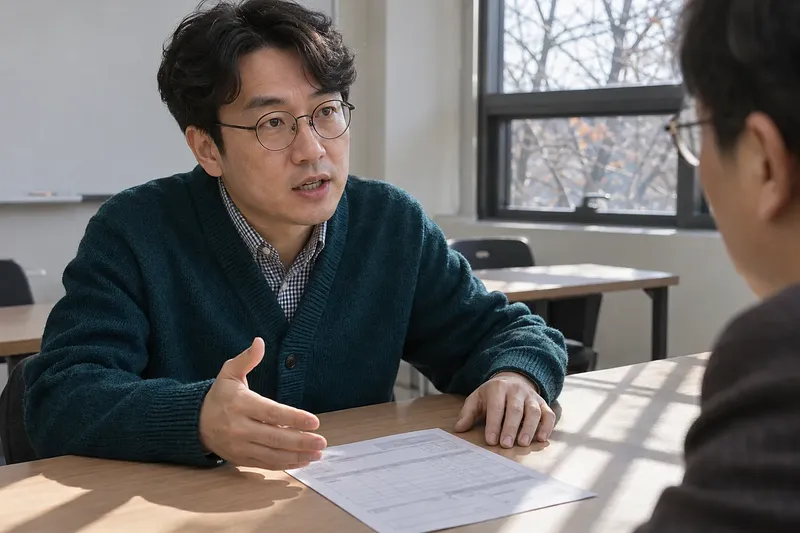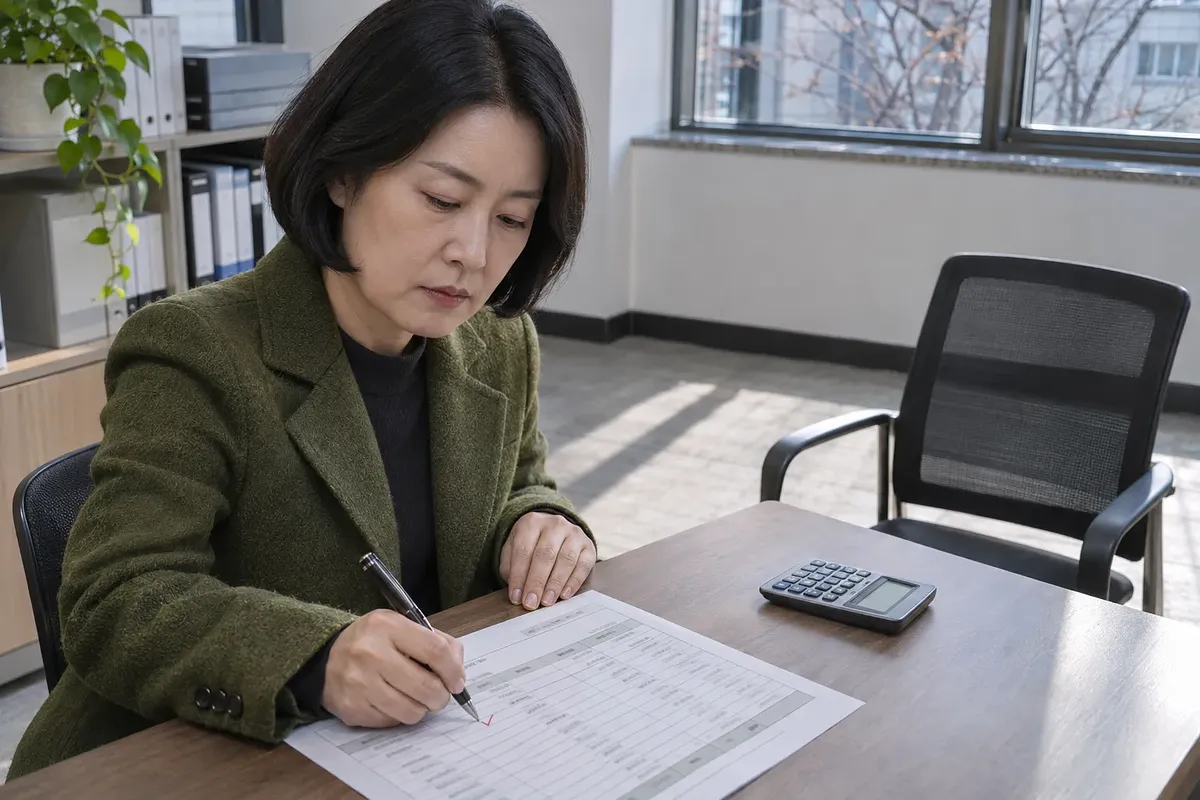
Cheating with AI makes it harder to tell whether exam scores reflect candidates' own abilities. In the Certified Tax Accountant exam, even the scores of past successful candidates are now subject to review. In hiring, checking again how candidates arrived at their answers takes more time for both the companies and the candidates who passed honestly.
The Certified Tax Accountant exam figures are based on the October 28, 2026 announcement of successful candidates by the Human Resources Development Service of Korea.
Confirmed cheating on the Certified Tax Accountant exam
The top scorer on the 63rd Certified Tax Accountant exam said they wrote their answers with help from generative AI. The candidate, known online as “Semunyang-i,” admitted to cheating on November 15 and turned themselves in to the police. Their reported score on the first stage was 397.5 out of 400. They also scored 663 out of 800 on the essay-based second stage.
Suspicion initially focused on smart glasses. The candidate said they had used a miniature camera and a smartphone. The question then became whether the person who wrote the essay answers by hand had come up with them independently.
On November 16, the National Tax Service began proceedings to invalidate the candidate's exam and bar them from taking it for 5 years. The Human Resources Development Service of Korea also decided to review the distribution of scores among candidates who passed the final stage over the past 3 to 5 years. As part of the criminal investigation, police applied for a detention warrant on November 26.
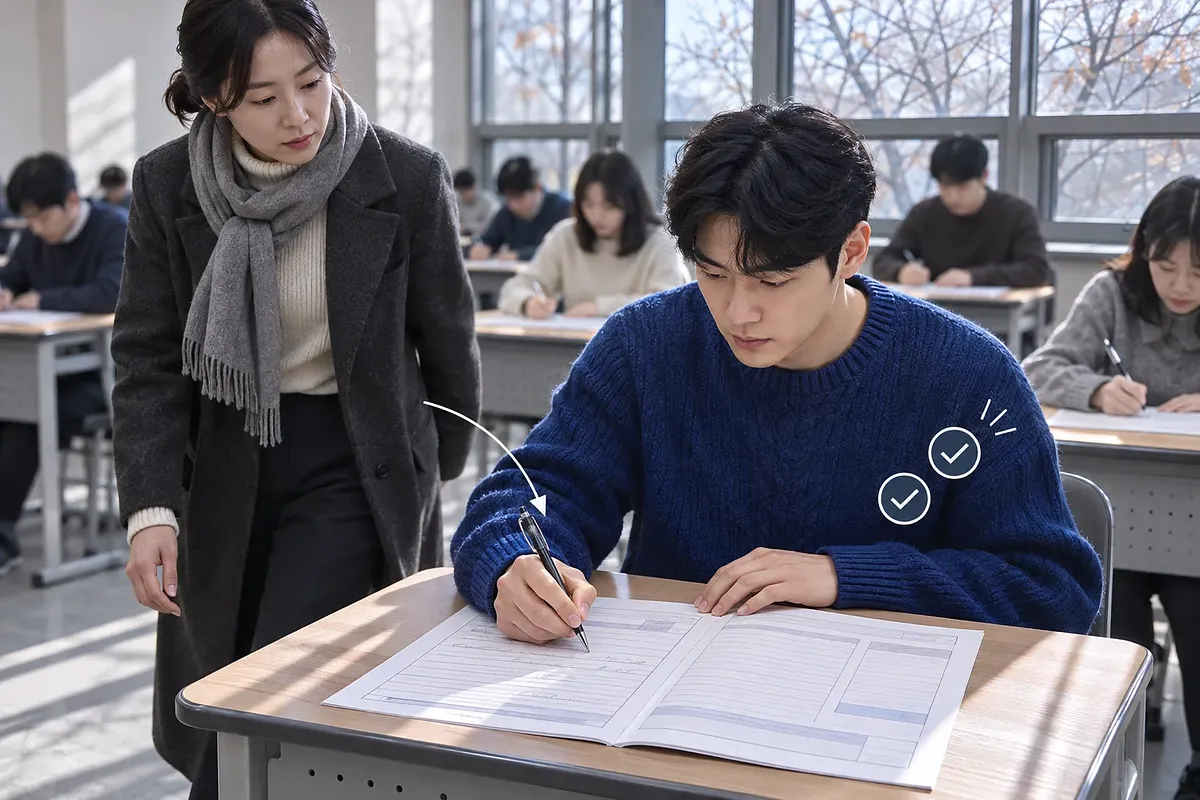
Even under exam supervision, writing an answer by hand does not prove it was worked out independently.
Why the passing cutoff for the second stage was below 60
If fewer candidates meet the score requirements than the minimum number who must pass, the remaining places in the second stage of the Certified Tax Accountant exam are filled in order of score. In 2026, the minimum number of successful candidates among those who took all subjects was 700. The standard passing requirements are at least 40 out of 100 in each subject and an average of at least 60 across all subjects.
If a tie at this stage causes the number of successful candidates to exceed the minimum, all tied candidates pass.
National Tax Service, “Minimum Number of Successful Candidates for the ’26 Certified Tax Accountant Exam Set at 700”
| Second stage of the 63rd Certified Tax Accountant exam | Announced figures | How to read the figures |
|---|---|---|
| Total candidates | 6,606 | Number of candidates who actually took the second stage |
| Total successful candidates | 722 | Number announced at the time, including candidates exempt from some subjects |
| Passing cutoff for candidates who took all subjects | Average of 49.75 points | Applies to candidates who met the 40-point requirement in each subject |
| Passing cutoff for candidates exempt from some subjects | Average of 46.55 points | Applies to the subjects that candidates with exemptions actually took |
Can the next candidate in the rankings be declared to have passed?
The number of successful candidates alone does not tell us whether the next candidate in the rankings can be declared to have passed. According to the announcement, 10 of the successful candidates were exempt from some second-stage subjects. Subtracting them from the total of 722 leaves 712 successful candidates who took all subjects. Even if the top scorer is removed, the number of successful candidates who took all subjects is still 11 above the minimum.
This calculation shows how the count changes if the top scorer is removed. Whether the next candidate's status has changed is something to check in a follow-up announcement of successful candidates from the Human Resources Development Service of Korea.
How do exam staff tell devices apart?
For the College Scholastic Ability Test for the 2027 academic year, proctors were told to check suspicious glasses and leave the decision to designated staff at the test site. The Ministry of Education said that wearing smart glasses during the exam would invalidate the candidate's exam for that year. The candidate would also lose eligibility to take the test the following year.
Hearing aids and continuous glucose monitors, on the other hand, may be necessary for candidates even during an exam. According to the Ministry of Education, candidates may keep medically necessary items with them if a proctor checks them before each testing period. The proctoring rules include procedures for checking what prohibited devices can do and for verifying medical devices.
AI exam scores and how often cheating actually occurs
AI's exam scores tell us something different from the number of cheating cases that universities confirm. Researchers at the Hong Kong University of Science and Technology (香港科技大學) ran an experiment in December 2025 using the final exam for a computer networks course. Answers produced using AI glasses scored 92.5 out of 100. The student average on the same exam was 72.
| What was studied | Findings | What the findings cover |
|---|---|---|
| Hong Kong University of Science and Technology final exam experiment | Answers produced using AI scored 20.5 points above the student average | A score difference in one course |
| The Guardian's freedom of information survey of UK universities | Confirmed cases of AI cheating rose from 1.6 per 1,000 students in the 2022-2023 academic year to 5.1 per 1,000 in 2023-2024 | The figures cover cases identified by responding universities, and the scope of their records varies by year |
Who pays to verify qualifications?
When more practical assessments are used to supplement qualifications, companies and applicants share the cost. In economics, a “signal” is a clue that helps people judge skills they cannot easily observe directly. Taxpayers who hire a Certified Tax Accountant to file their returns also have no easy way to test that person's knowledge of tax law in detail before hiring them. The qualification saves them some of that work.
Schools and companies already have ways to check in person how people arrive at their answers. Sales of written exam answer booklets at the UC Berkeley campus bookstore rose 80% between 2023 and 2025. According to findings Gartner published in October 2025, 74% of the organizations surveyed used in-person interviews to address hiring fraud. The two figures reflect sales at one bookstore and the hiring practices of the surveyed organizations, respectively.
How checking qualifications differs from assessing practical skills
Checking qualifications and assessing practical skills give employers different information. For example, an employer might ask an applicant for a tax position how they categorized an expense. The employer can then change the terms of the transaction and ask again to hear why the applicant would revise their judgment.
| Method | What it tells the employer | Additional cost |
|---|---|---|
| Qualification check | Whether the applicant earned the relevant qualification | Time for hiring staff to check the paperwork |
| On-site practical assessment | What judgment the applicant makes in a given case | Time for the applicant to take the assessment and for the evaluator to prepare and grade it |
| In-person follow-up questions | Whether the applicant can explain their reasoning even when the conditions change | Travel time for the applicant and time for the interviewer to ask questions |
The cost documented in the Certified Tax Accountant exam case is the work the testing agency has to put into reviewing even past scores. How much the qualification's value in hiring has actually changed is a separate question. Answering it would require data showing how hiring rates for people with the qualification or the share of companies introducing additional tests have changed.