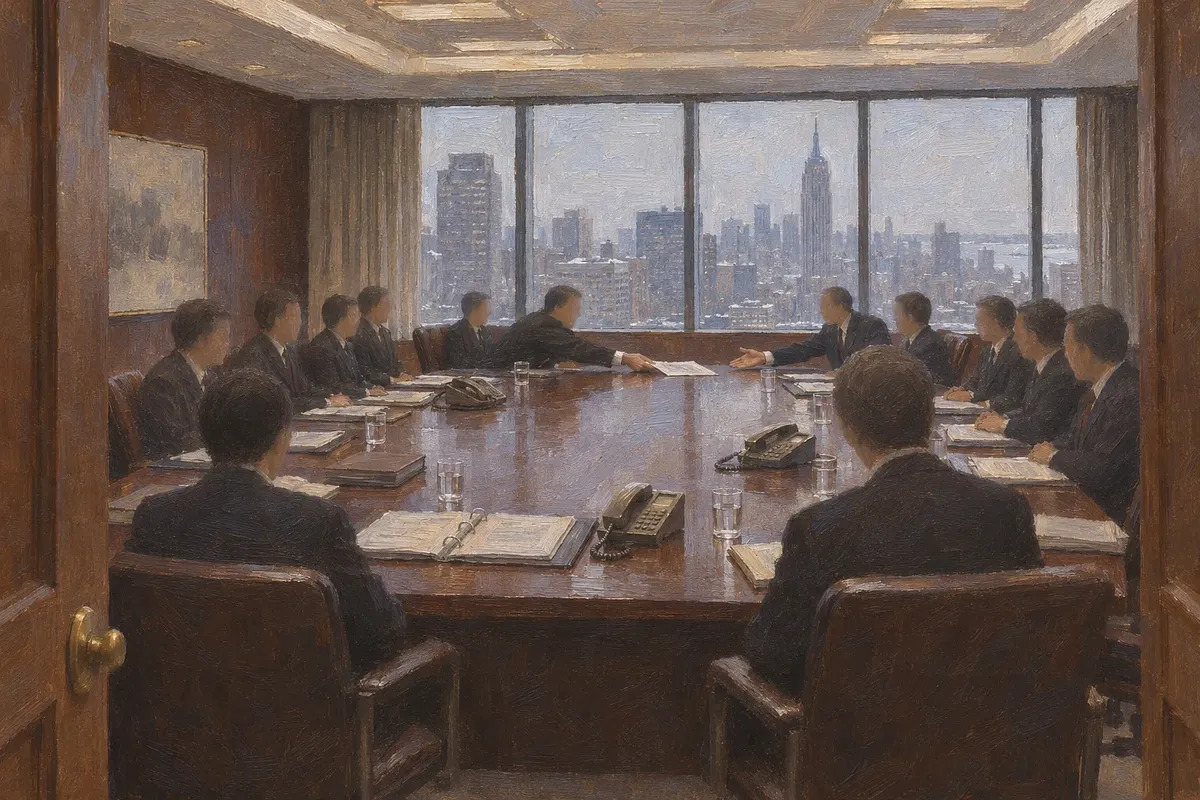
During the IMF foreign exchange crisis, South Korean financial institutions struggled to repay the dollars they had borrowed abroad on time. In January 1998, Korean negotiators in New York reached an agreement with creditor banks to push back repayment dates. A government guarantee allowed principal repayments to be spread over several years, giving the foreign exchange market time to stabilize.
In November 2026, the Ministry of Finance and Economy's announcement was checked against the Bank of Korea's “Monthly Economic Chronology.”
Why Korea still needed to negotiate its foreign debt after IMF emergency funds arrived
The arrival of IMF funds did not change the maturity dates on loans that domestic banks had taken out with foreign banks. In 1997, a wave of corporate defaults made it harder for domestic financial institutions to collect on their loans. As the currency turmoil that began in Thailand spread, foreign banks grew reluctant to extend the maturities of their loans to Korea.
Domestic banks could normally repay foreign currency loans as they came due by borrowing again. When that option dried up, they ran short of dollars to make immediate payments. According to the IMF's later evaluation, even after the emergency funds arrived, Korea's available foreign exchange reserves were nearly depleted by the end of December 1997.
| Response | Who did what | What changed in Korea |
|---|---|---|
| IMF emergency funding | The International Monetary Fund (IMF) lent foreign currency to Korea | More foreign currency was available for payments abroad |
| Extension of short-term foreign debt maturities | Foreign creditor banks agreed to push back repayment dates for domestic financial institutions | Less foreign currency was needed for payments in the near term |
The March 16, 1998 announcement put short-term foreign debt extensions at US$21.839 billion, or 94.8% of eligible debt.AI-generated image
Timeline from the New York framework agreement to the payment guarantee
The January 1998 talks in New York set common terms for the creditor banks to follow. Each bank then decided whether to extend its loans and, if it chose to do so, applied for the maturity it wanted. After confirming which debts qualified, the Korean government began providing guarantees in April.
| Date | What happened | Record |
|---|---|---|
| November 21, 1997 | The Korean government announced that it had decided to request funding from the IMF | National Archives of Korea, “Overcoming the IMF Foreign Exchange Crisis” |
| December 4, 1997 | The IMF Executive Board approved a Stand-By Arrangement for Korea | IMF evaluation of its support during the Asian crisis |
| Late December 1997 | Major foreign banks agreed to keep existing loans in place during the negotiations | IMF evaluation of its support during the Asian crisis |
| January 28, 1998, New York local time | Korea's working-level negotiating team and representatives of 13 creditor banks from 7 countries agreed on basic principles | Ministry of Finance and Economy announcement on the New York negotiations |
| March 16, 1998 | The Ministry of Finance and Economy announced the results of individual financial institutions' applications for maturity extensions | Bank of Korea, “March 1998” |
| April 8, 1998 | Government payment guarantees took effect for debts confirmed for extension | Bank of Korea, April 14 entry in “April 1998” |
| August 23, 2001 | Korea repaid the remaining balance of the funds it had borrowed from the IMF | National Archives of Korea, “Overcoming the IMF Foreign Exchange Crisis” |
Maturities and interest rates in the New York negotiations
The agreement covered foreign currency debt that domestic financial institutions had taken on for less than 1 year and were due to repay in 1998. Trade-related financing and borrowing in the form of securities were excluded. The Korean government would guarantee payment if creditor banks agreed to extend the maturities.
The rates below come from the January 1998 framework agreement announced by the Ministry of Finance and Economy. The benchmark was LIBOR, the London interbank rate at the time. The longer creditor banks had to wait to get their principal back, the higher the rate added to that benchmark.
| New maturity | Rate added to LIBOR | Terms by maturity |
|---|---|---|
| 1 year | 2.25 percentage points | Capped at 20% of total eligible debt |
| 2 years | 2.50 percentage points | Early repayment allowed after 6 months |
| 3 years | 2.75 percentage points | Early repayment allowed after 6 months |
Domestic financial institutions agreed to repay the principal in a single payment at the new maturity date. Interest was payable every 6 months. If foreign currency conditions improved, debts extended to 2 or 3 years could be repaid before the agreed maturity date.