Skip to content
Injoys
Report 🇯🇵 Japan

This content applies specifically to Japan.

Japan's 2026 Growth Strategy Explained: Public-Private Investment Roadmap for 17 Strategic Fields

On July 21, 2026, the Japanese government finalized a growth strategy and public-private investment roadmap covering 17 strategic fields, including AI and semiconductors, digital technology and cybersecurity, biotechnology, and energy. The key is to link crisis-management investment for economic security with growth investment that expands productivity and exports, while converting government support into actual private investment and industrial outcomes.

Views 18 13 min read KO EN JA ES

Listen or read this article

Listen, or read the text only.

Japan's 2026 Growth Strategy Explained: Public-Private Investment Roadmap for 17 Strategic Fields

Kokoro 82M AI-generated voice

0:00 23:03

Download audio

File name
japan-2026-growth-strategy-17-investment-sectors-en.mp3
Format
MP3 (audio/mpeg)
Duration
23:03
File size
15.8 MB
Engine
Kokoro 82M

This audio was generated by AI.

You may download and use it freely for personal use.

Japan's 2026 Growth Strategy Explained: Public-Private Investment Roadmap for 17 Strategic Fields

14 min read

Japan's 2026 Growth Strategy Explained: Public-Private Investment Roadmap for 17 Strategic Fields
On July 21, 2026, the Japanese government finalized a growth strategy and public-private investment roadmap covering 17 strategic fields, including AI and semiconductors, digital technology and cybersecurity, biotechnology, and energy. The key is to link crisis-management investment for economic security with growth investment that expands productivity and exports, while converting government support into actual private investment and industrial outcomes.
The 17 strategic fields combine not only the development of advanced technologies but also supply chains, energy, logistics, defense, and disaster response into a single industrial policy framework.
Crisis-management investment aims to reduce vulnerabilities in critical supply chains and infrastructure, while growth investment seeks to expand productivity, markets, and exports.
The success of AI and semiconductor policy depends not only on computing resources and chip production capacity but also on electricity, data, talent, and the software ecosystem.
Policies for manufacturing data and robotics foundation models must also address rules for intercompany data sharing, safety verification, and adoption costs for small and medium-sized enterprises.
Policy evaluations should focus on outcome indicators such as additional private investment, commercialization, supply chain diversification, and productivity gains rather than government budgets or announced investment amounts.
Japan’s 2026 growth strategy goes beyond allocating subsidies to individual industries. It is an attempt to connect economic security and growth policy through a unified public-private investment framework. On July 21, 2026, the Japanese government finalized a new growth strategy that includes investment roadmaps for 17 strategic fields. This article outlines the strategy’s structure, technology-specific challenges, evaluation metrics, and constraints to monitor during implementation.
Core Structure of the 2026 Growth Strategy
The strategy’s basic logic is for the government to bear some of the initial risks and public costs, thereby encouraging companies to invest in facilities, R&D, and talent. Its main targets include fields with large investment requirements and long payback periods, such as semiconductor plants and power grids; fields with a high probability of failure, such as new drugs and synthetic biology; and fields where investment by individual companies alone cannot reduce nationwide risks, such as cybersecurity.
The following four elements should be distinguished when reading the roadmaps.
· Policy objectives: Intended outcomes such as supply chain stability, higher productivity, creation of new markets, and export growth · Government measures: Subsidies, procurement, regulatory reform, standardization, R&D support, and provision of public data · Private-sector role: Capital investment, commercialization, hiring, data provision, and overseas market development · Verification metrics: Figures showing whether announced investments led to actual production, sales, exports, productivity gains, and risk reduction
Not all support necessarily translates into growth outcomes. Budgets announced by the government are input metrics, while additional investment actually executed by companies and commercialization performance are outcome metrics. These two types must be separated to assess the additionality of the policy.
17 Strategic Fields and Policy Objectives
The official strategy addresses both technology industries and the foundations of economic security. The Korean names in the following table are translated to make the Japanese government’s field classifications easier to understand. Detailed project names, schedules, and figures should be verified against the original roadmap for each field.
Strategic field | Main policy objective | Key variables to analyze AI and semiconductors | Strengthen computing resources, advanced and general-purpose semiconductors, and the foundation for AI use | Power supply, production yield, customers, talent Shipbuilding | Restore shipbuilding capacity and productivity and strengthen the maritime supply chain | Order backlog, automation, skilled workers, equipment and materials Quantum | Commercialize computing, communications, and sensing technologies | Error rates, use cases, researchers, international standards Synthetic biology and biotechnology | Develop biomanufacturing and high-value-added materials and products | Scale-up of cultivation, raw materials, safety, market demand Aviation and space | Expand the aviation supply chain and satellite and launch vehicle industries | Certification, launch frequency, domestic production of components, demand Digital and cybersecurity | Strengthen digital infrastructure and security capabilities | Specialists, incident response, supply chain security, procurement Content | Expand overseas distribution and revenue from intellectual property | Rights protection, localization, distribution agreements, overseas sales Food tech | Address food challenges and advance the food industry | Costs, regulations, consumer acceptance, supply stability Resources, energy security, and GX | Pursue energy supply stability and decarbonization investment in parallel | Electricity prices, grid, fuel dependence, emissions-reduction effects Disaster prevention and national resilience | Reduce disaster damage and the risk of infrastructure disruption | Prevention effects, recovery time, maintenance costs New drugs and advanced medicine | Connect research outcomes to clinical trials, approval, and production | Clinical success rates, review periods, manufacturing capacity, accessibility Fusion energy | Secure long-term energy technologies and related supply chains | Technology maturity, costs, component and material base Advanced materials | Strengthen competitiveness in critical materials for semiconductors, batteries, aviation, and other industries | Supply concentration, recycling, performance, mass-production capacity Ports and logistics | Improve logistics efficiency and supply chain resilience | Processing time, automation, transport workforce, connectivity Defense industry | Maintain the production base and supply chains and strengthen technological capabilities | Procurement predictability, production capacity, export controls, workforce Information and communications | Strengthen next-generation networks and communications infrastructure | Coverage, equipment supply chains, energy efficiency, standards Maritime | Expand capabilities in marine resources, observation, and equipment industries | Exploration technology, data, environmental impact, commercial viability
The 17 fields are not independent of one another. AI is commonly used in manufacturing, new drugs, logistics, and disaster prevention, while semiconductors and advanced materials provide the foundation for information and communications, space, and the defense industry. Power grids and cybersecurity are also common constraints across nearly all fields.
Difference Between Risk-Management Investment and Growth Investment
Risk-management investment refers to investment that reduces the risk of economic and social disruption. This includes projects that diversify supply chains concentrated in specific countries or companies, secure production capacity for critical components, and prepare for cyberattacks and natural disasters.
Growth investment refers to investment that increases productivity, market size, added value, and exports. Representative fields include AI adoption, automation, new drug commercialization, overseas content distribution, and next-generation communications.
The two categories are not mutually exclusive. For example, domestic semiconductor production can reduce the risk of supply disruptions while promoting manufacturing investment and technological accumulation. However, policy evaluation should vary according to the objective.
Nature of investment | Primary question | Appropriate outcome metrics Risk-management investment | Has the risk of disruption actually decreased? | Supplier concentration, stockpile duration, recovery time, production capacity for critical items Growth investment | Have additional private-sector activity and market outcomes emerged? | Additional capital investment, productivity, sales, exports, commercialization rate Combined investment | Is there an appropriate balance between risk reduction and industrial growth? | Supply stability, cost competitiveness, private investment, long-term fiscal burden
Cost verification should not be omitted merely because an investment is classified as risk management. Conversely, the public value of supply chains, security, and disaster response should not be ignored merely because short-term profitability is low.
Priorities for AI and Semiconductors
The AI and semiconductor field is not limited to chip manufacturing and AI services. It simultaneously requires data centers, power, cooling, networks, software, researchers, and industrial data.
Computing Resources and Semiconductor Supply
To assess policy effects, the following items should be examined in addition to factory construction starts and subsidy amounts.
· Whether the target processes and products correspond to actual demand within Japan · Whether production yields and utilization rates rise to competitive levels · Whether equipment, materials, design, and packaging are interconnected · Whether customers and cash flow can be secured even after support ends · Whether data-center power demand exceeds the capacity of regional power grids
Focusing only on advanced chips may overlook supply risks involving general-purpose and power semiconductors needed for automobiles and industrial machinery. Conversely, pursuing only expanded domestic production may weaken connections with overseas technologies and markets.
Use of Manufacturing Data for AI
Japan’s manufacturing sector has accumulated data related to equipment conditions, quality inspections, work processes, and maintenance. However, differences in format and issues involving trade secrets and security make it difficult to use this data immediately for joint learning among companies.
The following policy foundations are needed.
· Standardization of data formats and metadata · Contractual rules reflecting trade secrets, personal information, and usage rights · Federated learning and secure analytical environments that do not move original data externally · Data cleansing and security support accessible to small and medium-sized enterprises · Verification of the traceability, quality, and scope of responsibility for model outputs
More important than the scale of a data platform are operational outcomes such as actual reductions in defect rates, increased uptime, and energy savings.
Robotics Foundation Models and Industrial Automation
Robotics foundation models are general-purpose models designed to learn jointly from visual, language, sensor, and motion data and apply that learning to multiple tasks. While generative AI handles text or images, robotics models must perform perception, planning, and control in physical environments.
Japan has a manufacturing base and robotics companies, but general-purpose robotics AI requires large-scale motion data, simulation, safety verification, and high-performance computing resources. Support policies should cover not only model development itself but also the following foundations.
· Motion-data standards usable by multiple manufacturers · Testing and simulation environments resembling actual factories · Safety assessments for collisions, malfunctions, and cyber intrusions · Liability and operating standards for collaboration with human workers · Reduced adoption and maintenance costs for small and medium-sized manufacturers
Commercial viability is difficult to assess based solely on the number of successful demonstrations. The time required to switch tasks, error rates, utilization rates, frequency of human intervention, and payback period for adoption costs must also be measured.
Challenges in the Digital and Cybersecurity Field
As industries become more digitalized, security becomes an operating condition for production and supply chains rather than a separate sector. When factory equipment, ports, hospitals, and energy facilities are connected, operational disruption becomes a major risk alongside information leaks.
The priorities are as follows.
· Strengthening incident detection and recovery capabilities for critical infrastructure · Managing vulnerabilities in software and equipment supply chains · Improving the basic security level of small and medium-sized enterprises · Training security specialists and conducting practical exercises · Spreading safety standards through government procurement · Responding to attacks against AI models and training data
Evaluation metrics should not be limited to the number of people trained or spending on security products. Vulnerability remediation time, breach detection time, recovery time, repeat incident rates, and the rate at which companies participating in supply chains meet standards are more direct outcome metrics.
Conditions for Commercializing Synthetic Biology and New Drugs
Synthetic biology is a technological field that designs biological systems to produce pharmaceuticals, materials, chemicals, food ingredients, and other products. Expanding laboratory-stage success into industrial production requires cultivation facilities, process control, quality management, raw material procurement, and regulatory compliance.
In the new drug field, performance is also difficult to assess based only on the number of papers or candidate compounds. Significant costs and failure risks arise throughout the process from preclinical work and clinical trials to approval, manufacturing, insurance coverage, and market access.
Biotechnology policy should therefore distinguish and evaluate the following.
· Research outcomes: Papers, patents, candidate compounds, and technology validation · Development progress: Entry into clinical stages, trial completion, and approval applications · Production capabilities: Process scale-up, compliance with quality standards, and stable manufacturing · Market outcomes: Approvals, sales, exports, technology transfers, and patient accessibility
AI-based drug discovery can accelerate the identification of candidates, but it does not guarantee clinical success. The performance of AI use should be verified not only by predictive accuracy but also by total development time, costs, and the rate of transition to clinical trials.
Metrics Needed to Evaluate the Roadmaps
It is useful to structure policy evaluation in the order of inputs, outputs, outcomes, and long-term impacts.
Stage | Example metrics | Cautions when interpreting Input | Government budget, tax support, personnel, research funding | The scale of execution alone does not indicate performance Output | Factories, testing facilities, patents, training data, prototypes | Facility utilization and quality must also be verified Outcome | Additional private investment, productivity, commercialization, exports, supply chain diversification | Investments that would have occurred even without the policy must be excluded Impact | Potential growth rate, high-wage jobs, economic security, regional spillover effects | The effects of other factors, such as economic conditions, exchange rates, and international affairs, must be separated
In particular, the amount of induced private investment should be disclosed separately as announced and executed amounts. Double counting that reclassifies existing investment plans as results of government support must also be prevented. For support provided to individual companies, support conditions, performance criteria, clawback provisions, and ex-post evaluation results should be disclosed to the extent possible.
Major Constraints During Implementation
Workforce Shortages
In addition to AI researchers, semiconductor process engineers, electrical and construction workers, biomanufacturing personnel, security officers, and robot operators are needed. If multiple strategic fields simultaneously demand the same workers, wages and project costs may rise and schedules may be delayed.
Power and Infrastructure
Semiconductor plants and data centers require large amounts of power and cooling resources. Simply expanding generation facilities is not sufficient; transmission grids, substations, site approvals, backup power, and local acceptance must also be considered.
Supply Chain Dependence
Even if domestic production expands, critical equipment, raw materials, software, or intellectual property may remain dependent on specific overseas suppliers. Dependence should be assessed by examining not only the country producing the final product but also second- and third-tier supply chains and the time required to secure alternatives.
Concentration of Support and Market Distortion
Support for large-scale projects can easily become concentrated among a small number of companies. Stage-specific conditions and exit criteria are needed to prevent competition for support from creating excess capacity or sustaining low-productivity projects over the long term.
Interministerial Coordination
AI, energy, biotechnology, defense, and communications span multiple ministries and regulatory agencies. If the schedules and metrics of field-specific roadmaps are not interconnected, common bottlenecks such as power grids or permits and approvals may delay the entire plan.
Matters for Companies and Research Institutions to Verify
Rather than focusing simply on whether they are included in a strategic field, companies and research institutions should specifically verify the support measures and mandatory conditions.
· Whether the support targets basic research, demonstration, facilities, or commercialization · The company’s required contribution ratio and the period for which investment must be maintained · Whether there are conditions concerning data sharing, disclosure of outcomes, and domestic production · Whether international joint research and overseas procurement are permitted · Whether clawback conditions apply if targets are not met or a project is discontinued · Whether power, personnel, land, and permits and approvals can actually be secured
The roadmaps provide direction but do not automatically guarantee support for individual projects. Actual participation conditions must be verified in project-specific documents announced by the responsible ministries and agencies.
Overall Assessment
A defining feature of Japan’s 2026 growth strategy is its integration of advanced technologies such as AI and semiconductors with industrial foundations such as shipbuilding, logistics, energy, and disaster prevention. The strategy’s success or failure depends not on the number of fields or the announced scale of investment, but on how effectively common bottlenecks are resolved.
Going forward, it will be necessary to continuously compare the execution rate of private investment, actual utilization rates for data and infrastructure, productivity, commercialization, exports, supply chain concentration, and the status of power supply. The most important verification criteria are whether government support accelerated investment in the short term and whether competitiveness and markets remain sustainable after support ends in the long term.
0:00 0:00
1 / 72

Download text

File name
japan-2026-growth-strategy-17-investment-sectors-en.txt
Format
TXT (text/plain)
Paragraphs
72

Downloads exactly what you see as a text file.

Please cite the source when quoting.

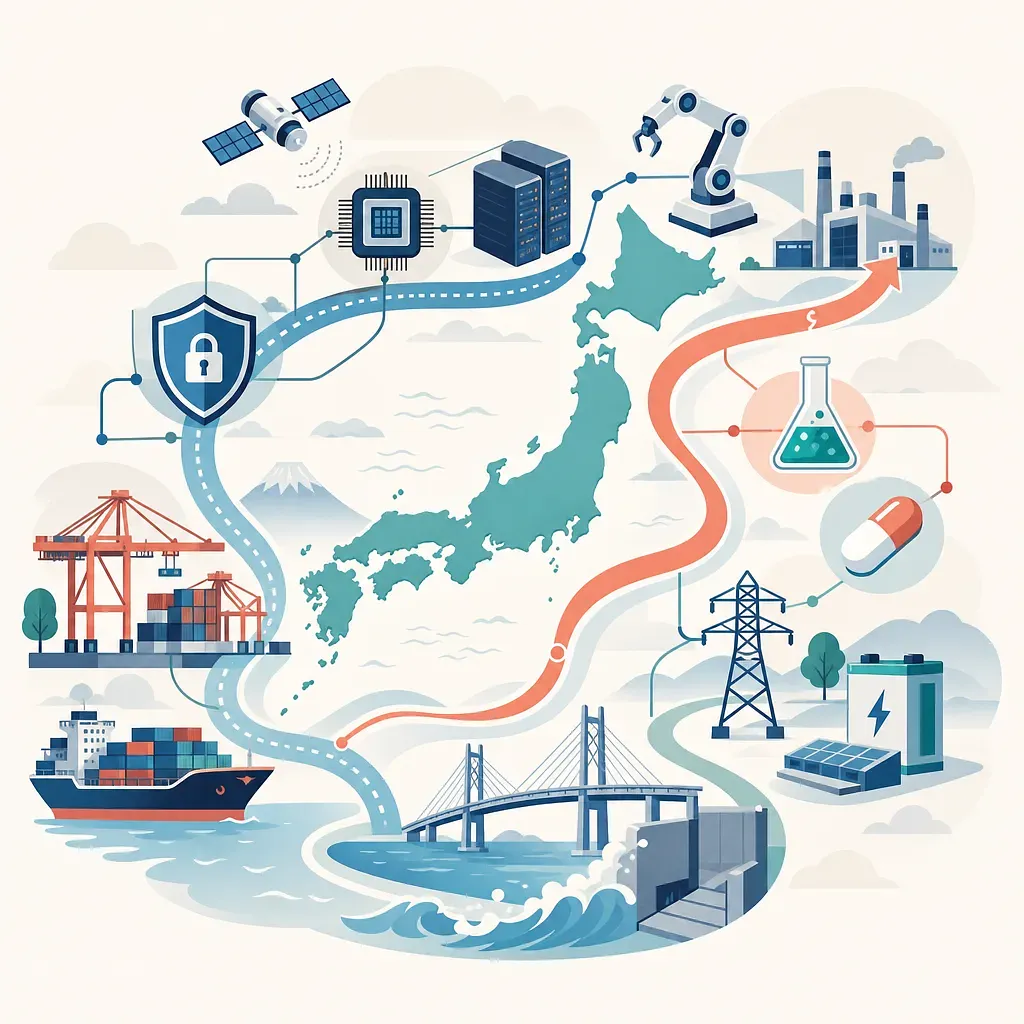
The illustration connects Japan’s strategic industries with areas for public-private investment.

Key points

  • The 17 strategic fields combine not only the development of advanced technologies but also supply chains, energy, logistics, defense, and disaster response into a single industrial policy framework.
  • Crisis-management investment aims to reduce vulnerabilities in critical supply chains and infrastructure, while growth investment seeks to expand productivity, markets, and exports.
  • The success of AI and semiconductor policy depends not only on computing resources and chip production capacity but also on electricity, data, talent, and the software ecosystem.
  • Policies for manufacturing data and robotics foundation models must also address rules for intercompany data sharing, safety verification, and adoption costs for small and medium-sized enterprises.
  • Policy evaluations should focus on outcome indicators such as additional private investment, commercialization, supply chain diversification, and productivity gains rather than government budgets or announced investment amounts.

Japan’s 2026 growth strategy goes beyond allocating subsidies to individual industries. It is an attempt to connect economic security and growth policy through a unified public-private investment framework. On July 21, 2026, the Japanese government finalized a new growth strategy that includes investment roadmaps for 17 strategic fields. This article outlines the strategy’s structure, technology-specific challenges, evaluation metrics, and constraints to monitor during implementation.

Core Structure of the 2026 Growth Strategy

The strategy’s basic logic is for the government to bear some of the initial risks and public costs, thereby encouraging companies to invest in facilities, R&D, and talent. Its main targets include fields with large investment requirements and long payback periods, such as semiconductor plants and power grids; fields with a high probability of failure, such as new drugs and synthetic biology; and fields where investment by individual companies alone cannot reduce nationwide risks, such as cybersecurity.

The following four elements should be distinguished when reading the roadmaps.

  1. Policy objectives: Intended outcomes such as supply chain stability, higher productivity, creation of new markets, and export growth
  2. Government measures: Subsidies, procurement, regulatory reform, standardization, R&D support, and provision of public data
  3. Private-sector role: Capital investment, commercialization, hiring, data provision, and overseas market development
  4. Verification metrics: Figures showing whether announced investments led to actual production, sales, exports, productivity gains, and risk reduction

Not all support necessarily translates into growth outcomes. Budgets announced by the government are input metrics, while additional investment actually executed by companies and commercialization performance are outcome metrics. These two types must be separated to assess the additionality of the policy.

17 Strategic Fields and Policy Objectives

The official strategy addresses both technology industries and the foundations of economic security. The Korean names in the following table are translated to make the Japanese government’s field classifications easier to understand. Detailed project names, schedules, and figures should be verified against the original roadmap for each field.

Strategic field Main policy objective Key variables to analyze
AI and semiconductors Strengthen computing resources, advanced and general-purpose semiconductors, and the foundation for AI use Power supply, production yield, customers, talent
Shipbuilding Restore shipbuilding capacity and productivity and strengthen the maritime supply chain Order backlog, automation, skilled workers, equipment and materials
Quantum Commercialize computing, communications, and sensing technologies Error rates, use cases, researchers, international standards
Synthetic biology and biotechnology Develop biomanufacturing and high-value-added materials and products Scale-up of cultivation, raw materials, safety, market demand
Aviation and space Expand the aviation supply chain and satellite and launch vehicle industries Certification, launch frequency, domestic production of components, demand
Digital and cybersecurity Strengthen digital infrastructure and security capabilities Specialists, incident response, supply chain security, procurement
Content Expand overseas distribution and revenue from intellectual property Rights protection, localization, distribution agreements, overseas sales
Food tech Address food challenges and advance the food industry Costs, regulations, consumer acceptance, supply stability
Resources, energy security, and GX Pursue energy supply stability and decarbonization investment in parallel Electricity prices, grid, fuel dependence, emissions-reduction effects
Disaster prevention and national resilience Reduce disaster damage and the risk of infrastructure disruption Prevention effects, recovery time, maintenance costs
New drugs and advanced medicine Connect research outcomes to clinical trials, approval, and production Clinical success rates, review periods, manufacturing capacity, accessibility
Fusion energy Secure long-term energy technologies and related supply chains Technology maturity, costs, component and material base
Advanced materials Strengthen competitiveness in critical materials for semiconductors, batteries, aviation, and other industries Supply concentration, recycling, performance, mass-production capacity
Ports and logistics Improve logistics efficiency and supply chain resilience Processing time, automation, transport workforce, connectivity
Defense industry Maintain the production base and supply chains and strengthen technological capabilities Procurement predictability, production capacity, export controls, workforce
Information and communications Strengthen next-generation networks and communications infrastructure Coverage, equipment supply chains, energy efficiency, standards
Maritime Expand capabilities in marine resources, observation, and equipment industries Exploration technology, data, environmental impact, commercial viability

The 17 fields are not independent of one another. AI is commonly used in manufacturing, new drugs, logistics, and disaster prevention, while semiconductors and advanced materials provide the foundation for information and communications, space, and the defense industry. Power grids and cybersecurity are also common constraints across nearly all fields.

Difference Between Risk-Management Investment and Growth Investment

Risk-management investment refers to investment that reduces the risk of economic and social disruption. This includes projects that diversify supply chains concentrated in specific countries or companies, secure production capacity for critical components, and prepare for cyberattacks and natural disasters.

Growth investment refers to investment that increases productivity, market size, added value, and exports. Representative fields include AI adoption, automation, new drug commercialization, overseas content distribution, and next-generation communications.

The two categories are not mutually exclusive. For example, domestic semiconductor production can reduce the risk of supply disruptions while promoting manufacturing investment and technological accumulation. However, policy evaluation should vary according to the objective.

Nature of investment Primary question Appropriate outcome metrics
Risk-management investment Has the risk of disruption actually decreased? Supplier concentration, stockpile duration, recovery time, production capacity for critical items
Growth investment Have additional private-sector activity and market outcomes emerged? Additional capital investment, productivity, sales, exports, commercialization rate
Combined investment Is there an appropriate balance between risk reduction and industrial growth? Supply stability, cost competitiveness, private investment, long-term fiscal burden

Cost verification should not be omitted merely because an investment is classified as risk management. Conversely, the public value of supply chains, security, and disaster response should not be ignored merely because short-term profitability is low.

Priorities for AI and Semiconductors

The AI and semiconductor field is not limited to chip manufacturing and AI services. It simultaneously requires data centers, power, cooling, networks, software, researchers, and industrial data.

Computing Resources and Semiconductor Supply

To assess policy effects, the following items should be examined in addition to factory construction starts and subsidy amounts.

  • Whether the target processes and products correspond to actual demand within Japan
  • Whether production yields and utilization rates rise to competitive levels
  • Whether equipment, materials, design, and packaging are interconnected
  • Whether customers and cash flow can be secured even after support ends
  • Whether data-center power demand exceeds the capacity of regional power grids

Focusing only on advanced chips may overlook supply risks involving general-purpose and power semiconductors needed for automobiles and industrial machinery. Conversely, pursuing only expanded domestic production may weaken connections with overseas technologies and markets.

Use of Manufacturing Data for AI

Japan’s manufacturing sector has accumulated data related to equipment conditions, quality inspections, work processes, and maintenance. However, differences in format and issues involving trade secrets and security make it difficult to use this data immediately for joint learning among companies.

The following policy foundations are needed.

  • Standardization of data formats and metadata
  • Contractual rules reflecting trade secrets, personal information, and usage rights
  • Federated learning and secure analytical environments that do not move original data externally
  • Data cleansing and security support accessible to small and medium-sized enterprises
  • Verification of the traceability, quality, and scope of responsibility for model outputs

More important than the scale of a data platform are operational outcomes such as actual reductions in defect rates, increased uptime, and energy savings.

Robotics Foundation Models and Industrial Automation

Robotics foundation models are general-purpose models designed to learn jointly from visual, language, sensor, and motion data and apply that learning to multiple tasks. While generative AI handles text or images, robotics models must perform perception, planning, and control in physical environments.

Japan has a manufacturing base and robotics companies, but general-purpose robotics AI requires large-scale motion data, simulation, safety verification, and high-performance computing resources. Support policies should cover not only model development itself but also the following foundations.

  • Motion-data standards usable by multiple manufacturers
  • Testing and simulation environments resembling actual factories
  • Safety assessments for collisions, malfunctions, and cyber intrusions
  • Liability and operating standards for collaboration with human workers
  • Reduced adoption and maintenance costs for small and medium-sized manufacturers

Commercial viability is difficult to assess based solely on the number of successful demonstrations. The time required to switch tasks, error rates, utilization rates, frequency of human intervention, and payback period for adoption costs must also be measured.

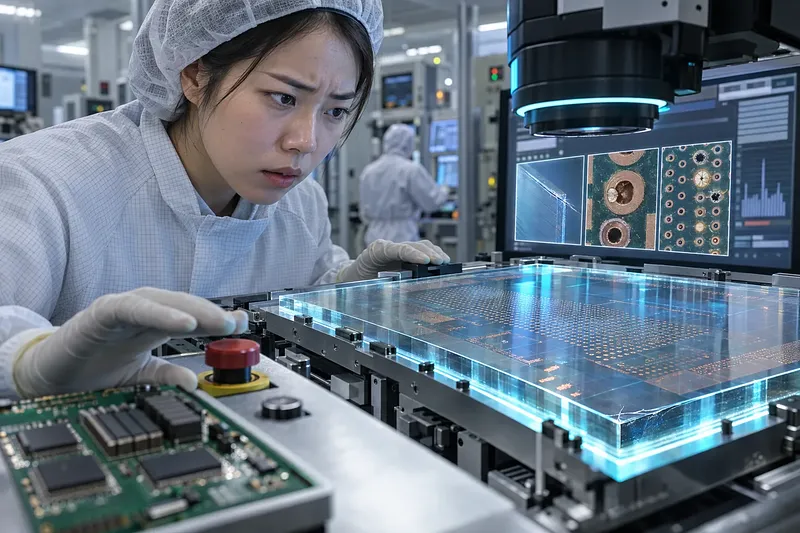
Challenges in the Digital and Cybersecurity Field

As industries become more digitalized, security becomes an operating condition for production and supply chains rather than a separate sector. When factory equipment, ports, hospitals, and energy facilities are connected, operational disruption becomes a major risk alongside information leaks.

The priorities are as follows.

  • Strengthening incident detection and recovery capabilities for critical infrastructure
  • Managing vulnerabilities in software and equipment supply chains
  • Improving the basic security level of small and medium-sized enterprises
  • Training security specialists and conducting practical exercises
  • Spreading safety standards through government procurement
  • Responding to attacks against AI models and training data

Evaluation metrics should not be limited to the number of people trained or spending on security products. Vulnerability remediation time, breach detection time, recovery time, repeat incident rates, and the rate at which companies participating in supply chains meet standards are more direct outcome metrics.

Conditions for Commercializing Synthetic Biology and New Drugs

Synthetic biology is a technological field that designs biological systems to produce pharmaceuticals, materials, chemicals, food ingredients, and other products. Expanding laboratory-stage success into industrial production requires cultivation facilities, process control, quality management, raw material procurement, and regulatory compliance.

In the new drug field, performance is also difficult to assess based only on the number of papers or candidate compounds. Significant costs and failure risks arise throughout the process from preclinical work and clinical trials to approval, manufacturing, insurance coverage, and market access.

Biotechnology policy should therefore distinguish and evaluate the following.

  • Research outcomes: Papers, patents, candidate compounds, and technology validation
  • Development progress: Entry into clinical stages, trial completion, and approval applications
  • Production capabilities: Process scale-up, compliance with quality standards, and stable manufacturing
  • Market outcomes: Approvals, sales, exports, technology transfers, and patient accessibility

AI-based drug discovery can accelerate the identification of candidates, but it does not guarantee clinical success. The performance of AI use should be verified not only by predictive accuracy but also by total development time, costs, and the rate of transition to clinical trials.

Metrics Needed to Evaluate the Roadmaps

It is useful to structure policy evaluation in the order of inputs, outputs, outcomes, and long-term impacts.

Stage Example metrics Cautions when interpreting
Input Government budget, tax support, personnel, research funding The scale of execution alone does not indicate performance
Output Factories, testing facilities, patents, training data, prototypes Facility utilization and quality must also be verified
Outcome Additional private investment, productivity, commercialization, exports, supply chain diversification Investments that would have occurred even without the policy must be excluded
Impact Potential growth rate, high-wage jobs, economic security, regional spillover effects The effects of other factors, such as economic conditions, exchange rates, and international affairs, must be separated

In particular, the amount of induced private investment should be disclosed separately as announced and executed amounts. Double counting that reclassifies existing investment plans as results of government support must also be prevented. For support provided to individual companies, support conditions, performance criteria, clawback provisions, and ex-post evaluation results should be disclosed to the extent possible.

Major Constraints During Implementation

Workforce Shortages

In addition to AI researchers, semiconductor process engineers, electrical and construction workers, biomanufacturing personnel, security officers, and robot operators are needed. If multiple strategic fields simultaneously demand the same workers, wages and project costs may rise and schedules may be delayed.

Power and Infrastructure

Semiconductor plants and data centers require large amounts of power and cooling resources. Simply expanding generation facilities is not sufficient; transmission grids, substations, site approvals, backup power, and local acceptance must also be considered.

Supply Chain Dependence

Even if domestic production expands, critical equipment, raw materials, software, or intellectual property may remain dependent on specific overseas suppliers. Dependence should be assessed by examining not only the country producing the final product but also second- and third-tier supply chains and the time required to secure alternatives.

Concentration of Support and Market Distortion

Support for large-scale projects can easily become concentrated among a small number of companies. Stage-specific conditions and exit criteria are needed to prevent competition for support from creating excess capacity or sustaining low-productivity projects over the long term.

Interministerial Coordination

AI, energy, biotechnology, defense, and communications span multiple ministries and regulatory agencies. If the schedules and metrics of field-specific roadmaps are not interconnected, common bottlenecks such as power grids or permits and approvals may delay the entire plan.

Matters for Companies and Research Institutions to Verify

Rather than focusing simply on whether they are included in a strategic field, companies and research institutions should specifically verify the support measures and mandatory conditions.

  • Whether the support targets basic research, demonstration, facilities, or commercialization
  • The company’s required contribution ratio and the period for which investment must be maintained
  • Whether there are conditions concerning data sharing, disclosure of outcomes, and domestic production
  • Whether international joint research and overseas procurement are permitted
  • Whether clawback conditions apply if targets are not met or a project is discontinued
  • Whether power, personnel, land, and permits and approvals can actually be secured

The roadmaps provide direction but do not automatically guarantee support for individual projects. Actual participation conditions must be verified in project-specific documents announced by the responsible ministries and agencies.

Overall Assessment

A defining feature of Japan’s 2026 growth strategy is its integration of advanced technologies such as AI and semiconductors with industrial foundations such as shipbuilding, logistics, energy, and disaster prevention. The strategy’s success or failure depends not on the number of fields or the announced scale of investment, but on how effectively common bottlenecks are resolved.

Going forward, it will be necessary to continuously compare the execution rate of private investment, actual utilization rates for data and infrastructure, productivity, commercialization, exports, supply chain concentration, and the status of power supply. The most important verification criteria are whether government support accelerated investment in the short term and whether competitiveness and markets remain sustainable after support ends in the long term.

Images

The illustration connects Japan’s strategic industries with areas for public-private investment.
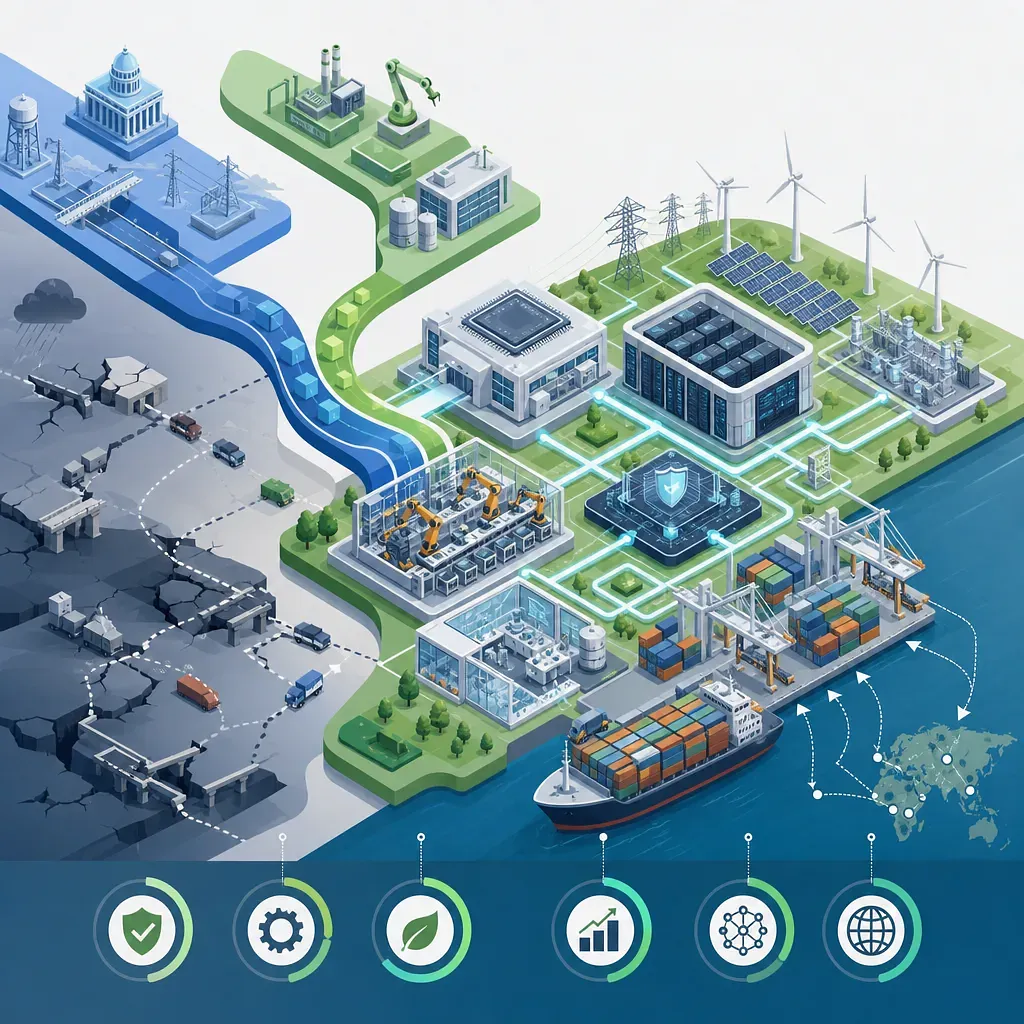
The illustration connects resilience, advanced manufacturing, clean energy, and global logistics.

FAQ

When was Japan's 2026 growth strategy finalized?

On July 21, 2026, the Japanese government finalized a new growth strategy and public-private investment roadmaps for 17 strategic sectors. Detailed schedules and project conditions for each sector may be further specified in subsequent announcements by the ministries and agencies in charge.

What common criteria were used to select the 17 strategic sectors?

The common assessment factors are their importance to economic security, Japan's existing industrial and technological base, the initial risks that are difficult for private investment alone to bear, and the potential to increase productivity and exports. Foundational sectors with significant social benefits, such as supply chains, energy, and disaster response, are also included.

How does crisis management investment differ from growth investment?

Crisis management investment focuses on reducing risks such as supply disruptions, cyberattacks, energy instability, and disaster damage. Growth investment aims to expand productivity, markets, added value, and exports. Many projects, including those in semiconductors and energy, serve both purposes simultaneously.

What is a robot foundation model?

A robot foundation model is a general-purpose AI model that jointly learns from video, language, sensor, and motion data and applies that learning to a variety of physical tasks. In actual industrial settings, it is necessary to verify not only task success rates but also error rates, safety, the frequency of human intervention, and the time required to recoup implementation costs.

What is the biggest obstacle to using manufacturing data for AI?

Major obstacles include differences in data formats and quality among companies, as well as issues involving trade secrets, security, and usage rights. Standardization, secure analytical environments, clear contractual rules, and support for data cleansing by small and medium-sized enterprises are all needed.

Can a policy be considered successful if the amount of government support is large?

No. The amount of support is only an input indicator. Actual additional private investment, facility utilization rates, productivity, commercialization, exports, supply chain diversification, and the potential for self-sufficiency after support ends must also be assessed.

What are the key constraints on AI and semiconductor investment?

Advanced talent, power grids, cooling and water, production yields, and customer acquisition are the main constraints. If only chip production capacity is expanded without securing power for data centers or a software and data ecosystem, the impact of the investment may be limited.

If a sector is included in the growth strategy, do companies automatically receive support?

No. Designation as a strategic sector indicates a policy direction and does not guarantee support for individual companies. Eligible technologies, cost-sharing requirements, domestic investment, disclosure of results, project continuation, and clawback conditions must be checked in the project-specific announcements issued by each ministry and agency.

Sources

Data formats

This content is available in several machine-friendly formats.

Data-only languages (machine translated, files only)

Indonesian JSON MD Portuguese JSON MD Chinese (Traditional) JSON MD Deutsch JSON MD

Reuse & AI usage

Search indexing and AI citation with attribution are welcome. See the license policy for details.

CC BY · License

Related content