Seoul Transit Changes During Heavy Snow and Cold Wave Alerts
Check the Korea Meteorological Administration's Weather Nuri site to see which areas are covered by heavy snow and cold wave alerts. For Seoul bus detours and extended hours of more frequent service, check TOPIS and the 120 Dasan Call Foundation. For subway service changes, check Ttota Subway and notices from the operators.
In the "Weather Alerts (Overview)" section of the Korea Meteorological Administration's Weather Nuri site, check when alerts apply at your starting point and destination.
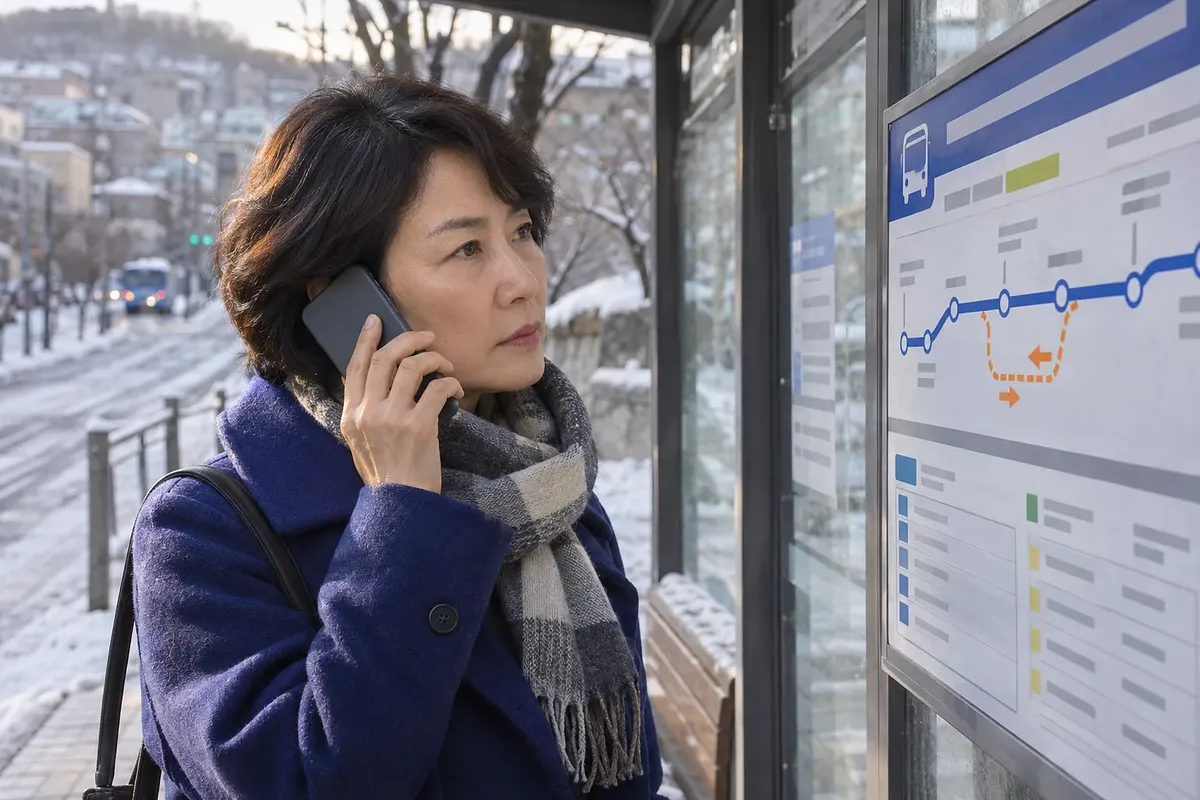
For Seoul buses, look up your route number and detour notices on TOPIS.
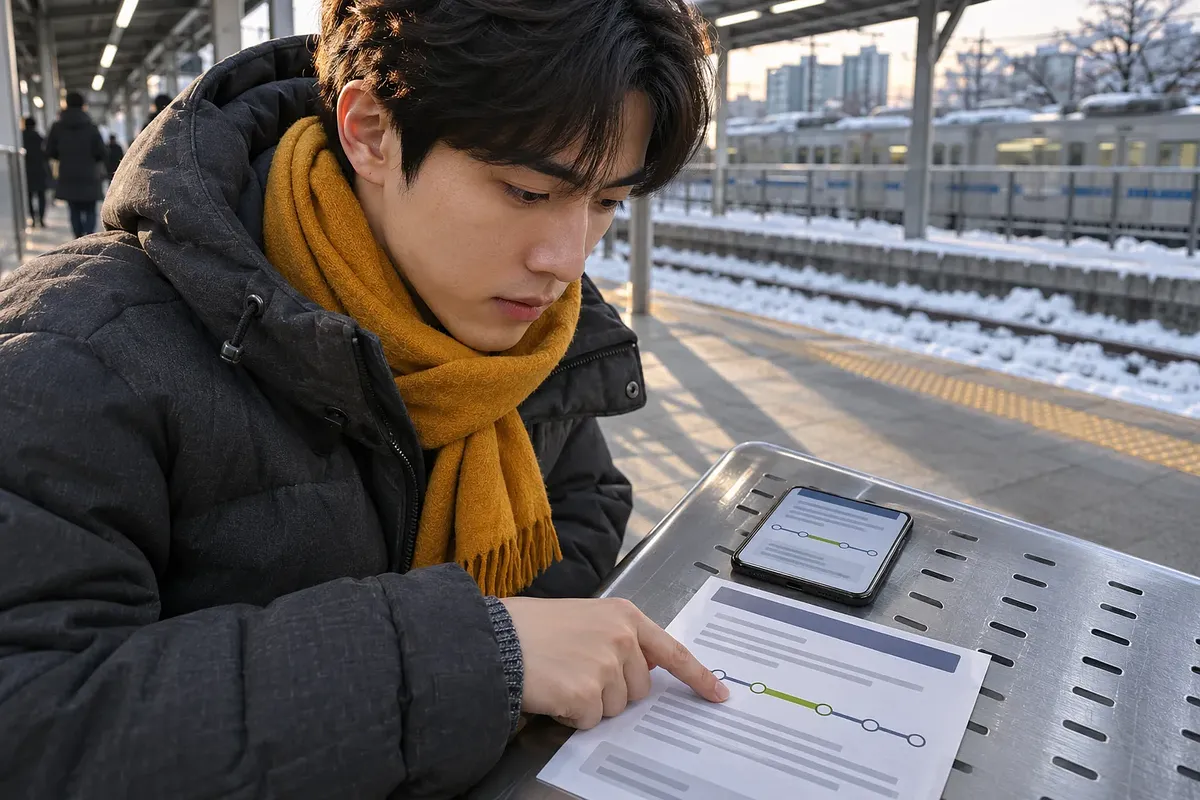
For sections operated by Seoul Metro, check the "Notices" section of Ttota Subway for your line and direction of travel.
Even after GilCheck shows that the alert has been lifted, double-check which sections the service change notice covers and when the changes end.
If a heavy snow or cold wave alert is issued, check the alerts for the area you’ll be traveling in on the Korea Meteorological Administration’s Weather Nuri before you leave. For Seoul bus detours, check TOPIS or call 120. For the subway, check Ttota Subway separately for service notices covering the section you’ll use.
The alert criteria and service extension times are based on announcements from the Korea Meteorological Administration and the Seoul Metropolitan Government checked on November 13, 2026.
How to check for bus and subway service changes before you leave
For buses, search by route number and stop name. For the subway, search by line and direction.
· On the Korea Meteorological Administration’s Weather Nuri, open “Alerts (Overview)” under “Alerts and Forecasts.” Check which alert zones your starting point and destination are in. Note the difference between when the alert was issued and when it takes effect.
· Open “Notices” on TOPIS, Seoul’s traffic information system. Find your route under “Bus” and check your stop against the stops listed in the detour notice. If you’re not sure where to board, give the 120 Dasan Call Foundation your route number and stop name.
· In the Ttota Subway app, check “Notices” for the line and direction you’ll be traveling. You can also find notices in the “Announcements” section of the Seoul Metro website. For KORAIL sections and the privately operated section of Line 9, check notices from the relevant operator.
· Just before you leave, check when the latest notice takes effect. On your way back, check again to see whether a notice says the detour has ended or train service has resumed.
Criteria for heavy snow and cold wave advisories and warnings
Heavy snow alerts are based on the amount of new snow expected to fall and accumulate over the next 24 hours. This amount is called “24-hour new snowfall.” Cold wave alerts are issued from October through April of the following year based on morning lows.
Expected conditions | Advisory | Warning
Heavy snow, 24-hour new snowfall | At least 5cm | At least 20cm, or at least 30cm in mountainous areas
Cold wave, sharp drop in morning temperature | At least 10℃ lower than the previous day, at most 3℃, and at least 3℃ below normal | At least 15℃ lower than the previous day, at most 3℃, and at least 3℃ below normal
Cold wave, persistently low temperatures | Morning lows expected to stay at or below -12℃ for at least 2 days | Morning lows expected to stay at or below -15℃ for at least 2 days
Here is the wording for a heavy snow advisory in the Korea Meteorological Administration’s “Criteria for Issuing Weather Alerts.”
When at least 5cm of snow is expected to fall and accumulate over 24 hours
A cold wave alert is issued if either of the two cold wave conditions in the table is expected. When temperatures drop sharply, check all three factors: the change from the previous day, the day’s low, and how it compares with normal. When low temperatures persist, the change from the previous day is not considered.
The name of your local alert zone
On June 1, 2026, the Korea Meteorological Administration increased the number of alert zones nationwide from 183 to 235 by dividing them into smaller areas. In the Seoul metropolitan area, the number rose from 39 to 48. In places such as Incheon, Paju, and Yongin, alert zones can vary within the same city.
For example, Munsan-eup in Paju is in “Northeastern Paju,” while Jori-eup is in “Southern Paju.” If you commute from Paju to Seoul, check the zone name for the town you’re leaving from and the zone name for your destination in Seoul. The alerts introduced at the time were the severe heat wave warning and the tropical night advisory. The Korea Meteorological Administration’s May 12 announcement about the changes did not revise the numerical criteria for heavy snow or cold wave alerts.
How long Seoul extends frequent rush-hour service at each snow removal level
During heavy snowfall, Seoul extends the hours when buses and subway trains run more frequently based on the snow removal level it declares. The 2026 Comprehensive Winter Plan runs from November 15, 2026, through March 15, 2027.
Situation announced by Seoul | 2026 Comprehensive Winter Plan | What to check before riding
Snow removal level 2 declared | Frequent rush-hour bus and subway service extended by 30 minutes | When frequent service ends on your route
Snow removal level 3 declared | Frequent rush-hour bus and subway service extended by 60 minutes | Hours and sections covered
Subway service suspended due to heavy snowfall | Replacement buses deployed | Section where service is suspended and where to board replacement buses
In the table for Seoul’s 2025 winter plan, level 2 lists heavy snow and cold wave advisories and a forecast of at least 5cm of snow. Level 3 lists heavy snow and cold wave warnings and a forecast of at least 10cm of snow. These figures come from Seoul’s response table for the previous winter.
The announcement for the 2026 plan does not include a table of snowfall thresholds by snow removal level. Korea Meteorological Administration alerts describe weather conditions, while Seoul’s snow removal levels determine how the city responds. If only a cold wave alert has been issued, check Seoul’s service notices for that day to see whether frequent rush-hour service will be extended.
Extra service for Seoul’s February 2, 2026, morning commute
Seoul announced that frequent morning rush-hour service would run until 9:30 a.m. on Monday, February 2, 2026. That was a 30-minute extension of the usual 7 a.m. to 9 a.m. period. The plan called for a total of 20 extra trips across subway Lines 2 and 5 through 8.
In the same notice, Seoul said some city buses that travel on steep roads could be diverted. Even if you took a subway line scheduled to run extra trains that day, you still needed to check separately whether your connecting bus would serve your stop. Each time it snows heavily, check that day’s notices for the number of extra trips and how long frequent service will be extended.
How to use Gilcheck to see whether alerts have been lifted and subway service is back to normal
In Gilcheck, you can view weather alerts under the “Daily Life” tab and subway notices under the “Transport” tab. A check on November 26, 2026, showed that the connection to Seoul Metro’s Subway Alert Information feed was marked “Normal.” A card for Seoul Metro’s November 25 notice that trains were running normally was also displayed.
· In “Daily Life,” select weather alerts and open the card for your area. Gilcheck posts weather alerts issued and lifted by the Korea Meteorological Administration. It does not post preliminary alerts, which come before formal alerts.
· Check the issuing agency and issue time on the card. The card details show when the alert takes effect, when it ends, and any changes. Follow the link to the Korea Meteorological Administration’s original notice to see which areas are no longer under the alert.
· In “Transport,” select “Subway” and open the card for your line. Check the current status: “Scheduled,” “In Progress,” “Partially Restored,” or “Restored.” If service is partially restored, check the original notice to see where trains are running again.
Gilcheck’s subway cards only show notices Seoul Metro publishes through its Subway Alert Information feed. It has not been confirmed whether all extra trips and delays appear as cards every time it snows. If you only see a card saying the weather alert has been lifted, check the operator’s notices to see whether train service has resumed.
Where can I find service information that isn’t on Gilcheck?
Check TOPIS and the 120 Dasan Call Foundation for extra Seoul city bus trips, detours, extensions to frequent rush-hour service, and replacement buses. If your bus is being diverted, ask whether it still serves your usual stop. If you’re taking a bus or subway outside Seoul, check notices from the relevant city or province or from the route operator.