Water Meter Freeze Prevention and How to Report to Seoul 120
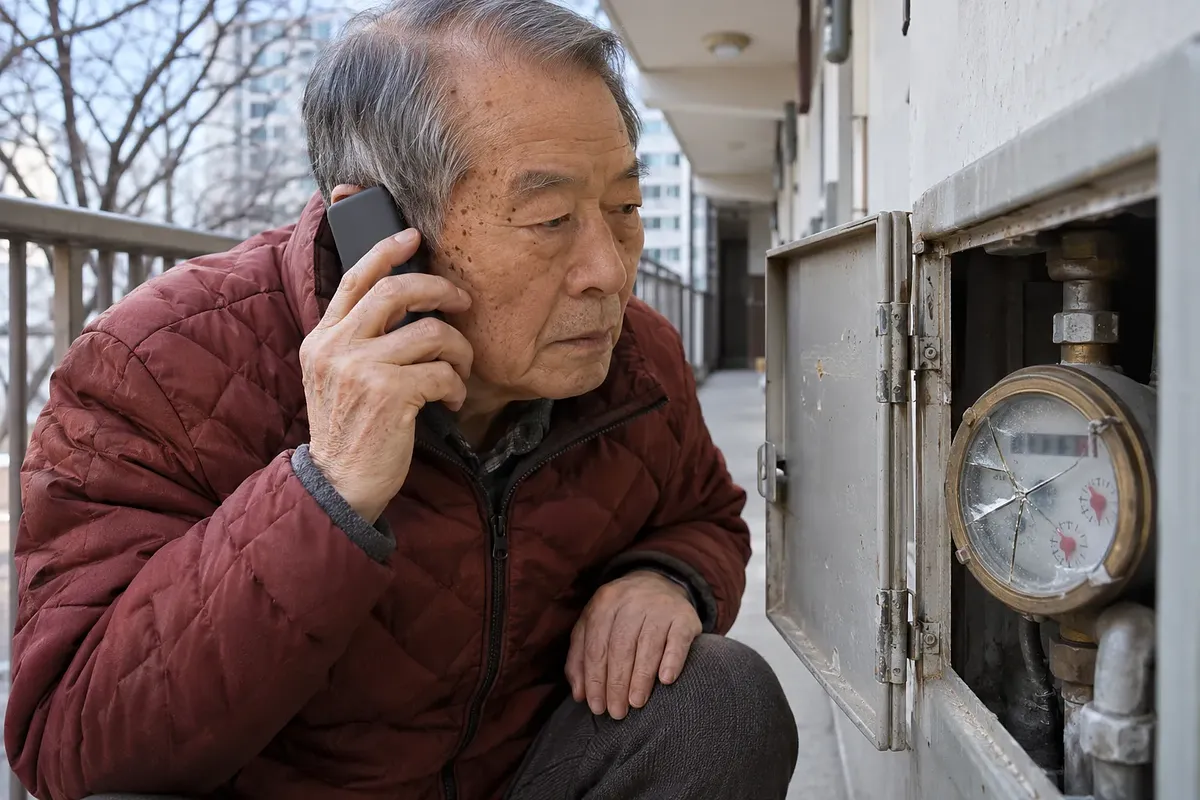
Before a cold snap, fill the meter box with dry old clothes or cotton padding. If the meter's display window is cracked or bulging, don't try to thaw it yourself or take it apart. In Seoul, report it to 120 or your local waterworks office.
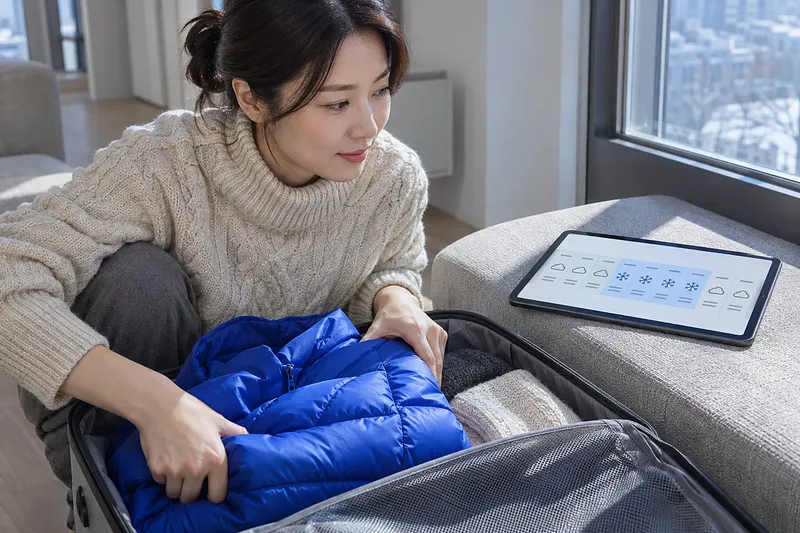
Before a cold snap, fill the meter box with dry old clothes or cotton padding and seal any gaps that let in cold air.
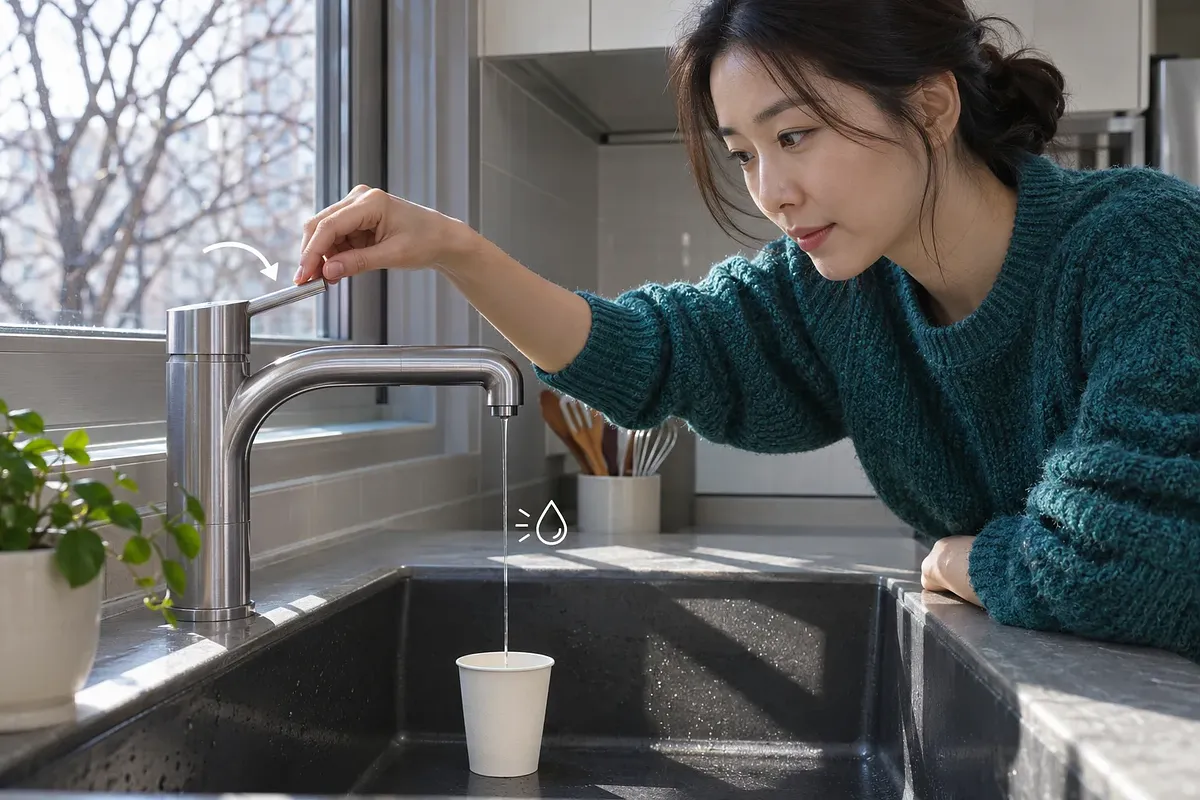
If a cold snap lasts at least two days, leave the tap running at a trickle that fills about one paper cup in 2 minutes.
If the meter or a water pipe freezes, first check whether the meter's display window is cracked or bulging.
If it's frozen but there's no sign of damage, thaw it slowly with lukewarm water or a warm towel. Don't use a flame.
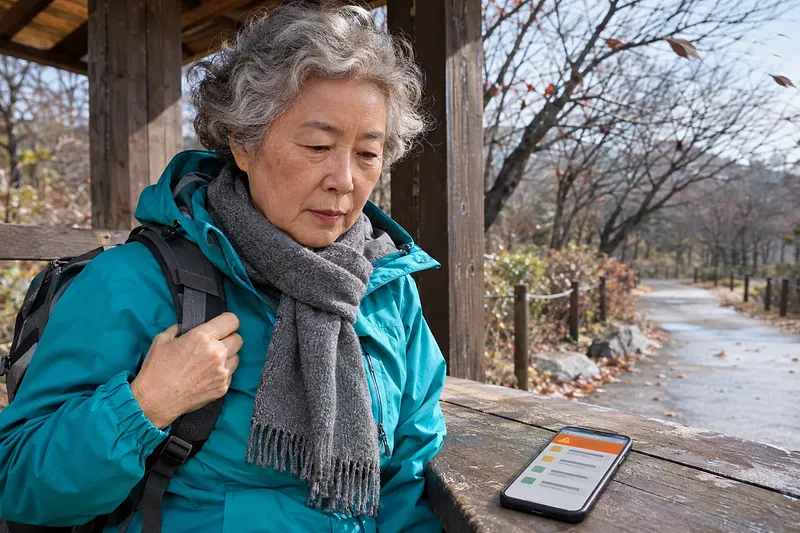
If the display window is cracked or bulging, call 120 or your local waterworks office in Seoul. In Jeju, contact your local water and sewer reporting service.
Before a cold wave, fill the water meter box with dry old clothes. If the cold wave lasts at least two days, let the tap run at a rate of about one paper cup every 2 minutes. If the meter display is cracked or bulging, call 120 immediately to report it in Seoul.
These precautions are based on guidance checked on November 13, 2026, and an announcement by the Seoul Metropolitan Government on November 16.
How to insulate the meter box and keep the tap running
Before a cold wave, open the meter box and check that the insulation is dry. Cold wind can easily hit the meter box directly, especially in apartment buildings with exterior corridors that have no windows to block the wind. If you’ll be away from home for a long time in winter, check the insulation before you leave.
· Remove any wet or damaged insulation and pack dry old clothes or cotton batting around the meter.
· Seal the gaps where the water pipes pass through the meter box. Cover the lid with insulation and seal the gaps on the outside with tape.
· If a cold wave lasts at least two days, open the tap slightly. Seoul’s 2025 guidance recommends about one paper cup every 2 minutes.
· Once you’ve used the cup to adjust the flow, remove it and leave the water running in a thin stream. Leave the tap trickling if you’ll be away from home for a long time during a cold wave.
How to thaw a frozen meter or water pipe
Before thawing the meter, check the register, the part that displays the numbers. If it’s cracked or bulging, there’s a risk of leaks and accidents. The Seoul Arisu Headquarters advises reporting it immediately rather than trying to force it to thaw or taking it apart.
· If the meter or pipe is frozen but shows no signs of damage, thaw it slowly with lukewarm water or a warm towel.
· Do not use heat above 50℃ or boiling water. The Jeju Waterworks and Sewerage Headquarters says temperatures of at least 50℃ will damage the meter.
National Safety 24’s “Cold Wave Safety Guidelines” specify what not to use as a heat source when thawing water pipes.
Never use fire to thaw water pipes.
Where to report water meter freeze damage in Seoul and Jeju
In Seoul, the 120 Dasan Call Foundation and local waterworks offices take reports of freeze damage. When you call, give the address where the meter is located and describe the condition of the display. In Jeju, choose the contact based on whether the address is in a dong or an eup or myeon area.
Area | How to report
Seoul by phone | 120 Dasan Call Foundation or your local waterworks office
Seoul online | Arisu Billing Customer Center (formerly Arisu Cyber Customer Center) > Submit a Service Request > Submit an Online Service Request > Request a Water Meter Replacement
Jeju City dong areas | 064-728-7461 through 064-728-7464
Seogwipo City dong areas | 064-760-6631 through 064-760-6634
Jeju eup and myeon areas | Local eup or myeon office
How Korea Meteorological Administration cold wave alerts differ from Seoul’s freeze damage forecasts
The Korea Meteorological Administration uses the morning low to decide whether to issue a cold wave alert, while the Seoul Arisu Headquarters uses the daily low to assess the risk of freeze damage. GilCheck shows when the Korea Meteorological Administration issues and lifts cold wave advisories and warnings on event cards. Before a cold wave, check the latest announcement from the Seoul Arisu Headquarters for Seoul’s freeze damage level. Seoul’s water outage notices are under ‘Arisu News > Water Outage Notices’ on the same headquarters’ website.
Korea Meteorological Administration criteria for cold wave advisories and warnings
The Korea Meteorological Administration issues cold wave alerts from October through April of the following year. An alert’s criteria are met if either of the two conditions below is forecast. The criteria for a sharp drop in temperature consider both the difference from the previous day and the difference from normal.
Forecast conditions | Cold wave advisory | Cold wave warning
Sharp drop in morning temperature | A drop of at least 10℃ from the previous day, a morning low of at most 3℃, and at least 3℃ below normal | A drop of at least 15℃ from the previous day, a morning low of at most 3℃, and at least 3℃ below normal
Persistent low morning temperatures | Morning lows of at most -12℃ for at least 2 days | Morning lows of at most -15℃ for at least 2 days
Seoul’s four forecast levels for water meter freeze damage
In its November 2026 plan, the Seoul Arisu Headquarters said it would keep its freeze damage response center open 24 hours a day starting at the Alert level. That year’s freeze damage measures began on November 15. Seoul’s comprehensive winter plan runs from November 15, 2026, through March 15, 2027.
Seoul freeze damage level | Seoul Arisu Headquarters criteria based on the daily low
Attention | At least -5℃
Caution | Range from -5℃ to -10℃
Alert | Range from -10℃ to -15℃ expected to persist for at least 2 days
Severe | Below -15℃ expected to persist for at least 2 days
For example, forecast morning lows of at most -15℃ for two days meet the Korea Meteorological Administration’s criteria for a cold wave warning. To reach the Severe level in Seoul’s freeze damage forecast, the daily low must be below -15℃. A cold wave warning card alone therefore cannot tell you the freeze damage level. The Korea Meteorological Administration’s ‘Cold Wave Impact Forecast’ describes the effects of the cold using four levels: Attention, Caution, Warning, and Danger.
Who pays to replace a water meter in Seoul?
Under Article 42 of the Seoul Metropolitan Government Waterworks Ordinance, the city pays for repairs and installation if a natural disaster damages a meter or causes it to freeze and burst. Who pays, however, depends on how the meter was insulated and the condition of its protective casing. The criteria below follow the ordinance that took effect on March 27, 2025.
Circumstances at the time of damage | Who pays
A natural disaster damaged the meter or caused it to freeze and burst, and none of the exceptions below apply | Seoul Metropolitan Government
The meter froze and burst because it was not insulated | The water user or other party responsible for maintaining the water supply equipment
The meter froze and burst because the protective casing was damaged, exposed, or had come off the meter | The water user or other party responsible for maintaining the water supply equipment
The mayor of Seoul sets the prices for meters and protective casings and the installation fees separately. If you receive a notice about a charge, ask your local waterworks office why it was charged and what the current amount is.
Eligibility and timeline for digital meter replacement in apartments with exterior corridors
In November 2026, Seoul announced a replacement target of 274,407 households in apartment buildings with exterior corridors by 2027. The part of a digital meter that displays water usage does not fill with water, reducing the risk of freeze damage. The meter sends usage data wirelessly, so a meter reader does not need to visit your home.
Date | Plan or progress reported by the Seoul Metropolitan Government
March 18, 2026 announcement | Announced a plan to switch about 300,000 households in apartment buildings with exterior corridors and a record of freeze damage in the past 5 years to remote meter reading. The planned budget through 2027 was 44.1 billion won
Progress through October 2026 | Replacements completed for 111,182 households
November 16, 2026 announcement | Announced that replacements would be made in phases for a total of 274,407 households by 2027
Seoul recorded 2,754 cases of freeze damage during the winter of 2025 to 2026. Of those, 1,352 cases (49.1%) occurred in apartment buildings with exterior corridors. If your meter hasn’t been replaced yet, start by checking the insulation on the exterior corridor side before a cold wave.