Injoys

The telecom supercycle is an investment hypothesis to test whether AI demand translates into company earnings. Data center networks and mobile networks benefit through different channels. When choosing stocks, check for actual orders and profit growth.
The verified figures are based on the periods specified in materials published from February to August 2026.
What the telecom supercycle means
The telecom supercycle is a forecast that demand for telecom equipment will grow over a long period. It is not an official indicator that guarantees a particular company’s share price will rise. This article uses repeat orders from increased investment as the test.
AI services need networks to send and receive data. But the equipment needed depends on where data volumes grow. There is no set sequence in which telecom stocks rise after growth in power infrastructure.
- Demand growth: Customers need additional network capacity.
- Investment spending: Customers use their budgets to buy equipment.
- Earnings growth: Suppliers see their revenue and profits increase.
- Revaluation: The market assigns a higher value to companies’ future profits.
These stages are connected, but they are not the same thing. An investment announcement alone cannot tell you how much a supplier’s profits will grow. Share prices may also reflect expectations before earnings appear.
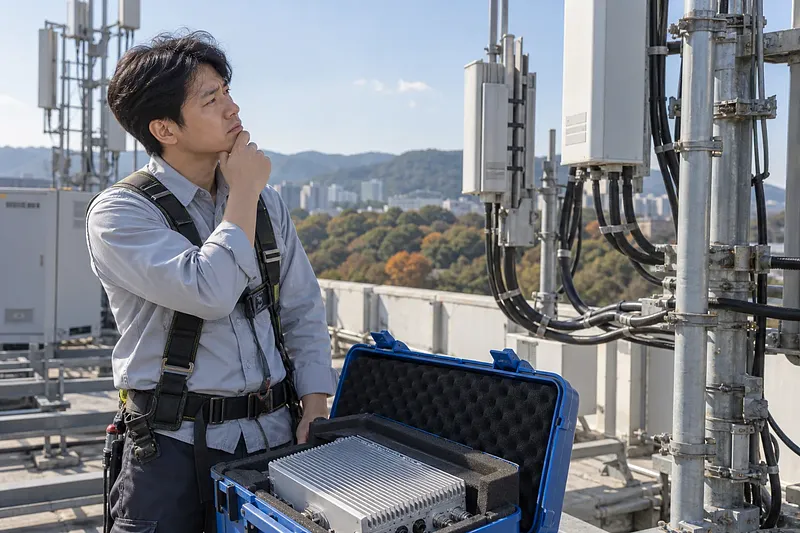
Network investment should be judged by whether it leads to equipment orders and profits.
Comparing AI data center networks and mobile networks
AI data center internal networks and mobile networks differ in what buyers need them for. NVIDIA says it uses NVLink to connect GPUs. It uses InfiniBand and Ethernet between servers and racks. The architecture is described in NVIDIA’s networking documentation.
| Category | What it connects | Main equipment | Starting point for an investment assessment |
|---|---|---|---|
| Data center internal network | GPUs and servers | High-speed interconnects, switches | Whether the products are adopted alongside AI computing equipment |
| Inter-data center network | Different data centers | Optical transmission equipment and lines | Whether the company participates in projects to expand connection capacity |
| Mobile access network | Mobile phones and base stations | Radio units, filters, antennas | Whether mobile carriers place base station orders |
| Indoor mobile network | Users inside buildings and the mobile network | DAS and repeaters | Whether the company secures installation projects in buildings and transport facilities |
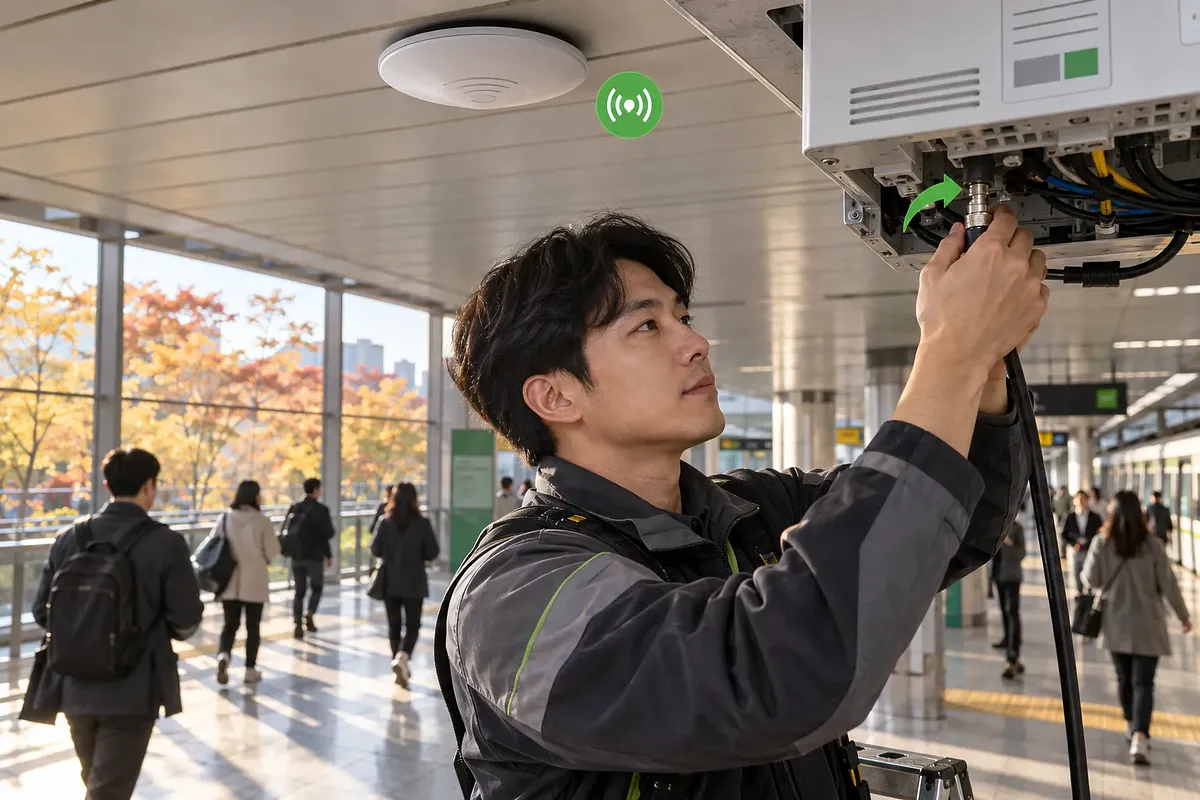
DAS is a system that distributes mobile signals through multiple antennas. SOLiD supplies it to address coverage gaps in buildings, subways and other locations. The company’s business scope is described in its 2026 investor presentation.
The investment implication of this distinction is clear. Do not assume that AI data center expansion creates demand for every type of wireless equipment. First, check which part of the network uses the company’s products.
What to check in AT&T’s investment plan
AT&T’s large investment announcement is not a purchase order for any individual supplier. AT&T announced a long-term investment plan on March 10, 2026. It plans to invest and spend more than $250 billion over five years through 2030. The AT&T announcement covers spending related to both networks and operations.
Do not treat the entire amount as an equipment purchasing budget. A separate capital investment measure also needs to be checked. In its July 2026 earnings announcement, AT&T maintained its annual investment outlook.
| Announced measure | Period | Amount | Interpretation |
|---|---|---|---|
| Long-term investment and spending plan | Five years through 2030 | More than $250 billion | A broad plan that includes spending beyond equipment purchases |
| Capital investment outlook | Each year from 2026 to 2028 | $23 billion to $24 billion | An investment measure defined separately by the company |
| Capital investment recorded | Second quarter of 2026 | $6.1 billion | Includes cash payments related to supplier financing |
| Capital expenditures recorded | Second quarter of 2026 | $5.7 billion | Equipment-related spending from continuing operations |
The quarterly figures and annual outlook come from AT&T’s second-quarter 2026 earnings announcement. Adding measures with different scopes can double-count investment. Check separately whether Korean companies’ products are adopted and orders are actually placed.
Comparing four telecom-related companies
Although these four companies fall under the same telecom theme, they make money in different ways. Companies that operate telecom services should be distinguished from those that sell equipment. The checks in the following table are analytical criteria based on their business structures.
| Company | Main business connection | Earnings to check | Signs that weaken the outlook |
|---|---|---|---|
| SK Telecom | Telecom services and data centers | Telecom profitability, data center revenue, cash flow after investment | Rising investment burden and weakening funds available for dividends |
| SOLiD | Telecom equipment, including DAS and repeaters | Revenue by region, project deliveries, operating margin | Delayed orders and declining profitability |
| RFHIC | High-frequency semiconductors and amplifiers for telecom and defense | Orders by business, contract changes, delivery results | Smaller contracts and delayed deliveries |
| KMW | Base station radio units, filters and antennas | Customer orders, revenue by product, operating profit or loss | Delayed customer investment and continued losses |
SK Telecom’s dividends and data center earnings
SK Telecom’s data center growth needs to be considered alongside the profitability of its existing telecom business. AI data center revenue in the second quarter of 2026 was 136.2 billion won, up 92.5% from the same quarter a year earlier. The dividend for the quarter was 830 won per share.
Consolidated operating profit in the second quarter of 2026 was 566 billion won. The company also cited a base effect from one-time spending in the previous year. It is difficult to attribute the entire growth rate to the AI business. The figures come from SK Telecom’s August 5, 2026 announcement.
Dividend yield changes with the dividend and share price. Check both the expected annual dividend and the share price used in the calculation. Do not use 4.7% as the current yield without a source and reference date.
SOLiD’s DAS demand
For SOLiD, check indoor network installation projects and overseas revenue. The company’s investor presentation includes 2024 data from Mobile Experts. That material puts SOLiD’s DAS market share at 15%.
Describing that figure as its current market share in 2026 would change the reference point. You also cannot estimate revenue by multiplying AT&T’s investment amount by that percentage. Market share is not the proportion of a particular customer’s purchases awarded to a supplier.
The claim that operating profit reached 113% of market expectations also needs a reference point. Check which quarter it covers and the source of the estimate used for comparison. Until then, it is best not to treat it as a confirmed assessment of earnings.
RFHIC’s defense orders and contract revisions
RFHIC’s orders need to be read alongside both the initial announcement and later revisions. The company supplies high-frequency products for wireless communications, defense and other uses. Its business scope can be checked through RFHIC investor information.
The value of the Raytheon Canada Limited contract changed after its announcement. The initial disclosed figure appears in a securities firm report posted by the company. The half-year report records the later revised amount.
| Document checked | Contract value stated | Basis |
|---|---|---|
| Shinhan Securities RFHIC report | 50,638,806,530 won | Initial disclosure included in the February 20, 2026 report |
| RFHIC 2026 half-year report | 29,636,037,311 won | Revised on June 19, 2026; reported as of June 30 |
The initial amount appears in the report posted by the company. The later amount can be checked in the public half-year report. Do not cite only the initial amount when describing the current contract value.
The difference in the revised amount does not necessarily mean all of it was canceled. Check whether the contracting party changed or there was a separate contract. Check the revised terms in RFHIC’s corrected single-sale and supply contract disclosure on KIND.
Orders for defense amplifiers are evidence for that business. They cannot be classified as orders for AI data center equipment. Forecasts of additional orders should also be distinguished from actual contracts.
Conditions for KMW’s earnings recovery
For KMW, check whether orders for base station equipment turn into revenue. The company’s investor presentation lists radio units, filters and antennas as its business areas. Its June 2026 materials describe 5G expansion and more efficient use of existing assets. The product lineup appears in KMW’s investor presentation.
Restrictions on Chinese equipment cannot be counted immediately as KMW orders. Buyers must first select replacement equipment and choose suppliers. Look for higher revenue and improved operating results to confirm an earnings recovery.