Enter a neighborhood name or route number in “Find a Neighborhood Bus” on the left side of this site. Select your direction of travel to see when the bus is expected at your stop. The standard fare is 500 won on Jeonju’s Baro On and 1,550 won by card on Chuncheon’s neighborhood buses. Transfer windows vary by city and by the route you take next.
Fares and transfer rules are based on local government and transit agency information checked on November 11, 2026.
How to check first and last neighborhood buses and expected arrivals at your stop
Check first and last buses by route, and check upcoming arrivals for the stop where you’ll board.
- Select your city in “Find a Neighborhood Bus” on the left. You can search by neighborhood name or by a route number that includes Korean characters, such as “군위1”.
- Open the route’s list of stops and check that your destination comes after the stop where you’ll board. If several routes share the same number, check the direction name too.
- Check the first and last bus times and how often buses run in your direction. If the first and last times are departures from the starting terminal, the bus will pass stops along the route at different times.
- Select your boarding stop to check expected arrivals. To see how long the ride will take, select your boarding and destination stops.
- Before leaving, check the city’s bus information website for notices about detours or service changes. Expected arrival times may change with road conditions.
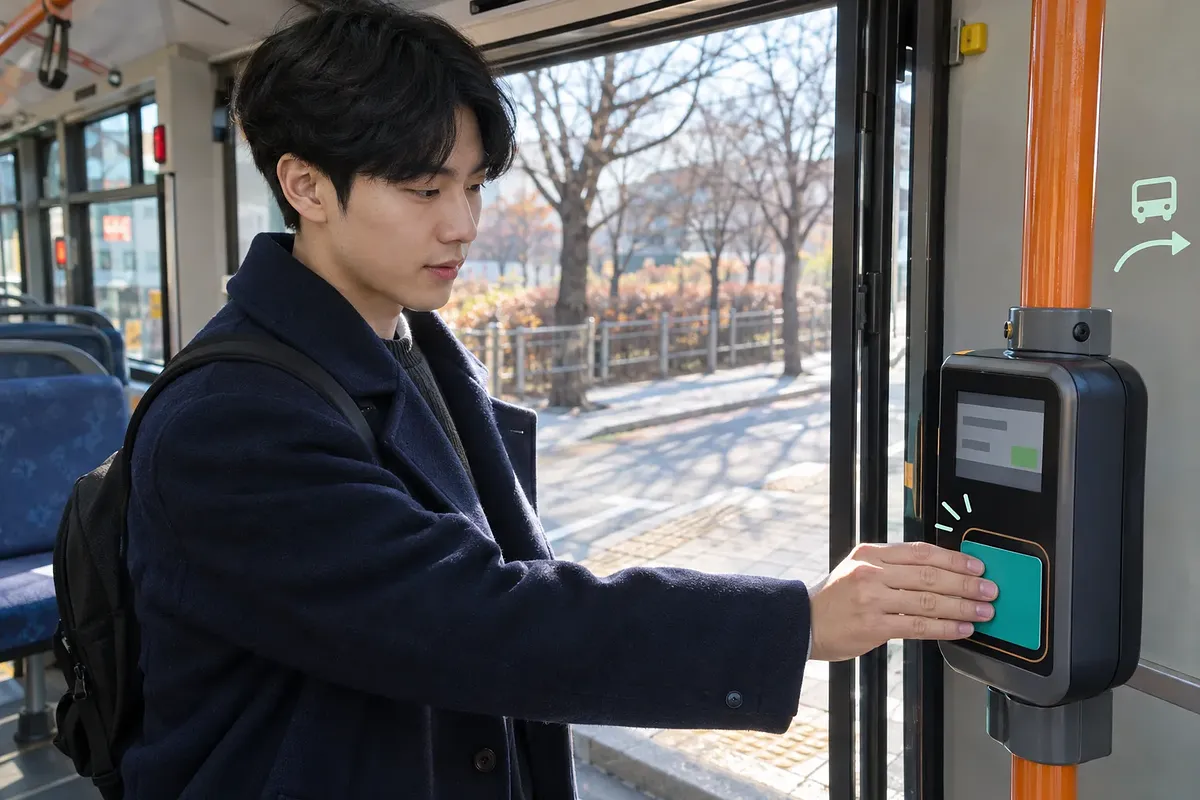
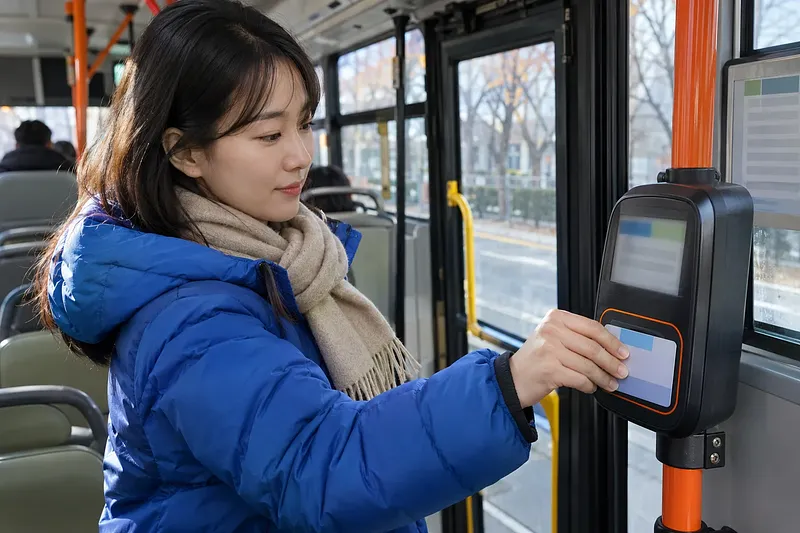
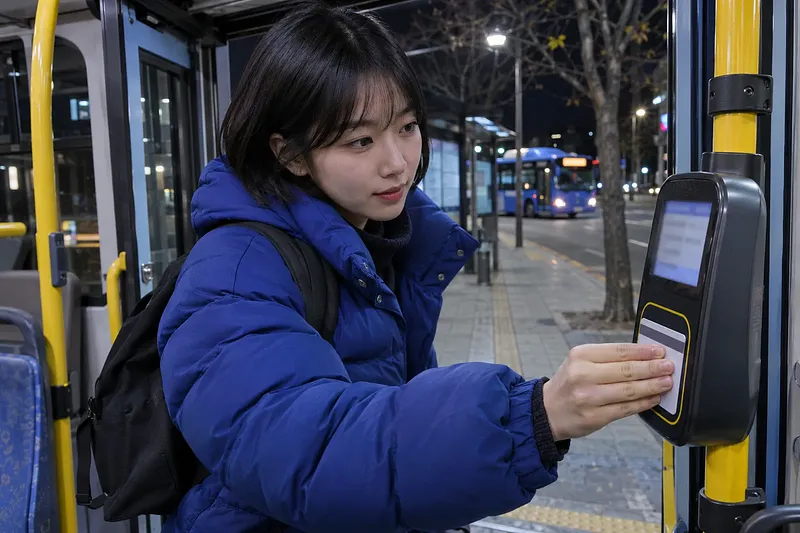
When you transfer, use the same transit card you used on the first bus.
Route names and bus information websites by city
In Incheon, you can search by number alone, but for routes such as Gwangju’s 마을720 or Chuncheon’s 신북1, including the Korean characters before the number makes it easier to find the right route.
| City | Name or number to search | Official bus information website |
|---|---|---|
| Incheon | 533, 534, 무의1 | Incheon Bus Information |
| Daegu | 군위1 through 군위11. Check the direction even if the route number is the same | Daegu Bus Information System |
| Gwangju | 마을720 | Gwangju Bus Service Information |
| Daejeon | Yuseong-gu 마을1, 마을3, 마을5 | Daejeon Traffic Information Center |
| Ulsan | Use the area name and number, as in 울주61. Check whether it’s a feeder, neighborhood, or Masil bus | Ulsan Traffic Management Center |
| Sejong | As with Route 91 in Jeondong-myeon, look it up by town or township name and route number | Sejong Traffic Information System |
| Chuncheon | Search by town or township name and number, as in 신북1 | Chuncheon Live Bus |
| Jeonju | The public neighborhood bus service “Baro On.” Search by the name of your boarding stop | Jeonju Traffic Information Center |
New address for Gwangju bus information
The new address for Gwangju Bus Service Information is bus.jeonnam-gwangju.go.kr. This is the address listed following the launch of Jeonnam-Gwangju Integrated Special City on July 1, 2026. If your old bookmark no longer works, use the Gwangju Bus Service Information link in the table above.
Public neighborhood buses and local bus operators
Jeonju Facilities Corporation operates Jeonju’s public neighborhood bus service, “Baro On”. Sejong Urban Transportation Corporation lists neighborhood bus routes by town and township. In Chuncheon, different companies serve different areas. For questions about buses toward Sinbuk, look up Maeil Tourism Co., Ltd. on the city’s transportation portal.
According to Ulsan’s December 2025 count, 6 companies operated 47 neighborhood buses on 21 routes. Ulsan counts its 10 Masil bus routes separately. In its transfer guide, Ulsan classifies Ulju61 as a feeder bus.
Neighborhood bus fares by transit card and cash
Find your route first, then check the adult, youth, or child column that applies to you. Each cell lists the transit card fare first and the published cash fare second, in won. If cash payments are restricted, follow the payment instructions on board.
| City or route | Adult card / cash | Youth card / cash | Child card / cash | Fare reference |
|---|---|---|---|---|
| Incheon 533 and 534 | 1,200 / 1,300 | 850 / 900 | 500 / 500 | Feeder fare, effective October 7, 2023 |
| Incheon Muui1 | 1,500 / 1,600 | 1,050 / 1,100 | 600 / 600 | Main route fare, effective October 7, 2023 |
| Daegu Gunwi | 1,500 / 1,700 | 850 / 1,000 | 400 / 500 | Updated by Gunwi County on May 8, 2026 |
| Gwangju neighborhood buses | 1,250 / 1,400 | 800 / 1,000 | 400 / 500 | Checked November 11, 2026. Same fare as regular city buses |
| Daejeon Yuseong-gu | 1,350 / 1,450 | 650 / 700 | 300 / 350 | Daejeon Bus Transportation Business Association, as of February 13, 2026 |
| Ulsan neighborhood buses | 1,000 / 1,100 | 750 / 800 | Free / 500 | Checked November 11, 2026. Same fare as feeder buses |
| Sejong neighborhood buses | 1,300 / cash restricted | 1,000 / cash restricted | Free / cash restricted | Checked November 11, 2026. Pay by bank transfer if necessary |
| Chuncheon city and neighborhood buses | 1,550 / 1,700 | 1,210 / 1,360 | 700 / 850 | Chuncheon city notice, August 5, 2024 |
| Jeonju Baro On | 500 / 500 | 500 / 500 | 500 / 500 | Held unchanged in the August 1, 2025 fare adjustment |
Incheon runs cashless buses, so bring a transit card. In Sejong, children ride free only with a transit card registered for child fares. In Ulsan, children also ride free with a child transit card, and the cash fare is 500 won.
On August 1, 2025, Jeonju changed the cash fare for regular city buses to 1,700 won. Paying by transit card takes 50 won off that fare. On the same day, the Baro On fare was kept at 500 won.