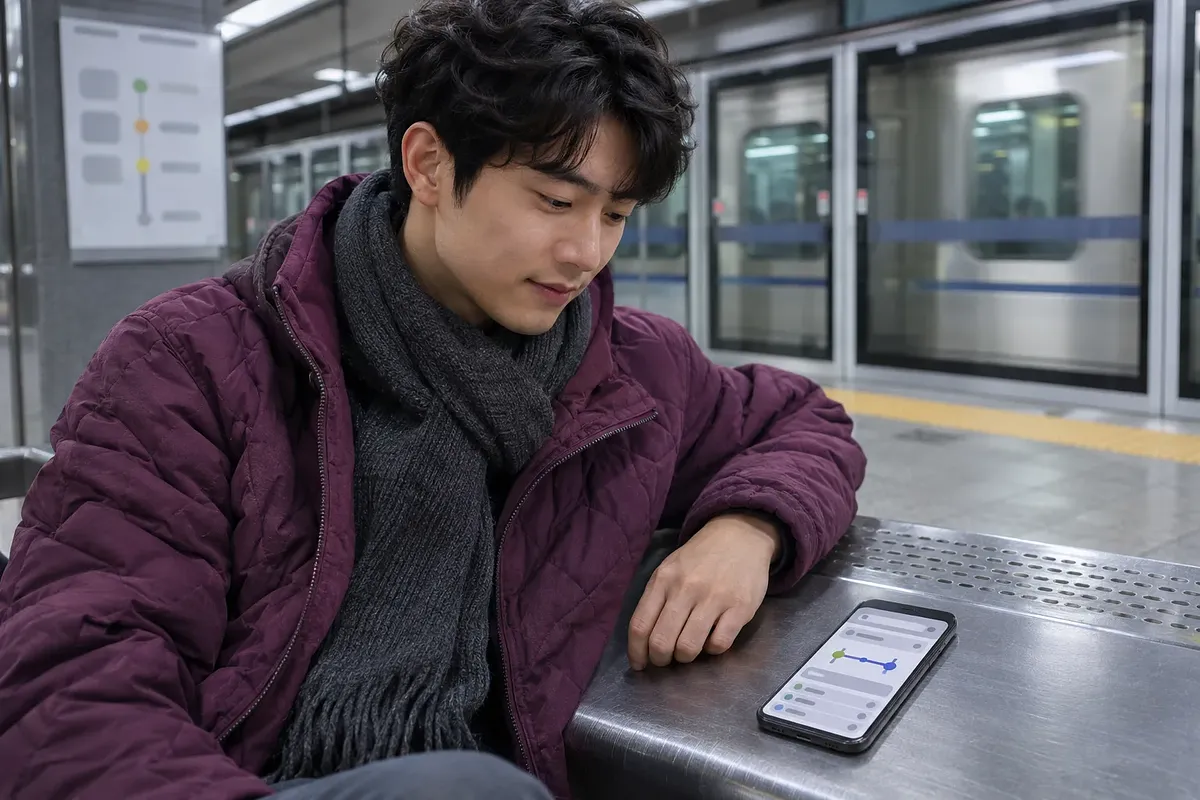
To use the subway in Gwangju or Daejeon, check station timetables using this site's search. Check fares and transfer conditions with each city's transportation corporation. Line 1 is currently available. Line 2 has not yet opened in either city.
Route, fare, and construction information is based on operator information accessed on November 9, 2026.
How to Check the First, Last, and Next Trains
Select a station in the subway and bus route search on the left side of this site. The station timetable shows the first, last, and next trains. Before departing, also check the operator's service change notices.
- Open the subway and bus route search on the left side of this site.
- Select the station you will use in Gwangju or Daejeon.
- Check the train times you need in the station timetable.
- Check fares in the relevant city's transportation corporation fare guide.
- Check bus transfer conditions and any station facilities you need.
This site's route and fare search between two stations is for the Seoul metropolitan area. Use each operator's information to check Gwangju and Daejeon fares. This article does not include a fixed table of first and last train times.
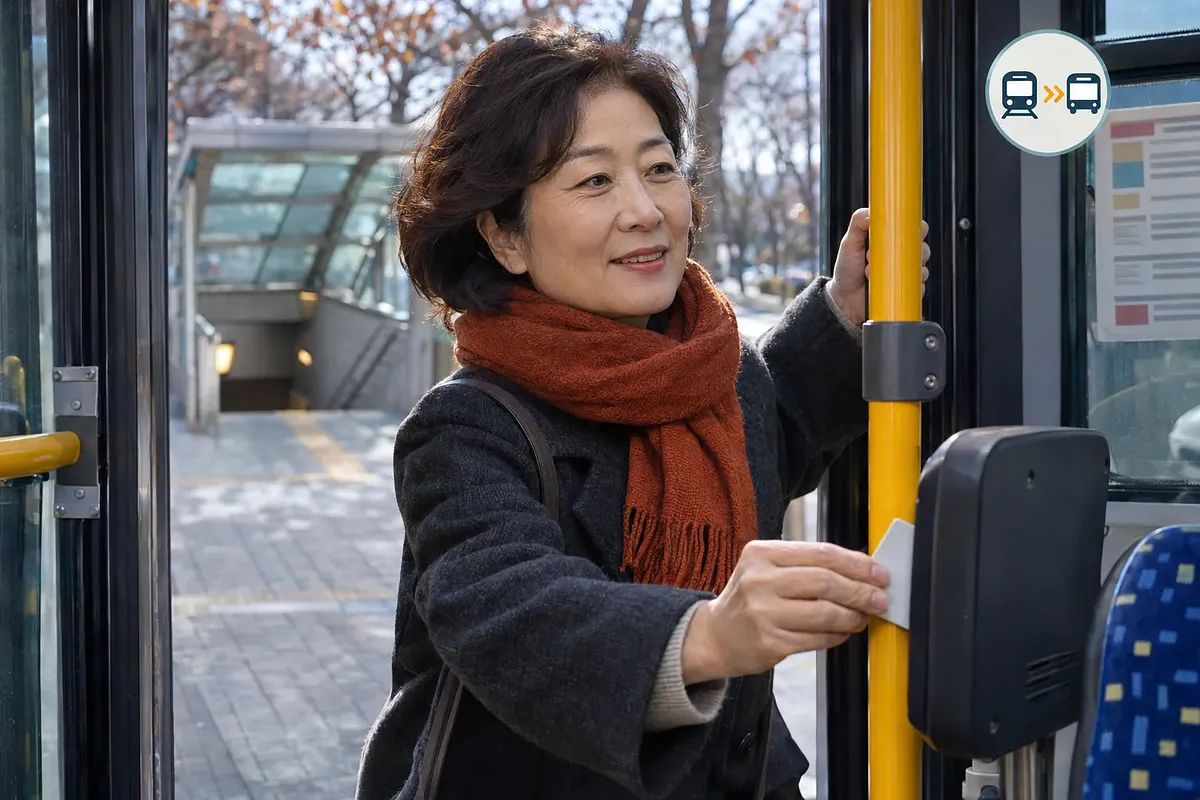
Before transferring to a bus, check the transit card requirements and transfer time limit.
Comparison of Operating Lines and Operators
Gwangju and Daejeon each have an operating urban railway Line 1.
| Category | Gwangju Line 1 | Daejeon Line 1 |
|---|---|---|
| Operating section | Nokdong Station to Pyeongdong Station | Panam Station to Banseok Station |
| Line length | 20.5km | 22.6km |
| Number of stations | 20 stations | 22 stations |
| Operator | Gwangju Transportation Corporation | Daejeon Transportation Corporation |
| Fare system | Flat fare across the entire line | Distance-based fare zones |
| Line 2 status | Under construction, not yet open | Tram under construction, not yet open |
Basic route information is available from Gwangju Transportation Corporation's Operation Status and Daejeon Transportation Corporation's Facilities Overview.
Gwangju Line 1 and Administrative Boundary Changes
Gwangju Line 1 opened in stages. The Nokdong to Sangmu section opened on April 28, 2004. The Kim Dae-jung Convention Center to Pyeongdong section opened on April 11, 2008. The current operator, Gwangju Transportation Corporation, was established in September 2023.
Jeonnam-Gwangju Integrated Special City was established on July 1, 2026. This administrative area combines Gwangju Metropolitan City and Jeollanam-do. Check Gwangju Transportation Corporation for urban railway travel information. Its establishment can be confirmed in the government's weekly policy magazine K-Gonggam.
Daejeon Line 1 Opening History
Daejeon Line 1 connects Panam Station and Banseok Station. Phase 1 opened on March 16, 2006. The entire line opened on April 17, 2007. The current operator, Daejeon Transportation Corporation, was established on January 1, 2022.
Transportation Card Fares and Concession Eligibility
Gwangju uses a flat fare, while Daejeon uses distance-based fare zones. Children and teenagers should have transportation cards appropriate for their age. Those eligible for free travel should also bring identification to verify their eligibility.
Gwangju Base Fares and Gwangju G-Pass
Gwangju's base fare is the same regardless of travel distance. The standard transportation card base fare is 1,250 won. The base fare for a youth transportation card is 900 won. The base fare for a child transportation card is 500 won.
The base fare for a standard or youth single-use ticket is 1,400 won. The corporation's fare guide lists the rates effective from August 1, 2016. Those aged at least 65, people with disabilities, and people with service-related disabilities recognized for national merit, among others, are eligible for free travel. Identification must be presented to use concession tickets. Gwangju Transportation Corporation Passenger Transport Regulations and Fares
Gwangju G-Pass is a support program that must be checked separately from the base fare. It took effect on January 1, 2025. It covers Gwangju's urban railway, city buses, and village buses.
- The guidance states that children receive an immediate 100% discount when using the designated transportation card.
- The guidance states that teenagers receive an immediate 50% discount when using the designated transportation card.
- Adults must sign up for K-Pass and register their card.
- The basic usage requirement for adults is at least 15 trips per month.
- Support payments for those eligible for reimbursement are paid the following month.
Check the support conditions, including age-specific transportation cards and residency. Rural buses from neighboring cities and counties are excluded from support for children and teenagers. This exclusion applies even when a rural bus operates within Gwangju. Introduction to Gwangju G-Pass
Daejeon's Distance-Based Fare Zones and Age-Based Fares
Daejeon determines the fare zone by the distance traveled from the departure station. Travel within 10km is Zone 1. Zone 2 applies to travel of more than 10km.
The standard transportation card fare is 1,550 won for Zone 1. Zone 2 costs 1,650 won. The standard Zone 1 transportation card fare increased on January 1, 2024.
The youth transportation card fare is 880 won for Zone 1. The youth Zone 2 fare is 960 won. The child transportation card fare is 550 won for Zone 1. The child Zone 2 fare is 600 won.
Daejeon also provides free travel for those aged at least 65, people with disabilities, and others. Identification must be presented to use concession tickets. Check the corporation's information for the fare zone between your departure and arrival stations. (Verified values: Zone 1 within 10km, Zone 2 more than 10km · Source: djtc.kr · Verified on 2026-11-17) Daejeon Transportation Corporation Passenger Transport Terms and Fares
Bus Transfer Conditions
To transfer, use a transportation card and tap it when getting off as well. Gwangju calculates the transfer time from the first time you get off. In Daejeon, check both the time allowed after getting off and the modes of transport used.
| Travel situation | Conditions to check |
|---|---|
| Transfers between Gwangju's urban railway, city buses, and village buses | Free transfers within 30 minutes of first getting off, with no limit on the number of transfers |
| Transfers between Gwangju public transport and nearby rural buses | One 50% discount under regional transfer conditions; fares outside city limits charged separately |
| Rural bus transfers where both the origin and destination are within Gwangju | Excluded from regional transfer discounts with Gwangju public transport |
| Transfers between Daejeon urban railway Zone 1 and city buses | Check the transfer requirement of boarding within 30 minutes of getting off and the fare for each mode of transport |
| Transfers between Daejeon's urban railway and village buses | Check discounted transfer fares rather than assuming all transfers are free |
| Travel in Daejeon urban railway Zone 2 | Check the additional fare separately from whether a transfer discount applies |
Daejeon Transportation Corporation provides free transfer criteria for Zone 1 and city buses. Check the actual additional amount payable based on the modes of transport and fare zones used. (Verified values: city bus→urban railway standard fare 50 won; Zone 2 additional fare: standard 100 won, youth 80 won, child 50 won · Source: djtc.kr · Verified on 2026-11-17) Transfers within Gwangju must also be distinguished from regional transfers involving rural buses. Gwangju Transportation Corporation Transfer Criteria, Daejeon Transportation Corporation Transfer Fares