Injoys
An AI-native developer is not simply someone who is proficient with tools such as ChatGPT, Claude Code, and GitHub Copilot. More precisely, an AI-native developer can be defined as a developer who designs the context, tools, permissions, and evaluation criteria that enable AI to perform executable tasks, while humans remain responsible for goal-setting, verification, approval, and accountability.
However, “AI-native developer” is not an official certification or a standardized job title agreed upon across the industry. The scope of automation also varies according to the risk level of the organization and product, so it should not be equated with handing every decision over to AI.
Definition of an AI-Native Developer
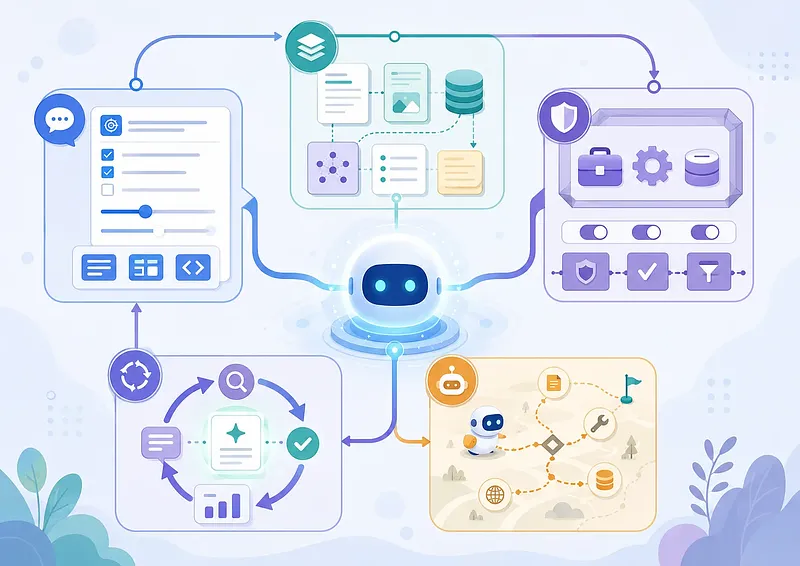
AI-native development treats AI not as an auxiliary code completion tool but as a development execution layer. Humans structure the work to be done and define success criteria and prohibited conditions, while AI performs exploration, drafting, execution, and modification within the permitted scope.
The core roles are divided as follows.
- Human: Problem definition, priorities, constraints, risk classification, approval criteria, and final accountability
- AI agent: Information retrieval, draft planning, code and test creation, static analysis, and iterative modification
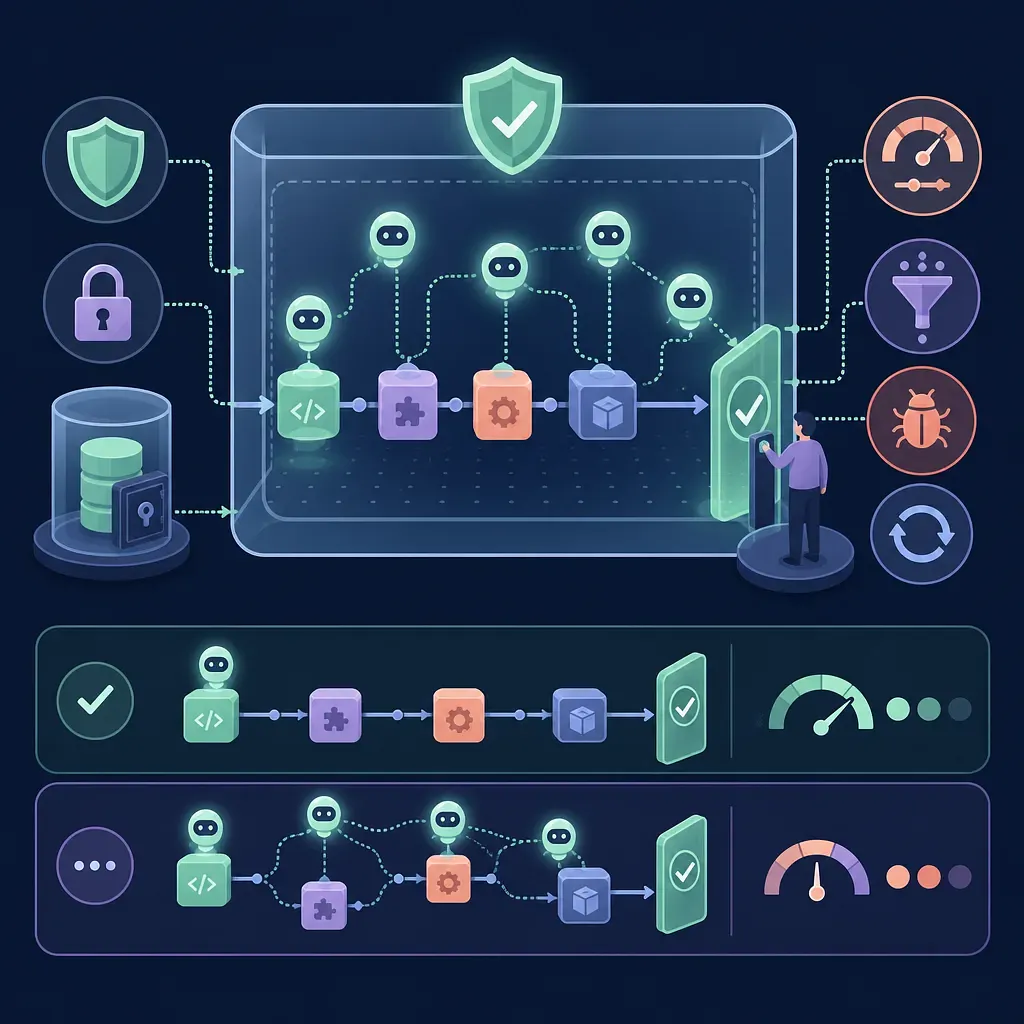
- Harness: Documentation, tools, permissions, state management, tests, logs, cost limits, and stop conditions
An AI agent generally refers to a system in which a language model uses tools and selects its next action based on intermediate results. Unlike a workflow that follows a predetermined procedure, an agent can dynamically determine the order of tasks within its permitted scope.
| Category | AI-Assisted Development | AI-Native Development |
|---|---|---|
| Role of AI | Code completion or question-and-answer tool | Part of the work execution layer |
| Input | Primarily short prompts | Specifications, repository context, constraints, and evaluation criteria |
| Human role | Implement directly, then use AI for assistance | Problem design, exception handling, verification, and approval |
| Quality management | Relies on manual developer checks | Includes tests, evaluators, and review rules in the harness |
| Operating model | Depends on individual usage practices | Managed through reproducible team processes and policies |
An important principle is that work can be delegated, but accountability cannot. AI may make low-risk operational decisions, but high-impact decisions involving security, privacy, payments, healthcare, legal matters, or production changes require stronger human approval.
Coding Equalization and New Differentiators for Developers
Generative AI lowers the barriers to repetitive implementation tasks such as writing boilerplate, finding API usage examples, drafting tests, and suggesting refactoring. It has a certain equalizing effect because even less experienced developers can produce working drafts faster than before.
However, it is inaccurate to conclude that “the gap in coding skills has disappeared.” Evaluating AI-generated results still requires the following knowledge.
- The ability to identify contradictory or missing requirements
- The ability to design system boundaries and data flows
- The ability to assess trade-offs among performance, security, cost, and maintainability
- The ability to identify plausible but incorrect implementations
- The ability to trace causes and recover when failures occur
The capabilities that create greater differentiation in the AI era include the following.
- Problem definition: Clarify the problem users actually experience and the conditions for success.
- Product and UX judgment: Evaluate user flows, comprehensibility, accessibility, and trust rather than merely the existence of features.
- Decomposition: Break large goals into small, verifiable tasks.
- Evaluation design: Create tests, checklists, scorecards, and approval criteria first.
- Context design: Organize documentation and repositories so AI can accurately find only the information it needs.
- Risk judgment: Distinguish between tasks that can be automated and those requiring human approval.
Ultimately, as implementation becomes faster, the ability to determine “what should be built and why” and “whether the result is good enough” becomes more valuable.
Markdown and Source-of-Truth Document Design
Agents do not automatically know an organization’s tacit knowledge. If requirements and constraints are scattered across conversations, meetings, code comments, and individual memories, agents are more likely to repeat the same questions or work from different assumptions.
Markdown is useful as a practical documentation format because its change history is easy to manage in Git, and it is relatively simple for both humans to read and AI to process. More important than the file format itself, however, is clearly designating which document is the current source of truth.
Information to Include in the Source of Truth
- Product goals, non-goals, and user scenarios
- Functional requirements and verifiable acceptance criteria
- Repository structure and responsibilities by module
- API contracts, data models, and migration rules
- Coding conventions, test commands, and deployment procedures
- Architecture decision records and reasons for changes
- Access permissions, prohibited actions, and human approval conditions
- Known limitations, incident response procedures, and responsible personnel
A GitHub Issue can record the task background, scope, acceptance criteria, related documents, and definition of done. Long-term architecture and operational rules should be kept in version-controlled documentation such as a docs directory, with Issues linking to those documents.
Example Task Specification
# Goal
Improve login failure messages so users know how to recover.

# Scope
- Web login screen
- Korean and English messages

# Out of Scope
- Changes to the authentication method
- Changes to the password policy

# Acceptance Criteria
- Do not reveal externally whether an account exists.
- Pass accessibility checks and existing authentication tests.
- It must be possible to revert to the original behavior if the change fails.

# Verification Commands
- npm test
- npm run lint
Well-organized documentation can reduce the need for an agent to read the entire codebase each time. However, this does not necessarily reduce token usage or cost. If documentation is duplicated or outdated, it may instead cause more exploration and incorrect modifications. Documentation owners, update schedules, and automated validation rules should be established together.
Passwords, API keys, actual customer data, and excessive database permissions must not be recorded in documentation. Schema examples should be de-identified, and secrets should be managed in a separate secure store.
Minimum Structure of an AI Agent Harness
Harness engineering refers to designing the execution system surrounding a model. This includes system instructions, tool integrations, context retrieval, permissions, memory, tests, observability, retries, and stop conditions.
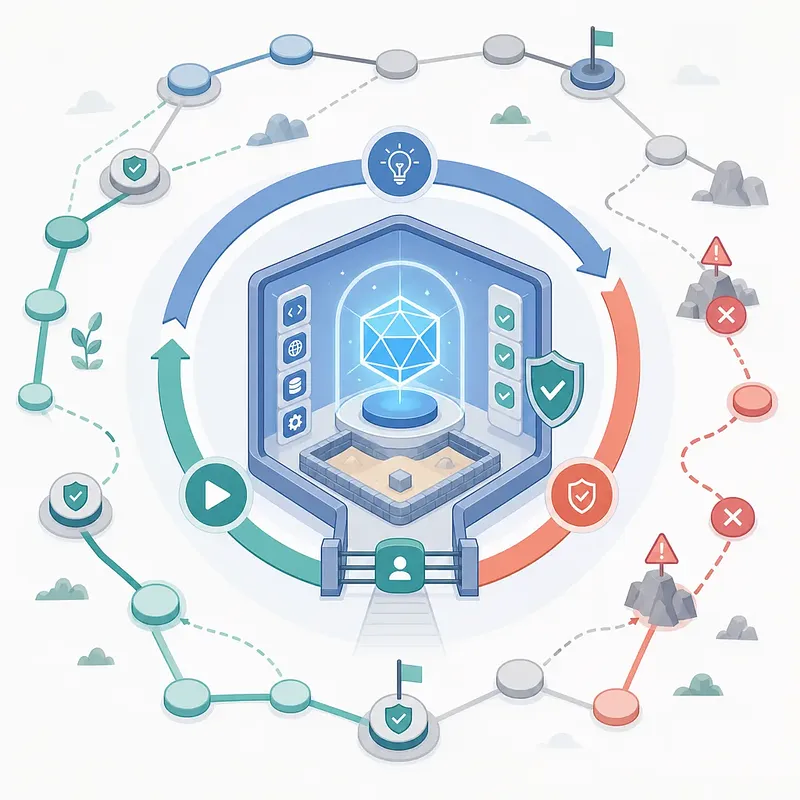
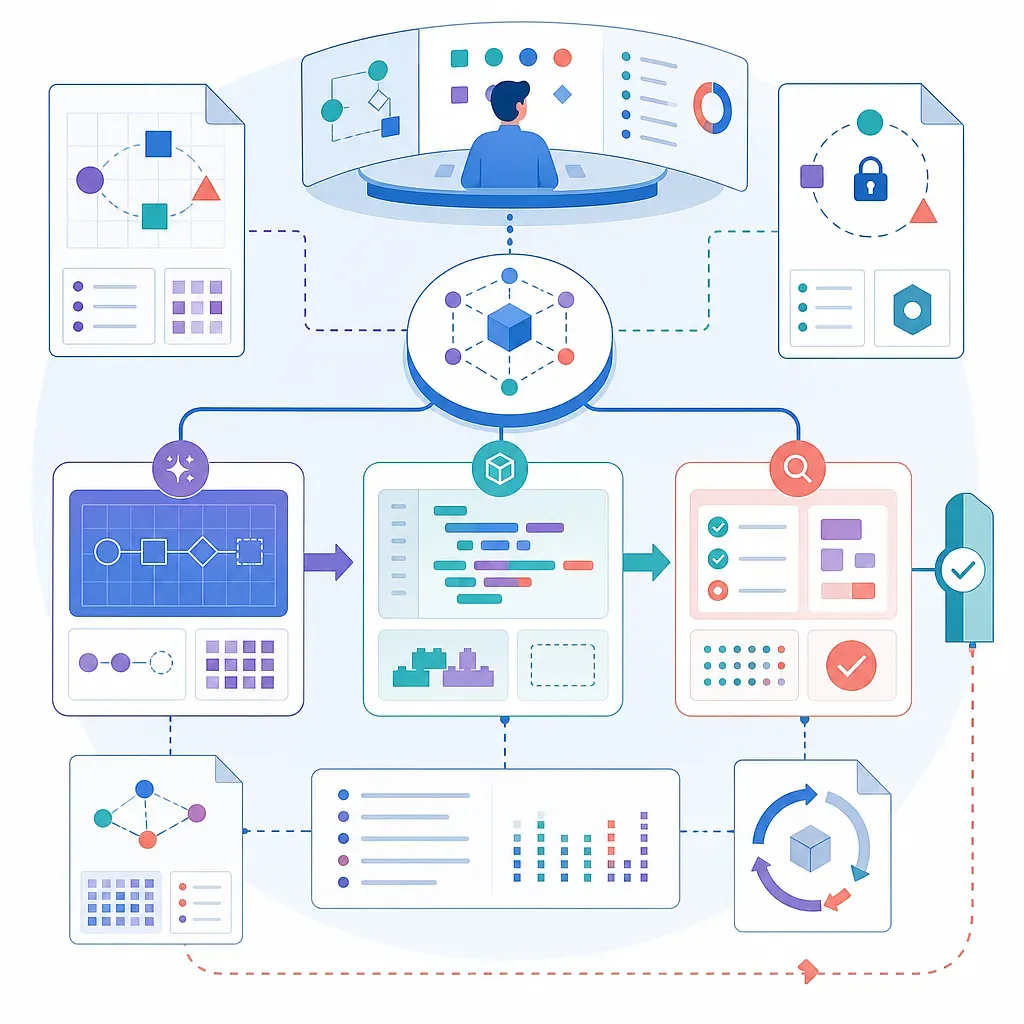
A minimal execution loop can consist of Plan, Draft, and Review.
| Stage | Key Question | Output | Handling Failure |
|---|---|---|---|
| Plan | Is this task necessary, and what are its scope and risks? | Plan, targets for change, and verification method | Request additional information or stop the task |
| Draft | Was the plan implemented in the smallest safe unit? | Code, tests, and documentation changes | Revise a limited number of times |
| Review | Does the result meet the requirements and quality standards? | Evaluation results, defect list, and approval recommendation | Rework or escalate to a human |
An actual harness requires the following controls.
- Permitted files, commands, networks, and data scope
- Maximum execution time, number of tool calls, and cost limits
- Stop conditions when tests fail or uncertainty is high
- Logs of all inputs, tool calls, changes, and approvals
- A human approval stage before production deployment
- Rollback procedures for returning to the original state
Single-Agent and Multi-Agent Approaches
Plan, Draft, and Review do not necessarily require three separate models or agents. A single agent can perform them using stage-specific instructions and tools.
In a multi-agent structure, roles can be divided as follows.
- Planner: Analyzes requirements and reviews the necessity, scope, and risk of a feature.
- Generator: Writes code, tests, and documentation according to the plan.
- Evaluator: Inspects the results using independent criteria and identifies defects and areas for improvement.
Role separation can support independent criticism and parallel exploration. On the other hand, it also increases the complexity of call costs, latency, state synchronization, and tracing the causes of errors. For simple tasks, deterministic scripts or a single agent may be more reliable, and multi-agent systems should be adopted only when measured improvements justify the added complexity.
Adoption Process for Teams and Companies
AI adoption announcements and training alone do not create an AI-native organization. Permitted scope, data policies, quality standards, and accountability structures must be established together.
Step 1: Establish Baselines and Policies
- Measure current task duration, defect rates, review wait times, and deployment frequency.
- Define which data cannot be entered and which tools may be used.
- Distinguish tasks that can be executed automatically from those requiring human approval.
Step 2: Champions and a Limited Pilot
Designate champions within the team who have experience using AI and the ability to provide training. A champion’s role is not to promote tools, but to document reproducible use cases, failure cases, and safety guidelines.
It is safer to begin pilots with work whose results are easy to verify, such as test generation, internal documentation organization, and low-risk refactoring.
Step 3: Standardize Successful Patterns
- Prioritize recording input documents and evaluation criteria over prompts that happened to work.
- Create shared Issue templates and a definition of done.
- Automate tests, linting, security checks, and review procedures.
- Document causes of failure and points requiring human intervention.
Step 4: Operations and Expansion
Expand the scope of application when pilot results improve upon the baseline. Tool selection, training, cost management, access permissions, incident response, and periodic evaluation should be connected within a single operating system.