Injoys

Analyses surrounding Iran often combine confirmed structural problems with wartime rumors of unclear origin. The observation that a leader has not been seen does not immediately prove injury or a power vacuum, and the existence of underground missile facilities does not prove a specific figure for remaining capabilities.
This article does not claim that Iran is stable. Economic hardship, state violence, elite privilege, sanctions, and military tensions are all substantial risk factors. However, conclusions such as “the greatest crisis since the country’s founding,” “on the verge of collapse,” or “the truth the media is hiding” require each link in the chain to be independently verified.
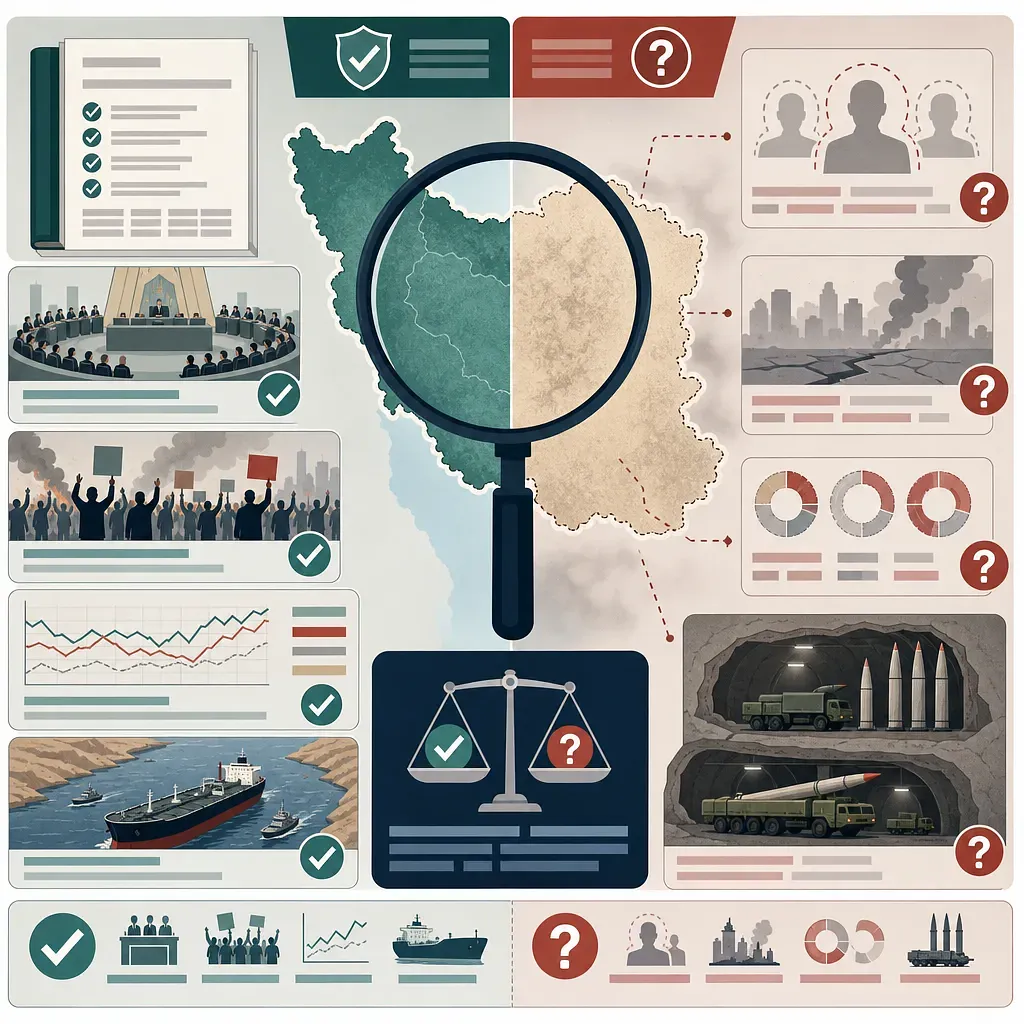
Summary of Verification Results
| Claim | Assessment | Basis for Assessment |
|---|---|---|
| Mojtaba Khamenei is Iran’s de facto Supreme Leader | Further verification required | Reports about influence and constitutionally assuming office as Supreme Leader are different matters. Official election records take precedence. |
| Mojtaba was seriously injured in an airstrike and went into hiding | Unable to verify | No date or location of the attack, medical information, satellite data, or reporting by multiple independent sources has been provided. |
| A father-to-son succession is itself unconstitutional in Iran | Inaccurate | The Supreme Leader is elected by the Assembly of Experts. A son cannot automatically succeed his father merely because he is his son, but kinship alone does not determine whether an election is unconstitutional. |
| 61% of the public cited domestic corruption as the cause of economic hardship | Source required | Representativeness cannot be assessed without the polling organization, question wording, sample, timing, and methodology. |
| The Islamic Revolutionary Guard Corps wields enormous political and economic influence | Largely confirmed | It has long been assessed as possessing networks of organizations and companies connected to construction, energy, and numerous other sectors beyond its military role. Its exact share of the economy remains opaque. |
| Government negotiators and IRGC hard-liners are in conflict | Structurally plausible | Policy differences between the elected government and unelected power institutions are a longstanding feature. The specific claim that a statement was reversed within 23 hours requires checking the original text. |
| 90% of Iran’s missile capabilities have been destroyed, or 70% remain | Unable to verify | Both claims require independently verified data on inventories, launchers, crews, and command networks. |
| Iran can launch 15–30 missiles and 50–100 drones per day | Unable to verify | No source or calculation method is given, and inventory size is not the same as a sustainable operational launch rate. |
How the Supreme Leadership and Succession Structure Work
Iran is a system that combines the principle of rule by an Islamic jurist with republican institutions that include a president and parliament. The Supreme Leader has extensive powers, including command of the armed forces, appointment of the head of the judiciary, and oversight of state broadcasting. The president leads the executive branch but is constrained by the Supreme Leader, the Islamic Revolutionary Guard Corps, and unelected institutions such as the Guardian Council.
Under Iran’s Constitution, the Assembly of Experts elects the Supreme Leader, and the specific provisions should be checked against the current constitutional text. The Constitution also stipulates procedures for the Supreme Leader’s death, resignation, removal, or inability to perform official duties, and the specific provisions should be checked against the current constitutional text. The system is therefore institutionally different from a hereditary monarchy in which a son automatically assumes office simply because he is the successor.
Mojtaba Khamenei has long been the subject of speculation regarding succession and informal influence. However, the following three propositions must be distinguished.
- The assessment that the Supreme Leader’s son exercises political influence
- The speculation that the ruling elite prefers him as successor
- The fact that he has actually been elected Supreme Leader through the Assembly of Experts’ constitutional process
Even if the first two are true, the third does not automatically follow. The identity of the incumbent Supreme Leader and whether an official successor has been designated must be checked again against Assembly of Experts records, gazette-level announcements, and the Supreme Leader’s official website as of the time of publication.
What Absence from Public Appearances Does and Does Not Prove
If a leader has not appeared in public for a certain period, there may be several explanations, including heightened security, health issues, a private schedule, or a change in video-release strategy. Verifying reports of injury requires at least the following information.
- The date and location of the last authenticated public activity
- When subsequently released videos were recorded and whether they were edited
- Whether the timing and target of an attack corresponded with the leader’s movements
- Reporting by multiple media outlets independent of one another
- Cross-verification of official announcements against physical evidence such as satellite imagery and on-site footage
Conclusions such as “he was seriously injured because there is no video” or “he is ruling from a secret location because written orders were issued” are inferences that run ahead of the evidence.
Anger Surrounding the Islamic Revolutionary Guard Corps and Aghazadehs
The Islamic Revolutionary Guard Corps is a military organization formed after the Islamic Revolution to protect the regime, and its exact founding date should be checked against its official history. Separate from the regular military, it operates ground, naval, and aerospace forces, and also oversees the Quds Force, which is associated with overseas operations. Multiple studies assess that the IRGC and affiliated foundations and companies are deeply involved in economic sectors including construction, energy, logistics, and telecommunications.
However, claims that it “monopolizes all key industries” or controls a specific percentage of the economy should be made cautiously. Iran’s ownership structure is a complex web of state institutions, religious foundations, pension funds, state-owned companies, and private companies, while transparent consolidated financial data is lacking.
“Aghazadeh” is a Persian expression used critically to refer to the children of senior officials or influential figures. It is not a legal status or official rank, but a social term symbolizing connections, privilege, and double standards. Photos purportedly showing luxurious lifestyles abroad or violations of dress codes may have been mistakenly linked to the wrong people unless the individuals’ identities and the location and date of the photos are verified.
The Mahsa Amini Case and State Violence
Mahsa Jina Amini died after being detained by Iran’s morality police in 2022, after which the “Woman, Life, Freedom” protests spread nationwide. The United Nations Independent International Fact-Finding Mission on Iran found the state responsible for Amini’s death and determined that serious human rights violations, including murder, imprisonment, torture, sexual violence, and persecution, occurred during the suppression of protests. The mission stated that some acts amounted to crimes against humanity.
This record shows that discontent within Iranian society is not merely external propaganda. However, descriptions of the use of specific weapons, death tolls, or the responsibility of individual commanders should remain within the scope of UN findings and verified incident records.
Why Negotiators and Hard-Liners Clash
Policy differences within Iran are more complex than a simple confrontation between two factions. Elected politicians include a mix of conservative, pragmatic, and reformist tendencies, while neither the IRGC nor the clerical establishment is entirely monolithic.
Even so, the following distinctions are useful as an analytical framework for understanding policy choices.
| Issue | Negotiation and Pragmatist Approach | Hard-Line and Deterrence Approach |
|---|---|---|
| Nuclear negotiations | Emphasizes deals to ease sanctions and restore the economy | Wary of verification demands and the West’s failure to honor commitments |
| Foreign military strategy | Avoids direct confrontation and seeks a diplomatic exit | Emphasizes deterrence through missiles, drones, and regional armed groups |
| Domestic control | Manages discontent through limited social relaxation | Maintains strict security controls on the grounds of threats to the regime |
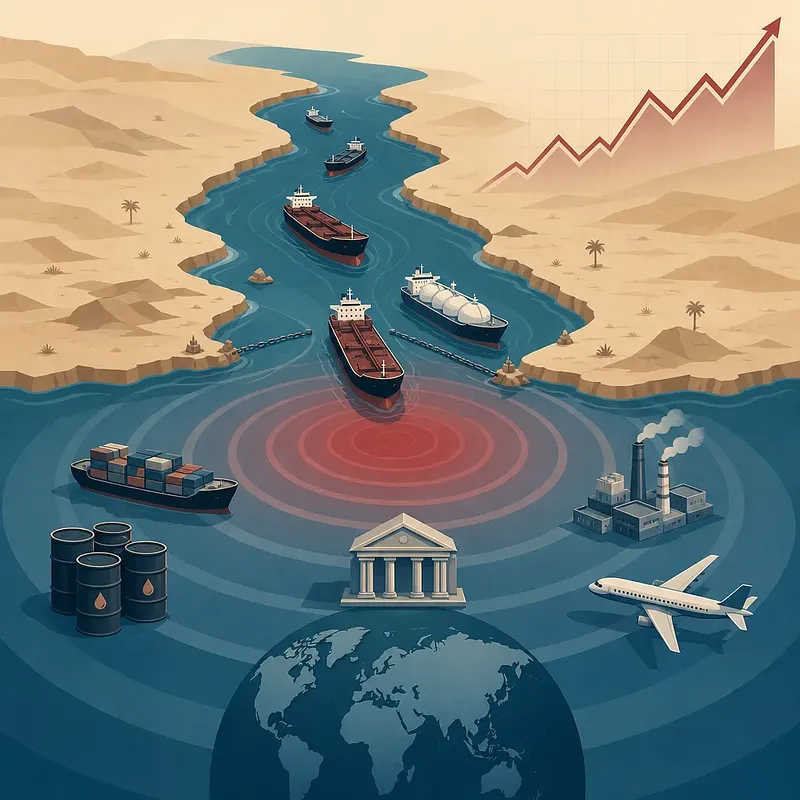
| Strait of Hormuz | Prefers stable navigation to support exports and diplomacy | Emphasizes its potential use as leverage during a crisis |
The claim that an IRGC official reversed the foreign minister’s statement within 23 hours requires comparing the original texts of both statements, their posting times, translations, and full context. A threatening statement by a specific commander also does not immediately constitute the Iranian government’s settled policy or an order to close the strait.