Injoys

Pancreatic cancer is a cancer that can be detected late because it causes few early symptoms and the pancreas is located deep within the abdomen. However, the common description “silent killer” does not mean that every case of indigestion or back pain should be interpreted as a final warning sign of pancreatic cancer.
The key is to consider the combination and persistence of symptoms, changes from what is usual, and personal risk factors together. Unlike a heart attack, pancreatic cancer does not have a single “golden window” defined in minutes. Instead, it is important not to delay testing when suspicious symptoms arise and, after diagnosis, to promptly assess whether the cancer is resectable and determine the order of treatment.
Why Pancreatic Cancer Is Often Detected Late
The pancreas is an elongated organ behind the stomach. It performs an exocrine function by producing digestive enzymes and an endocrine function by secreting hormones such as insulin. Most pancreatic cancers are pancreatic ductal adenocarcinomas, which begin in the ducts through which digestive enzymes flow.
An early tumor may not cause clear symptoms. Even when symptoms develop, they overlap with common problems such as indigestion, loss of appetite, and abdominal pain. The bile duct and major blood vessels are also located around the pancreas, so the tumor’s location and extent of invasion greatly affect whether surgery is possible.
The “exact percentage of patients eligible for surgery” or the “survival rate” varies according to the country, year of diagnosis, stage, cancer type, and statistical method. A single outdated figure should not be applied to every patient. The medical team determines an individual’s outlook based on factors such as resectability shown on imaging, the presence of metastasis, treatment response, and overall health.
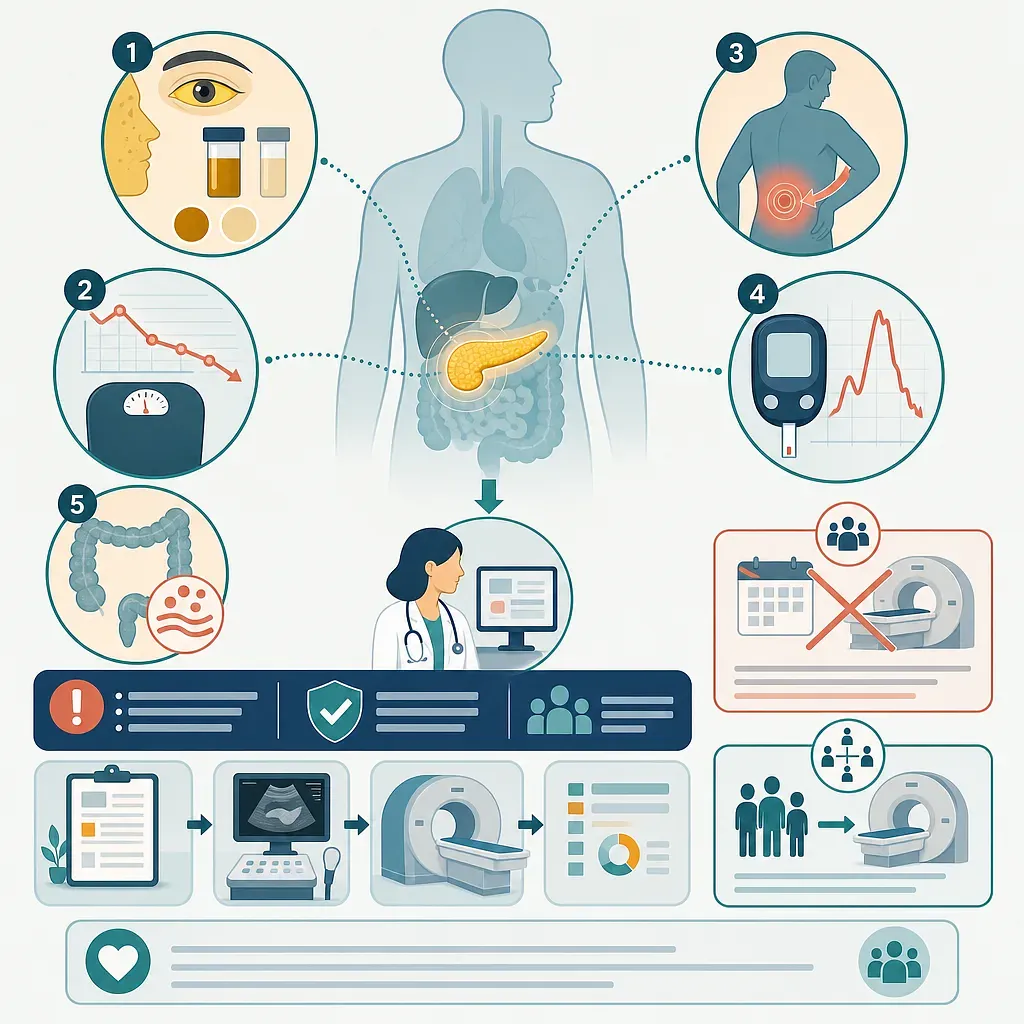
5 Signs That Should Not Be Overlooked
The symptoms below can occur with pancreatic cancer, but all are nonspecific. Having one does not immediately mean cancer, while having no symptoms does not completely rule out pancreatic cancer.
1. Jaundice and Changes in Urine and Stool Color
If a tumor in the head of the pancreas blocks the bile duct, bilirubin may accumulate, causing the whites of the eyes and skin to turn yellow. The following changes may also occur:
- Urine that becomes dark like tea or cola
- Pale stool that is gray or clay-colored
- Itching throughout the body
- Loss of appetite and nausea
Jaundice can also result from various causes, including gallstones, hepatitis, and drug-induced liver injury. However, newly developed jaundice is not a symptom for which determining the cause should be delayed.
2. Unintentional Weight Loss and Loss of Appetite
Medical attention is needed if your weight continues to decrease and your appetite declines even though you have not changed your diet or exercise habits. Possible causes include cancer-related metabolic changes, reduced food intake, or impaired nutrient absorption due to insufficient pancreatic enzymes.
There is no fixed standard stating that losing a certain number of kilograms within a particular period means pancreatic cancer. What matters more is whether weight loss that is difficult to explain continues compared with your usual weight.
3. Persistent Upper Abdominal Pain or Pain Radiating to the Back
Pain from pancreatic cancer may begin in the upper abdomen and spread to the back. Some people feel more discomfort after eating or when lying down, but this pattern alone cannot distinguish cancer.
Gallstones, stomach ulcers, pancreatitis, and spinal disorders can also cause similar pain. Evaluation should be expedited if the pain recurs or worsens and is accompanied by weight loss, jaundice, or vomiting.
4. Newly Developed Diabetes or a Sudden Worsening of Blood Sugar
Pancreatic disease can affect insulin secretion and metabolism. In particular, if diabetes develops without a clear reason in middle or older age, or previously stable blood sugar suddenly worsens along with weight loss, you should inform your doctor of these changes.
However, most newly diagnosed diabetes is not caused by pancreatic cancer. Rather than undergoing repeated CT scans based on diabetes alone, age, weight changes, family history, abdominal symptoms, and test results should be evaluated together.
5. Indigestion and Changes in Bowel Movements, Including Fatty Stool
If pancreatic enzymes are not secreted in sufficient amounts or cannot flow into the intestine, digesting fat may become difficult. If the following changes persist, it is helpful to describe them specifically during your medical visit:
- Recurrent abdominal bloating and nausea
- Greasy stool that floats or is difficult to flush away
- Particularly foul-smelling stool
- Diarrhea or frequent bowel movements
- Discomfort after eating and early satiety
Common functional dyspepsia and irritable bowel syndrome are much more frequent causes. Important clues include whether symptoms persist for a long time or occur together with jaundice or weight loss.
When to Respond to Each Symptom
There is no time-based golden window for pancreatic cancer that applies equally to everyone. The following criteria are not rules for confirming cancer but safety principles for deciding when to contact a medical institution.
| Situation | Recommended Response |
|---|---|
| The eyes or skin newly turn yellow, with dark urine or pale stool | Contact a medical institution and undergo evaluation the same day or as soon as possible. |
| Severe upper abdominal pain, repeated vomiting, fever, altered consciousness, or dehydration | Seek immediate medical assistance, as emergency evaluation may be necessary. |
| Unexplained weight loss with persistent abdominal or back pain | Do not wait until your routine checkup; schedule a medical appointment soon. |
| New diabetes or worsening blood sugar accompanied by weight loss or abdominal symptoms | Report the accompanying symptoms during diabetes care and discuss whether further evaluation is needed. |
| Only mild, temporary indigestion | Monitor its course, but seek medical care if it persists, worsens, or other warning symptoms develop. |
Sudden chest pain, difficulty breathing, paralysis on one side, or slurred speech are not typical signs of pancreatic cancer, but they may indicate heart disease or stroke and therefore require an immediate emergency response.
Limitations of Health Checkups and Pancreatic Cancer Testing
Is Everything Fine If an Abdominal Ultrasound Is Normal?
Abdominal ultrasound is useful for examining the liver, gallbladder, and bile ducts, but intestinal gas, body shape, and the pancreas’s deep location may prevent the entire pancreas from being seen clearly. Therefore, a normal ultrasound alone cannot completely rule out pancreatic cancer in someone with symptoms.
Should Asymptomatic People Get a CT Scan Every Year?
Routine pancreatic cancer screening is generally not recommended for asymptomatic adults at average risk. CT involves radiation exposure and the possibility of adverse reactions to contrast agents. It may also reveal incidental abnormalities that are not clinically significant, leading to unnecessary additional tests or procedures.
Uniformly recommending “one CT scan per year” without assessing symptoms or risk is not an evidence-based screening strategy. The medical team should determine which tests are needed based on symptoms, examination findings, blood tests, and personal risk.
Can the Tumor Marker CA 19-9 Detect Pancreatic Cancer Early?
CA 19-9 can be elevated in some patients with pancreatic cancer, but it may be normal in early-stage cancer and can also rise due to bile duct obstruction or benign disease. Some people do not produce enough of this marker because of their genetic characteristics. It therefore cannot be used alone as a screening or confirmatory test for the general population and is used as an adjunct to monitor treatment response after diagnosis.