Skip to content
Injoys
Knowledge Base

Medication Principles for Protecting Your Kidneys: Review, Don't Cut Back

Reducing or stopping prescription medications on your own to protect your kidneys can instead increase the risk of kidney damage and cardiovascular complications. Continue necessary medications, but regularly review doses that are inappropriate for your kidney function, duplicate prescriptions, and unnecessary over-the-counter medications and supplements.

Listen or read this article

13:46

Listen, or read the text only.

Medication Principles for Protecting Your Kidneys: Review, Don't Cut Back

Kokoro 82M AI-generated voice 14 min read

0:00 13:46

Advertisement

Download audio

File name
kidney-medication-review-safety-en.mp3
Format
MP3 (audio/mpeg)
Duration
13:46
File size
9.45 MB
Engine
Kokoro 82M

This audio was generated by AI.

You may download and use it freely for personal use.

Medication Principles for Protecting Your Kidneys: Review, Don't Cut Back

10 min read

Medication Principles for Protecting Your Kidneys: Review, Don't Cut Back
Reducing or stopping prescription medications on your own to protect your kidneys can instead increase the risk of kidney damage and cardiovascular complications. Continue necessary medications, but regularly review doses that are inappropriate for your kidney function, duplicate prescriptions, and unnecessary over-the-counter medications and supplements.
The principle for protecting your kidneys is not to minimize the number of medications at all costs, but to use necessary medications at appropriate doses.
Do not stop prescription medications on your own. Review all prescription and over-the-counter medications, herbal medicines, and supplements with your healthcare provider or pharmacist.
Medication doses should be adjusted based not on serum creatinine alone, but also on glomerular filtration rate, electrolytes, hydration status, and drug-specific criteria.
NSAIDs may increase the risk of acute kidney injury in people who are dehydrated, older, have chronic kidney disease, or take diuretics or certain blood pressure medications.
It is safer to establish a personalized plan with your healthcare provider in advance for managing medications on days when vomiting, diarrhea, high fever, or difficulty eating and drinking occurs.
Reducing your medications on your own because you are concerned about kidney function is not a safe solution. A more accurate principle is to review unnecessary or duplicate medications with your healthcare team and take necessary medications at doses appropriate for your current kidney function. Arbitrarily stopping medications that control blood pressure and blood sugar or slow kidney damage may instead increase your risk.
Do All Medications Burden the Kidneys?
After medications are absorbed, they may be metabolized by the liver or excreted through the kidneys as the original compounds or metabolites. A medication may use both liver and kidney pathways, and the method of excretion varies by ingredient.
When kidney function declines, some medications or active metabolites may remain in the body longer, increasing the risk of side effects. However, the burden on the kidneys cannot be determined solely by the number of medications taken.
· Some medications are barely excreted through the kidneys. · Appropriate blood pressure and blood sugar treatment can protect the kidneys over the long term. · Taking duplicate medications with the same ingredient or doses that are too high for your kidney function can cause problems. · Over-the-counter pain relievers, cold medicines, herbal medicines, or supplements may create overlooked risks even more often than prescription medications.
Therefore, the goal is not simply to reduce the number of medications but to conduct a medication review that checks indications, effectiveness, dosages, duplication, and interactions.
Indicators Used to Assess Kidney Function and Medication Dosage
Chronic kidney disease refers to structural abnormalities or reduced function that persist for a certain period, and the exact diagnostic criteria should be confirmed with your healthcare team. The following information should be considered together when adjusting medications.
Item to Check | Significance for Medication Use Estimated glomerular filtration rate (eGFR) | Estimates the kidneys’ filtration function and is used as a criterion for starting, reducing, or discontinuing many medications. Urine albumin-to-creatinine ratio (uACR) | Assesses kidney damage and the risk of progression and is used to determine the need for certain kidney-protective treatments. Electrolytes such as potassium and sodium | Needed to assess the safety of certain blood pressure medications, diuretics, and supplements. Blood pressure, pulse, and blood sugar | Used to determine whether the effects of medications are excessive or insufficient. Hydration status and recent illnesses | Vomiting, diarrhea, fever, bleeding, or inadequate intake can affect blood flow to the kidneys and medication safety.
Safety cannot be assumed solely because serum creatinine is within the normal range. In particular, older adults with low muscle mass may have reduced kidney function even when their creatinine is not elevated. Because the methods used to calculate kidney function may differ among medication labels, the final dosage must be determined individually by a healthcare professional or pharmacist.
Medications and Supplements That Particularly Require Review
Type | Risk to Check | Principles for Safe Management NSAID pain relievers and anti-inflammatory drugs | They can reduce blood flow to the kidneys and cause fluid retention or acute kidney injury. | Check ingredient names such as ibuprofen and naproxen, and consult a healthcare professional before taking them if you have chronic kidney disease or dehydration. ACE inhibitors and ARBs | Creatinine and potassium may change after starting treatment or increasing the dose. | Because they may protect the kidneys and heart, do not stop them on your own based solely on changes in laboratory values; instead, undergo repeat testing and evaluation of the cause. Diuretics | Excessive diuresis combined with inadequate intake can cause dehydration, low blood pressure, or electrolyte abnormalities. | Adjust the dose based on weight, swelling, blood pressure, dizziness, and test results. SGLT2 inhibitors | eGFR may change slightly soon after starting, and separate management is necessary during severe dehydration or fasting. | Because initial changes must be distinguished from progressive damage, do not stop them on your own, and confirm your medication plan for sick days. metformin | If kidney function declines substantially or an acute illness develops, the risk of accumulation must be assessed. | Check eGFR regularly and ask the prescribing institution for instructions regarding acute illness or the period before and after tests or procedures. insulin and certain blood glucose-lowering medications | If reduced kidney function prolongs the medication’s effects, the risk of hypoglycemia may increase. | Review food intake, blood sugar records, symptoms of hypoglycemia, and kidney function together. Antibiotics and antiviral medications | Some ingredients are largely excreted through the kidneys or may be toxic to the kidneys. | Inform the prescriber of your current eGFR and other medications, and follow the prescribed dosage and duration. Herbal medicines and dietary supplements | Ingredients and amounts may be unclear, or drug interactions and excessive potassium or phosphorus may occur. | Do not assume they are safe simply because they contain natural ingredients; show the product name and ingredient label to your healthcare team.
Cold medicines and combination pain relievers may contain duplicate pain-relieving ingredients. It is important to record not only the product name but also the active ingredients and amounts.
Why Blood Pressure and Diabetes Medications Should Not Be Reduced Excessively
If blood pressure or blood sugar becomes too low, dizziness, fainting, falls, or altered consciousness may occur. When dehydration and low blood pressure occur together, reduced blood flow to the kidneys may lead to acute kidney injury. The risk may increase when you sweat heavily in hot weather or experience vomiting or diarrhea, but medications should not be reduced automatically based only on the season.
Conversely, uncontrolled high blood pressure and diabetes have a major impact on the development and progression of chronic kidney disease. Depending on the patient’s condition, medications such as ACE inhibitors, ARBs, and SGLT2 inhibitors may protect the kidneys and cardiovascular system. Therefore, blood pressure or diabetes medications should be adjusted not because there are many of them, but based on the following evidence:
· Repeated blood pressure and blood sugar measurements · Dizziness, fainting, or symptoms of hypoglycemia · Test results such as eGFR and potassium · Weight changes, swelling, and signs of dehydration · Conditions that also require treatment, such as heart failure or proteinuria
Rather than skipping a dose based on a single low reading, it is safer to record the measurement time, posture, symptoms, and whether you had eaten, and provide that information to the prescribing institution.
An Individualized Plan Is Needed on Sick Days or During Dehydration
Vomiting, diarrhea, high fever, heavy sweating, or inadequate intake can change the risks of medications that are normally safe. Some blood pressure medications, diuretics, and diabetes medications may need to be temporarily adjusted depending on the circumstances, but it is not appropriate for every patient to stop the same medications. This is because stopping them may itself be dangerous for people with heart failure or severe high blood pressure.
During routine appointments, confirm the following in advance:
· Which symptoms and situations should be considered a sick day · The exact ingredient names of medications that may be temporarily adjusted · The conditions for restarting medications and whether tests are needed · Blood pressure, blood sugar, or symptom thresholds that require immediate contact with a medical institution · Whether you have restrictions, such as heart failure or dialysis, that make it unsafe to drink large amounts of water on your own
This plan should be determined by healthcare professionals who know your current conditions and prescriptions, not by a general list found online.
How to Receive a Medication Review During an Appointment
A medication review is not a process of unilaterally stopping prescription medications. It is a process of reducing unnecessary risks while maintaining treatment goals.
· List prescription medications, over-the-counter medications, ointments, eye drops, herbal medicines, vitamins, and supplements together. · Include pain relievers and cold medicines taken only as needed, as well as antibiotics you recently finished. · Record why you take each medication, the amount you actually take, the time you take it, and the prescribing institution. · Prepare your latest eGFR, uACR, potassium, blood pressure, and blood sugar data. · Ask individually about duplicate ingredients, current indications, kidney-adjusted dosing, interactions, and whether each medication can be discontinued. · After an adjustment, confirm when repeat testing is needed and the conditions under which the medication should be restarted.
If you use multiple medical institutions, do not assume that a prescriber at one automatically knows which medications were prescribed elsewhere. It is more accurate to directly show medication packets, product photos, or an up-to-date list.
Factors to Manage Alongside Medications
Kidney health cannot be managed solely by reducing medications. Blood pressure and blood sugar control, smoking cessation, appropriate physical activity, and dietary management are also necessary.
However, a chronic kidney disease diet should not be generalized. Appropriate amounts of protein, sodium, potassium, phosphorus, and fluids vary depending on the disease stage, test results, nutritional status, and whether the patient receives dialysis. Excessive restriction without testing can cause malnutrition or muscle loss. Salt substitutes containing potassium may also be dangerous for some patients and with certain medications, so their ingredients must be checked.
Exercise can also support health management when your condition is stable, but if you have chest pain, severe shortness of breath, rapidly worsening swelling, an infection, or uncontrolled blood pressure, you should seek medical care first.
Signs Requiring Immediate Medical Care
If any of the following changes occur, do not merely adjust medications on your own; promptly consult a medical institution:
· A marked decrease in urine output or almost no urine · Persistent vomiting or diarrhea that makes it difficult to keep down fluids and medications · Fainting, severe dizziness, or altered consciousness · Suddenly worsening swelling or shortness of breath · Severe weakness, palpitations, or muscle abnormalities · Recurrent hypoglycemia or symptoms of low blood pressure that do not resolve
Emergency evaluation is necessary for urgent symptoms such as reduced consciousness, shortness of breath, or fainting.
Key Takeaway
Protecting the kidneys does not require minimizing medications indiscriminately. The key is to continue medications with clear therapeutic benefits while identifying and safely adjusting doses that are inappropriate for kidney function and duplicate or unnecessary medications. In particular, do not stop prescription medications on your own, and regularly review your complete list, including over-the-counter medications and supplements, with a healthcare professional or pharmacist.
0:00 0:00
1 / 44

Advertisement

Download text

File name
kidney-medication-review-safety-en.txt
Format
TXT (text/plain)
Paragraphs
44

Downloads exactly what you see as a text file.

Please cite the source when quoting.

Large text

Makes the text larger and the colors clearer. Turn it on if the text feels too small.

A pharmacist helps an older woman review her medicines and dosing schedule.

Key points

  • The principle for protecting your kidneys is not to minimize the number of medications at all costs, but to use necessary medications at appropriate doses.
  • Do not stop prescription medications on your own. Review all prescription and over-the-counter medications, herbal medicines, and supplements with your healthcare provider or pharmacist.
  • Medication doses should be adjusted based not on serum creatinine alone, but also on glomerular filtration rate, electrolytes, hydration status, and drug-specific criteria.
  • NSAIDs may increase the risk of acute kidney injury in people who are dehydrated, older, have chronic kidney disease, or take diuretics or certain blood pressure medications.
  • It is safer to establish a personalized plan with your healthcare provider in advance for managing medications on days when vomiting, diarrhea, high fever, or difficulty eating and drinking occurs.

Reducing your medications on your own because you are concerned about kidney function is not a safe solution. A more accurate principle is to review unnecessary or duplicate medications with your healthcare team and take necessary medications at doses appropriate for your current kidney function. Arbitrarily stopping medications that control blood pressure and blood sugar or slow kidney damage may instead increase your risk.

Do All Medications Burden the Kidneys?

After medications are absorbed, they may be metabolized by the liver or excreted through the kidneys as the original compounds or metabolites. A medication may use both liver and kidney pathways, and the method of excretion varies by ingredient.

When kidney function declines, some medications or active metabolites may remain in the body longer, increasing the risk of side effects. However, the burden on the kidneys cannot be determined solely by the number of medications taken.

  • Some medications are barely excreted through the kidneys.
  • Appropriate blood pressure and blood sugar treatment can protect the kidneys over the long term.
  • Taking duplicate medications with the same ingredient or doses that are too high for your kidney function can cause problems.
  • Over-the-counter pain relievers, cold medicines, herbal medicines, or supplements may create overlooked risks even more often than prescription medications.

Therefore, the goal is not simply to reduce the number of medications but to conduct a medication review that checks indications, effectiveness, dosages, duplication, and interactions.

Indicators Used to Assess Kidney Function and Medication Dosage

Chronic kidney disease refers to structural abnormalities or reduced function that persist for a certain period, and the exact diagnostic criteria should be confirmed with your healthcare team. The following information should be considered together when adjusting medications.

Item to Check Significance for Medication Use
Estimated glomerular filtration rate (eGFR) Estimates the kidneys’ filtration function and is used as a criterion for starting, reducing, or discontinuing many medications.
Urine albumin-to-creatinine ratio (uACR) Assesses kidney damage and the risk of progression and is used to determine the need for certain kidney-protective treatments.
Electrolytes such as potassium and sodium Needed to assess the safety of certain blood pressure medications, diuretics, and supplements.
Blood pressure, pulse, and blood sugar Used to determine whether the effects of medications are excessive or insufficient.
Hydration status and recent illnesses Vomiting, diarrhea, fever, bleeding, or inadequate intake can affect blood flow to the kidneys and medication safety.

Safety cannot be assumed solely because serum creatinine is within the normal range. In particular, older adults with low muscle mass may have reduced kidney function even when their creatinine is not elevated. Because the methods used to calculate kidney function may differ among medication labels, the final dosage must be determined individually by a healthcare professional or pharmacist.

Medications and Supplements That Particularly Require Review

Type Risk to Check Principles for Safe Management
NSAID pain relievers and anti-inflammatory drugs They can reduce blood flow to the kidneys and cause fluid retention or acute kidney injury. Check ingredient names such as ibuprofen and naproxen, and consult a healthcare professional before taking them if you have chronic kidney disease or dehydration.
ACE inhibitors and ARBs Creatinine and potassium may change after starting treatment or increasing the dose. Because they may protect the kidneys and heart, do not stop them on your own based solely on changes in laboratory values; instead, undergo repeat testing and evaluation of the cause.
Diuretics Excessive diuresis combined with inadequate intake can cause dehydration, low blood pressure, or electrolyte abnormalities. Adjust the dose based on weight, swelling, blood pressure, dizziness, and test results.
SGLT2 inhibitors eGFR may change slightly soon after starting, and separate management is necessary during severe dehydration or fasting. Because initial changes must be distinguished from progressive damage, do not stop them on your own, and confirm your medication plan for sick days.
metformin If kidney function declines substantially or an acute illness develops, the risk of accumulation must be assessed. Check eGFR regularly and ask the prescribing institution for instructions regarding acute illness or the period before and after tests or procedures.
insulin and certain blood glucose-lowering medications If reduced kidney function prolongs the medication’s effects, the risk of hypoglycemia may increase. Review food intake, blood sugar records, symptoms of hypoglycemia, and kidney function together.
Antibiotics and antiviral medications Some ingredients are largely excreted through the kidneys or may be toxic to the kidneys. Inform the prescriber of your current eGFR and other medications, and follow the prescribed dosage and duration.
Herbal medicines and dietary supplements Ingredients and amounts may be unclear, or drug interactions and excessive potassium or phosphorus may occur. Do not assume they are safe simply because they contain natural ingredients; show the product name and ingredient label to your healthcare team.

Cold medicines and combination pain relievers may contain duplicate pain-relieving ingredients. It is important to record not only the product name but also the active ingredients and amounts.

Why Blood Pressure and Diabetes Medications Should Not Be Reduced Excessively

If blood pressure or blood sugar becomes too low, dizziness, fainting, falls, or altered consciousness may occur. When dehydration and low blood pressure occur together, reduced blood flow to the kidneys may lead to acute kidney injury. The risk may increase when you sweat heavily in hot weather or experience vomiting or diarrhea, but medications should not be reduced automatically based only on the season.

Conversely, uncontrolled high blood pressure and diabetes have a major impact on the development and progression of chronic kidney disease. Depending on the patient’s condition, medications such as ACE inhibitors, ARBs, and SGLT2 inhibitors may protect the kidneys and cardiovascular system. Therefore, blood pressure or diabetes medications should be adjusted not because there are many of them, but based on the following evidence:

  • Repeated blood pressure and blood sugar measurements
  • Dizziness, fainting, or symptoms of hypoglycemia
  • Test results such as eGFR and potassium
  • Weight changes, swelling, and signs of dehydration
  • Conditions that also require treatment, such as heart failure or proteinuria

Rather than skipping a dose based on a single low reading, it is safer to record the measurement time, posture, symptoms, and whether you had eaten, and provide that information to the prescribing institution.


An Individualized Plan Is Needed on Sick Days or During Dehydration

Vomiting, diarrhea, high fever, heavy sweating, or inadequate intake can change the risks of medications that are normally safe. Some blood pressure medications, diuretics, and diabetes medications may need to be temporarily adjusted depending on the circumstances, but it is not appropriate for every patient to stop the same medications. This is because stopping them may itself be dangerous for people with heart failure or severe high blood pressure.

During routine appointments, confirm the following in advance:

  1. Which symptoms and situations should be considered a sick day
  2. The exact ingredient names of medications that may be temporarily adjusted
  3. The conditions for restarting medications and whether tests are needed
  4. Blood pressure, blood sugar, or symptom thresholds that require immediate contact with a medical institution
  5. Whether you have restrictions, such as heart failure or dialysis, that make it unsafe to drink large amounts of water on your own

This plan should be determined by healthcare professionals who know your current conditions and prescriptions, not by a general list found online.

How to Receive a Medication Review During an Appointment

A medication review is not a process of unilaterally stopping prescription medications. It is a process of reducing unnecessary risks while maintaining treatment goals.

  • List prescription medications, over-the-counter medications, ointments, eye drops, herbal medicines, vitamins, and supplements together.
  • Include pain relievers and cold medicines taken only as needed, as well as antibiotics you recently finished.
  • Record why you take each medication, the amount you actually take, the time you take it, and the prescribing institution.
  • Prepare your latest eGFR, uACR, potassium, blood pressure, and blood sugar data.
  • Ask individually about duplicate ingredients, current indications, kidney-adjusted dosing, interactions, and whether each medication can be discontinued.
  • After an adjustment, confirm when repeat testing is needed and the conditions under which the medication should be restarted.

If you use multiple medical institutions, do not assume that a prescriber at one automatically knows which medications were prescribed elsewhere. It is more accurate to directly show medication packets, product photos, or an up-to-date list.

Factors to Manage Alongside Medications

Kidney health cannot be managed solely by reducing medications. Blood pressure and blood sugar control, smoking cessation, appropriate physical activity, and dietary management are also necessary.

However, a chronic kidney disease diet should not be generalized. Appropriate amounts of protein, sodium, potassium, phosphorus, and fluids vary depending on the disease stage, test results, nutritional status, and whether the patient receives dialysis. Excessive restriction without testing can cause malnutrition or muscle loss. Salt substitutes containing potassium may also be dangerous for some patients and with certain medications, so their ingredients must be checked.

Exercise can also support health management when your condition is stable, but if you have chest pain, severe shortness of breath, rapidly worsening swelling, an infection, or uncontrolled blood pressure, you should seek medical care first.

Signs Requiring Immediate Medical Care

If any of the following changes occur, do not merely adjust medications on your own; promptly consult a medical institution:

  • A marked decrease in urine output or almost no urine
  • Persistent vomiting or diarrhea that makes it difficult to keep down fluids and medications
  • Fainting, severe dizziness, or altered consciousness
  • Suddenly worsening swelling or shortness of breath
  • Severe weakness, palpitations, or muscle abnormalities
  • Recurrent hypoglycemia or symptoms of low blood pressure that do not resolve

Emergency evaluation is necessary for urgent symptoms such as reduced consciousness, shortness of breath, or fainting.

Key Takeaway

Protecting the kidneys does not require minimizing medications indiscriminately. The key is to continue medications with clear therapeutic benefits while identifying and safely adjusting doses that are inappropriate for kidney function and duplicate or unnecessary medications. In particular, do not stop prescription medications on your own, and regularly review your complete list, including over-the-counter medications and supplements, with a healthcare professional or pharmacist.

Sign-in required

Sign in with your Google account to like, comment, and save highlights.

Images

A pharmacist helps an older woman review her medicines and dosing schedule.
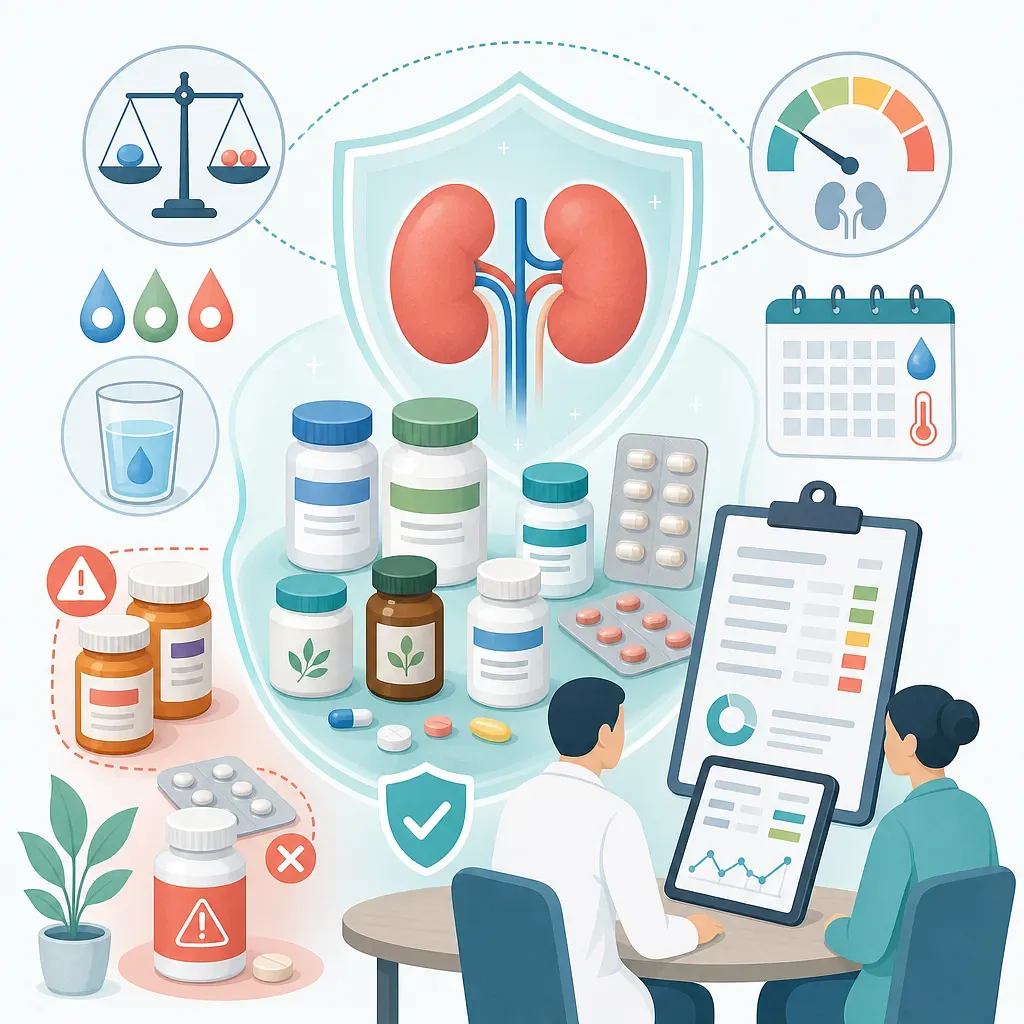
A doctor and patient review medicines and health records to protect kidney function.

FAQ

If my kidney function test results are poor, should I start by reducing my prescription medications?

No. Some medications may need dose reductions, but others help manage blood pressure and blood sugar and protect the kidneys. Any adjustments should be made with the prescriber after reviewing eGFR, electrolytes, symptoms, and treatment goals. Avoid stopping medications on your own.

Does taking more types of medication make kidney function decline faster?

This cannot be determined solely by the number of medications. The risk varies depending on each ingredient's route of elimination, dosage, duplication, interactions, whether you are dehydrated, and your current kidney function. However, as the number of medications increases, the possibility of errors and interactions may also increase, so regular medication reviews are important.

Which pain relievers should I avoid if I have poor kidney function?

NSAID pain relievers and anti-inflammatory drugs such as ibuprofen and naproxen may increase the risk of acute kidney injury in people with chronic kidney disease or dehydration. They may also be included in combination cold medicines, so check the ingredients and ask a healthcare professional or pharmacist about alternative pain relievers, taking into account your other medical conditions and medications.

If I feel dizzy while taking blood pressure medication, can I stop it immediately?

Do not stop it on your own. Record your blood pressure while sitting or lying down and after standing up, your pulse, when the symptoms occur, your fluid intake, and when you take the medication, and inform the prescribing provider. Prompt medical attention is needed if you experience fainting, changes in consciousness, chest pain, or severe shortness of breath.

If my creatinine rises after starting an ACE inhibitor or ARB, does that mean my kidneys have been damaged?

These medications change the pressure inside the kidneys, so levels may change after starting them or increasing the dose, and not every change indicates progressive damage. The extent and persistence of the change, potassium levels, dehydration, and other medications should be assessed together, so do not stop the medication on your own based solely on the results.

Should I reduce my blood pressure medication or diuretic on hot days?

The dose should not be reduced automatically based on the weather alone. An adjustment may be needed if heavy sweating and reduced intake cause dehydration or symptoms of low blood pressure, but stopping the medication may be more dangerous depending on your heart failure or hypertension. Check your individualized sick-day medication plan in advance.

Are herbal medicines and dietary supplements safer for the kidneys than prescription medications?

No. Their ingredients or amounts may be unclear, and they may interact with prescription medications or increase potassium and phosphorus intake. Tell your healthcare professional about them, including the product names and ingredient labels, and do not use products of unverified safety to treat kidney disease.

What should I prepare for a kidney medication review?

Make a list of the names, strengths, and times taken for all prescription and over-the-counter medications, medications taken as needed, herbal medicines, vitamins, and supplements. Also bring recent eGFR, uACR, and potassium results, blood pressure and blood sugar records, and information about symptoms such as dizziness or low blood sugar so that dosages and potential duplication can be reviewed more accurately.

If my kidney function is low, does drinking a lot of water help eliminate medications?

Drinking a lot of water does not ensure that all medications are eliminated safely. Excessive fluid intake may be dangerous for people with heart failure, edema, advanced chronic kidney disease, or those receiving dialysis. Fluid intake should be tailored to thirst, urine output, fluid status, and any fluid restrictions provided by your healthcare professional.

Sources

Data formats

This content is available in several machine-friendly formats.

Data-only languages (machine translated, files only)

Indonesian JSON MD Portuguese JSON MD Chinese (Traditional) JSON MD Deutsch JSON MD

Verification

Reviewed by 신익희 · 편집장 · 2026-08-26

Figures in this article were checked against the source material during generation. 1 correction(s) applied. · 2026-08-26

This translation has been cross-checked by AI. · 2026-08-26

Reuse & AI usage

Search indexing and AI citation with attribution are welcome. See the license policy for details.

CC BY · License

Loading…

Loading…

Related content

From Injoys

Request the content you want and take 70% of what it earns

Just leave the subject. We handle production, review, translation and distribution.

See how revenue sharing works

Comments