Seoul Subway Station Bypass Notices and Alerts: How to Check
Check Seoul Metro notices, Ttota Subway alerts, and on-site announcements for Seoul subway trains bypassing stations. Distinguish advance warnings of possible bypasses from actual implementation, and note that Gilcheck was still preparing to integrate subway information as of November 13, 2026.
Check your station and the event date under Alerts > Notices on the Seoul Metro website.
In the Ttota Subway app settings, enable alerts for the lines you use.
Check the integration status in Gilcheck's [Transport] tab. When a card is available, check the original source and when it takes effect.
Just before departure and while on board, check the latest alerts and station and train announcements to confirm whether trains are actually bypassing stations.
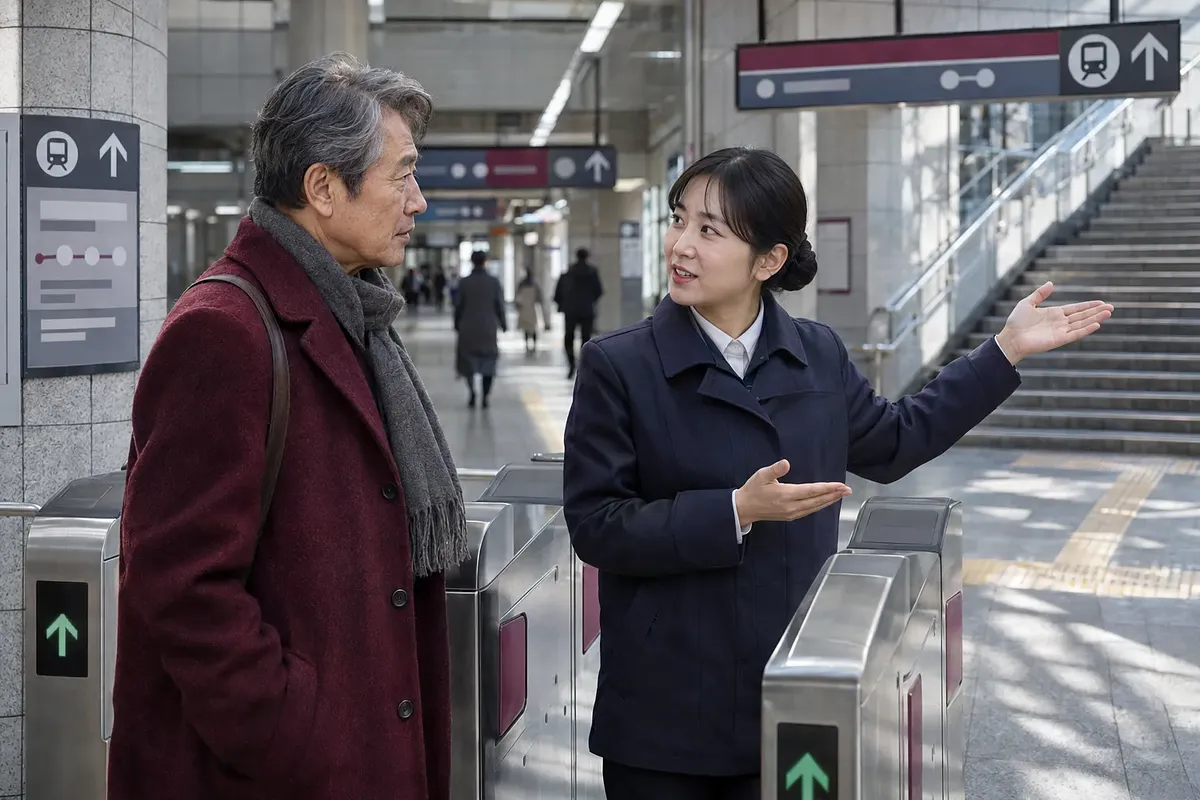
If trains are bypassing a station, consider the nearby stations recommended in the notice, and ask station staff how fares will be handled.
For Seoul subway trains skipping stops, check Seoul Metro's notices first. Just before departure, check Ttota Subway alerts. At the station or on the train, listen to announcements. Notices about possible skipped stops must be distinguished from actual implementation.
The dates, times, and figures in this article are based on official information checked on November 13, 2026.
How to Check for Seoul Subway Trains Skipping Stops
Start with official notices for the station and date you plan to travel. Searching only by event name may bring up notices for past events. Distinguish the notice's publication date from the date it actually applies.
· On the Seoul Metro website, open Notifications > Notices. Search for relevant information using the station or event name. Check the affected stations and applicable dates in the body of the notice.
· In the Ttota Subway app settings, enable alerts for the lines you use. Before departure, also check the latest notices in the app.
· Check the integration status in the [Traffic] tab on Gilcheck's left panel. If subway cards are available, read both the effective times and the original notice.
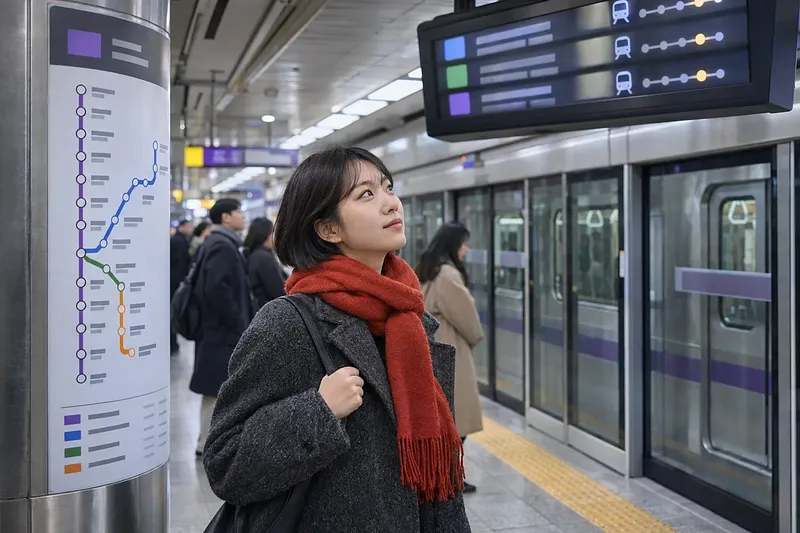
· When you arrive at the station or board a train, listen to announcements. This is where you confirm whether trains are actually skipping stops and whether stops have resumed.
· If trains are skipping stops, consider the nearby stations recommended in the notice. If you cannot continue your journey, ask station staff about fare refund conditions.
As of November 13, 2026, Gilcheck's subway alerts were being prepared for integration. At that time, approval of an application to use the Public Data Portal's data was pending. If no cards appear, check Seoul Metro and Ttota Subway notices.
When Do Trains Skip Stops?
Skipping a stop is an operating measure in which a train passes through a particular station without stopping. It may be implemented when event crowds or rallies near a station cause congestion. Related notices may also be issued during unusual situations such as accidents.
Seoul Metro Subway Alert Information is based on notice content from the Ttota app. It provides information on train delays and skipped stops. It also includes notices about unusual situations, such as timetable changes. A description of the data is available at Seoul Metro Subway Alert Information on the Public Data Portal.
The Difference Between Advance Notices and On-Site Decisions
Even if a notice has been issued in advance, the actual time when trains will skip stops may not have been decided.
Type | What the notice tells you | What to check before travel
Advance event or rally notice | Expected congestion and possible skipped stops | Event date, affected stations, updated notices
Notice specifying an effective time | Operating measures that apply from a particular time | Start time, direction of travel, affected section
Notice based on on-site conditions | Service changes caused by congestion or accidents | Whether measures are currently in effect, announcements that stops have resumed
Seoul Metro's rally notice dated August 21, 2026, stated that the schedule could change.
The protest schedule, locations, and other details may change.
This wording appears in Seoul Metro's “Notice of Rally and Demonstration by a Specific Disability Group ('26.8.24.).” The notice announced a demonstration between Seoul Station and City Hall Station at 08:00 on August 24, 2026. It warned of possible delays on that section. It also specified that trains might skip the affected stations depending on conditions.
How to Use Each Official Information Channel
Use the website when planning ahead, and check the app and announcements for changes while traveling.
Information channel | How to check | Main information to check
Seoul Metro website | Notifications > Notices | Advance event and rally notices, extra trains, timetable changes
Ttota Subway app | Enable alerts by line in settings | Latest notices about delays and unusual situations
Station and train announcements | Listen to announcements while traveling | Service changes affecting that station and train
Gilcheck [Traffic] tab | Check the integration status, then open an incident card | Original official notice, effective times, status, and change history
Ttota Subway provides delay information for Lines 1 to 9 and the Ui-Sinseol Line. This coverage is based on Seoul Metro's press release dated July 20, 2026. Do not assume this is the same as Gilcheck's subway information coverage.
Seoul Metro also announced a mobile train announcement service. This feature lets you listen to train announcements on a smartphone. Check the related press release dated May 19, 2026, and the app instructions for how to use it.
How Should You Read Event Notices?
Distinguish notices about possible measures from records of measures actually implemented. The following examples are notices from the time of each event. They do not mean that the same stations and times will apply to the next event.
Event | Official information and date | What to distinguish when reading
2026 Seoul International Fireworks Festival | An August 31, 2026, notice warned of congestion and possible skipped stops at Yeouinaru Station on September 5 | Recommendations to use nearby stations such as Yeouido Station and Mapo Station are separate from actual implementation times
Results of measures for the 2026 Seoul International Fireworks Festival | A September 8, 2026, press release recorded trains skipping Yeouinaru Station from 18:15 to 22:15 on September 5 | A record of approximately 4 hours of implementation confirmed by information published afterward
Halloween 2026 | A November 3, 2026, press release recorded trains skipping Itaewon Station from 23:47 on October 31 until the end of service | Results of measures implemented at the time, covering a total of 4 trainsets in both directions
2026 Spring Flower Festival | An April 2, 2026, press release announced crowd management measures for April 4 and 11 | Measures implemented flexibly as needed, taking on-site conditions into account
2024 New Year's Eve Bell-Ringing Ceremony | A December 30, 2024, notice warned that trains might skip Jonggak Station | Recommendation to use nearby stations such as Jongno 3-ga Station and Euljiro 1-ga Station
2025 New Year's Eve Bell-Ringing Ceremony | A December 29, 2025, notice announced extra trains from December 31 to 02:00 the next day | The announcement of 89 extra services on Lines 1 to 8 alone does not establish whether trains skipped Jonggak Station
Example: Reading a Fireworks Festival Notice
If you plan to travel to Yeouinaru Station, consider the recommended nearby stations first. The 2026 advance notice stated that trains might skip the station if passenger numbers surged. The actual start and end times were confirmed in a press release published afterward.
· Check the applicable date in the advance notice dated August 31, 2026. It applies to the event on September 5, 2026.
· Consider Yeouido Station and Mapo Station, which the notice recommended, as alternative routes. The notice asked passengers to avoid bringing bicycles onto trains to prevent safety incidents.
· On the event day, check Ttota Subway and on-site announcements to see whether the measures are in effect. Do not assume a start time based only on wording about the possibility in an advance notice.
Check notices issued before an upcoming event for the affected stations and times. Also check the integration status before using Gilcheck's [Traffic] tab. Do not apply past implementation times directly to the next event's schedule.
Alternative Travel and Fare Refunds When Trains Skip Stops
Consider alternative travel based on the nearby stations and extra trains recommended in the relevant notice. An announcement of extra trains alone does not establish that stops have resumed at a skipped station. Check separate service information to confirm whether trains are stopping.
Situation | Travel option to consider | Conditions to check
Trains are skipping your destination station | Use nearby stations recommended in the notice | Check whether trains currently stop at the station
Crowds are heading home after an event | Use the announced extra trains | Operating date, direction, destination, and times
Your train passes the station where you intended to get off | Ask station staff how to travel back | Whether trains stop in the opposite direction and how fares are handled
You cannot continue traveling after entering through the ticket gate | Ask about a fare refund at the station where you stop your journey | Whether the refund conditions in the Passenger Transport Terms and Conditions apply
During the fireworks festival on September 5, 2026, 18 extra services operated. There were 2 standby trainsets. These figures are results from the special transport arrangements at that time, not regular service counts.
Follow on-site safety instructions when traveling to nearby stations as well. Seoul Metro's Spring Flower Festival press release dated April 2, 2026, asked passengers to follow safety rules. Do not walk or run on escalators.
When Should You Check Fare Refund Conditions?
Fare refund provisions cover situations where you cannot continue your journey after entering through the ticket gate because of a service suspension, delay, or similar issue. Entering through the ticket gate means passing through it with a ticket or transit card. This information is based on Article 31 of the Passenger Transport Terms and Conditions effective March 7, 2026.
· Explain the service situation to staff at the station where you stop your journey.
· Check whether the refund conditions in Article 31 of the Passenger Transport Terms and Conditions apply.
· If you qualify for a refund, submit your claim to the station where you interrupt your journey, as specified in the terms. This means the station where you stop traveling.
It has not been confirmed whether a skipped stop alone qualifies for a fare refund. How fares are handled when you travel back to a station your train passed also requires separate confirmation. Check the terms under Travel Information > Fare System on the Seoul Metro website. The document to check is the Passenger Transport Terms and Conditions (Lines 1 to 8).
How to Read Stop-Skipping Cards in Gilcheck's Traffic Tab
According to operating information dated November 13, 2026, Gilcheck's subway alerts were being prepared for integration. Whether integration had been completed on the public interface was not separately confirmed. The following explains how to read the cards that will be provided after integration.
Gilcheck is designed to collect and display Seoul Metro Subway Alert Information. This covers train delays, skipped stops, timetable changes, and similar information. The cards are designed to let you check the official issuing organization and original notice.
· Open the [Traffic] tab in the left panel. First, check the subway information integration status.
· If cards are available, open the incident related to the station you plan to use. Check the official issuing organization and publication time.
· Check the effective start and end times. Read the last checked time separately.
· Check the current status and change history. If the card is marked as ended, also check the basis for ending it.
· Follow the original source link to check the official information. Before boarding, also check Ttota Subway and on-site announcements.
What Do the Times on a Card Mean?
The official publication time and the time when an operating measure takes effect may differ.
Card field | How to read it
Official issuing organization | Check which operator issued the information
Publication time | Read this as the time the notice was published
Effective start and end | Check the times during which the operating measure applies
Last checked time | Read this as the time Gilcheck last checked the information
Change history | Check the record of changes to times, status, and content
Original source link | Check the wording and conditions in the official notice
How Do Card Statuses Differ?
The status refers to the incident shown, so read it together with the affected stations and scope.
Status | What to check
Scheduled | Scheduled effective time and conditions for actual implementation
Ongoing | Currently announced affected stations, directions, and sections
Partially restored | Where service has been restored and where measures remain in place
Restored | Basis for ending the incident and official announcements that stops have resumed
Canceled/Withdrawn | Scope of the canceled notice and whether a replacement notice exists
The Difference Between the Basis for Ending a Card and Official Service Restoration
When a card is marked as ended, check whether there is an official announcement that service has been restored. Gilcheck is designed to show the basis for determining that an incident has ended. Removal from a list or the passing of a scheduled time must be distinguished from an official restoration announcement.
Basis for ending | What has been confirmed | What else to check
Official service restoration notice | A record of the operator announcing that service has been restored | Stations, directions, and effective times covered by the restoration
Removed from the list | An alert previously returned by a query has been removed from the list | A separate restoration notice or on-site announcement that stops have resumed
Scheduled end time has passed | The scheduled end time stated in the notice has passed | Whether there is an extension or follow-up notice
Do not read the last checked time as the actual time when stops resumed. Partial restoration also does not mean that stops have resumed at every station. Check the original notice and announcements for the station you plan to use to confirm the scope.
Which Lines Can You Check on Gilcheck?
Gilcheck's subway information covers lines operated by Seoul Metro. Do not judge information coverage by the line name alone. Check information from the operator of the section you plan to use.
Section used | Information to check
Sections operated by Seoul Metro | Seoul Metro notices, Ttota Subway, and Gilcheck cards after integration
Sections operated by Korail | Korail service information for the relevant section
Sections operated by Seoul Metro Line 9 | Seoul Metro Line 9 service information
Shinbundang Line, Airport Railroad, and others | Service information from each operator
Distinguish Ttota Subway's delay information coverage from Gilcheck's coverage. Gilcheck does not display every skipped stop operated by other operators. Do not assume service is normal simply because there is no card.
Common Mistakes When Reading Stop-Skipping Notices
Possible skipped stops, measures currently in effect, and restored service are different kinds of information. Reading only the title can cause you to miss these distinctions. Check the body of the notice and its change history together.
· Do not read a notice about possible measures as confirmation that they will be implemented. Whether and when they are actually implemented may depend on on-site conditions.
· Do not use past event records as the schedule for this year's remaining events. Check new notices before each event.
· Do not assume trains will stop at your destination just because extra trains are running. Check that station's stop-skipping notices separately.
· Do not calculate when trains will skip stops based only on crowding figures. The official documents checked for this article contain no uniform numerical threshold for the decision.
· Do not assume your fare will be refunded automatically if your train skips a stop. Check the applicable conditions at the station where you stop your journey.