Skip to content
Rail and Intercity Buses, a guide from choosing routes and departure points to booking tickets and using terminals How-to 🇰🇷 South Korea

This content applies specifically to South Korea.

Busan Subway 2026 Routes and Transfer Rules

Listen or read this article

19:37

Listen, or read the text only.

Busan Subway 2026 Routes and Transfer Rules

Kokoro 82M AI-generated voice 20 min read

0:00 19:37

Advertisement

Download audio

File name
busan-subway-2026-routes-fares-transfer-guide-en.mp3
Format
MP3 (audio/mpeg)
Duration
19:37
File size
13.5 MB
Engine
Kokoro 82M

This audio was generated by AI.

You may download and use it freely for personal use.

Advertisement

Busan Subway 2026 Routes and Transfer Rules

15 min read

Busan Subway 2026 Routes and Transfer Rules
This guide explains how to connect between Busan Metro Lines 1 to 4, the Busan-Gimhae Light Rail Transit, and the Donghae Line. It covers ticket options, child and senior benefits, transfer exceptions, Dongbaek Pass, and sections scheduled to open.
Select your departure and arrival stations in the subway and bus route finder on the left side of this site.
Check which agency operates your route and have a transit card or ticket ready.
Check the child and youth discounts and senior benefits that apply to the ages of those traveling with you.
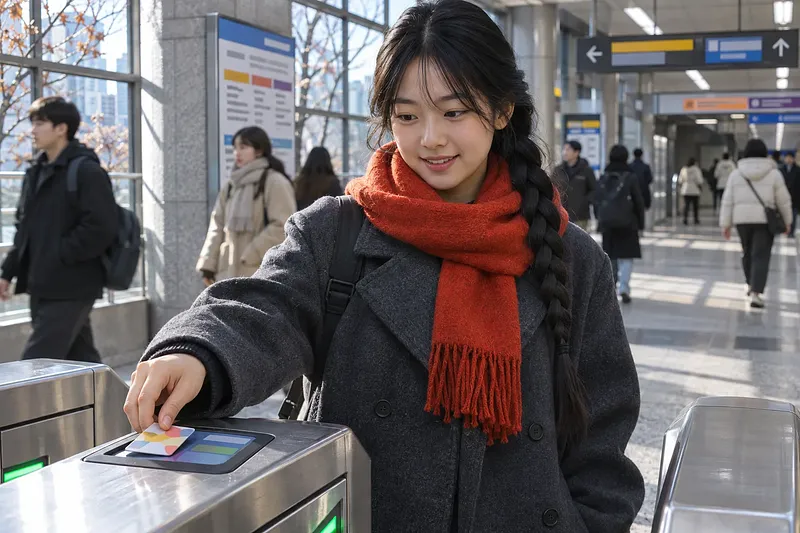
Tap out with the same transit card, then board your next mode of transport within the transfer time limit.
Before you leave, double-check train times and elevator operating status.
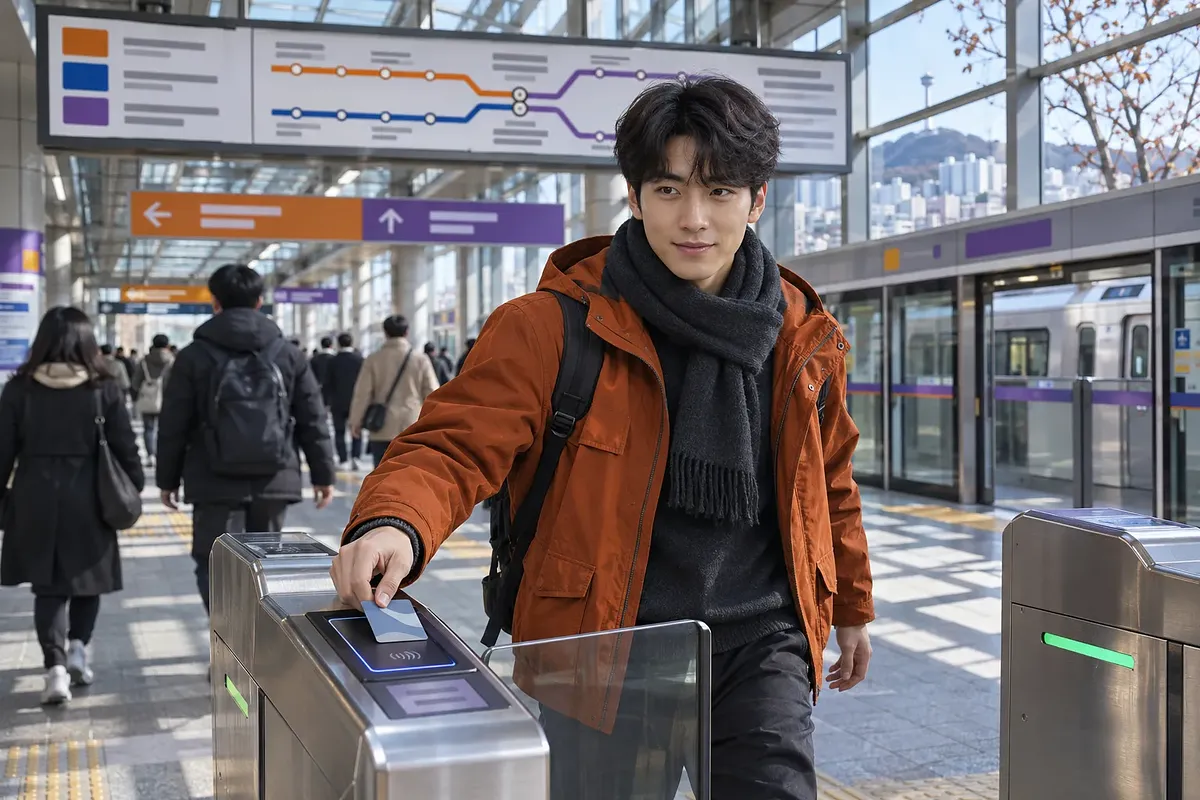
To use the Busan subway, first choose your departure and arrival stations. With a transit card, you can receive transfer discounts between modes of transport. The conditions for free travel for children and seniors differ by line.
The figures and planned service information in this article are based on operating agency guidance accessed on November 9, 2026.
How to use the Busan subway
Start by checking your route in this site's route finder. If you qualify for a discount, prepare the appropriate transit card. You will need identification documents to use a concession ticket.
· Open “Subway and Bus Route Finder” on the left side of this site. · Select your departure and arrival stations to check the lines and transfer stations for your trip. · Select a station to check the first, last, and next trains. · Prepare a transit card or ticket appropriate for your age and route. · Before leaving, check the operator's service change notices.
Check first and last trains and fares in the route finder before traveling. If you are transferring, also check the last train on the connecting line. Boarding the last train at your departure station does not guarantee that you can catch every connecting train.
Busan Metro Lines 1 to 4
Busan Metro Lines 1 to 4 are operated by Busan Transportation Corporation. The sections below were in service as of the reference date. Distinguish extensions under construction from routes currently available for travel.
Line | Operating section | Line type and train formation Line 1 | Nopo~Dadaepo Beach | Metro, 8-car trains Line 2 | Yangsan~Hopo~Jangsan | Metro connecting Yangsan and Busan, 6-car trains Line 3 | Suyeong~Daejeo | Metro, 4-car trains Line 4 | Minam~Anpyeong | Rubber-tired light rail, 6-car trains
Line 4 is a light rail line that runs on rubber tires. It has a different operator from Busan-Gimhae Light Rail Transit. Follow Busan Transportation Corporation's guidance on tickets and concession eligibility.
The main transfer stations between lines are as follows.
· Seomyeon: Lines 1 and 2 · Yeonsan: Lines 1 and 3 · Dongnae: Lines 1 and 4 · Suyeong and Deokcheon: Lines 2 and 3 · Minam: Lines 3 and 4
You can check the full station sequence on Busan Transportation Corporation's route map. Check the line number as well as the station name. You can also search for routes using the corporation's Cyber Station.
Connecting to Busan-Gimhae Light Rail Transit and the Donghae Line
Busan-Gimhae Light Rail Transit and the Donghae Line are separately operated lines that connect to the metro. Busan-Gimhae Light Rail Transit is operated by Busan-Gimhae Light Rail Transit Co., Ltd. The Donghae commuter rail line is operated by KORAIL.
Line | Operating section as of the reference date | Metro connections Busan-Gimhae Light Rail Transit | Sasang~Kaya University, 21 stations | Line 2 at Sasang, Line 3 at Daejeo Donghae commuter rail line | Bujeon~Taehwagang, 23 stations | Line 1 at Busan National University of Education, Line 2 at BEXCO, Line 3 at Geoje
From Gimhae Airport, you can reach the metro using Busan-Gimhae Light Rail Transit. Compare routes transferring at Sasang or Daejeo based on your destination. Metro passes cannot be used on the light rail section.
The Donghae Line is a commuter rail line connecting Busan and Ulsan. Although it connects to the metro, you need to check its fare calculation separately. The full length of the Donghae Line is not listed here because measurement criteria differ.
Choosing a transit card or QR ticket
Metro Lines 1 to 4 divide fares into zones based on travel distance. Travel up to 10km from the departure station falls within Zone 1. Zone 2 applies to travel of more than 10km.
Fare rules for Metro Lines 1 to 4
The adult Zone 1 fare with a transit card or mobile ticket is 1,600 won. The Zone 2 fare is 1,800 won. With a QR ticket, you pay 1,700 won for Zone 1 and 1,900 won for Zone 2.
The youth fare with a transit card or mobile ticket is 1,050 won for Zone 1. For Zone 2, it is 1,200 won. Children travel free if they meet the applicable discount conditions.
Children's QR tickets cost 700 won for Zone 1 and 800 won for Zone 2. Free travel for children does not apply to every ticket type. Adult fares also apply to mobile tickets used by non-members.
Check the conditions for each ticket type in Busan Transportation Corporation's metro fare guide.
Comparing ticket and card options
If you plan to transfer to a bus or another railway, first check the transfer conditions for transit cards.
Option | What to check before use Transit card | Child or youth registration status and whether transfers between modes qualify for discounts Mobile ticket | Passenger category and discount eligibility based on membership status QR ticket | Fares that differ from transit card fares and whether you need to buy a separate ticket Mobile pass | Whether your itinerary uses only Metro Lines 1 to 4
Card payments at ticket machines
Card payments for single-use tickets at ticket machines are being introduced in stages. Busan Transportation Corporation announced that the rollout would begin on October 21, 2026. Tickets can be purchased using credit cards and digital payment services.
Introduction on the Dongmae~Dadaepo Beach section of Line 1 is scheduled for December 2026. Line 4 is also scheduled for introduction that month. Check the ticket machine payment information at the station you plan to use.
Discount conditions for children, youths, and seniors
Even companions of the same age may pay different amounts depending on the mode of transport. On the metro, children are aged 6 to 12. Youths are aged 13 to 18.
Passenger | Metro Lines 1 to 4 | Busan-Gimhae Light Rail Transit | Donghae commuter rail line Children | Free when discount conditions are met, such as using a child transit card; QR tickets require payment | Free with a child transit card | Child fares apply Youths | Youth fares apply | Youth fares different from metro youth fares apply | KORAIL youth fares apply Passengers aged at least 65 | Free with a concession ticket | Standard fares apply | Free under KORAIL's senior concession conditions
People with disabilities and legally eligible persons of national merit, among others, also qualify for metro concessions. Whether accompanying caregivers are covered depends on the eligibility category. Bring documents that verify your eligibility.
Busan-Gimhae Light Rail Transit charges standard fares even for passengers aged at least 65. The adult transit card fare is 1,600 won for Zone 1. The Zone 2 fare is 1,800 won.
With a youth light rail transit card, you pay 1,000 won for Zone 1. The Zone 2 fare is 1,150 won. These figures are based on the fare table revised on September 22, 2025.
The basic child transit card fare on the Donghae Line is 650 won. Additional fares may apply depending on travel distance. Free travel on the metro does not mean that travel on the Donghae Line is also free.
The Donghae Line figures are based on the December 2024 revision of KORAIL's terms and conditions. Confirm current fares with KORAIL before leaving. Also check the identification requirements for child and concession tickets.
Transfer conditions for Busan, Gimhae, and Yangsan
The basic rule for transit card transfers is to board the next mode of transport within 30 minutes of getting off. Discounts apply to at most 2 transfers. This allows connections between a total of 3 modes of transport.
· Decide which transit card to use when you first board. · Tap out with the same card when you get off. · Board the next mode of transport within the specified transfer time. · Use the same card through to your final exit.
The regional transfer surcharge for Busan, Gimhae, and Yangsan was abolished on September 19, 2025. This removed the former adult regional transfer surcharge of 500 won. Differences in basic fares and additional distance fares may still apply separately.
The Donghae Line does not offer transfer discounts with transport services in Gimhae or Yangsan. A difference in basic fares may apply when transferring between the metro and the Donghae Line. You should also check additional distance fares on the Donghae Line.
Busan Transportation Corporation identifies the Busan section of the Donghae Line as Bujeon~Wollae. Additional fares on this section are calculated for distances of more than 10km. Check the detailed rules in the city transfer fare guide.
Transfer mistakes when reboarding the metro
If you leave the metro, use another mode of transport, and return to the metro, this may count as reboarding. Different metro line numbers are still considered the same mode of transport. This must be distinguished from an ordinary transfer between metro lines.
Busan Transportation Corporation's “City Transfer Fares” guidance states:
When reboarding the same mode of transport, no transfer discount applies and the basic fare is charged.
The corporation gives a journey on Line 2, then the Donghae Line, then Line 1 as an example. Reboarding a bus with the same route number is also excluded from the discount. When choosing a route, check not only the travel time but also the order in which you use different modes of transport.
Travel pattern | What to check Changing to another metro line through a metro transfer passage | Check the transfer route within the metro Taking the metro, then the Donghae Line, then reboarding the metro | Check the discount exclusion for reboarding the same mode of transport Taking a bus, then another mode of transport, then reboarding a bus with the same route number | Check the discount exclusion for reusing the same bus route number
This distinction follows Busan Transportation Corporation's transfer guidance.
Choosing a pass and example calculations
If you will take multiple trips using only the metro, compare mobile passes. An adult 1-day pass costs 6,000 won. A 3-day pass costs 13,000 won.
The 1-day pass allows unlimited rides on the day it is first validated. The 3-day pass is valid for 3 days from the day it is first validated. An adult 1-month pass costs 45,000 won and provides 45 rides.
These passes are valid on Busan Metro Lines 1 to 4. They cannot be used on buses, the Donghae Line, or Busan-Gimhae Light Rail Transit. Check where a pass is valid before considering how many trips you will take.
Adult 1-day pass calculation example
If you pay separately for each Zone 1 trip, the total exceeds the price of a 1-day pass starting with 4 trips. This threshold is calculated by dividing 6,000 won by 1,600 won. The calculation excludes transfer discounts and Dongbaek Pass refunds.
· 4 separate Zone 1 trips with a transit card: 1,600 won × 4 trips = 6,400 won · Using a metro 1-day pass on the same day: 6,000 won · Calculated difference: 400 won
Here, 4 trips means separate journeys for which you pay a fare each time. Simply changing lines within the metro does not count as an additional trip. Calculate bus or Donghae Line travel as a separate cost.
Conditions for using Dongbaek Pass and K-Pass
You must also register for K-Pass to receive linked Dongbaek Pass benefits. Busan strengthened the link between the services on April 1, 2026. The monthly Busan public transport spending threshold for eligible users is 45,000 won.
This program refunds transport costs based on actual usage. It differs from buying a fixed-price pass before traveling. Check Dongbaek Pass and K-Pass for the conditions that apply to you.
· Check whether your Dongbaekjeon transit card is registered for Dongbaek Pass. · Check your K-Pass membership and card registration status. · Check whether the lines you plan to use count toward Dongbaek Pass usage. · After traveling, check your usage and refund details in each service.
Dongbaek Pass covers services including Busan city buses and village buses. It also includes Metro Lines 1 to 4 and Busan-Gimhae Light Rail Transit. The entire Donghae Line is covered, including the Ulsan section.
For buses you use in Gimhae or Yangsan, check their operating area. Rail coverage does not mean that buses in other areas are also covered. You can check eligible routes in Busan's Dongbaek Pass guide.
Option | How it works | What to check first Metro pass | Use a ticket within a set period or ride limit | Travel mainly on Metro Lines 1 to 4 Linked Dongbaek Pass and K-Pass | Refunds based on usage of a registered card | Regular use of both eligible buses and rail services
K-Pass's “Everyone's Card” is also included in the guidance on linked benefits. Separate, temporarily expanded benefits were available from April to September 2026. Do not apply the refund rates from that period unchanged to travel in November.
The temporary benefit period is specified in the April 30, 2026 notice in Busan City News.
Checking elevators, nursing rooms, and luggage lockers
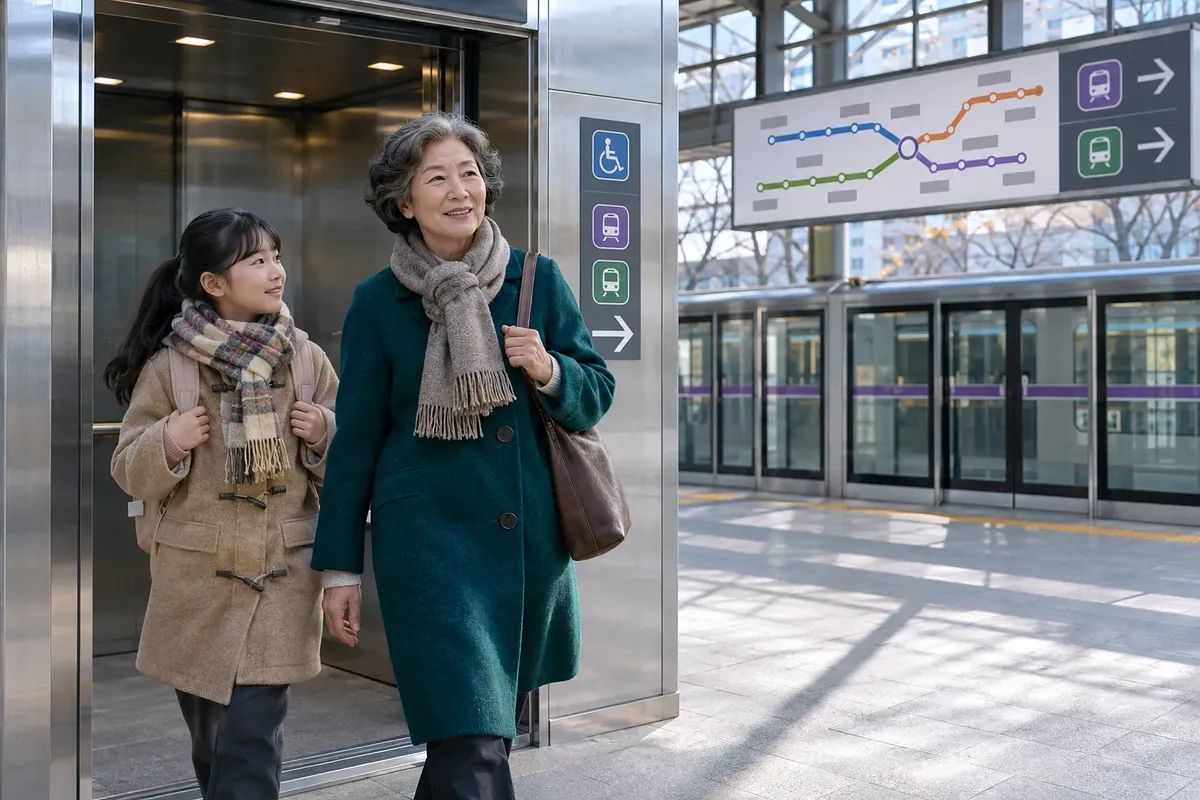
When checking station facilities, distinguish between whether they are installed and whether they are currently available. Even stations with elevators may restrict their use during inspections. If traveling with a stroller or wheelchair, check your transfer stations as well.
· Open “User Guide” on Busan Transportation Corporation's website. · Check elevator locations under “Facilities for Passengers with Reduced Mobility.” · Check whether they are operating under “Elevator Operating Status.” · For nursing rooms or luggage lockers, look up the station in the relevant facility list.
Nursing rooms are listed under “Facilities for Passengers with Reduced Mobility.” Luggage lockers can be found under “Convenience Facilities.” Locker operators and fees may differ by line.
Before leaving, check the elevator operating status. For lockers, check the posted rates and conditions of use on site. If you have large luggage, it is also worth checking the locker dimensions.
Planned Yangsan Line, Bukulsan extension, and Sasang~Hadan Line
Lines that had not opened as of the reference date cannot be used as current travel routes. Project periods must be distinguished from actual commercial service start dates. Check the operators' final announcements for exact opening dates and fares.
Project | Planned section | Information confirmed as of the reference date Yangsan Line | Nopo~Bukjeong, 11.43km | Scheduled to open within 2026 Line 2 connecting section | Yangsan~Yangsan Jungang | Extension planned to connect to the Yangsan Line; exact opening date needs confirmation Donghae Line Bukulsan extension | Taehwagang~Bukulsan, 9.7km | Scheduled to open in December 2026 Sasang~Hadan Line | Sasang on Line 2~Hadan on Line 1 | Announced construction period of 2010~2027; commercial service start date needs confirmation
Yangsan City has been identified as the operator of the main Yangsan Line section. Busan City is expected to operate the Yangsan~Yangsan Jungang connecting section of Line 2. Check the opening announcement for the Yangsan Line's final fares.
Ulsan's Buk-gu Office states that the Bukulsan extension is scheduled to open in December 2026. Do not treat this as confirmation of a specific date. Detailed scheduling information is available in the notice on extended commuter rail service to Bukulsan Station.
Some construction sections of the Sasang~Hadan Line are marked as suspended. The final year of the construction period cannot be assumed to be the opening year. Check progress in Busan Transportation Corporation's construction progress guide.
Contacts for fares and service information
If the information on the search screen differs from notices at the station, check with the relevant operator. Providing your departure and arrival stations can help narrow down what needs to be checked. Also explain the type of transit card you use and the passenger's age.
· Busan Transportation Corporation Customer Center: 1544-5005 · Busan-Gimhae Light Rail Transit Call Center: 055-310-9800 · Donghae commuter rail line: Commuter rail information on KORAIL's website or the station you use
The number of Line 2 stations is not listed here because sources give different figures. The full length of the Donghae Line is also not presented as a single figure. For actual travel, check the stations you will use and the sections currently in service.
0:00 0:00
1 / 91

Advertisement

Download text

File name
busan-subway-2026-routes-fares-transfer-guide-en.txt
Format
TXT (text/plain)
Paragraphs
91

Downloads exactly what you see as a text file.

Please cite the source when quoting.

Advertisement

Large text

Makes the text larger and the colors clearer. Turn it on if the text feels too small.

Prepare a transit card or ticket before using Busan’s urban rail.

Key points

  • Select your departure and arrival stations in the subway and bus route finder on the left side of this site.
  • Check which agency operates your route and have a transit card or ticket ready.
  • Check the child and youth discounts and senior benefits that apply to the ages of those traveling with you.
  • Tap out with the same transit card, then board your next mode of transport within the transfer time limit.
  • Before you leave, double-check train times and elevator operating status.

To use the Busan subway, first choose your departure and arrival stations. With a transit card, you can receive transfer discounts between modes of transport. The conditions for free travel for children and seniors differ by line.

The figures and planned service information in this article are based on operating agency guidance accessed on November 9, 2026.

How to use the Busan subway

Start by checking your route in this site's route finder. If you qualify for a discount, prepare the appropriate transit card. You will need identification documents to use a concession ticket.

  1. Open “Subway and Bus Route Finder” on the left side of this site.
  2. Select your departure and arrival stations to check the lines and transfer stations for your trip.
  3. Select a station to check the first, last, and next trains.
  4. Prepare a transit card or ticket appropriate for your age and route.
  5. Before leaving, check the operator's service change notices.

Check first and last trains and fares in the route finder before traveling. If you are transferring, also check the last train on the connecting line. Boarding the last train at your departure station does not guarantee that you can catch every connecting train.

Check elevator operating status again before setting out.

Busan Metro Lines 1 to 4

Busan Metro Lines 1 to 4 are operated by Busan Transportation Corporation. The sections below were in service as of the reference date. Distinguish extensions under construction from routes currently available for travel.

Line Operating section Line type and train formation
Line 1 Nopo~Dadaepo Beach Metro, 8-car trains
Line 2 Yangsan~Hopo~Jangsan Metro connecting Yangsan and Busan, 6-car trains
Line 3 Suyeong~Daejeo Metro, 4-car trains
Line 4 Minam~Anpyeong Rubber-tired light rail, 6-car trains

Line 4 is a light rail line that runs on rubber tires. It has a different operator from Busan-Gimhae Light Rail Transit. Follow Busan Transportation Corporation's guidance on tickets and concession eligibility.

The main transfer stations between lines are as follows.

  • Seomyeon: Lines 1 and 2
  • Yeonsan: Lines 1 and 3
  • Dongnae: Lines 1 and 4
  • Suyeong and Deokcheon: Lines 2 and 3
  • Minam: Lines 3 and 4

You can check the full station sequence on Busan Transportation Corporation's route map. Check the line number as well as the station name. You can also search for routes using the corporation's Cyber Station.

Connecting to Busan-Gimhae Light Rail Transit and the Donghae Line

Busan-Gimhae Light Rail Transit and the Donghae Line are separately operated lines that connect to the metro. Busan-Gimhae Light Rail Transit is operated by Busan-Gimhae Light Rail Transit Co., Ltd. The Donghae commuter rail line is operated by KORAIL.

Line Operating section as of the reference date Metro connections
Busan-Gimhae Light Rail Transit Sasang~Kaya University, 21 stations Line 2 at Sasang, Line 3 at Daejeo
Donghae commuter rail line Bujeon~Taehwagang, 23 stations Line 1 at Busan National University of Education, Line 2 at BEXCO, Line 3 at Geoje

From Gimhae Airport, you can reach the metro using Busan-Gimhae Light Rail Transit. Compare routes transferring at Sasang or Daejeo based on your destination. Metro passes cannot be used on the light rail section.

The Donghae Line is a commuter rail line connecting Busan and Ulsan. Although it connects to the metro, you need to check its fare calculation separately. The full length of the Donghae Line is not listed here because measurement criteria differ.

Choosing a transit card or QR ticket

Metro Lines 1 to 4 divide fares into zones based on travel distance. Travel up to 10km from the departure station falls within Zone 1. Zone 2 applies to travel of more than 10km.

Fare rules for Metro Lines 1 to 4

The adult Zone 1 fare with a transit card or mobile ticket is 1,600 won. The Zone 2 fare is 1,800 won. With a QR ticket, you pay 1,700 won for Zone 1 and 1,900 won for Zone 2.

The youth fare with a transit card or mobile ticket is 1,050 won for Zone 1. For Zone 2, it is 1,200 won. Children travel free if they meet the applicable discount conditions.

Children's QR tickets cost 700 won for Zone 1 and 800 won for Zone 2. Free travel for children does not apply to every ticket type. Adult fares also apply to mobile tickets used by non-members.

Check the conditions for each ticket type in Busan Transportation Corporation's metro fare guide.

Comparing ticket and card options

If you plan to transfer to a bus or another railway, first check the transfer conditions for transit cards.

Option What to check before use
Transit card Child or youth registration status and whether transfers between modes qualify for discounts
Mobile ticket Passenger category and discount eligibility based on membership status
QR ticket Fares that differ from transit card fares and whether you need to buy a separate ticket
Mobile pass Whether your itinerary uses only Metro Lines 1 to 4

Card payments at ticket machines

Card payments for single-use tickets at ticket machines are being introduced in stages. Busan Transportation Corporation announced that the rollout would begin on October 21, 2026. Tickets can be purchased using credit cards and digital payment services.

Introduction on the Dongmae~Dadaepo Beach section of Line 1 is scheduled for December 2026. Line 4 is also scheduled for introduction that month. Check the ticket machine payment information at the station you plan to use.

Discount conditions for children, youths, and seniors

Even companions of the same age may pay different amounts depending on the mode of transport. On the metro, children are aged 6 to 12. Youths are aged 13 to 18.

Passenger Metro Lines 1 to 4 Busan-Gimhae Light Rail Transit Donghae commuter rail line
Children Free when discount conditions are met, such as using a child transit card; QR tickets require payment Free with a child transit card Child fares apply
Youths Youth fares apply Youth fares different from metro youth fares apply KORAIL youth fares apply
Passengers aged at least 65 Free with a concession ticket Standard fares apply Free under KORAIL's senior concession conditions

People with disabilities and legally eligible persons of national merit, among others, also qualify for metro concessions. Whether accompanying caregivers are covered depends on the eligibility category. Bring documents that verify your eligibility.

Busan-Gimhae Light Rail Transit charges standard fares even for passengers aged at least 65. The adult transit card fare is 1,600 won for Zone 1. The Zone 2 fare is 1,800 won.

With a youth light rail transit card, you pay 1,000 won for Zone 1. The Zone 2 fare is 1,150 won. These figures are based on the fare table revised on September 22, 2025.

The basic child transit card fare on the Donghae Line is 650 won. Additional fares may apply depending on travel distance. Free travel on the metro does not mean that travel on the Donghae Line is also free.

The Donghae Line figures are based on the December 2024 revision of KORAIL's terms and conditions. Confirm current fares with KORAIL before leaving. Also check the identification requirements for child and concession tickets.

Transfer conditions for Busan, Gimhae, and Yangsan

The basic rule for transit card transfers is to board the next mode of transport within 30 minutes of getting off. Discounts apply to at most 2 transfers. This allows connections between a total of 3 modes of transport.

  1. Decide which transit card to use when you first board.
  2. Tap out with the same card when you get off.
  3. Board the next mode of transport within the specified transfer time.
  4. Use the same card through to your final exit.

The regional transfer surcharge for Busan, Gimhae, and Yangsan was abolished on September 19, 2025. This removed the former adult regional transfer surcharge of 500 won. Differences in basic fares and additional distance fares may still apply separately.

The Donghae Line does not offer transfer discounts with transport services in Gimhae or Yangsan. A difference in basic fares may apply when transferring between the metro and the Donghae Line. You should also check additional distance fares on the Donghae Line.

Busan Transportation Corporation identifies the Busan section of the Donghae Line as Bujeon~Wollae. Additional fares on this section are calculated for distances of more than 10km. Check the detailed rules in the city transfer fare guide.

Transfer mistakes when reboarding the metro

If you leave the metro, use another mode of transport, and return to the metro, this may count as reboarding. Different metro line numbers are still considered the same mode of transport. This must be distinguished from an ordinary transfer between metro lines.

Busan Transportation Corporation's “City Transfer Fares” guidance states:

When reboarding the same mode of transport, no transfer discount applies and the basic fare is charged.

The corporation gives a journey on Line 2, then the Donghae Line, then Line 1 as an example. Reboarding a bus with the same route number is also excluded from the discount. When choosing a route, check not only the travel time but also the order in which you use different modes of transport.

Travel pattern What to check
Changing to another metro line through a metro transfer passage Check the transfer route within the metro
Taking the metro, then the Donghae Line, then reboarding the metro Check the discount exclusion for reboarding the same mode of transport
Taking a bus, then another mode of transport, then reboarding a bus with the same route number Check the discount exclusion for reusing the same bus route number

This distinction follows Busan Transportation Corporation's transfer guidance.

Choosing a pass and example calculations

If you will take multiple trips using only the metro, compare mobile passes. An adult 1-day pass costs 6,000 won. A 3-day pass costs 13,000 won.

The 1-day pass allows unlimited rides on the day it is first validated. The 3-day pass is valid for 3 days from the day it is first validated. An adult 1-month pass costs 45,000 won and provides 45 rides.

These passes are valid on Busan Metro Lines 1 to 4. They cannot be used on buses, the Donghae Line, or Busan-Gimhae Light Rail Transit. Check where a pass is valid before considering how many trips you will take.

Adult 1-day pass calculation example

If you pay separately for each Zone 1 trip, the total exceeds the price of a 1-day pass starting with 4 trips. This threshold is calculated by dividing 6,000 won by 1,600 won. The calculation excludes transfer discounts and Dongbaek Pass refunds.

  • 4 separate Zone 1 trips with a transit card: 1,600 won × 4 trips = 6,400 won
  • Using a metro 1-day pass on the same day: 6,000 won
  • Calculated difference: 400 won

Here, 4 trips means separate journeys for which you pay a fare each time. Simply changing lines within the metro does not count as an additional trip. Calculate bus or Donghae Line travel as a separate cost.

Conditions for using Dongbaek Pass and K-Pass

You must also register for K-Pass to receive linked Dongbaek Pass benefits. Busan strengthened the link between the services on April 1, 2026. The monthly Busan public transport spending threshold for eligible users is 45,000 won.

This program refunds transport costs based on actual usage. It differs from buying a fixed-price pass before traveling. Check Dongbaek Pass and K-Pass for the conditions that apply to you.

  1. Check whether your Dongbaekjeon transit card is registered for Dongbaek Pass.
  2. Check your K-Pass membership and card registration status.
  3. Check whether the lines you plan to use count toward Dongbaek Pass usage.
  4. After traveling, check your usage and refund details in each service.

Dongbaek Pass covers services including Busan city buses and village buses. It also includes Metro Lines 1 to 4 and Busan-Gimhae Light Rail Transit. The entire Donghae Line is covered, including the Ulsan section.

For buses you use in Gimhae or Yangsan, check their operating area. Rail coverage does not mean that buses in other areas are also covered. You can check eligible routes in Busan's Dongbaek Pass guide.

Option How it works What to check first
Metro pass Use a ticket within a set period or ride limit Travel mainly on Metro Lines 1 to 4
Linked Dongbaek Pass and K-Pass Refunds based on usage of a registered card Regular use of both eligible buses and rail services

K-Pass's “Everyone's Card” is also included in the guidance on linked benefits. Separate, temporarily expanded benefits were available from April to September 2026. Do not apply the refund rates from that period unchanged to travel in November.

The temporary benefit period is specified in the April 30, 2026 notice in Busan City News.

Checking elevators, nursing rooms, and luggage lockers

When checking station facilities, distinguish between whether they are installed and whether they are currently available. Even stations with elevators may restrict their use during inspections. If traveling with a stroller or wheelchair, check your transfer stations as well.

  1. Open “User Guide” on Busan Transportation Corporation's website.
  2. Check elevator locations under “Facilities for Passengers with Reduced Mobility.”
  3. Check whether they are operating under “Elevator Operating Status.”
  4. For nursing rooms or luggage lockers, look up the station in the relevant facility list.

Nursing rooms are listed under “Facilities for Passengers with Reduced Mobility.” Luggage lockers can be found under “Convenience Facilities.” Locker operators and fees may differ by line.

Before leaving, check the elevator operating status. For lockers, check the posted rates and conditions of use on site. If you have large luggage, it is also worth checking the locker dimensions.

Planned Yangsan Line, Bukulsan extension, and Sasang~Hadan Line

Lines that had not opened as of the reference date cannot be used as current travel routes. Project periods must be distinguished from actual commercial service start dates. Check the operators' final announcements for exact opening dates and fares.

Project Planned section Information confirmed as of the reference date
Yangsan Line Nopo~Bukjeong, 11.43km Scheduled to open within 2026
Line 2 connecting section Yangsan~Yangsan Jungang Extension planned to connect to the Yangsan Line; exact opening date needs confirmation
Donghae Line Bukulsan extension Taehwagang~Bukulsan, 9.7km Scheduled to open in December 2026
Sasang~Hadan Line Sasang on Line 2~Hadan on Line 1 Announced construction period of 2010~2027; commercial service start date needs confirmation

Yangsan City has been identified as the operator of the main Yangsan Line section. Busan City is expected to operate the Yangsan~Yangsan Jungang connecting section of Line 2. Check the opening announcement for the Yangsan Line's final fares.

Ulsan's Buk-gu Office states that the Bukulsan extension is scheduled to open in December 2026. Do not treat this as confirmation of a specific date. Detailed scheduling information is available in the notice on extended commuter rail service to Bukulsan Station.

Some construction sections of the Sasang~Hadan Line are marked as suspended. The final year of the construction period cannot be assumed to be the opening year. Check progress in Busan Transportation Corporation's construction progress guide.

Contacts for fares and service information

If the information on the search screen differs from notices at the station, check with the relevant operator. Providing your departure and arrival stations can help narrow down what needs to be checked. Also explain the type of transit card you use and the passenger's age.

  • Busan Transportation Corporation Customer Center: 1544-5005
  • Busan-Gimhae Light Rail Transit Call Center: 055-310-9800
  • Donghae commuter rail line: Commuter rail information on KORAIL's website or the station you use

The number of Line 2 stations is not listed here because sources give different figures. The full length of the Donghae Line is also not presented as a single figure. For actual travel, check the stations you will use and the sections currently in service.

Open the link

Opens in a new window.

Advertisement

Sign-in required

Sign in with your Google or Apple account to like, comment, and save highlights.

FAQ

Where can I check the first and last train times for the Busan Metro?

Use ‘Find Subway and Bus Routes’ on the left side of this site. Select a station to check the first, last, and next trains. If you are transferring, check the last train on your connecting line as well.

Is Busan Metro Line 4 also operated by the Busan Transportation Corporation?

Line 4 is a rubber-tired light rail line operated by the Busan Transportation Corporation. It runs between Minam and Anpyeong. It is separate from the Busan-Gimhae Light Rail Transit.

Where can I transfer from the Busan-Gimhae Light Rail Transit to the metro?

You can transfer to Line 2 at Sasang. At Daejeo, it connects to Line 3. Choose a transfer route that suits your destination.

Where does the Donghae Line connect to the Busan Metro?

It connects to Line 1 at Gyodae. You can transfer to Line 2 at BEXCO and Line 3 at Geoje. Check the Donghae Line's fares and transfer conditions separately.

Do children always ride the Busan Metro for free?

Children ride Metro Lines 1 to 4 for free if they meet the discount requirements, such as having a children's transportation card. There is a charge for children's QR tickets. Children must pay the child fare on the Donghae Line.

Is the Busan-Gimhae Light Rail Transit also free for people aged 65 or older?

The Busan-Gimhae Light Rail Transit charges standard fares even for people aged 65 or older. This differs from the free rides for seniors on Metro Lines 1 to 4. Check the ticket types before traveling.

Does a free transfer mean there is nothing extra to pay?

Even with the regional transfer fee abolished, you may still have to pay the difference in base fares. Additional distance-based fares may also apply. The Donghae Line does not offer transfer discounts with transportation services in Gimhae or Yangsan.

Do I still get a discount if I take the metro, transfer to the Donghae Line, and then take the metro again?

The Busan Transportation Corporation states that boarding the same mode of transportation again is not eligible for a transfer discount. Traveling on Line 2, the Donghae Line, and Line 1 in that order is included as an example. Even if the line numbers differ, this may count as boarding the metro again.

Can I use a Busan Metro 1-day pass on buses or the Donghae Line?

Busan Transportation Corporation travel passes are for use on Metro Lines 1 to 4. They cannot be used on buses, the Donghae Line, or the Busan-Gimhae Light Rail Transit. Calculate the cost of any other transportation you use separately.

Is a Busan Metro 1-day pass valid for 24 hours after purchase?

A 1-day pass is valid on the day it is first validated. It is not described as being valid for 24 hours from the time it is validated. Check the date you plan to use it before buying.

Do I receive the linked K-Pass benefits just by signing up for Dongbaek Pass?

You need to sign up for both Dongbaek Pass and K-Pass to receive the linked benefits. Also check your card registration status. Individual refund amounts vary depending on the applicable conditions and usage.

Does Dongbaek Pass also cover the Ulsan section of the Donghae Line?

The City of Busan's guidance explicitly states that the entire Donghae Line is covered. This includes the Ulsan section. However, you need to check separately whether buses in other regions are covered.

If a station has an elevator, can I use it right away?

Even if elevators are installed, their use may be restricted due to inspections or breakdowns. Check Busan Transportation Corporation’s “Elevator Operating Status.” It is also a good idea to check your transfer and destination stations.

Have the opening dates for the Yangsan Line and the Donghae Line extension to Bukulsan been confirmed?

As of this article’s reference date, the Yangsan Line is scheduled to open by the end of 2026. The Bukulsan extension is listed as scheduled to open in December 2026. Check the operator’s final announcement for the exact date commercial service will begin.

Will the Sasang-Hadan Line open in 2027?

Busan Transportation Corporation lists the construction period as 2010~2027. This period alone does not confirm the actual opening date. Work suspensions are also noted for some construction sections, so you need to check the latest announcements.

Sources

Data formats

This content is available in several machine-friendly formats.

Data-only languages (machine translated, files only)

Indonesian JSON MD Portuguese JSON MD Chinese (Traditional) JSON MD Deutsch JSON MD

Verification

This article was drafted with AI and then reviewed and edited by a person.

Reviewed by 신익희 · 편집장 · 2026-11-14

Figures in this article were checked against the source material during generation. · 2026-11-14

This translation has been cross-checked by AI. · 2026-11-14

Reuse & AI usage

Search indexing and AI citation with attribution are welcome. See the license policy for details.

CC BY · License

Loading…

Loading…

Loading…

From Injoys

Request the content you want and take 70% of what it earns

Just leave the subject. We handle production, review, translation and distribution.

See how revenue sharing works

Comments