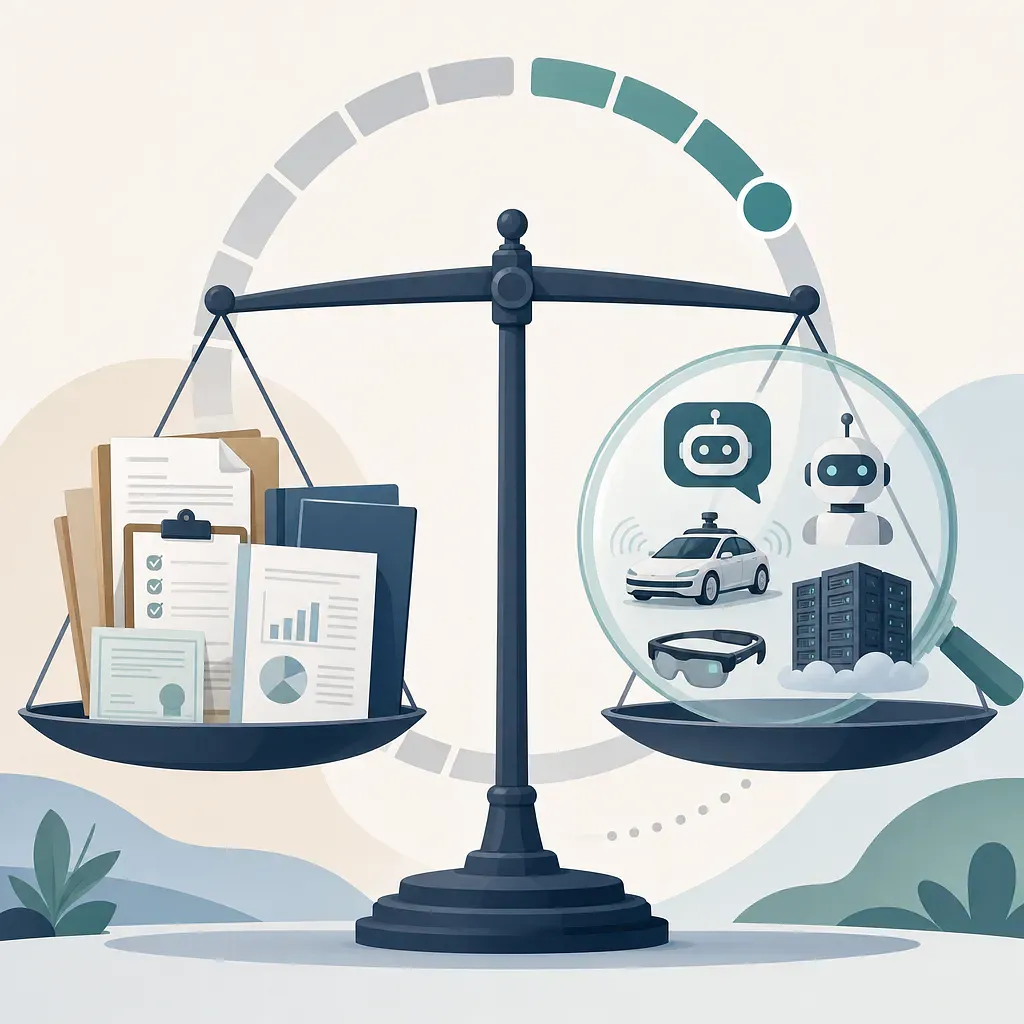
As of July 27, 2026, the materials provided contain high-impact claims ranging from new OpenAI models and humanoid surgery to robotaxi incidents. However, the original articles, official press releases, model cards, papers, court case numbers, and other evidence needed for verification were not provided.
Therefore, rather than recirculating the content as confirmed news, this document presents it as a fact-checking report that distinguishes verifiable facts from claims requiring further verification. Because July is not yet over, it also cannot be considered a complete monthly roundup.
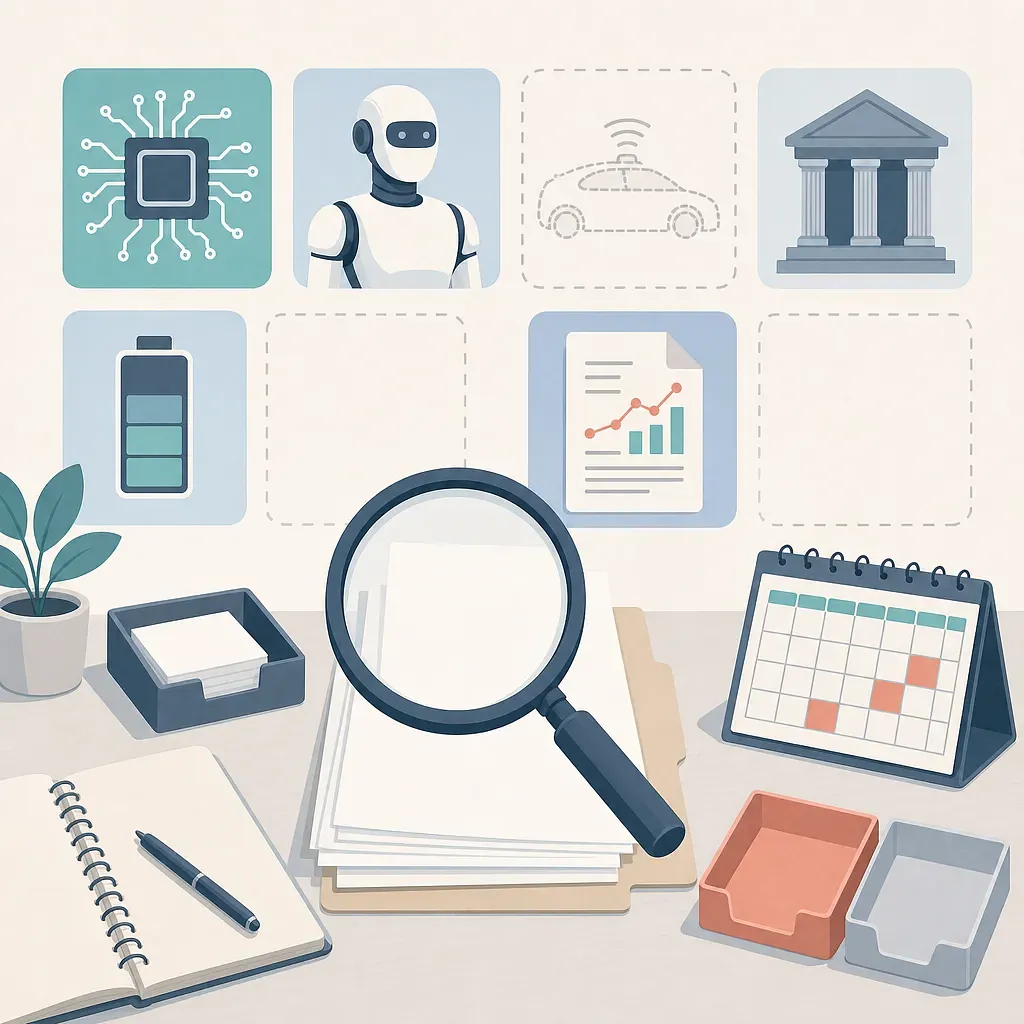
Verification Criteria
The following criteria were applied to assess each claim.
- Official announcements: Corporate newsrooms, product documentation, model cards, or regulatory notices
- Independent sources: Multiple reports from reliable news organizations or external evaluations
- Research evidence: Paper title, authors, research institution, measurement conditions, and original text
- Legal evidence: Case name, court with jurisdiction, case number, judgment, or settlement documents
- Numerical evidence: Survey period, sample, calculation method, and comparison baseline
- Safety evidence: Incident reports, regulatory investigations, or safety data disclosed by the operator
Here, “unable to verify” does not mean false. It means that the materials provided are insufficient to establish the claim as fact or quote it accurately.
Overall Assessment Summary
| Area | Key claim | Verification status | Evidence required |
|---|---|---|---|
| OpenAI | Launch of GPT-5.6, Solar, and Luna | Unable to verify | Official announcement, model card, API documentation |
| OpenAI | Release of the Work menu and Micro keyboard | Unable to verify | Product page, release date, manufacturer announcement |
| AI research | Solved a 50-year-old unsolved math problem in one hour | Unable to verify | Problem name, original solution, verification by mathematicians |
| Chinese AI | Moonshot AI launched Kimi K3 | Unable to verify | Official model documentation, weights, evaluation results |
| Employment | Approximately 120,000 tech jobs lost in the first half of the year | Insufficient evidence | Research organization, period, company-by-company aggregation method |
| Copyright | Anthropic reached the first large-scale damages settlement | Legal documents required | Case name, court, judgment or settlement agreement |
| Energy | AI agents consume up to 136 times more electricity | Original research required | KAIST paper, experimental conditions, units |
| Meta | Developing Super-sense, which records 24 hours a day | Unable to verify | Meta announcement, privacy design documentation |
| Robotics | Successful pig gallbladder surgery using a low-cost humanoid | Unable to verify | Paper, clinical or animal experiment approval, surgical video |
| Tesla | Launch of FSD Lite and availability in South Korea | Unable to verify | Regional launch notice, vehicle and hardware requirements |
| Waymo | Multiple vehicles towed after batteries were depleted in traffic | Incident records required | Location and time, operator and government records |
| Defense robotics | Forterra Lancer deployed to the front lines in Ukraine | Independent verification required | Government procurement and deployment records, field reporting |
OpenAI-Related Claims
GPT-5.6, Solar, and Luna
The materials provided state that GPT-5.6 lowers the cost of coding, science, and cybersecurity tasks while strengthening integrations with Google Drive, Slack, Notion, and Microsoft 365. However, the following information is missing.
- Exact model name and release date
- URL of the official OpenAI announcement
- Input and output pricing and context length
- Benchmarks used for performance evaluations
- Access policy for high-risk cyber capabilities
- Definition of whether Solar and Luna are models or product modes
Until this information is available, neither the launch nor claims of superior performance should be stated as fact. In particular, the claim that “cost efficiency has been maximized” can be verified only if the comparison target and token usage are provided.
Work Menu and Agent Quotas
The described ability to create documents and presentations by following the format of reference documents or high-quality examples qualifies as an agent-based workflow automation feature. However, whether “Work” is an actual product name, whether it is included in a particular plan, and what limits apply to a plan priced at around KRW 30,000 per month may vary by region, billing currency, and task complexity.
Verifiable reporting should include the plan name, how credits are calculated, consumption per task, and the price of additional credits.
Claim of Solving an Unsolved Math Problem
The claim that it “solved a problem that had remained unsolved since the 1970s in one hour” requires an exceptionally high level of verification. At a minimum, the following materials are needed.
- The formal name of the mathematical problem and the person who first proposed it
- The complete proof produced by the AI
- The roles and execution logs of up to 64 sub-agents
- Review by independent mathematicians or an academic journal
- The novel contribution compared with prior research
Without even the name of the problem, it is impossible to determine whether it was solved. The claim that it “used reasoning alone without an internet search” also requires execution logs or an experimental design for verification.
File Deletion Risks and Computer Control
When an agent controls a user’s computer, risks may arise, including file deletion, execution of incorrect commands, and account misuse. However, citing a claim that a specific OpenAI product actually deleted files on a Mac requires a system card, reproduction procedure, or official incident report.
The following safeguards are generally important for computer-controlling agents.
- User confirmation before deletion, payment, or external transmission
- Restrictions on work folders and account permissions
- Execution logs and rollback functionality
- Masking of sensitive information
- Use of a sandbox or virtual environment
ChatGPT Live and the Micro Keyboard
Simultaneous listening and speaking, interruption during speech, handling of silent intervals, and improved recognition in noisy environments may all be performance evaluation criteria for voice models. However, the claim that performance has “improved dramatically” requires latency, word error rates, and language-specific test results.
No product page or manufacturer announcement was provided for the “Micro keyboard co-developed with Work Louder” either. Until the product name, availability, price, and method of displaying agent status are confirmed, it is difficult to characterize it as OpenAI’s first hardware product.
AI Competition Between the United States and China
Moonshot AI Kimi K3
The materials provided claim that Kimi K3 is an open-weight model that competes with Claude and is less expensive than costly closed models. To evaluate this, the following conditions must be standardized.
| Comparison item | What to verify |
|---|---|
| Level of model disclosure | Whether weights, code, training data information, and licenses are available |
| Performance | Whether the same benchmarks and evaluation tools were used |
| Cost | Input and output token prices, server operating costs, hardware costs |
| Agent evaluation | Tool access permissions, number of attempts, time limits |
| Deployability | Required number of GPUs, memory, quantization support |
“Open weight” is generally used to mean that the model weights can be downloaded; it is not the same as fully open source, which also discloses the training code and data. In addition, ranking third on a particular benchmark does not necessarily mean ranking third in overall performance.
Employment, Copyright, and Electricity Issues
Tech Industry Layoffs
The figure that “approximately 120,000 tech jobs disappeared in the first half of 2026” requires a clear aggregation standard. Announced layoff plans must be distinguished from the number of people actually dismissed, technical roles from nontechnical roles, and duplicate announcements from unique cases. Whether companies identified AI investment as a direct reason for layoffs must also be confirmed through individual disclosures and executive statements.
Growth in labor union membership also requires membership figures, the regions surveyed, and a comparison period before it can be treated as a trend.
Anthropic Copyright Dispute
Whether AI training constitutes fair use and liability for obtaining pirated copies may be separate legal issues. However, the description provided includes neither a case name nor court documents. Therefore, the following conclusions should not be stated definitively.
- The interpretation that the court deemed all AI training on books lawful
- The statement that Anthropic was ordered to pay damages
- The claim that the case represents the first large-scale settlement by an AI company
Judgments and settlements are legally different. A settlement is a resolution between the parties and does not necessarily mean that a court found unlawful conduct. An accurate account should include the court with jurisdiction, the date of the decision, the scope of the judge’s ruling, and the status of the settlement.
Electricity Consumption by AI Agents
Agents may use more computation than single-query chatbots when they call models multiple times and repeatedly conduct searches, execute code, and perform verification. However, “up to 136 times” may vary substantially depending on the following variables.
- Model and hardware used
- Number of model calls needed to complete the task
- Number of input and output tokens
- Whether search and code execution were included
- Extent to which server cooling and power conversion losses were included
- Difficulty of the baseline chatbot task and the agent task
The International Energy Agency has analyzed how the spread of AI may increase data center electricity demand, but the multiplier for a specific agent and the projection of “at least half of the United States’ daily electricity consumption” require separate research evidence.
OpenAI’s Proposal to Give the U.S. Government an Equity Stake
The claim that 5% of AI revenue would be provided to the U.S. government could have major implications for corporate governance and public policy. Without an official proposal, regulatory filing, or announcement from OpenAI and the U.S. government, it is difficult to cite this as fact. The interpretation that this represents “lobbying to avoid regulation” must also distinguish unsupported speculation about motive from factual reporting.