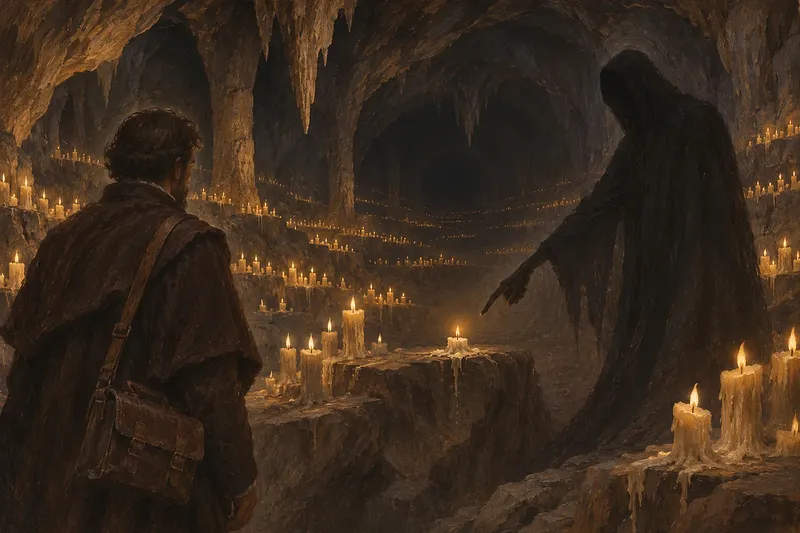
The Cadejo is a being in Central American oral tradition that takes the form of a dog and follows people. The black dog story told here is a retelling of a tale from Cartago, Costa Rica. In Salvadoran legend, the same black dog sometimes protects the person it accompanies on the road at night.
This story was retold in November 2026, based on the Cartago oral legend “El Cadejos.”
The Story of Cartago’s Black Dog
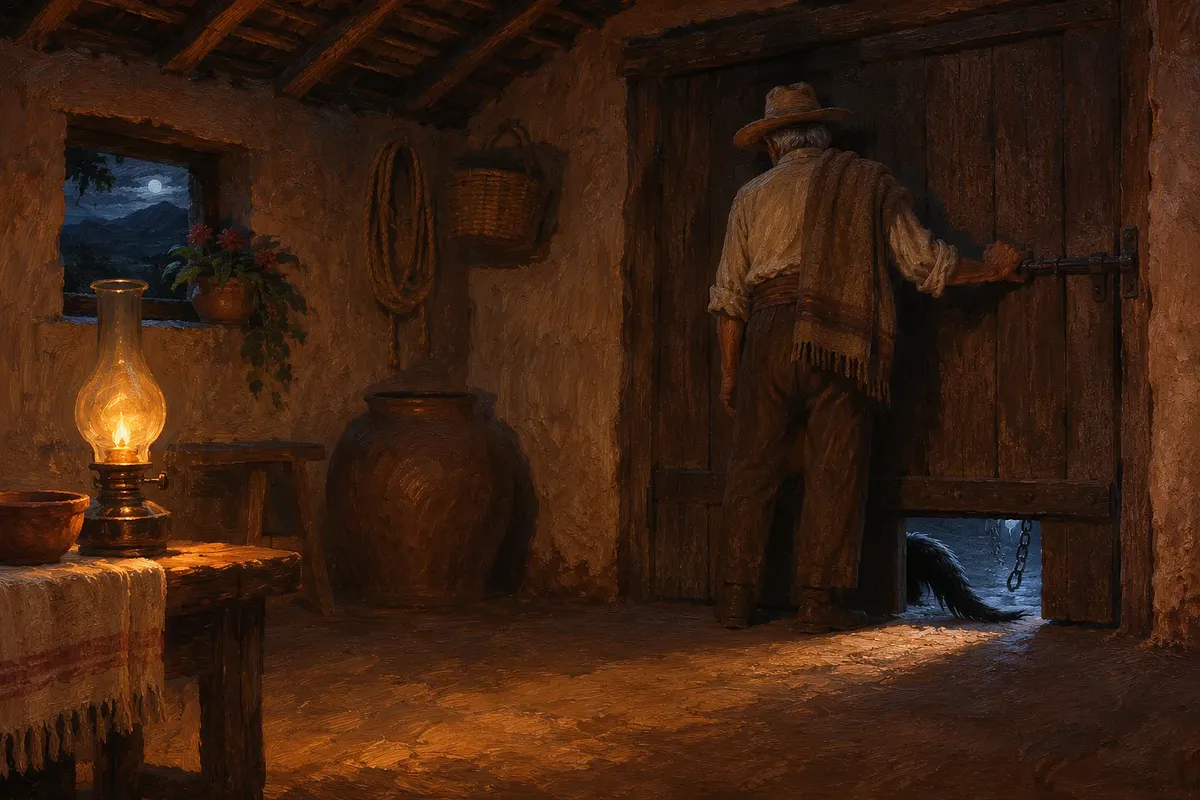
When the old man reached home, a black dog with red eyes stood behind him. It had followed him the whole way. Even after the old man went inside, the dog stayed outside the door.
There was a small hole at the bottom of the door. If someone brought a snack, it could be passed through the hole without opening the door. This time, what poked through was the black dog’s tail. At that moment, an iron chain rattled deafeningly outside.
Only then did the people inside realize that the Cadejo had followed the old man. Someone set fire to a palm leaf. Someone else sprinkled holy water throughout the house.
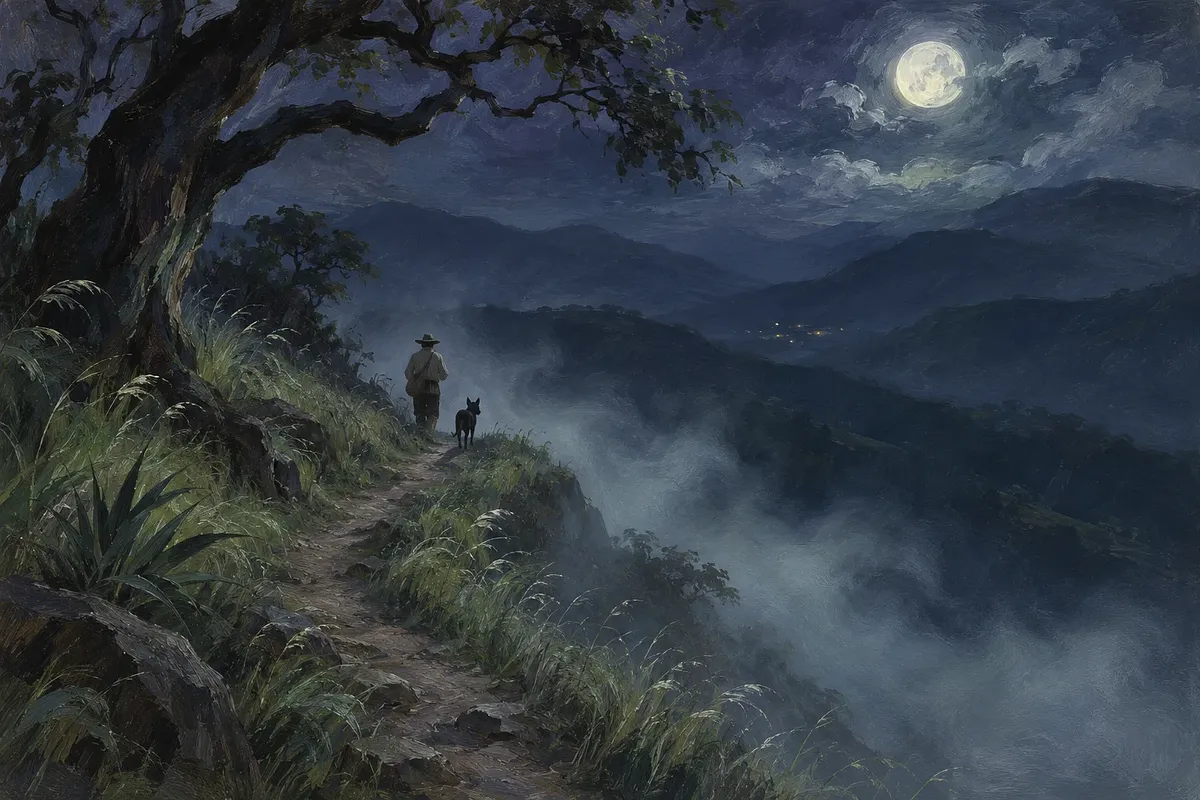
In one telling from Santa María Ostuma, the black Cadejo protects men traveling at night.AI-generated image
The Source and Origins of the Cadejo Legend
The Cartago story is an oral legend whose original teller’s name has not been passed down. One version appeared in volume 20, issues 1 and 2, of the University of Costa Rica’s journal Revista Herencia. The entry “El Cadejos” on page 68 recounts a story said to have been told by a grandmother. The journal issue was published in 2007, but when the legend originated is unknown.
In this account, the Cadejo follows men who chase after women. The scene with the old man and the dog is a short anecdote that illustrates that tradition. The story ends with the people sprinkling holy water. It does not say where the dog went afterward.
The White Cadejo and the Black Cadejo in El Salvador
In El Salvador, the black dog’s role depends on who tells the story. The University of Southern California’s folklore archive includes an account from a storyteller from San Salvador who heard the tale from their grandfather. A folklore survey in Santa María Ostuma presents different interpretations from the same village side by side.
| Oral account | White Cadejo | Black Cadejo |
|---|---|---|
| “El Cadejos” from Cartago, Costa Rica | Does not appear in this scene | Follows the old man and sticks its tail through the hole at the bottom of the door |
| Account from a storyteller from San Salvador, El Salvador | Protects people who are faithful to God | Follows people on the road at night and frightens them |
| One account from Santa María Ostuma, El Salvador | Protects women | Protects men |
| Another account recorded in the same village | Protects people | Is seen as a sign that something bad will happen |
The storyteller in Santa María Ostuma who says both dogs protect people also recounts an encounter on the road at night. In that story, the dog appears on a mountain pass and walks alongside someone heading to the village. In this version, the color of the dog’s coat tells you not whether it is good or evil, but whom it protects.
Folklore in the Hole in the Door and the Mask
In the Cartago story, the hole in the door is where the people inside first notice a strange presence. “El Cadejos” explains that in old houses, people passed snacks or groceries back and forth through the hole. The scene takes on a different meaning when a tail suddenly appears in the familiar opening and the people hear a chain rattle. The ending, with the burning of a palm leaf and the sprinkling of holy water, shows how the people in the story believe they can ward off the threat.
At festivals, the Cadejo is a character played by someone wearing a mask. Page 68 of Revista Herencia features a photograph of a black dog mask with pointed ears and a red tongue sticking out. Costa Rica celebrates October 31 each year as the day of its traditional mask festival. In the story, the dog is on the other side of a closed door; in the masked parade, people come face to face with it in the street.