“Godfather Death” is a traditional folktale from Hesse, Germany, that the Brothers Grimm included in their 1812 first edition. This is a retelling of the story of a doctor who tricked Death twice. The first edition ends with a warning by candlelight. In the final edition, the flame goes out and the doctor dies.
This article was written in November 2026, based on the Brothers Grimm’s 1857 final edition.
Plot of Godfather Death
A poor father set out to find a godfather for his thirteenth child’s baptism. God offered to look after the child, but the father shook his head. As he saw it, God gave to the rich while the poor went hungry. He also turned down the Devil, who offered him gold, because the Devil deceived people.
Then he saw Death walking down the road on thin legs. The father entrusted his child to Death, who took rich and poor alike. On Sunday, Death came to the baptism as promised.
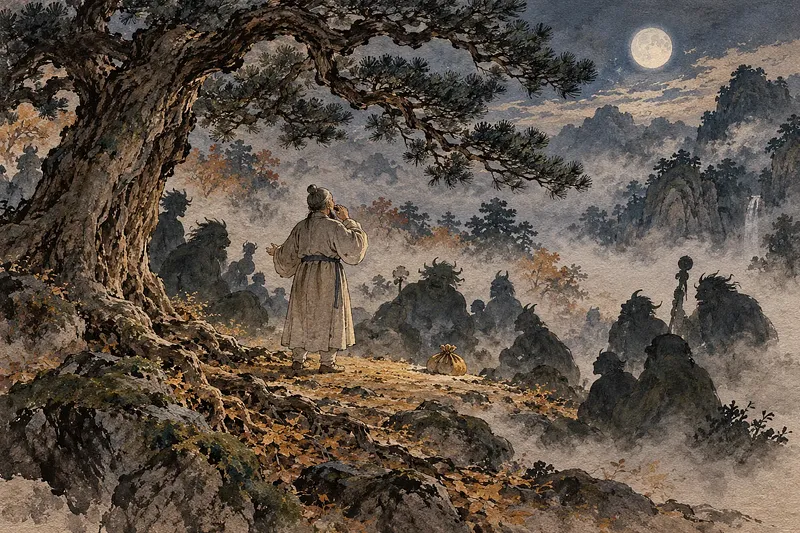
When the boy grew up, his godfather took him into the woods and pointed out an herb. If Death stood at a patient’s head, giving the patient the herb would cure them. If Death stood at their feet, the young man had to stop treating them. People came from far away to see the young doctor who could tell at a glance which patients would recover.
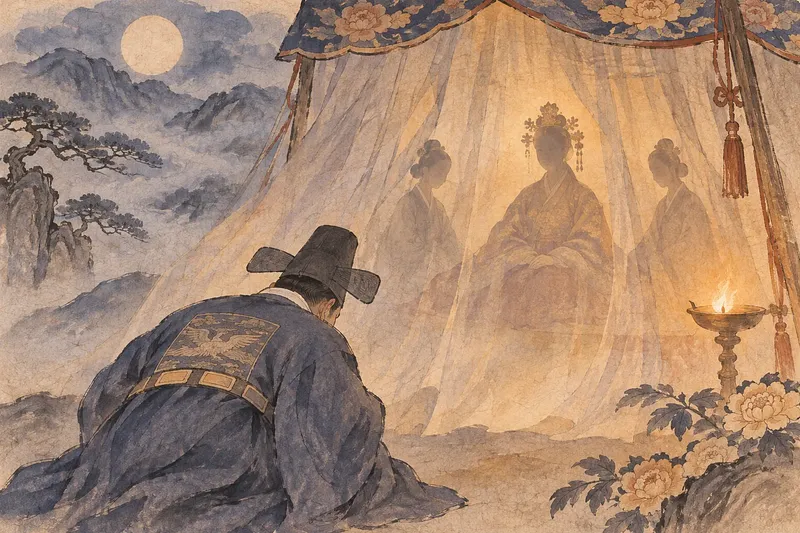
When the king fell ill, Death stood at the foot of his bed. Thinking his godfather would let it pass just this once, the doctor turned the king so that his head lay where his feet had been. Death was now at the king’s head, and the king regained his strength after taking the herb. Death warned the doctor that if he tricked him again, he would take the doctor himself.
Soon afterward, the king announced that whoever saved his only daughter would become his son-in-law and inherit the throne. Death was already standing at the princess’s feet. Thinking of marrying her, the doctor once again turned the patient around. After the princess took the herb, color returned to her cheeks.
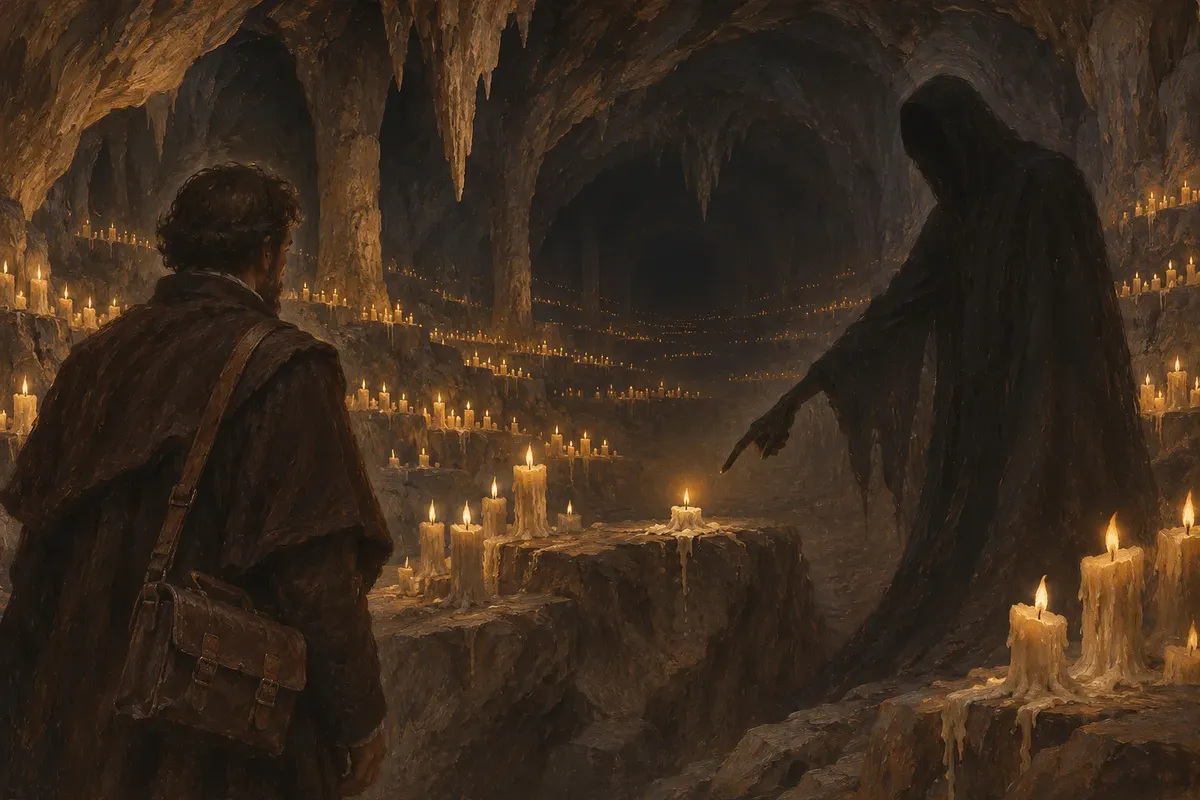
Death took the doctor by the hand and led him down into an underground cave. Candles stood in rows, each representing one person’s life. The doctor thought his own candle would still be tall, but his godfather pointed to a stub that had nearly burned away.
The doctor begged Death to set the stub on top of a new candle so the flame would keep burning. Death brought over a long candle as though he meant to grant the request. Just as he was about to put the two candles together, he pretended his hand had slipped and knocked the stub over. The flame went out, and the doctor fell to the ground and died on the spot.
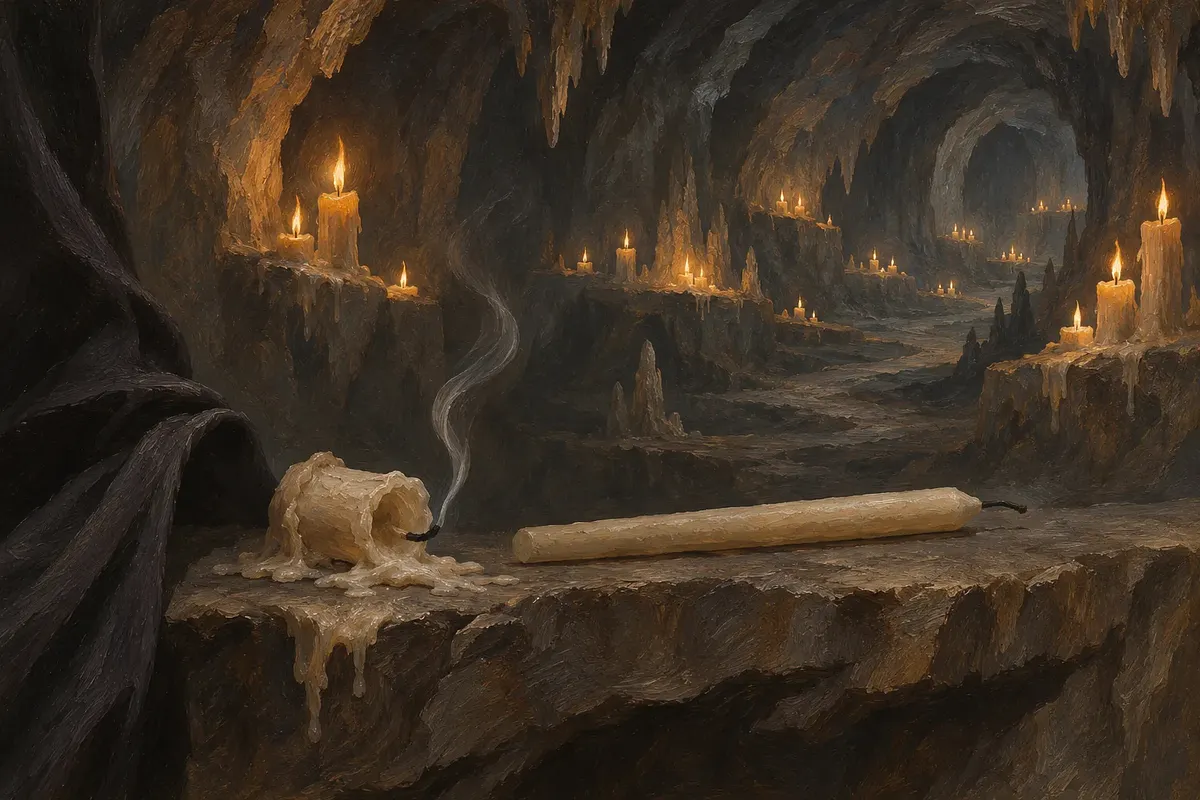
Starting with the second edition in 1819, the tale ends with Death taking the doctor’s life.AI-generated image
The Original Text and Its Roots in Hessian Oral Tradition
The German original is “Der Gevatter Tod,” tale 44 in volume 1 of the Brothers Grimm’s Children’s and Household Tales. The full texts of the 1812 first edition, the 1819 second edition, and the 1857 final edition are available on German Wikisource. The editions are distinguished by the year that follows the shared title.
In entry 44 of their 1856 volume of notes, the Brothers Grimm identified Hesse as the source of the story. The oral version they heard ended with Death showing the doctor the lights in the cave and warning him. They added that the episode in which the godfather tricks the doctor to punish him came from a story recorded by Schilling.
Comparing the Endings of the First and Final Editions
The scene in which the doctor’s candle actually goes out first appears in the 1819 second edition. In all three editions, the doctor tricks Death by turning the patient around. In the second edition, however, Death stands in a different place when treatment is allowed.
| Edition | Where Death stands when treatment is allowed | What the doctor uses | Final scene in the cave |
|---|---|---|---|
| 1812 first edition | At the patient’s head | Medicine in a bottle from his godfather | Death points to the dying flame and warns the doctor. |
| 1819 second edition | At the patient’s feet | The herb his godfather showed him in the woods | Death deliberately drops the candle stub, putting out the flame, and the doctor collapses. |
| 1857 final edition | At the patient’s head | The herb his godfather showed him in the woods | Death pretends to join the stub to a new candle, then puts out what remains of the flame and takes the doctor’s life. |
The last thing the doctor learns in the first edition is that he has little time left. In the second and final editions, he goes a step further and tries to figure out how to extend his life. At the bedside, the doctor tricked his godfather by switching the positions of the patient’s head and feet, but in the cave, Death is the one who plays the final trick.
The Meaning of the Baptismal Godfather and the Candles
A godfather is a man who forms a bond with a child at baptism and helps guide the child in their faith. The father entrusts his son to Death because he trusts Death to be fair. Later, the son assumes that this very bond will make him an exception. The son’s expectation runs directly against the reason his father chose Death as his godfather.
The candles in the cave are the tale’s way of making the time a person has left visible. In the final edition, Death explains that even a young person may have only a little candle left. That makes it more unsettling when the doctor takes it for granted that his own candle will be long. To understand the scene, there is no need to assume that people in Hesse had a custom of lighting a candle for each person to pray for a long life.