Skip to content
Injoys
Comparison 🇰🇷 South Korea

This content applies specifically to South Korea.

Elementary School Allowance: Cash or Card?

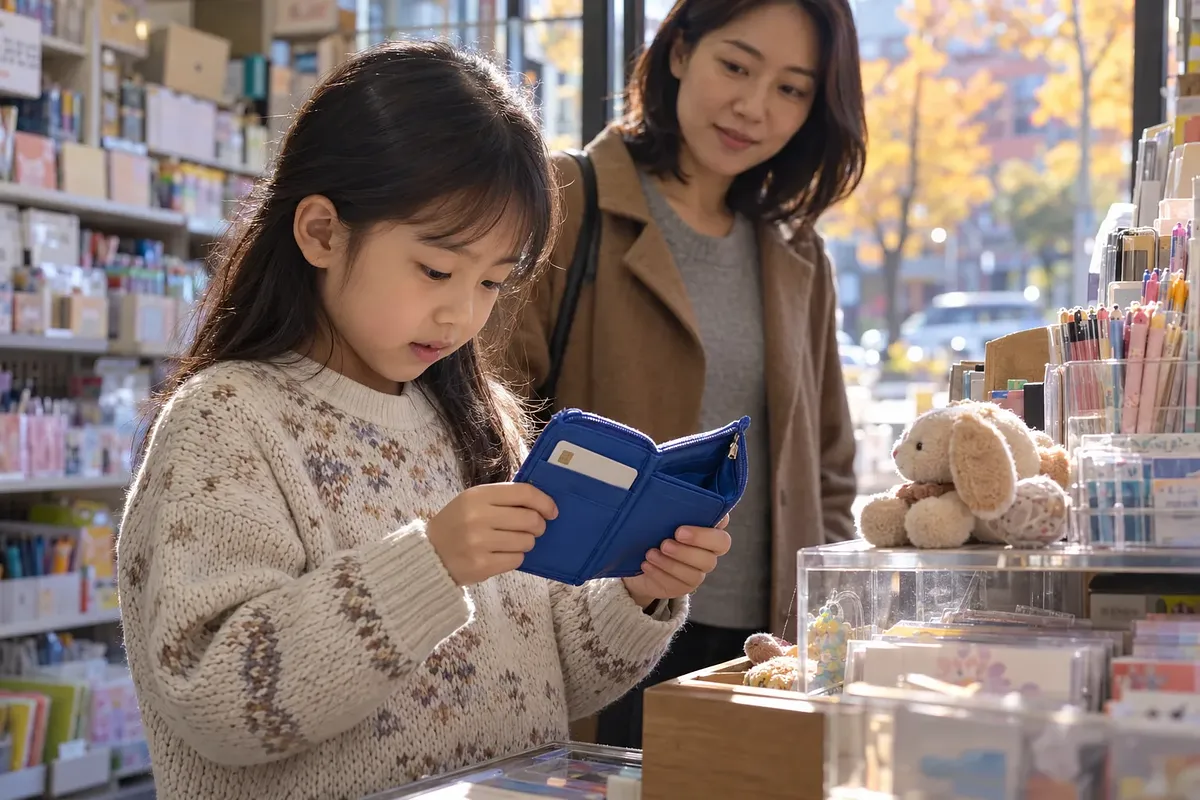
If your child is managing an allowance for the first time, we recommend starting with cash. Decide when to switch to a card based on their ability to manage their balance rather than their grade, and check the age requirement for getting a card and its transit features separately.

Listen or read this article

12:13

Listen, or read the text only.

Elementary School Allowance: Cash or Card?

Kokoro 82M AI-generated voice 13 min read

0:00 12:13

Advertisement

Download audio

File name
children-allowance-cash-prepaid-debit-card-guide-en.mp3
Format
MP3 (audio/mpeg)
Duration
12:13
File size
8.39 MB
Engine
Kokoro 82M

This audio was generated by AI.

You may download and use it freely for personal use.

Elementary School Allowance: Cash or Card?

11 min read

Elementary School Allowance: Cash or Card?
If your child is managing an allowance for the first time, we recommend starting with cash. Decide when to switch to a card based on their ability to manage their balance rather than their grade, and check the age requirement for getting a card and its transit features separately.
Cash is good for practicing counting the money left after spending.
Decide when to switch to a card based on the child's ability to check their balance and plan their spending, rather than their grade.
According to guidance from the Financial Services Commission in May 2026, debit cards without a postpaid transit feature can be issued to children aged 7 or older.
Loading money onto a card is a transfer of funds, so record it separately from purchases.
With some products, you need to check the prepaid transit card balance separately from the balance available for regular payments.
If your child is managing an allowance for the first time, start with cash. Even in fifth grade, a child who is not used to checking their balance should practice with cash first. Consider a card when they can plan their next purchase based on the money they have left.
The debit card issuance ages below are based on guidance from the Financial Services Commission dated May 11, 2026.
How are cash, prepaid cards, and debit cards different?
The three methods differ in where the money used for payment is kept. A reloadable allowance card is usually a prepaid card that uses money loaded in advance. With a debit card, the payment amount generally comes out of a linked bank account.
Comparison | Cash | Reloadable prepaid card | Debit card Money spent | Bills and coins in a wallet | Balance loaded in advance | Available balance in a linked account Checking the balance | Count it directly | Check an app or use a method provided for the product | Bank or card app, among other methods What it can teach | Paying and receiving change | Distinguishing the amount loaded from the amount spent | Matching the account balance with payment records What to record | Where and how much was spent | Check payment records | Check payments and withdrawals If lost | Uncertain whether the cash can be recovered | Check how to block the card and handle the balance | Block the card and check transaction records What else to check | Whether cash is accepted | How to load money and check the transit balance | Issuance requirements and the postpaid transit feature
Not every product with “card” in its name is a debit card. KakaoBank mini is a prepaid electronic payment service. The Toss Youth Card is also a prepaid card linked to Toss Money. You can check how they work in the mini service description and the Youth Card product information.
Is fifth grade a good time to start using a card?
Decide based on your child's experience managing money independently, rather than their grade. Teacher Park Hyun-ah's answer on allowance education also recommends starting with cash. Her advice is to try a reloadable card in the upper grades if the child has managed money since the lower grades.
What your child does now | Method to consider | What to check together Receives a regular allowance for the first time | Start with cash | Count the money left after a purchase Can explain their balance and next expense | Consider a prepaid or debit card | Review payment records and adjust the budget Only needs a transit card | Choose a transit option separately first | Separate transit costs from spending money Often loses track of the balance after using a card | Increase cash use again | Compare expected and actual spending
Cash does not necessarily help every child save. Some children may make good use of a card's automatic records. After changing payment methods, check whether your child can explain how much money is left.
How old must a child be to get a debit card?
A debit card without a postpaid transit feature can be issued to children at least 7 years old. In May 2026, the Financial Services Commission announced a reduction in the minimum issuance age. Check the application requirements with the card issuer and for the specific product. The source is this Financial Services Commission card news post.
Category | Financial Services Commission guidance from May 2026 | What to check before applying Debit card without a postpaid transit feature | Issuance age: at least 7 years old | Product availability and the process for parental consent Debit card with a postpaid transit feature | Available to those at least 12 years old | Requirements for applying for postpaid transit and how payment is withdrawn Postpaid transit use limit for minors | Raised to 100,000 won per month | The actual limit applied and the payment date
Shinhan Card also announced changes to the terms for some products on July 28, 2026. The notice requires a legal representative's consent for issuance to those at least 7 years old. A legal representative is a parent or another person legally authorized to act for a child. For detailed requirements, see the notice of changes to the S20·S20 Pink debit card terms.
Being old enough to get a card does not mean a child should use one. Do not automatically apply the minimum ages of 12 or 14 found in older articles. Check the latest information for your chosen product for the following:
· Eligibility based on date of birth · How a legal representative applies or gives consent · Whether a linked account and a mobile phone in the child's name are required · Identity and family relationship documents · Separate requirements for online payments and transit features
An allowance calculation using 1,500 won
If your child spends 1,000 won from an allowance of 1,500 won, 500 won remains. This example uses the amounts in teacher Park Hyun-ah's explanation. It is not a recommended allowance amount based on current prices.
Step | Amount | What your child should check Receive allowance | 1,500 won | Money available to spend this time Buy ddakji | 1,000 won | Money spent on the chosen item Balance after purchase | 500 won | Amount available for the next purchase
With cash, have your child count the 500 won left in their wallet. With a card, have them check both the payment record and the balance. They need to compare the balance with the actual price to know whether they can buy the next item.
How to avoid counting money loaded onto a card twice as spending
Loading a card usually just moves your own money to a different place. If you load 1,500 won in cash onto a card, the total stays the same. The 1,000 won later paid for an item is the purchase expense.
Transaction | How to record it | Total balance in the example Receive 1,500 won in cash allowance | Allowance income | 1,500 won Load 1,500 won in cash onto the card | Transfer from cash to card | 1,500 won Buy an item for 1,000 won with the card | Purchase expense | 500 won
If you count both the amount loaded and the purchase price as spending, the total is overstated. This is particularly easy to miss when using both cash and a card. In your allowance records, mark transfers and purchases separately.
How parents and children can manage an allowance
Agree on rules for spending the allowance before switching to a card. Teacher Park Hyun-ah's advice focuses on having the child take part in loading the card and managing the balance. Even if a parent transfers the money, the child can still check the amount.
· Decide which costs the allowance will cover. First, determine whether to include snacks and transit fares. · Agree on the payment schedule and amount. Have your child check the budget available until the next payment. · Check the amount together before loading the card or transferring money. Afterward, have your child check the balance themselves. · Record or review transactions after each payment. Have your child explain why they made the purchase, too. · Compare planned and actual spending on an agreed day. If managing the balance is difficult, you can increase cash use again.
If parents immediately add money whenever it runs low, the child may have fewer chances to review their budget. Decide in advance when extra allowance will be given. Lending a parent's credit card makes it hard to keep spending within the child's allowance budget.
What average allowance should you use as a reference for elementary school students?
It is difficult to give a single average allowance amount without a comparable survey. Even when looking at an average, check when the survey was conducted. Also check whether it includes transit and food costs.
What to check about an average | Why it matters Survey year and grades covered | Spending circumstances differ by time and age Whether the amount is weekly or monthly | Amounts for different payment periods are hard to compare directly Whether food and transit costs are included | The amount available for discretionary spending differs Scope of survey participants | A survey of users of a particular app differs from a survey of all students
When deciding an amount for your family, first list the costs your child will pay themselves. Agree on a budget based on the actual prices of those items. Do not treat a card's loading or payment limit as a recommended allowance.
What to check about transit balances and lost cards
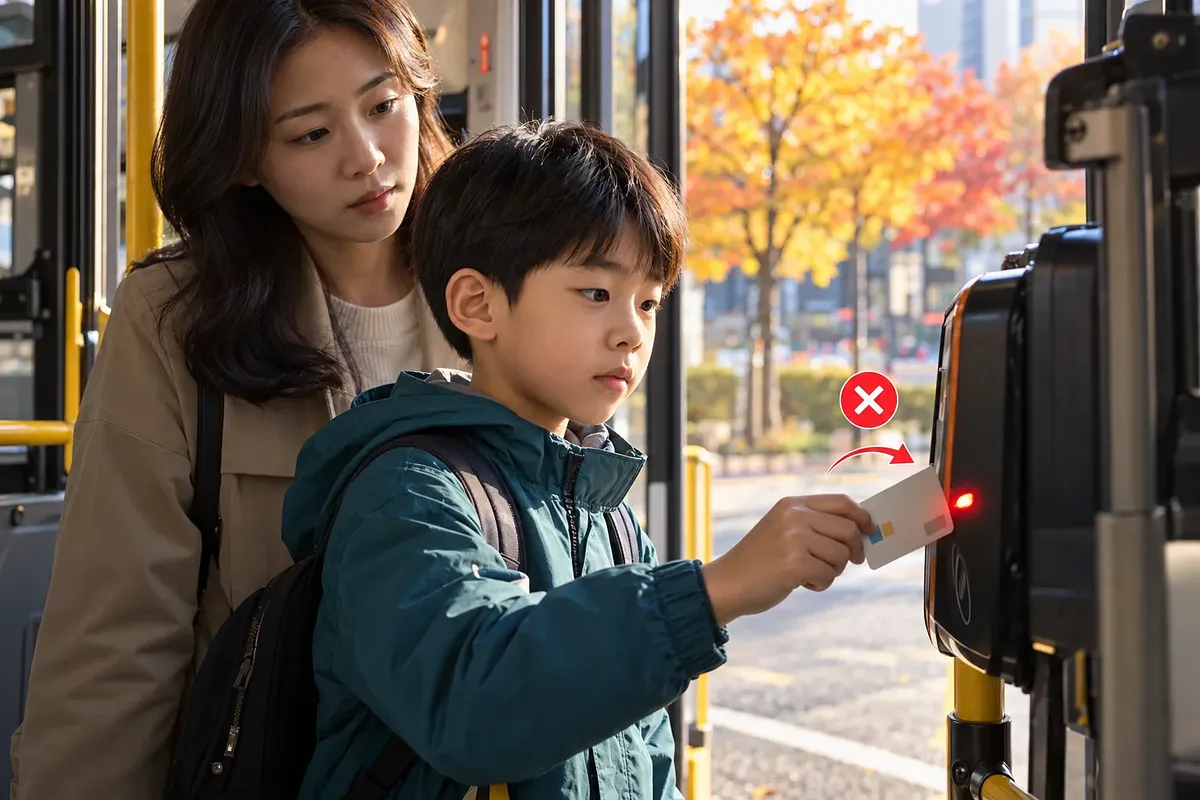
Even if a card has a transit feature, its regular payment balance and transit balance may differ. T-money on a KakaoBank mini card must be loaded and checked separately. Reissuing the card does not, by itself, transfer the old card's transit balance.
If your card is reissued, the T-money balance loaded on your previous card will not be transferred to your new card.
This wording comes from the KakaoBank mini card product guide. The same guide says the T-money balance cannot be refunded if the card is lost. Check the rules for handling regular payment balances and transit balances separately.
Situation | What to check first The app shows money, but a bus payment fails | Prepaid transit balance and whether loading was completed Transit money cannot be loaded through the app | Mobile phone compatibility requirements and whether parental consent is needed A postpaid transit feature is in use | The account from which charges will be withdrawn and the payment date The card and mobile phone are both lost | How to contact a parent and report the loss to the issuer A new card is issued | Rules for handling the previous card's transit balance
If a card is lost, take these steps in order.
· Block the card through the issuer's app or customer service center. · Check the payment records for transactions you do not recognize. · Ask separately how the regular payment balance and transit balance will be handled. · Arrange a way to pay for the trip home before the card is reissued.
Common mistakes when choosing between cash and cards
Do not treat getting a card as the end of allowance education. Automatically recorded transactions are useful for managing money only if they are reviewed. It is worth addressing these misconceptions before your child starts using a card.
Common misconception | What to check instead Children should use a card once they reach the upper grades | Decide based on experience managing a balance, not grade Reloadable cards and debit cards are the same | Distinguish a prepaid balance from a bank account A card prevents overspending | Review purchase decisions regardless of the limit Money shown in the app can also be used for transit | Check the prepaid transit balance separately Reporting a lost card means every balance will be returned | Check refund and compensation rules for each type of balance Going back to cash means the education has failed | Switch to a method your child can manage more easily
0:00 0:00
1 / 49

Advertisement

Download text

File name
children-allowance-cash-prepaid-debit-card-guide-en.txt
Format
TXT (text/plain)
Paragraphs
49

Downloads exactly what you see as a text file.

Please cite the source when quoting.

Large text

Makes the text larger and the colors clearer. Turn it on if the text feels too small.

Base the move to a card on balance-checking and spending-planning skills, not school grade.

Key points

  • Cash is good for practicing counting the money left after spending.
  • Decide when to switch to a card based on the child's ability to check their balance and plan their spending, rather than their grade.
  • According to guidance from the Financial Services Commission in May 2026, debit cards without a postpaid transit feature can be issued to children aged 7 or older.
  • Loading money onto a card is a transfer of funds, so record it separately from purchases.
  • With some products, you need to check the prepaid transit card balance separately from the balance available for regular payments.

If your child is managing an allowance for the first time, start with cash. Even in fifth grade, a child who is not used to checking their balance should practice with cash first. Consider a card when they can plan their next purchase based on the money they have left.

The debit card issuance ages below are based on guidance from the Financial Services Commission dated May 11, 2026.

How are cash, prepaid cards, and debit cards different?

The three methods differ in where the money used for payment is kept. A reloadable allowance card is usually a prepaid card that uses money loaded in advance. With a debit card, the payment amount generally comes out of a linked bank account.

Comparison Cash Reloadable prepaid card Debit card
Money spent Bills and coins in a wallet Balance loaded in advance Available balance in a linked account
Checking the balance Count it directly Check an app or use a method provided for the product Bank or card app, among other methods
What it can teach Paying and receiving change Distinguishing the amount loaded from the amount spent Matching the account balance with payment records
What to record Where and how much was spent Check payment records Check payments and withdrawals
If lost Uncertain whether the cash can be recovered Check how to block the card and handle the balance Block the card and check transaction records
What else to check Whether cash is accepted How to load money and check the transit balance Issuance requirements and the postpaid transit feature

Not every product with “card” in its name is a debit card. KakaoBank mini is a prepaid electronic payment service. The Toss Youth Card is also a prepaid card linked to Toss Money. You can check how they work in the mini service description and the Youth Card product information.

With some products, check the prepaid transit balance separately from the regular payment balance.

Is fifth grade a good time to start using a card?

Decide based on your child's experience managing money independently, rather than their grade. Teacher Park Hyun-ah's answer on allowance education also recommends starting with cash. Her advice is to try a reloadable card in the upper grades if the child has managed money since the lower grades.

What your child does now Method to consider What to check together
Receives a regular allowance for the first time Start with cash Count the money left after a purchase
Can explain their balance and next expense Consider a prepaid or debit card Review payment records and adjust the budget
Only needs a transit card Choose a transit option separately first Separate transit costs from spending money
Often loses track of the balance after using a card Increase cash use again Compare expected and actual spending

Cash does not necessarily help every child save. Some children may make good use of a card's automatic records. After changing payment methods, check whether your child can explain how much money is left.

How old must a child be to get a debit card?

A debit card without a postpaid transit feature can be issued to children at least 7 years old. In May 2026, the Financial Services Commission announced a reduction in the minimum issuance age. Check the application requirements with the card issuer and for the specific product. The source is this Financial Services Commission card news post.

Category Financial Services Commission guidance from May 2026 What to check before applying
Debit card without a postpaid transit feature Issuance age: at least 7 years old Product availability and the process for parental consent
Debit card with a postpaid transit feature Available to those at least 12 years old Requirements for applying for postpaid transit and how payment is withdrawn
Postpaid transit use limit for minors Raised to 100,000 won per month The actual limit applied and the payment date

Shinhan Card also announced changes to the terms for some products on July 28, 2026. The notice requires a legal representative's consent for issuance to those at least 7 years old. A legal representative is a parent or another person legally authorized to act for a child. For detailed requirements, see the notice of changes to the S20·S20 Pink debit card terms.

Being old enough to get a card does not mean a child should use one. Do not automatically apply the minimum ages of 12 or 14 found in older articles. Check the latest information for your chosen product for the following:

  • Eligibility based on date of birth
  • How a legal representative applies or gives consent
  • Whether a linked account and a mobile phone in the child's name are required
  • Identity and family relationship documents
  • Separate requirements for online payments and transit features

An allowance calculation using 1,500 won

If your child spends 1,000 won from an allowance of 1,500 won, 500 won remains. This example uses the amounts in teacher Park Hyun-ah's explanation. It is not a recommended allowance amount based on current prices.

Step Amount What your child should check
Receive allowance 1,500 won Money available to spend this time
Buy ddakji 1,000 won Money spent on the chosen item
Balance after purchase 500 won Amount available for the next purchase

With cash, have your child count the 500 won left in their wallet. With a card, have them check both the payment record and the balance. They need to compare the balance with the actual price to know whether they can buy the next item.

How to avoid counting money loaded onto a card twice as spending

Loading a card usually just moves your own money to a different place. If you load 1,500 won in cash onto a card, the total stays the same. The 1,000 won later paid for an item is the purchase expense.

Transaction How to record it Total balance in the example
Receive 1,500 won in cash allowance Allowance income 1,500 won
Load 1,500 won in cash onto the card Transfer from cash to card 1,500 won
Buy an item for 1,000 won with the card Purchase expense 500 won

If you count both the amount loaded and the purchase price as spending, the total is overstated. This is particularly easy to miss when using both cash and a card. In your allowance records, mark transfers and purchases separately.

How parents and children can manage an allowance

Agree on rules for spending the allowance before switching to a card. Teacher Park Hyun-ah's advice focuses on having the child take part in loading the card and managing the balance. Even if a parent transfers the money, the child can still check the amount.

  1. Decide which costs the allowance will cover. First, determine whether to include snacks and transit fares.
  2. Agree on the payment schedule and amount. Have your child check the budget available until the next payment.
  3. Check the amount together before loading the card or transferring money. Afterward, have your child check the balance themselves.
  4. Record or review transactions after each payment. Have your child explain why they made the purchase, too.
  5. Compare planned and actual spending on an agreed day. If managing the balance is difficult, you can increase cash use again.

If parents immediately add money whenever it runs low, the child may have fewer chances to review their budget. Decide in advance when extra allowance will be given. Lending a parent's credit card makes it hard to keep spending within the child's allowance budget.

What average allowance should you use as a reference for elementary school students?

It is difficult to give a single average allowance amount without a comparable survey. Even when looking at an average, check when the survey was conducted. Also check whether it includes transit and food costs.

What to check about an average Why it matters
Survey year and grades covered Spending circumstances differ by time and age
Whether the amount is weekly or monthly Amounts for different payment periods are hard to compare directly
Whether food and transit costs are included The amount available for discretionary spending differs
Scope of survey participants A survey of users of a particular app differs from a survey of all students

When deciding an amount for your family, first list the costs your child will pay themselves. Agree on a budget based on the actual prices of those items. Do not treat a card's loading or payment limit as a recommended allowance.

What to check about transit balances and lost cards

Even if a card has a transit feature, its regular payment balance and transit balance may differ. T-money on a KakaoBank mini card must be loaded and checked separately. Reissuing the card does not, by itself, transfer the old card's transit balance.

If your card is reissued, the T-money balance loaded on your previous card will not be transferred to your new card.

This wording comes from the KakaoBank mini card product guide. The same guide says the T-money balance cannot be refunded if the card is lost. Check the rules for handling regular payment balances and transit balances separately.

Situation What to check first
The app shows money, but a bus payment fails Prepaid transit balance and whether loading was completed
Transit money cannot be loaded through the app Mobile phone compatibility requirements and whether parental consent is needed
A postpaid transit feature is in use The account from which charges will be withdrawn and the payment date
The card and mobile phone are both lost How to contact a parent and report the loss to the issuer
A new card is issued Rules for handling the previous card's transit balance

If a card is lost, take these steps in order.

  1. Block the card through the issuer's app or customer service center.
  2. Check the payment records for transactions you do not recognize.
  3. Ask separately how the regular payment balance and transit balance will be handled.
  4. Arrange a way to pay for the trip home before the card is reissued.

Common mistakes when choosing between cash and cards

Do not treat getting a card as the end of allowance education. Automatically recorded transactions are useful for managing money only if they are reviewed. It is worth addressing these misconceptions before your child starts using a card.

Common misconception What to check instead
Children should use a card once they reach the upper grades Decide based on experience managing a balance, not grade
Reloadable cards and debit cards are the same Distinguish a prepaid balance from a bank account
A card prevents overspending Review purchase decisions regardless of the limit
Money shown in the app can also be used for transit Check the prepaid transit balance separately
Reporting a lost card means every balance will be returned Check refund and compensation rules for each type of balance
Going back to cash means the education has failed Switch to a method your child can manage more easily
Open the link

Opens in a new window.

Advertisement

Sign-in required

Sign in with your Google account to like, comment, and save highlights.

FAQ

For a fifth grader getting an allowance for the first time, is cash better?

If the child is managing their allowance on their own for the first time, I recommend starting with cash. Have them practice counting what is left after spending and planning their next purchase.

What should I check before giving a child a card?

Check whether the child can check the balance on their own. Also check whether they can plan their next purchase based on the money left. Teach them how to ask for help if they lose the card.

Can debit cards only be issued to people aged 14 or older?

According to guidance from the Financial Services Commission in May 2026, debit cards without a postpaid transit feature can be issued to people aged 7 or older. Check the issuance requirements for the specific product before applying. Debit cards with a postpaid transit feature are for people aged 12 or older.

Are KakaoBank mini and the Toss Youth Card debit cards?

KakaoBank mini is a prepaid electronic payment service. The Toss Youth Card is also a prepaid card linked to Toss Money. They are different from standard debit cards, which pay using money in a bank account.

If parents send allowance to a bank account, is it ineffective for teaching children about money?

You cannot judge its educational value by the way the money is sent alone. Have the child check the amount received and the current balance themselves. Review their spending plan through the next allowance payment together, too.

Can we use cash and a card together?

You can use both. Add the remaining cash and the card balance to see the total allowance left. Keep top-ups separate from purchases so you do not double-count the top-up amount as spending.

Should I base the amount on the average allowance for elementary school students?

Even if you look at an average, first check who was surveyed and the payment period. Whether transportation and meal costs are included changes what the amount means. I recommend agreeing on an amount based on the expenses the child will pay for themselves.

Why does my transit card payment fail when there is money on the allowance card?

The card may keep its regular payment balance separate from its prepaid transit balance. Check the transit balance and whether the top-up was completed. If that does not resolve the issue, contact the card issuer or the transit card operator.

If I get a replacement card, will my transit card balance be restored too?

The rules vary by product. The KakaoBank mini card guide says the Tmoney balance on the previous card is not transferred to the new card. It also states that the Tmoney balance cannot be refunded if the card is lost.

What if my child spends their allowance faster after starting to use a card?

Compare the planned spending with the actual transactions. If managing the balance is difficult, you can increase the use of cash again. Before topping up the card again, you also need to find out why the money ran short.

Sources

Data formats

This content is available in several machine-friendly formats.

Data-only languages (machine translated, files only)

Indonesian JSON MD Portuguese JSON MD Chinese (Traditional) JSON MD Deutsch JSON MD

Verification

This article was drafted with AI and then reviewed and edited by a person.

Reviewed by 신익희 · 편집장 · 2026-10-21

Figures in this article were checked against the source material during generation. · 2026-10-21

This translation has been cross-checked by AI. · 2026-10-21

Reuse & AI usage

Search indexing and AI citation with attribution are welcome. See the license policy for details.

CC BY · License

Loading…

Loading…

Loading…

Related content

From Injoys

Request the content you want and take 70% of what it earns

Just leave the subject. We handle production, review, translation and distribution.

See how revenue sharing works

Comments