Skip to content
Injoys
Case Study

FBI Sentinel: Lessons 25 Years After 9/11

Before 9/11, the FBI missed the threat not because it lacked clues, but because it failed to connect scattered information. The subsequent VCF failure and Sentinel recovery process showed that workflows, knowledge structures, and validation cycles must change before AI adoption.

Listen or read this article

14:02

Listen, or read the text only.

FBI Sentinel: Lessons 25 Years After 9/11

Kokoro 82M AI-generated voice 15 min read

0:00 14:02

Advertisement

Download audio

File name
fbi-sentinel-911-25-years-organizational-innovation-en.mp3
Format
MP3 (audio/mpeg)
Duration
14:02
File size
9.64 MB
Engine
Kokoro 82M

This audio was generated by AI.

You may download and use it freely for personal use.

FBI Sentinel: Lessons 25 Years After 9/11

9 min read

FBI Sentinel: Lessons 25 Years After 9/11
Before 9/11, the FBI missed the threat not because it lacked clues, but because it failed to connect scattered information. The subsequent VCF failure and Sentinel recovery process showed that workflows, knowledge structures, and validation cycles must change before AI adoption.
Before 9/11, multiple FBI field offices had received warning signs related to aviation training.
Approximately 170 million dollars was reportedly invested in VCF, but it was never deployed for actual case management.
After restructuring the Sentinel project in 2010, the FBI expanded short development cycles and field feedback.
Before adopting AI, organizations must first define data access permissions, process owners, evaluation criteria, and exception-handling procedures.
A tool's performance may depend more on how an organization connects and validates information than on model performance.
The central lesson the FBI learned after 9/11 was that it needed to change its work structure before changing its tools. Fragmented information and delayed validation led to the failure of VCF, while Sentinel was fully deployed in 2012 after introducing short development cycles and field feedback.
The figures and timeline in this article are based on the 2004 commission report and Sentinel oversight records from 2012 to 2014.
Signals the FBI Missed Before 9/11
Before the attacks, the FBI had leads worth reviewing. The problem was that those leads were scattered across different organizations and systems. The path for field intelligence to inform headquarters’ decisions was also weak. The 2001 attacks, which killed about 3,000 people, exposed this disconnect.
Representative examples were the Phoenix memo and the Minneapolis investigation. A Phoenix agent reported on trends at flight schools in July 2001. Minneapolis agents sought to search Zacarias Moussaoui’s belongings. The two pieces of information did not develop into an integrated warning of the attack plot.
The 9/11 Commission did not blame only information sharing. It also identified flaws in analytical capabilities and management systems. The sentence below is an English translation of the relevant passage from the report.
“The FBI did not know what it already knew.” — The 9/11 Commission Report
Interpreting this case simply as a lack of data misses the point. Information cannot be used if it cannot be found. Without someone accountable, connecting multiple leads is also difficult. When channels for raising dissenting views are weak, warnings disappear more easily.
Timeline of VCF and Sentinel
The FBI’s transition to electronic case management proceeded through two projects. VCF was discontinued in 2005 without ever being deployed for actual work. Sentinel also struggled initially with scheduling and cost management. However, after being restructured in 2010, it reached full deployment in 2012.
Date | Event | Organizational significance September 2001 | 9/11 attacks occur | Flaws in information integration and analytical systems are exposed 2004 | The 9/11 Commission Report is published | Recommends improvements in information sharing and management capabilities 2005 | VCF development is discontinued | The risks of large-scale, all-at-once development become a reality 2006 | Sentinel project begins | Renewed effort to build a web-based electronic case management system 2010 | Development approach and management structure are reorganized | Short cycles and internal development capabilities are expanded July 2012 | Sentinel is fully deployed | Becomes the case management foundation across the FBI 2014 | U.S. Department of Justice Inspector General report is released | Reviews implementation outcomes and remaining operational challenges
About $170 million is reported to have been invested in VCF. However, audit documents differ in how they define the scope of contract costs and related project expenses. This amount therefore should not be interpreted as the cost of the FBI’s entire modernization effort. What is clear is that VCF itself never became operational as a case management system.
Sentinel’s initial project budget was $425 million. The project was divided into multiple phases, but delays accumulated. In 2010, officials concluded that it would be difficult to complete under the existing plan. The FBI divided the scope again and brought development control in-house.
Comparing VCF with the Reorganized Sentinel
The difference between the two projects lay more in how they were validated than in the names of the software. With VCF, a major problem was that the completed product was reviewed too late. The reorganized Sentinel frequently released functional units. Feedback from field users was also incorporated into the next development cycle.
Comparison criterion | VCF-centered approach | Reorganized Sentinel approach Deliverable size | Integrate a large scope all at once | Divide features into small units Timing of validation | Concentrated in late-stage integration | Confirm functionality during each short cycle User participation | Problems likely to be identified at the final stage | Field agents provide repeated feedback Requirement changes | Major changes to the overall design are burdensome | Priorities are reflected in the next development cycle Accountability structure | High dependence on contractors | Expanded FBI internal control and development capabilities Scope of failure | Defects spread across the entire system | Defects are identified and corrected in small units
It is not enough to view this solely as a victory for a methodology called agile. The FBI also revised the project scope and command structure. It expanded the role of its internal technical staff as well. Short development cycles were the means by which these changes worked.
AI Adoption by Use Case
The work that must be fixed first varies depending on where AI is applied. Document search requires metadata and access permissions. Decision support requires evidence and approval procedures. Automation requires someone responsible for handling exceptions.
AI use case | Organizational conditions to check first | Initial validation target Internal document search | Document owners, retention standards, access permissions | Whether current documents are retrieved and sources are displayed Report drafting | Approvers and responsibility for fact-checking | Numerical errors and missing evidence Customer inquiry classification | Classification criteria and staff responsible for escalation | Misclassification rate and missed urgent inquiries Development assistance | Code reviewers and security policies | Vulnerabilities, licenses, and whether tests pass Decision support | Final decision-maker and appeal procedure | Bias, missing information, and explainability
First, map one workflow from start to finish. Next, mark waiting time and duplicate data entry. Apply AI only at confirmed bottlenecks. Measure not only accuracy but also the cost of corrections.

Knowledge Structure Problems Added by the AI Era
Generative AI can connect scattered information in a plausible way. However, it cannot connect documents it cannot access. If there are many outdated documents, it may produce outdated answers. Nor can it independently take responsibility for conflicting rules.
For this reason, knowledge management in the AI era is difficult to evaluate by storage volume. Each document must indicate its author and period of applicability. Disposal status and approval status must also be distinguished. Users must be able to trace answers back to the original supporting sources.
The following items can be checked before selecting a model.
· Are rules on the same topic duplicated across multiple repositories? · Can current documents be distinguished from retired documents? · Are role-based access permissions applied to sensitive information? · Can the source documents and versions behind AI answers be verified? · Is someone responsible for reporting and correcting wrong answers? · Are tasks that require human approval clearly defined?
This perspective also reveals a new risk that was absent from the earlier FBI case. In the past, the major problem was that information could not be found. Now, incorrectly connected information can spread rapidly. Searchability and verifiability must be designed together.
Common Mistakes and Misconceptions
First, 9/11 should not be described simply as an incident caused by insufficient information. Multiple leads existed, but they were not analyzed together. Organizational structure and decision-making procedures also affected the outcome. Simply collecting more data makes it difficult to prevent the same problem.
Second, the failure of VCF should not be reduced to the waterfall approach alone. Requirements management and contract oversight were also problems. User participation and technical control were likewise insufficient. The development approach was only one of several causes.
Third, Sentinel should not be considered automatically successful because it adopted agile. The project scope was adjusted and leadership changes occurred in parallel. Internal staff also assumed greater responsibility. A methodology does not replace an accountability structure.
Fourth, describing the collapse of the World Trade Center with a single definitive figure of “14 seconds” may be inaccurate. The two towers differed in the timing of their impacts and collapses. Descriptions of the collapse duration also vary depending on the measurement criteria. A single figure unrelated to the central lesson should be treated cautiously.
Implementation Sequence for Organizations
It is safer to validate AI adoption within small units of work. Goals should be defined by business outcomes, not tool usage rates. Criteria for stopping early when failure is detected are also necessary. The following sequence can be used when piloting a single workflow.
· Select one task that is repetitive or frequently delayed. · Record the input information and final approver. · Measure the current processing time and types of errors. · Separate the scope handled by AI from the scope handled by people. · Deploy first to a small group of users. · Incorporate errors and correction time into the next cycle. · Expand the scope only when the criteria are met.
Do not define performance metrics solely by the number of uses. Consider processing time and the amount of rework together. Check how quickly critical errors are detected as well. You should also record whether field feedback leads to actual changes.
Organizational Questions Raised by the FBI Case
This case shows that AI can amplify an organization’s existing habits. In an organization where information is isolated, AI also receives incomplete context. If approval stages are unclear, faster generation increases rework. If validation is postponed, errors likewise accumulate at scale.
Organizations can begin by answering three questions.
· Who holds the necessary information? · Who is responsible for connecting different signals? · When can small failures be detected and stopped?
The central lesson of the FBI Sentinel case is not to replicate a particular development method. It lies in the operating principle of dividing uncertainty into small units and checking them frequently. AI tools must be placed under the same controls. The organization’s pace of learning must stay ahead of its pace of adoption.
0:00 0:00
1 / 48

Advertisement

Download text

File name
fbi-sentinel-911-25-years-organizational-innovation-en.txt
Format
TXT (text/plain)
Paragraphs
48

Downloads exactly what you see as a text file.

Please cite the source when quoting.

Large text

Makes the text larger and the colors clearer. Turn it on if the text feels too small.

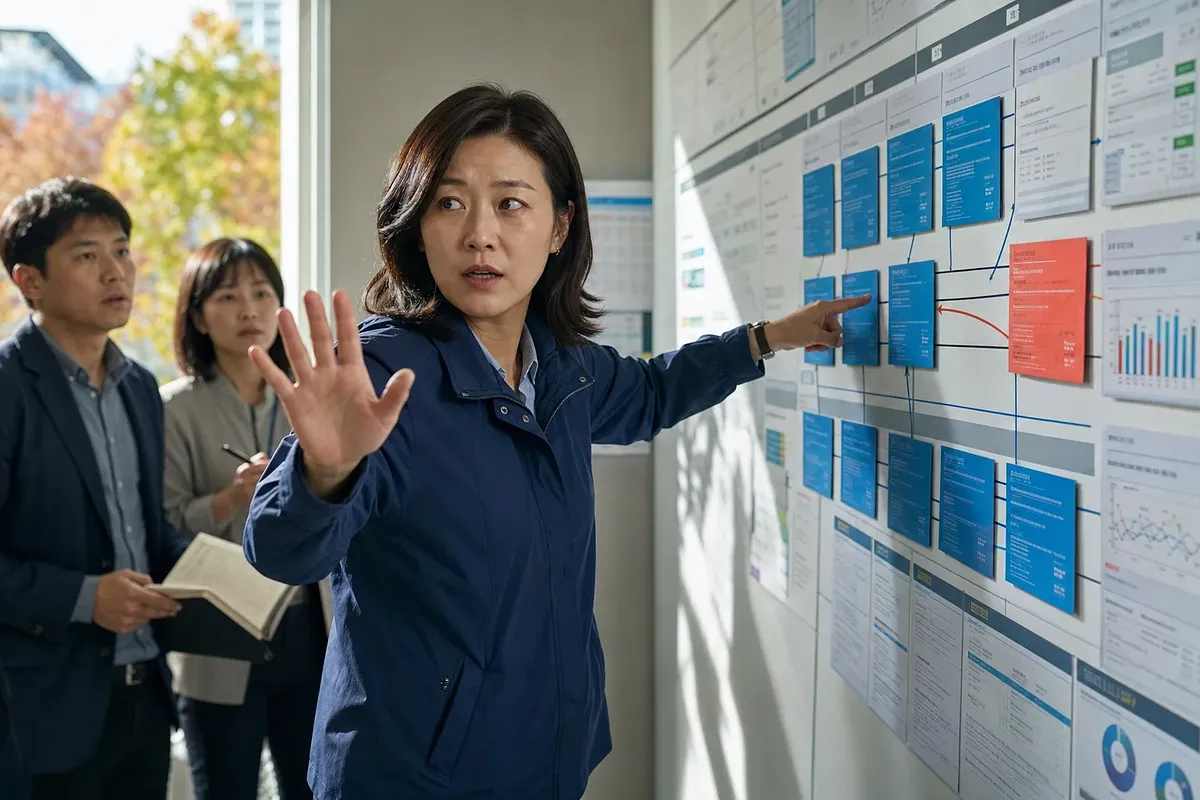
A woman leads a team discussion in front of a workflow board covered with cards and charts.

Key points

  • Before 9/11, multiple FBI field offices had received warning signs related to aviation training.
  • Approximately 170 million dollars was reportedly invested in VCF, but it was never deployed for actual case management.
  • After restructuring the Sentinel project in 2010, the FBI expanded short development cycles and field feedback.
  • Before adopting AI, organizations must first define data access permissions, process owners, evaluation criteria, and exception-handling procedures.
  • A tool's performance may depend more on how an organization connects and validates information than on model performance.

The central lesson the FBI learned after 9/11 was that it needed to change its work structure before changing its tools. Fragmented information and delayed validation led to the failure of VCF, while Sentinel was fully deployed in 2012 after introducing short development cycles and field feedback.

The figures and timeline in this article are based on the 2004 commission report and Sentinel oversight records from 2012 to 2014.

Signals the FBI Missed Before 9/11

Before the attacks, the FBI had leads worth reviewing. The problem was that those leads were scattered across different organizations and systems. The path for field intelligence to inform headquarters’ decisions was also weak. The 2001 attacks, which killed about 3,000 people, exposed this disconnect.

Representative examples were the Phoenix memo and the Minneapolis investigation. A Phoenix agent reported on trends at flight schools in July 2001. Minneapolis agents sought to search Zacarias Moussaoui’s belongings. The two pieces of information did not develop into an integrated warning of the attack plot.

The 9/11 Commission did not blame only information sharing. It also identified flaws in analytical capabilities and management systems. The sentence below is an English translation of the relevant passage from the report.

“The FBI did not know what it already knew.” — The 9/11 Commission Report

Interpreting this case simply as a lack of data misses the point. Information cannot be used if it cannot be found. Without someone accountable, connecting multiple leads is also difficult. When channels for raising dissenting views are weak, warnings disappear more easily.

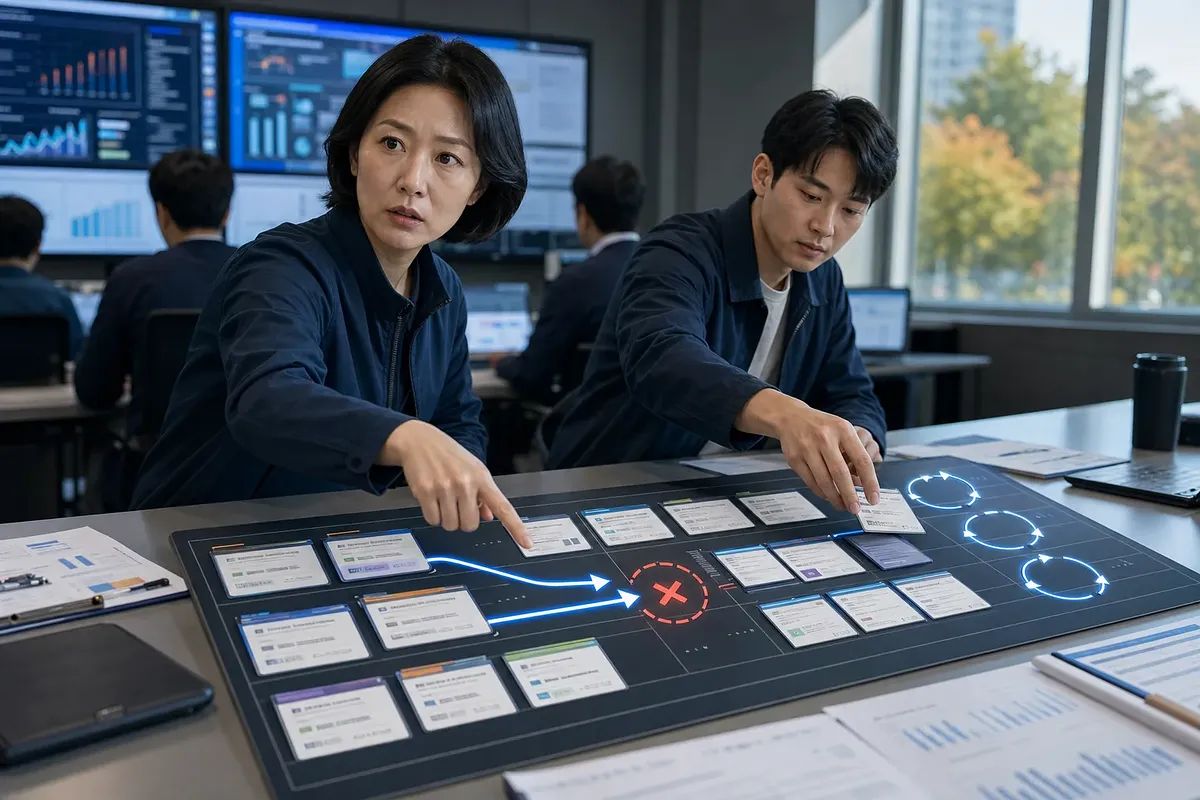
Analysts examine a digital workflow to identify bottlenecks and potential improvements.

Timeline of VCF and Sentinel

The FBI’s transition to electronic case management proceeded through two projects. VCF was discontinued in 2005 without ever being deployed for actual work. Sentinel also struggled initially with scheduling and cost management. However, after being restructured in 2010, it reached full deployment in 2012.

Date Event Organizational significance
September 2001 9/11 attacks occur Flaws in information integration and analytical systems are exposed
2004 The 9/11 Commission Report is published Recommends improvements in information sharing and management capabilities
2005 VCF development is discontinued The risks of large-scale, all-at-once development become a reality
2006 Sentinel project begins Renewed effort to build a web-based electronic case management system
2010 Development approach and management structure are reorganized Short cycles and internal development capabilities are expanded
July 2012 Sentinel is fully deployed Becomes the case management foundation across the FBI
2014 U.S. Department of Justice Inspector General report is released Reviews implementation outcomes and remaining operational challenges

About $170 million is reported to have been invested in VCF. However, audit documents differ in how they define the scope of contract costs and related project expenses. This amount therefore should not be interpreted as the cost of the FBI’s entire modernization effort. What is clear is that VCF itself never became operational as a case management system.

Sentinel’s initial project budget was $425 million. The project was divided into multiple phases, but delays accumulated. In 2010, officials concluded that it would be difficult to complete under the existing plan. The FBI divided the scope again and brought development control in-house.

Comparing VCF with the Reorganized Sentinel

The difference between the two projects lay more in how they were validated than in the names of the software. With VCF, a major problem was that the completed product was reviewed too late. The reorganized Sentinel frequently released functional units. Feedback from field users was also incorporated into the next development cycle.

Comparison criterion VCF-centered approach Reorganized Sentinel approach
Deliverable size Integrate a large scope all at once Divide features into small units
Timing of validation Concentrated in late-stage integration Confirm functionality during each short cycle
User participation Problems likely to be identified at the final stage Field agents provide repeated feedback
Requirement changes Major changes to the overall design are burdensome Priorities are reflected in the next development cycle
Accountability structure High dependence on contractors Expanded FBI internal control and development capabilities
Scope of failure Defects spread across the entire system Defects are identified and corrected in small units

It is not enough to view this solely as a victory for a methodology called agile. The FBI also revised the project scope and command structure. It expanded the role of its internal technical staff as well. Short development cycles were the means by which these changes worked.

AI Adoption by Use Case

The work that must be fixed first varies depending on where AI is applied. Document search requires metadata and access permissions. Decision support requires evidence and approval procedures. Automation requires someone responsible for handling exceptions.

AI use case Organizational conditions to check first Initial validation target
Internal document search Document owners, retention standards, access permissions Whether current documents are retrieved and sources are displayed
Report drafting Approvers and responsibility for fact-checking Numerical errors and missing evidence
Customer inquiry classification Classification criteria and staff responsible for escalation Misclassification rate and missed urgent inquiries
Development assistance Code reviewers and security policies Vulnerabilities, licenses, and whether tests pass
Decision support Final decision-maker and appeal procedure Bias, missing information, and explainability

First, map one workflow from start to finish. Next, mark waiting time and duplicate data entry. Apply AI only at confirmed bottlenecks. Measure not only accuracy but also the cost of corrections.


Knowledge Structure Problems Added by the AI Era

Generative AI can connect scattered information in a plausible way. However, it cannot connect documents it cannot access. If there are many outdated documents, it may produce outdated answers. Nor can it independently take responsibility for conflicting rules.

For this reason, knowledge management in the AI era is difficult to evaluate by storage volume. Each document must indicate its author and period of applicability. Disposal status and approval status must also be distinguished. Users must be able to trace answers back to the original supporting sources.

The following items can be checked before selecting a model.

  • Are rules on the same topic duplicated across multiple repositories?
  • Can current documents be distinguished from retired documents?
  • Are role-based access permissions applied to sensitive information?
  • Can the source documents and versions behind AI answers be verified?
  • Is someone responsible for reporting and correcting wrong answers?
  • Are tasks that require human approval clearly defined?

This perspective also reveals a new risk that was absent from the earlier FBI case. In the past, the major problem was that information could not be found. Now, incorrectly connected information can spread rapidly. Searchability and verifiability must be designed together.

Common Mistakes and Misconceptions

First, 9/11 should not be described simply as an incident caused by insufficient information. Multiple leads existed, but they were not analyzed together. Organizational structure and decision-making procedures also affected the outcome. Simply collecting more data makes it difficult to prevent the same problem.

Second, the failure of VCF should not be reduced to the waterfall approach alone. Requirements management and contract oversight were also problems. User participation and technical control were likewise insufficient. The development approach was only one of several causes.

Third, Sentinel should not be considered automatically successful because it adopted agile. The project scope was adjusted and leadership changes occurred in parallel. Internal staff also assumed greater responsibility. A methodology does not replace an accountability structure.

Fourth, describing the collapse of the World Trade Center with a single definitive figure of “14 seconds” may be inaccurate. The two towers differed in the timing of their impacts and collapses. Descriptions of the collapse duration also vary depending on the measurement criteria. A single figure unrelated to the central lesson should be treated cautiously.

Implementation Sequence for Organizations

It is safer to validate AI adoption within small units of work. Goals should be defined by business outcomes, not tool usage rates. Criteria for stopping early when failure is detected are also necessary. The following sequence can be used when piloting a single workflow.

  1. Select one task that is repetitive or frequently delayed.
  2. Record the input information and final approver.
  3. Measure the current processing time and types of errors.
  4. Separate the scope handled by AI from the scope handled by people.
  5. Deploy first to a small group of users.
  6. Incorporate errors and correction time into the next cycle.
  7. Expand the scope only when the criteria are met.

Do not define performance metrics solely by the number of uses. Consider processing time and the amount of rework together. Check how quickly critical errors are detected as well. You should also record whether field feedback leads to actual changes.

Organizational Questions Raised by the FBI Case

This case shows that AI can amplify an organization’s existing habits. In an organization where information is isolated, AI also receives incomplete context. If approval stages are unclear, faster generation increases rework. If validation is postponed, errors likewise accumulate at scale.

Organizations can begin by answering three questions.

  • Who holds the necessary information?
  • Who is responsible for connecting different signals?
  • When can small failures be detected and stopped?

The central lesson of the FBI Sentinel case is not to replicate a particular development method. It lies in the operating principle of dividing uncertainty into small units and checking them frequently. AI tools must be placed under the same controls. The organization’s pace of learning must stay ahead of its pace of adoption.

Sign-in required

Sign in with your Google account to like, comment, and save highlights.

FAQ

Did the FBI have no information at all related to 9/11?

No. Multiple organizations had leads to review, such as trends at flight schools and the Moussaoui investigation. However, the information did not lead to integrated analysis and timely decision-making.

Why was VCF not used for actual case management?

Changes in requirements and contract management issues accumulated. Integration defects emerged in the later stages, increasing the cost of fixes, and the FBI discontinued VCF in 2005.

Was Sentinel's recovery achieved solely through agile methods?

Agile was one element of the recovery process. The FBI redivided the development scope, strengthened internal controls, and incorporated feedback from field users more frequently.

When was Sentinel fully deployed?

Sentinel was deployed across the entire FBI in July 2012. This was about two years after the project was restructured in 2010.

How can this case be applied to AI adoption?

First, the location of information and responsibility for approvals must be clearly defined. A suitable approach is to apply AI to small tasks, measure errors, rework time, and feedback from the field, and then expand the scope.

Can the performance of AI adoption be evaluated based on usage?

Usage alone makes it difficult to assess improvements in work. Processing time, error rates, the amount of rework, the time taken to detect critical errors, and whether actual improvements were made should be evaluated together.

Sources

Data formats

This content is available in several machine-friendly formats.

Data-only languages (machine translated, files only)

Indonesian JSON MD Portuguese JSON MD Chinese (Traditional) JSON MD Deutsch JSON MD

Verification

This article was drafted with AI and then reviewed and edited by a person.

Reviewed by 신익희 · 편집장 · 2026-09-15

Figures in this article were checked against the source material during generation. · 2026-09-15

This translation has been cross-checked by AI. · 2026-09-15

Reuse & AI usage

Search indexing and AI citation with attribution are welcome. See the license policy for details.

CC BY · License

Loading…

Loading…

Related content

From Injoys

Request the content you want and take 70% of what it earns

Just leave the subject. We handle production, review, translation and distribution.

See how revenue sharing works

Comments