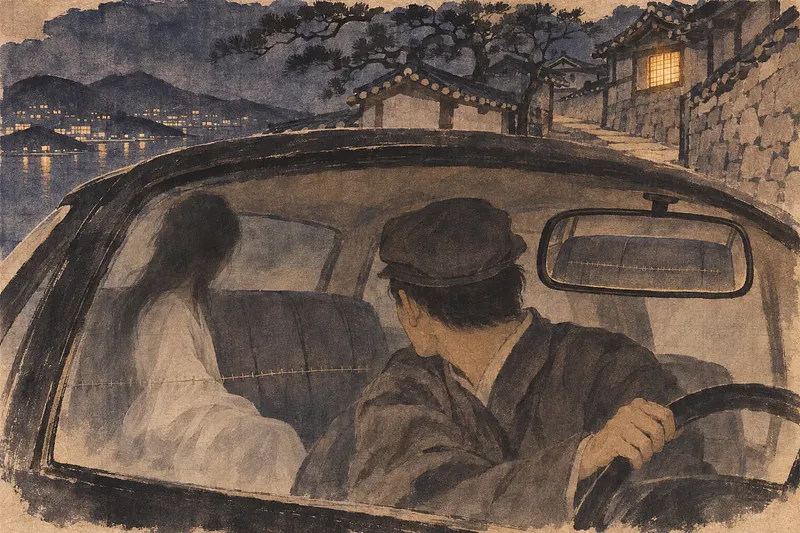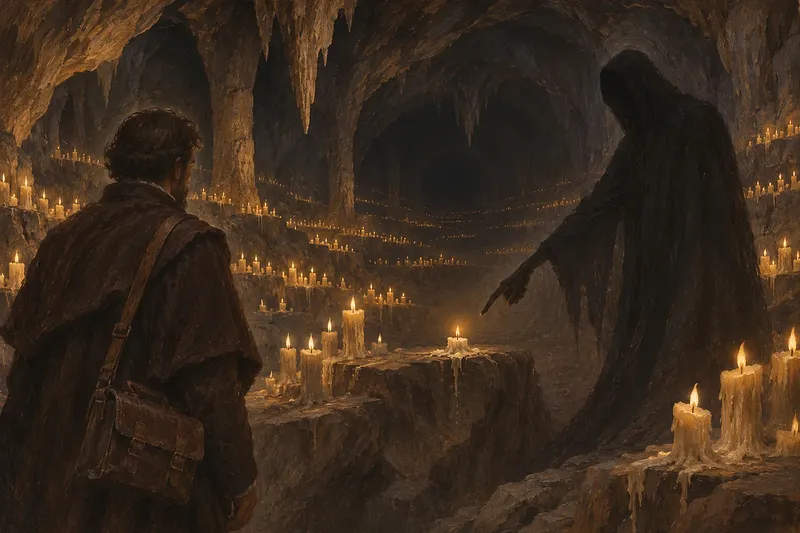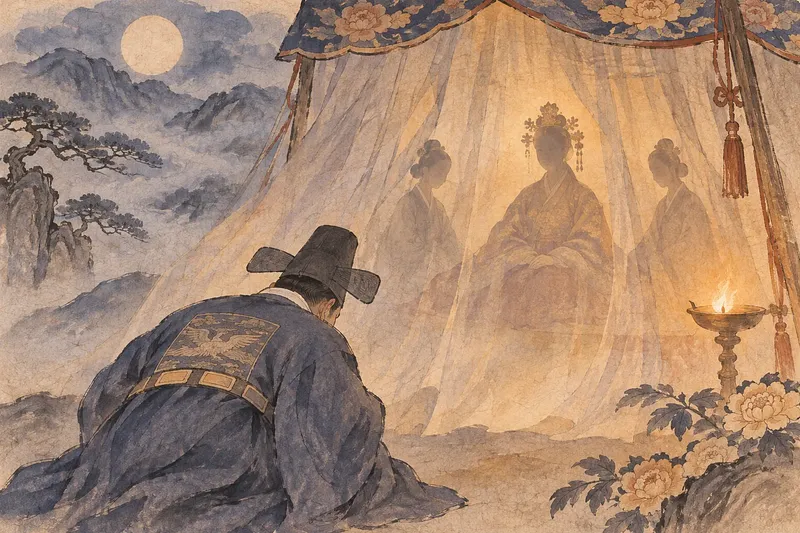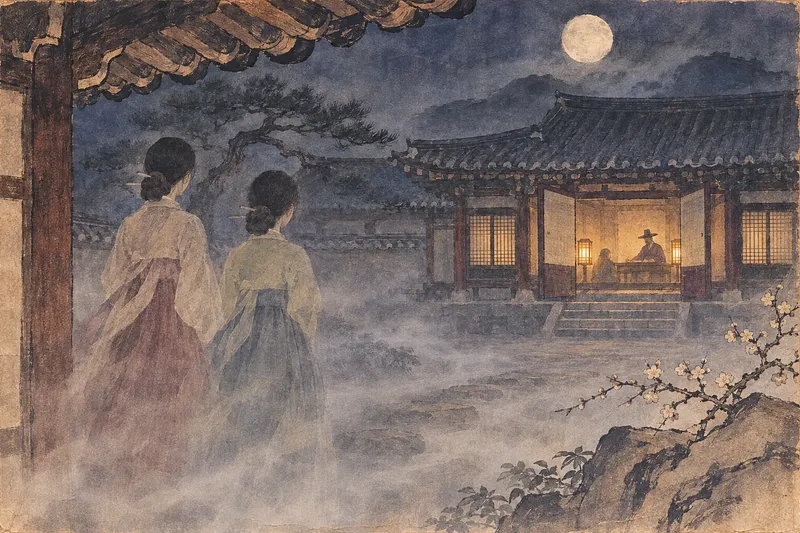
Gangnim Doryeong is a man from the world of the living who goes to the underworld to fetch King Yeomna in the Jeju myth “Chasa Bonpuri.” When the magistrate chooses Gangnim’s body, King Yeomna takes his soul and makes him a messenger of the underworld. This is a retelling of a traditional story recorded on Jeju in 1979.
This version, prepared in November 2026, follows “Gwiyangpuri (Chesa Bonpuri)” as sung by Kim Deoksam.
Plot of Chasa Bonpuri
The magistrate ordered Gangnim to fetch King Yeomna to solve the mystery of the three brothers’ deaths. Gwayangsaengi’s wife had just appealed to the local government office, saying that she had lost her sons on the same day at the same hour. All three had died on the day they returned home after passing the civil service examination.
How the First Wife Shared the Steamed Rice Cake
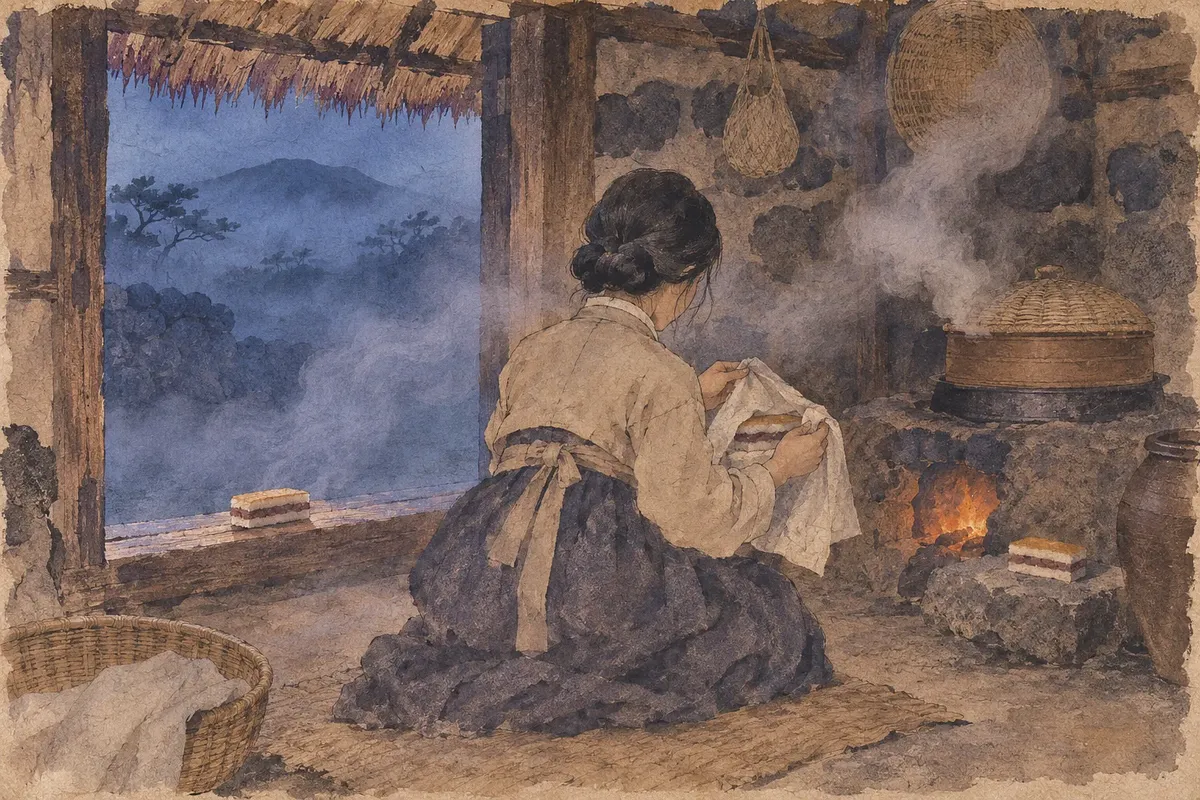
No one offered to go with Gangnim when they heard he was going to the underworld. The sound of pounding came from the house of his first wife, whom he had not visited in a long time. She offered the top layer of the steamed rice cake to the deity who guarded the door. She offered the middle layer to the deity who guarded the kitchen and packed the bottom layer for her husband’s lunch.
When an old woman Gangnim met on the road unwrapped her lunch, he saw the same kind of rice cake as the one in his bundle. The old woman was the kitchen deity, who had come to show him the way in answer to his first wife’s devotion. With help first from the kitchen deity and then from the door deity, Gangnim found King Yeomna. The king promised to come to the government office courtyard when the time came.
The Magistrate Chooses Gangnim’s Body
Gangnim returned to the world of the living first, only to be thrown in jail. The magistrate had heard that he had never gone to the underworld and had stayed at his first wife’s house instead. At the appointed time, black clouds rolled in, and King Yeomna descended into the government office courtyard. His first order was to release Gangnim from jail.
King Yeomna summoned Gwayangsaengi and his wife for questioning, and the story long buried in their household came to light. Three sons of a king had once stopped at their house, and Gwayangsaengi’s wife had killed them for their silk. A flower bloomed in the pond where they lay submerged. When it was burned, it left behind a bead. The woman who swallowed the bead gave birth to the three sons who went on to pass the civil service examination.
King Yeomna held the couple to account for their crimes, then had the pond drained. He brought the king’s sons back to life from the bottom of the pond, and the brothers said they wanted to return to their parents. Before returning to the underworld, King Yeomna told the magistrate to choose between Gangnim’s body and his soul.
The magistrate chose the body, and King Yeomna summoned Gangnim’s soul and took it with him. The magistrate asked several times what the underworld was like, but Gangnim stood there without answering. When the magistrate touched him, his body collapsed. That was how the magistrate’s errand to fetch King Yeomna ended, and Gangnim became a messenger who came from the underworld to collect the dead.
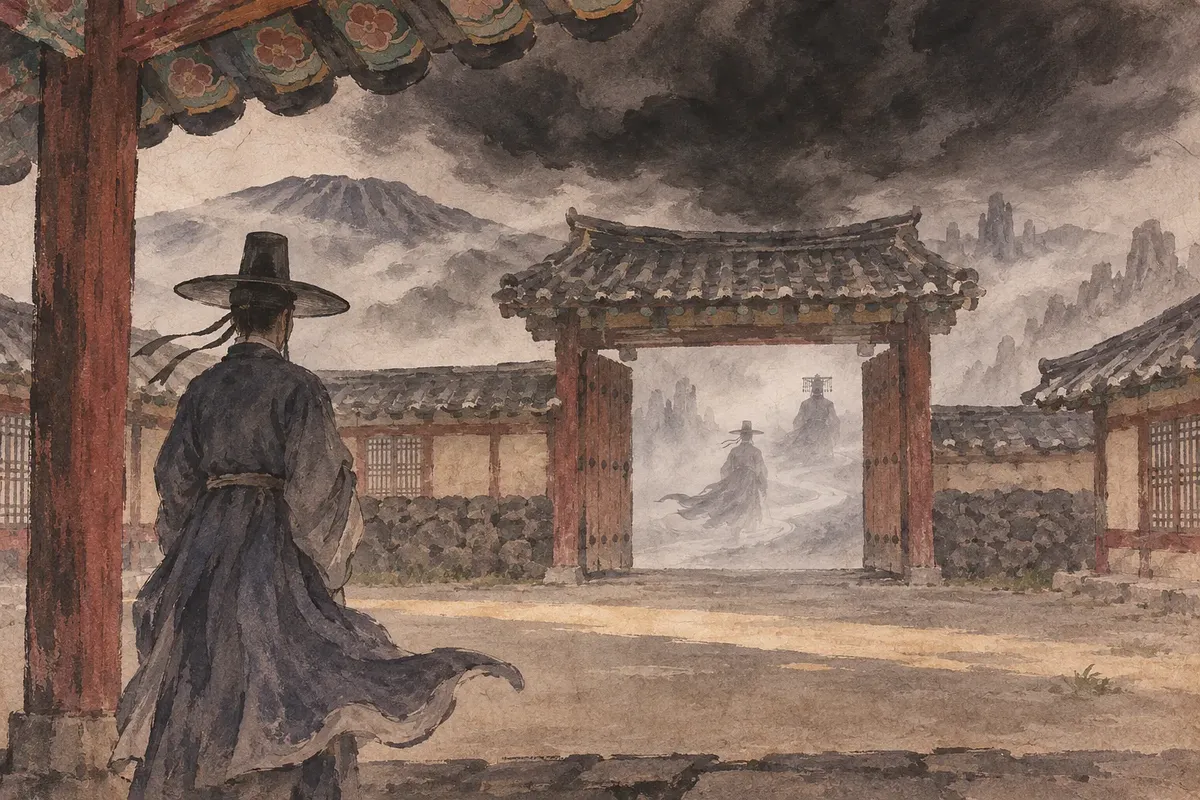
When the magistrate chooses Gangnim’s body, King Yeomra takes his soul and makes him a messenger of the underworld.AI-generated image
The Original Text of Chasa Bonpuri and How It Was Recorded
The Jeju-language transcription of Kim Deoksam’s performance can be found under “Gwiyangpuri (Chesa Bonpuri)” in the Academy of Korean Studies’ Comprehensive Collection of Korean Oral Literature. In Jeju, a shaman who leads a gut ritual is called a simbang. On December 9, 1979, Hyeon Yongjun recorded the simbang Kim Deoksam’s song at a Gwiyangpuri ritual in Yongdam-dong, Jeju City.
The recording date is the day Kim Deoksam sang at that ritual. “Chasa Bonpuri” is a shamanic ritual song by an unknown author, passed down by word of mouth. Look for “2. Chesa Bonpuri” in the transcript to find the passage that tells how the underworld messenger came to be.
How the Endings Differ in Kim Deoksam’s and Park Bongchun’s Versions
The episode in which Gangnim meets Dongbangsak after becoming an underworld messenger varies with the teller. In Kim Deoksam’s song, Dongbangsak speaks up when he hears that black charcoal turns white if you wash it. When he says he has lived a very long time and has never heard such a thing, Gangnim realizes who he is.
| Oral version | Dongbangsak episode | How it relates to Gangnim’s title |
|---|---|---|
| Kim Deoksam’s version | Gangnim recognizes Dongbangsak and returns to King Yeomna. | In recognition of his service, he also receives the title of Bondang Chasa. |
| Park Bongchun’s version | There is no episode in which Gangnim goes to catch Dongbangsak. | There is no ending in which he earns a title for catching Dongbangsak. |
Why the Messenger’s Story Is Sung at Gwiyangpuri and Siwangmaji Rituals
In Jeju gut rituals, the messenger’s story is sung to entrust the deceased to his care. Gwiyangpuri is a ritual held on the evening of the funeral to soothe the spirit of the deceased and send it on its way. At Siwangmaji, people also ask the messenger to help the deceased pass peacefully into the underworld.
In Kim Deoksam’s Gwiyangpuri, the “bonpuri,” which tells the messenger’s story, is followed by the “binyeom,” a prayer asking for a wish to be granted. In the story, the messenger comes to collect people when ordered to do so. In the ritual, he is asked to untie the hands and feet of the deceased and gently guide them on their way to the underworld.