Great Kanto Earthquake: Why 52 Parks by Elementary Schools?
After the 1923 Great Kanto Earthquake, the City of Tokyo built 52 small parks next to elementary schools in areas that had burned. This layout gave students more room beyond their cramped schoolyards and gave residents a place to relax day to day and a place to take refuge during a disaster.
In 1923, parks and plazas in Tokyo kept fires from spreading. That experience led the city to include parks in its recovery plan.
By 1931, the City of Tokyo had rebuilt 117 elementary schools using reinforced concrete. Small parks were built at 52 of them.
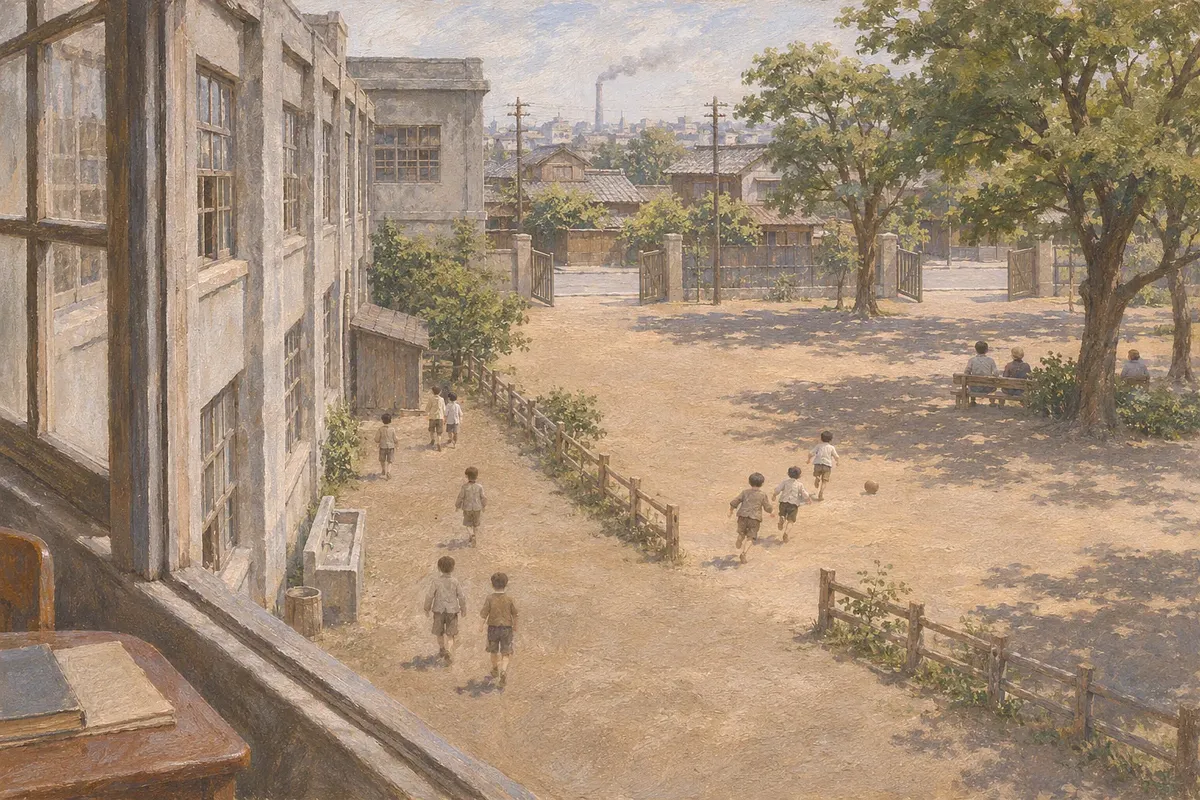
Fencing between the schools and parks was kept to a minimum, and several entrances along the street let students and residents share the same plaza.
The Tokyo Metropolitan Government’s Bureau of Urban Development cites these small parks as models for later urban parks and children’s parks. Built during reconstruction, they were designed for exercise and play, for residents to relax, and for evacuation during disasters.
After the Great Kanto Earthquake (関東大震災) in 1923, Tokyo City (東京市) built 52 small parks next to elementary schools in the parts of the city that had burned. For students, the parks extended cramped schoolyards. For residents, they offered a place to rest in everyday life and a place to take shelter during a disaster.
In November 2026, the Imperial Diet minutes and the reconstruction records of the Tokyo Metropolitan Government (東京都) were checked.
The Great Tokyo Fire and where parks stopped the flames
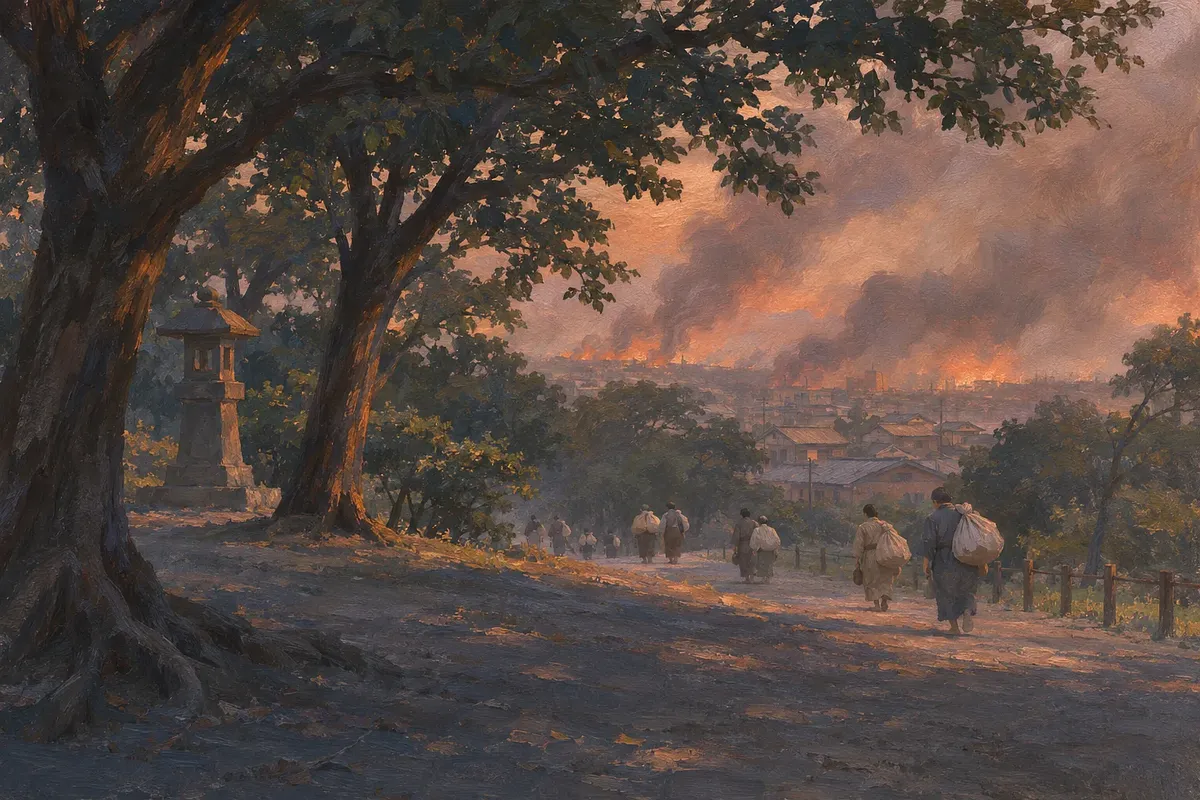
The fires that spread after the earthquake on September 1, 1923, stopped at the edges of some of Tokyo’s parks and plazas. Around noon, houses collapsed and fires broke out across the city. With the water supply cut off, firefighters who relied on hydrants struggled to get water. Driven by the wind, the fires reached even neighborhoods where few buildings had collapsed at first.
Existing parks also gave people a place to take shelter. On the evening of the day the earthquake struck, some residents fled to Ueno Park (上野公園) as the flames approached. Drawing on that experience, Tokyo City set aside land for parks within neighborhoods as it repaired roads and bridges in the burned areas.
Timeline from the earthquake to the rebuilding of schools
The number of small parks discussed in the Diet in 1923 should be distinguished from the number actually built by 1931.
When | What happened | Source
September 1, 1923 | A major fire broke out in Tokyo after the Great Kanto Earthquake, and residents took shelter in existing parks. | Japan’s Cabinet Office account of the Great Kanto Earthquake
December 17, 1923 | The government told a House of Representatives committee that it planned to create about 50 small parks across Tokyo. | House of Representatives committee minutes No. 3, 47th Imperial Diet
1924 | The decision was made to build the parks as part of the earthquake reconstruction effort. | History of the small reconstruction parks from Japan’s National Institute for Land and Infrastructure Management
From 1926 to 1931 | Tokyo City’s 52 small parks opened one after another. | History of the small reconstruction parks from the National Institute for Land and Infrastructure Management
By 1931 | The rebuilding of reinforced concrete school buildings at 117 elementary schools was complete. | Exhibition materials on elementary schools rebuilt after the earthquake, from Tokyo’s Association of Special Wards
Schoolyards and gates linking elementary schools and parks
Putting a park next to a school let students use the open space set aside in the neighborhood as an extension of their schoolyard. Tokyo City chose park sites based on the number of students and the size of the school grounds. It also considered whether there were already parks nearby and where new large parks would be built.
The placement of fences and gates was key to connecting the two spaces. There was only as much fencing between the school and the park as was needed to manage the grounds. Along the street, low fences and several gates allowed access in an emergency. The land set aside for the park also provided space for construction while the school was being rebuilt.
When | How the small park next to the school was used
Weekdays during the day | Students exercised and played in the plaza. Some areas were also used for lessons in growing and observing plants.
When school was not in session | Residents took walks, rested on benches, and held neighborhood events.
During disasters | The plaza was set aside as an evacuation area so residents could take shelter close to home.
Clues in a photo of Izumi Elementary School and a reconstruction map of Honjo Ward
The 1930 Photo Album Commemorating the Completion of Rebuilt School Buildings shows the new building of Izumi Elementary School (和泉小学校). The Edo-Tokyo Museum (江戸東京博物館) holds the album. The rebuilt elementary schools that the Tokyo Metropolitan Government featured alongside the photo had electric lights, running water, and gas service.
The neighborhood park plans survive on the back of the Honjo Ward Reconstruction Map (本所区復興図), held by the Tokyo Metropolitan Archives. The round stamps on the front mark the locations of elementary schools in the ward. The marks were stamped on the map when it was attached to a proposal to reduce the number of schools by one in fiscal year 1933. The back lists the locations and planned areas of 9 parks that were being planned at the time.
Counting the school stamps shows which school locations the administrative documents of the time covered. The list of plans on the back shows what stage the park project had reached. Based on the 1930 statistics on the back, the archives estimate that the map was made around 1931 or 1932.
Records and interpretation
The 1923 Diet records explicitly cite a shortage of evacuation space as the reason for seeking to provide a park in every neighborhood. Diet member Naohiko Seki (關直彦) also pointed to narrow streets and collapsed wooden bridges as factors that made evacuation difficult. Government representative Hiroshi Ikeda (池田宏) gave an estimate of how many small parks Tokyo City planned to build across the city.
“We are planning about fifty.” Minutes of the House of Representatives Committee on the Imperial Capital Reconstruction Plan Bill and Two Other Bills, 47th Imperial Diet, No. 3, December 17, 1923, statement 003.
Urban history research looks at children’s play and exercise to explain why the parks were built where they were. Janet Borland argued that the aim of giving students more room to run and play shaped the original design. In her view, the parks later played a larger role as places for residents to rest, spend their leisure time, or take shelter in emergencies.
The Diet discussed why parks were needed throughout the city. Research on the design of schools and parks explains why the parks were placed next to schoolyards. What the parks were mainly used for varied from neighborhood to neighborhood. A 1998 study that compared documents from the time with interviews with residents also found that park use varied with local conditions.
Tokyo’s small reconstruction parks today
The Tokyo Metropolitan Government’s Bureau of Urban Development describes the small reconstruction parks as models for later urban parks and children’s parks. According to an account published by Taito Ward (台東区) in September 2023, 49 of the original 52 parks were still in Tokyo at the time. Several parks remain in Taito Ward with a plaza in the center and shade and play areas around the edges.
Even where the parks remain, the way schools and neighborhoods use them has changed. A 2001 study of the 52 parks found that the relationship between the schools and parks changed with schools’ needs and local conditions. In Taito Ward, there have also been cases where, after consulting residents, parks were fitted with emergency toilets or benches that can serve as cooking stations in an emergency.
In 1960, Japan designated September 1 of each year as Disaster Prevention Day. The day commemorates the experience of the Great Kanto Earthquake. The design used at the time, with a large gate that lets the schoolyard and park plaza be used together, can still be seen in Taito Ward.