Injoys
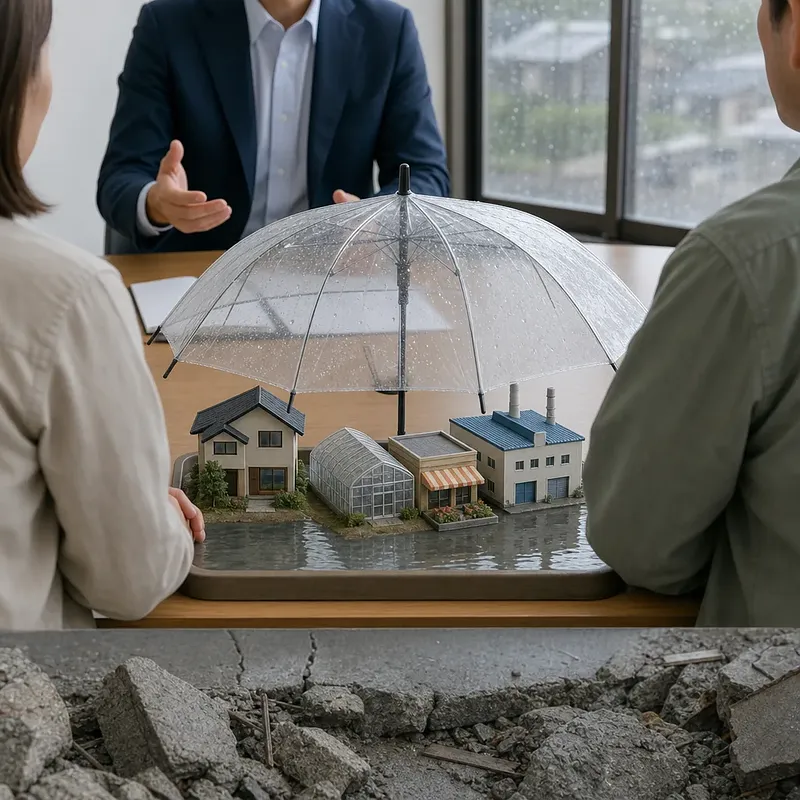
Storm, Flood, and Earthquake Disaster Insurance is a government-backed insurance program under which the central and local governments subsidize part of the premiums, while private insurers handle contracts and compensation. Eligible property typically includes residential buildings and tenants’ household belongings, greenhouses used for agriculture and forestry, and commercial premises and factories owned by small business owners.
There is no single seasonal application deadline that applies nationwide, but coverage cannot be purchased retroactively for damage that has already occurred. When a typhoon is forecast or torrential rain is imminent, consultation, underwriting, or contract processing may take time. Therefore, do not look only at the premium payment date; check the exact coverage start date and time shown on the insurance policy.
1. Check the Property to Be Insured and Eligibility
Who Can Insure What
| Policyholder or facility | Property generally eligible for coverage | What to check first |
|---|---|---|
| Homeowner | Building of a detached or multi-unit residence | Building use, ownership, illegal extensions or alterations, insured amount |
| Residential tenant | Movable property owned by the tenant, including household belongings | Rental address, coverage limit for movable property, distinction from damage to the building |
| Agricultural or forestry worker | Greenhouses meeting statutory and product requirements | Facility type, area, structure, cultivation purpose, and eligibility for coverage |
| Small business owner | Facilities, fixtures and equipment, machinery, inventory, and other property at commercial premises or factories | Qualification as a small business owner, business registration, and insured amount for each type of property |
A person is not automatically recognized as a small business owner merely because they have a business registration. They must meet both the small business criteria under the relevant laws and the insurer’s underwriting standards. Property with special circumstances, such as multi-unit housing, unauthorized buildings, vacant homes, or buildings under construction, may or may not be eligible, so confirmation from the insurer is required.
Landlords and Tenants Have Different Coverage
A landlord’s insurance on a residential building does not automatically cover the tenant’s household belongings, such as refrigerators, furniture, and clothing. Conversely, even if a tenant insures movable property, parts of the building such as walls, floors, and windows generally fall under the landlord’s responsibility.
Even at the same address, it is safer to review coverage separately as follows.
- Landlord: Check whether the building structure and attached equipment are included in the insured property.
- Tenant: Check the insured amount and range of items covered for household belongings owned by the tenant.
- Commercial tenant: Distinguish between facilities owned by the building owner, facilities installed by the tenant, and inventory.
- Shared equipment: Check the insured parties and scope of coverage under the management rules and group insurance policy.
2. Prepare Documents and Information Before Consultation
Required documents may vary depending on the insured property and insurer. Preparing the following materials for the initial consultation makes it easier to confirm eligibility and the premium.
- Policyholder’s identification and contact information
- Exact address of the home, commercial premises, or factory to be insured
- Lease agreement, if the policyholder is a tenant
- Business registration certificate and documents needed to verify the type of business, sales, and number of regular employees, if the policyholder is a small business owner
- Information about the insured property, such as the building register, area, and building structure
- Types and estimated values of the facilities, machinery, inventory, or household belongings to be insured
- Premium payment method and bank account information for receiving insurance payments
- Documents proving eligibility for additional support, such as being a basic livelihood security recipient, near-poverty household member, or member of a single-parent family
The insurer may request additional photographs, an on-site inspection, a small business confirmation certificate, or detailed facility specifications. Before submitting documents, verify that the party requesting personal and bank account information is an actual participating insurer or the relevant administrative authority.
3. Check the Subsidy Rate at a Community Service Center or Participating Insurer
Enrollment consultations are generally conducted through the relevant eup, myeon, or dong community service center or an insurer participating in the program for that year. Because participating insurers and products may change, it is most accurate to check the current list through guidance from the Ministry of the Interior and Safety or a community service center.
The central and local governments subsidize a substantial portion of the premium. According to guidance from the Ministry of the Interior and Safety, the level of support varies depending on the policyholder, insured property, vulnerable-group status, and additional support from the local government, and full subsidies may be available in some cases. However, the same subsidy rate does not apply to every policyholder.
During the consultation, confirm the following amounts and details numerically.
- Total premium before subsidies
- Amount subsidized by the central and local governments
- Premium actually payable by the policyholder
- Deductible or excess per incident
- Insured amount and compensation limit for each type of property
- Whether the policy provides fixed benefits or indemnifies actual losses
- Contract start date and exact coverage start time
Additional local government support may vary or end depending on the budget and ordinances. Do not estimate this year’s out-of-pocket premium based only on last year’s payment or online examples; check again based on your address.
4. Compare Covered Disasters and Potential Exclusions Against the Policy Terms
Disasters legally covered by Storm, Flood, and Earthquake Disaster Insurance include typhoons, floods, heavy rain, strong winds, wind waves, storm surges, heavy snow, earthquakes, and tsunamis. However, the mere occurrence of such a disaster does not mean that every loss will be compensated. The insurer also determines whether the damage was direct damage to the insured property and whether it falls within the compensation method and limits specified in the policy terms.
| Situation | Key coverage consideration |
|---|---|
| A home is flooded due to a river overflowing or torrential rain | Check whether it is direct flood damage to the insured building or movable property |
| A roof or exterior wall is damaged by a typhoon | Distinguish the causal relationship between strong winds and the damage from pre-existing deterioration |
| Inventory and machinery are damaged when commercial premises are flooded | Check whether the inventory and machinery were each included as insured property |
| Refrigerated products spoil due to a power outage | Check the policy terms to determine whether this is classified as indirect damage rather than direct storm or flood damage |
| Prolonged leakage or mold develops after rainfall | Determine whether the cause is deterioration, a construction defect, a maintenance issue, or a direct disaster |
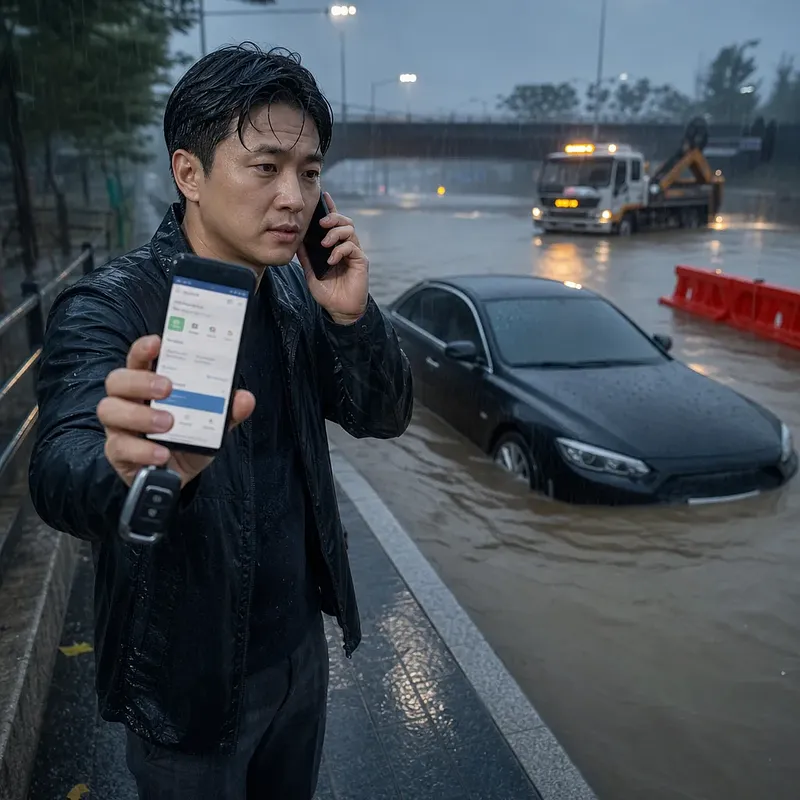
| A vehicle is flooded | Check whether it is covered by own-damage automobile insurance rather than as residential or business property under this insurance |
| Sales decline because the business suspends operations | Check whether business interruption losses, which are separate from facility damage, are included in the selected coverage |
Deterioration, corrosion, ordinary leakage, intentional damage, and damage that existed before enrollment may not be covered or may lead to disputes. Debris removal expenses, temporary accommodation costs, cleaning costs, and business losses also cannot be assumed to be automatically included. Before signing the contract, review the exclusions and expense-loss provisions in the policy terms.