Injoys
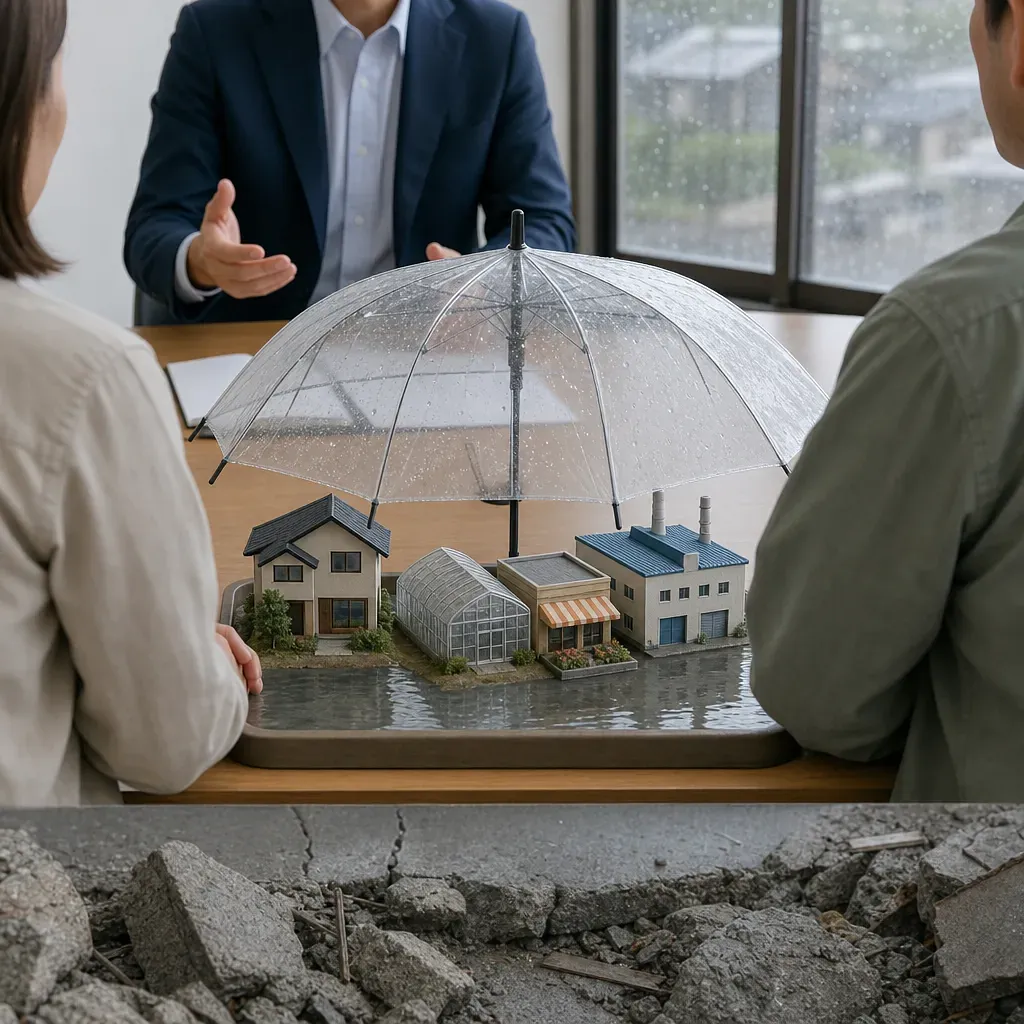
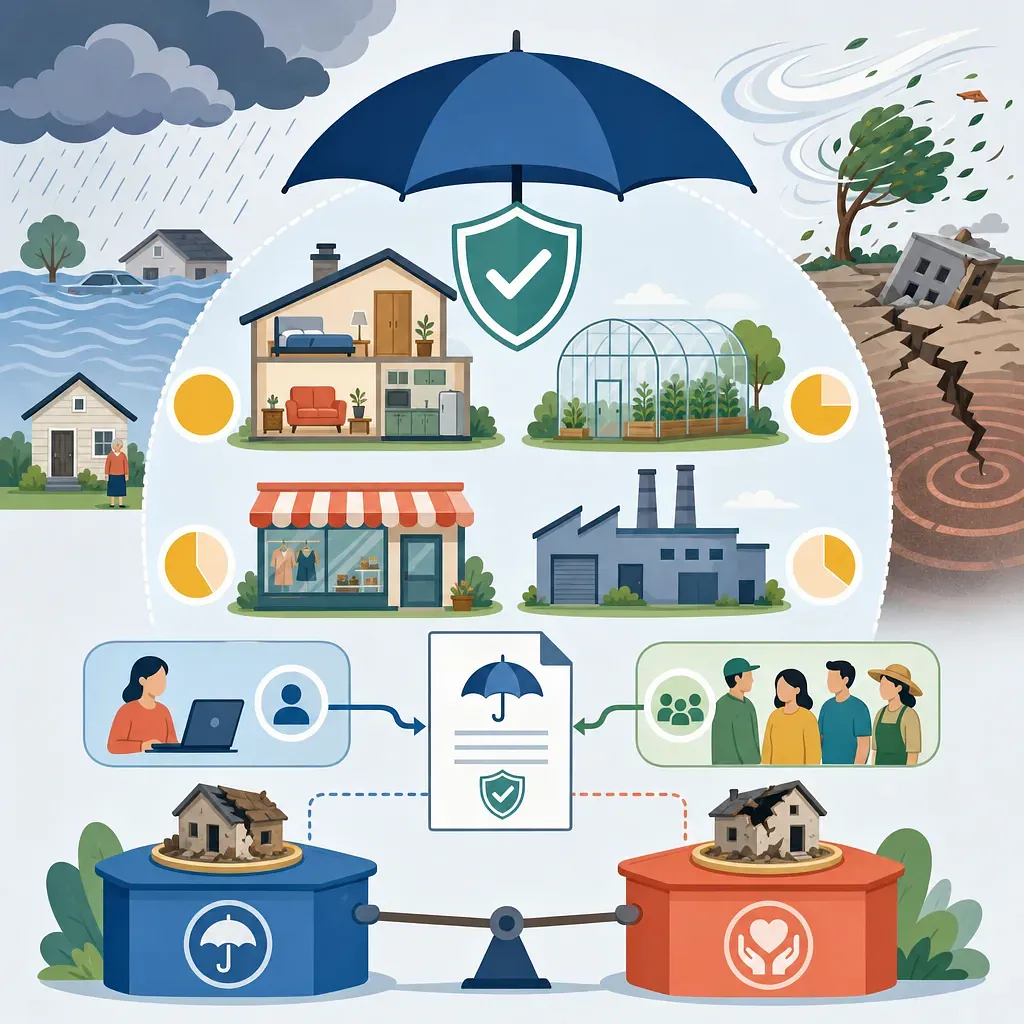
Storm, Flood, and Earthquake Disaster Insurance is a government-backed insurance program under which the central and local governments subsidize part of the premium, and the insurer pays benefits according to the contract when the policyholder suffers damage from natural disasters covered by the policy, such as typhoons, heavy rain, floods, and earthquakes. According to the practical manual published by the Ministry of the Interior and Safety in March 2026, eligible properties are categorized as homes and tenants’ movable property, greenhouses used for agriculture or forestry, and commercial premises and factories operated by small business owners.
This is a program that subsidizes insurance premiums, not a disaster assistance program that automatically covers all property. Before signing a contract, applicants must verify eligibility, the insured property, the amount of coverage, the deductible, and the coverage start date.
2026 Premium Subsidy Rates by Eligibility Category
The subsidy rate generally refers to the combined percentage of the premium covered by the central and local governments. Therefore, the figures below do not represent the percentage covered by the central government alone.
| Eligibility category | 2026 premium subsidy standard | Policyholder’s basic share | Items to verify |
|---|---|---|---|
| General homes | At least 55% | At most 45% | Whether additional local government subsidies are available |
| Homes of single-parent families and near-poverty households | At least 77.5% | At most 22.5% | Eligibility and the occupied home |
| Homes of basic livelihood security recipients | At least 86.5% | At most 13.5% | Recipient eligibility and insured property |
| Homes of low-income households in disaster-vulnerable areas that meet specified requirements | Up to 100% | May be 0% | Disaster history, area, and income requirements |
| Greenhouses used for agriculture or forestry | 70% | 30% | Whether the greenhouse is legally compliant |
| Commercial premises and factories operated by small business owners | 55% | 45% | Small business status and the distinction between facilities and inventory |
“At least” in the table means that a local government may provide additional premium subsidies from its budget. The actual amount payable varies depending on the address, building structure and area, insured amount, deductible, product type, group enrollment discount, and additional local government subsidies.
Full Subsidies Do Not Apply to Everyone
A 100% premium subsidy for homes is not a universal standard automatically applied to all basic livelihood security recipients or near-poverty households. Applicants must meet official requirements, such as having previously received Storm, Flood, and Earthquake Disaster Insurance benefits or disaster assistance, or residing in a disaster-vulnerable area.
Detailed eligibility selection and budget execution may vary by local government. It is advisable to check the following with the disaster management department of the city, county, or district governing the applicant’s address, or with the insurance company:
- Whether the address is within a disaster-vulnerable area
- Whether eligibility as a basic livelihood security recipient, near-poverty household, or single-parent family can be verified
- Whether any history of receiving insurance benefits or disaster assistance satisfies the requirements
- Whether the local government still has a budget available for full premium subsidies
How Homes and Tenants’ Movable Property Differ
Homeowners and tenants need to insure different types of property.
- Homeowners: The building itself and household goods they own may be considered for coverage as insured property.
- Tenants: They generally enroll primarily for movable property inside the home that they own, such as furniture, home appliances, and clothing.
- Landlords and tenants: A landlord may insure the building, while a tenant may separately insure their own movable property. One party’s contract does not automatically cover the other party’s property.
- Multi-unit residential buildings: Because ownership and management arrangements differ between private and common areas, applicants must distinguish between any group enrollment arranged by the management office and the scope they wish to cover individually.
Tenants should not assume that both the building and movable property are covered simply because the application form states “home.” They must check whether movable property is included under the insured property section of the insurance policy.
Scope of Coverage for Greenhouses and Small Business Commercial Premises and Factories
Greenhouses Used for Agriculture or Forestry
Greenhouses used for agricultural or forestry purposes are eligible, and this may include vinyl greenhouses. However, underwriting eligibility may vary depending on the actual use, facility type, structure, and legal compliance. Applicants must separately check the insured property and policy terms to determine whether crops and various types of equipment inside the greenhouse are automatically included in full.
Small Business Commercial Premises and Factories
Commercial premises and factories operated by small business owners are eligible. Buildings, facilities and fixtures, machinery, and inventory may be treated as separate insured properties, so applicants must verify the coverage amount for each enrolled item.
If a business operates from leased commercial premises, the building may belong to the landlord. The tenant business operator should check whether their own facilities, fixtures, and inventory are listed in the policy. Documents verifying small business status may also be required.
Which Natural Disasters Are Covered
Typical covered disasters include typhoons, floods, heavy rain, strong winds, high seas, tsunamis, heavy snow, earthquakes, and earthquake-triggered tsunamis. However, not all damage occurring during a natural disaster is eligible for insurance benefits.
The following factors are important when reviewing an insurance claim:
- Whether the direct cause of the loss is a disaster covered under the policy terms
- Whether the damaged building, movable property, facilities, or inventory is included in the insurance policy
- Whether the damage occurred during the insurance period
- Whether any exclusions or deductibles apply
- The amount of the actual loss and the insured amount
For example, a simple leak caused by aging pipes or inadequate waterproofing may be treated differently from flooding caused by a natural disaster, even if it is discovered during a period of heavy rain. Conversely, if a living area is flooded due to a river overflowing or torrential rain, photographs and records proving the cause of the damage, water level, and condition of the damage are important.
Differences Between Individual Enrollment and Local Government Group Enrollment
Individual Enrollment
Under this method, the applicant contacts a participating insurance company directly to determine the insured property and coverage conditions. One advantage is the ability to select the insured amount, deductible, and whether movable property, facilities, and inventory are included in relatively specific detail.
The general verification process is as follows:
- Classify the property to be insured as a home, movable property, greenhouse, commercial premises, or factory.
- Prepare requested documents, such as the building register, lease agreement, and documents verifying small business status.
- Verify subsidy eligibility and whether additional local government subsidies are available.
- Review the application details showing the insured property, insured amount, deductible, and coverage period.
- Confirm the final premium payable by the applicant after central and local government subsidies and discounts have been applied.
Local Government Group Enrollment
A local government may collect residents’ applications and arrange enrollment through a group contract. Depending on the product and participation conditions, group enrollment discounts or additional local government subsidies may apply.
However, group enrollment does not mean that all residents automatically become insured persons. Applicants must check the application and consent procedures, eligible areas, enrollment period, and whether the property has been registered. The discount amount also varies according to the contract terms and should not be assumed to be a fixed percentage.