Rental Room Typhoon and Heavy Rain: Drain Checks, Evacuation
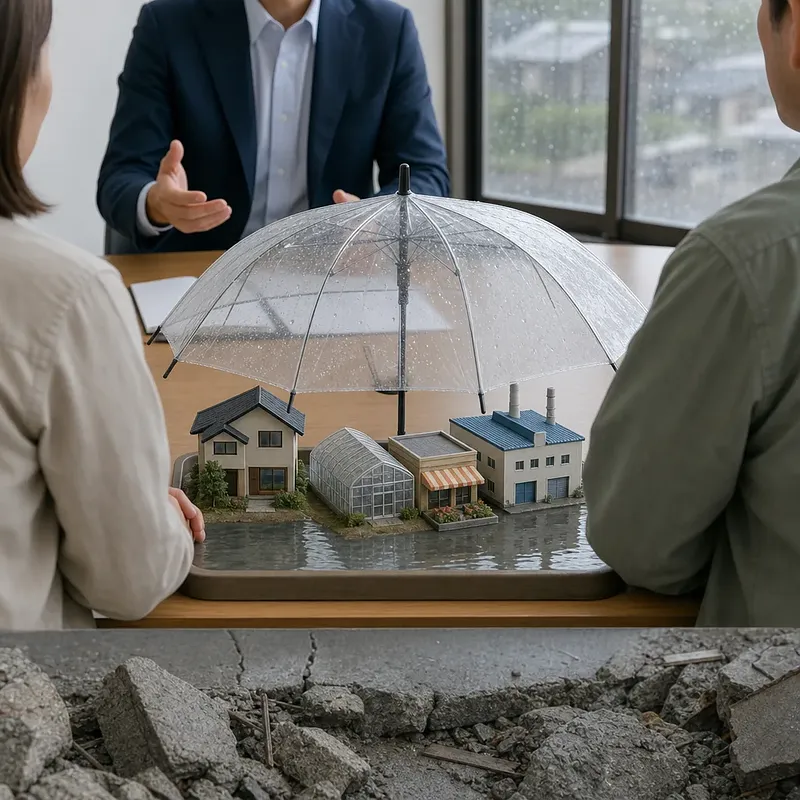
Drain maintenance and flood barrier installation in a rental room must be completed before flooding begins. If water enters a semi-basement or sewage backs up, evacuate immediately. After flooding, an electrical safety inspection is required.
In semi-basements, check entrances and the risk of sewer backflow in advance. In rooftop units, check roof drainage and signs of leaks.
Cleaning drains and installing flood barriers are preventive measures to take before flooding.
If water enters a semi-basement or sewage backs up, evacuate before gathering belongings.
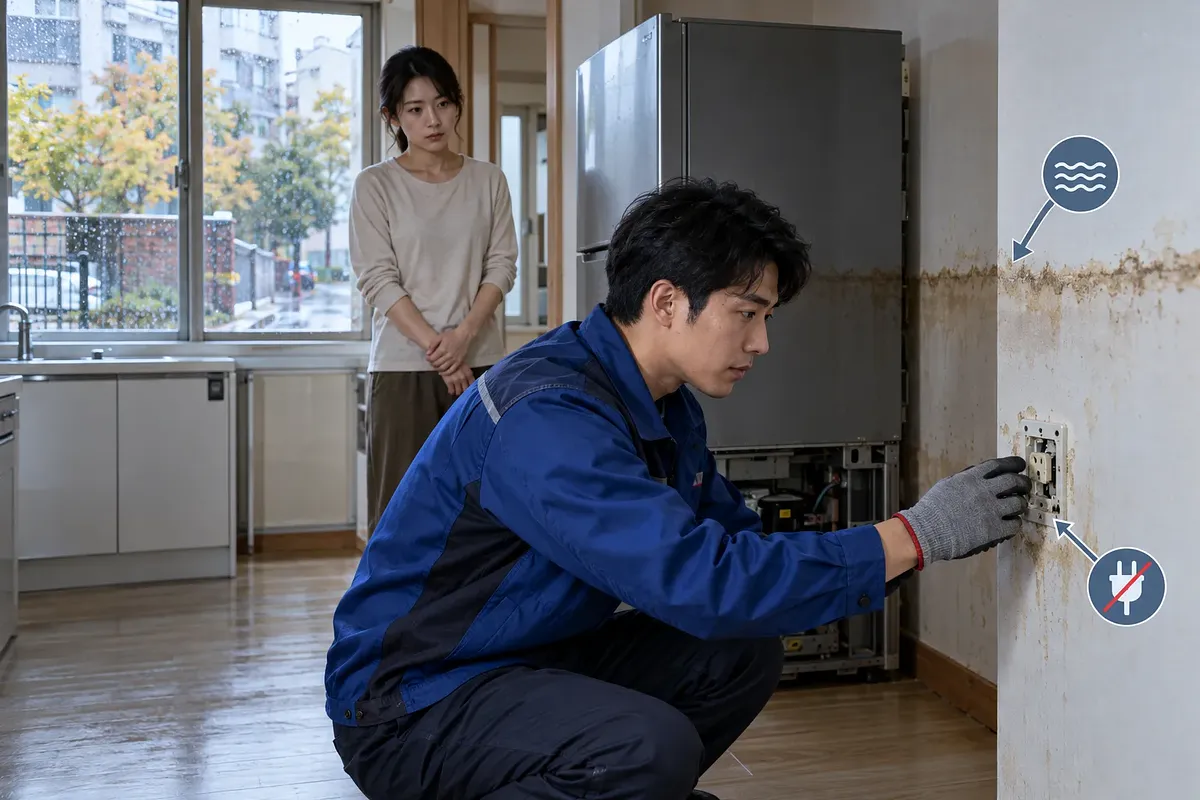
Do not use flooded electrical equipment or appliances again just because they look dry on the outside.
Photograph the damage after it is safe to do so and before restoration begins.
Preparing a home where you live alone for typhoons and heavy rain starts with checking drains before it rains. If water enters a semi-basement or sewage backs up, evacuate immediately. After flooding, have an expert inspect the electrical system before using it.
The evacuation criteria are based on guidance issued by the Ministry of the Interior and Safety on October 17, 2025.
Checks by type of home
The first place to check for water entry depends on the type of home. In a semi-basement, check for flooding through low-lying entrances and windows. In a rooftop unit, check roof drainage and signs of ceiling leaks.
Housing conditions | What to check before it rains | Main focus
Semi-basement | Windows near ground level, entrances, stairs leading down, sewer drains | Secure an evacuation route before water enters
Ground-floor or low-lying home | Water flow in front of the entrance, storm drains around the building, signs of past flooding | Check for rainwater entering from outside and the condition of drainage
Rooftop unit or top floor | Roof drains, ceiling stains, gaps around window frames | Check for blocked drains and causes of leaks
Building with an underground parking garage | Parking garage ramp, flood barriers, shared entrances | Prepare facilities and restrict entry before flooding
Home with many items outdoors | Balcony, railings, flowerpots and drying racks outside windows | Move items indoors before strong winds
This table applies official prevention guidance to different housing conditions. Being on a particular floor does not guarantee safety. Check the condition of shared routes out of the building as well.
Drain inspection steps
Check drains before it rains, while you can reach them safely. A drain is an opening through which water flows away. A roadside storm drain collects rainwater and directs it into the drainage system.
· Locate the bathroom and balcony drains. Check storm drains around the home as well.
· Remove hair and trash from strainers you can reach. Clear away nearby fallen leaves too.
· Check whether water normally drains slowly or pools when you use it. If the problem persists, ask the building manager to inspect it.
· Tell the landlord or building manager about blocked shared drainage facilities. Report problems with roadside storm drains to the local government.
· Check whether flood barriers are ready for entrances at risk of flooding. Decide in advance who will install them.
The Korea Meteorological Administration advises checking drains around the home in advance. It recommends flood barriers and sandbags for areas expected to flood. This guidance is available in Weather Nuri’s public safety guidance for typhoons.
Once water starts entering, it is no longer time to keep cleaning. Do not enter a manhole or dismantle shared facilities yourself. Avoid going out to check roof drains during strong winds and heavy rain.
The difference between clearing drains and using flood barriers
Clearing drains and using flood barriers address water in different places and serve different purposes. Clearing a drain keeps an outlet open for water to flow away. A flood barrier blocks water from entering through an entrance or other opening.
Measure | Intended purpose | What to keep in mind
Remove debris from drains | Ease blockages at drainage openings | Clearing drains alone cannot be assumed to prevent sewage backups
Install flood barriers | Limit rainwater entering through entrances and other openings | Prepare and install them before water enters
Place sandbags | Help prevent water from entering areas expected to flood | They are not a substitute for evacuation
Zipper bags filled with water | A temporary method suggested by a personal blog | No evidence of an equivalent effect was found in the official safety guidance reviewed
Having a flood barrier does not make it safe to stay inside. Treat a sewage backup as a separate signal to evacuate. Follow evacuation instructions even if you have finished checking the drains.
When to start evacuating during a flood
If water enters a semi-basement or sewage backs up, evacuate immediately. There is no reason to wait and see whether the water rises further. Stop moving belongings to higher places at that point too.
If rainwater enters an underground space or semi-basement home, evacuate immediately.
This wording comes from the Ministry of the Interior and Safety’s “Public Safety Guidance for Flooding in Underground Spaces.” The original appears in Policy Briefing’s guidance dated October 17, 2025.
Situation | First action
Receive local government evacuation instructions before flooding | Move to the designated safe place
Water enters a semi-basement floor or sewage backs up | Evacuate immediately
Water enters basement stairs | Escape without delay
Rainwater enters an underground parking garage | Do not enter to check on a vehicle
Evacuation route is flooded or you are stranded | Do not try to cross the water; request rescue
Evacuation steps
Start by leaving the dangerous area. Do not delay to shut off the electricity or pack belongings. Approaching wet electrical equipment increases the risk of electric shock.
· Stop drainage work and putting belongings away. Alert people nearby to the danger.
· Leave immediately by a safe route you can use. Do not enter a flooded basement stairwell.
· Head to a shelter designated by the local government or to safe higher ground. Avoid riverbanks and flooded roads.
· If the route is blocked, do not try to cross the water. Call 119 for rescue from a safe location.
· After evacuating, tell someone you know where you are. Do not return for belongings or a vehicle.
It is best to know where the electricity and gas shutoffs are ahead of time. Use them only when you can do so safely before flooding. Do not touch a circuit breaker or outlet that is already underwater.
Checking shared entrances when you live alone
If you live alone, check your evacuation route beyond your room. Even if your room is on a high floor, the building entrance may be low-lying. In that case, whether your room is flooded does not tell you whether you can leave.
This checklist applies official evacuation planning principles to a home where you live alone. Its purpose is to help you prepare for using shared entrances and contacting others. Check the following before it rains.
· Whether anything blocks the route from your room to outside the building
· How to open the shared entrance lock under normal conditions
· Where flood barriers are stored and who will install them
· Contact information for the landlord or building manager
· Local shelters and safe routes to them
· Contact information for someone you can tell where you are after evacuating
Keep emergency supplies together so you can grab them as you leave. Charge your phone and portable charger in advance. Keep a flashlight for power outages somewhere easy to find.
Electrical checks and damage records after flooding
After a flood, confirm that it is safe to enter before documenting the damage. The rain stopping or the water draining from the floor is not enough. An expert must inspect the electrical system before it is used in a flooded home.
· Check whether you can enter the building safely. Follow any access restrictions.
· Request an inspection of flooded electrical equipment. Do not plug anything into a wet outlet.
· Have flooded appliances inspected by the manufacturer’s service center or an expert. Do not turn them on to test them, even if they look dry.
· Take photos of the damage from a safe location. Document the condition before repairs begin.
· Tell the landlord or building manager about the damage. Ask the relevant Administrative Welfare Center how to report it.
It is best for photos to show both the whole room and the damaged areas. Record water marks and wet walls too. You can also note when you discovered the damage and what you told the building manager.
The Korea Meteorological Administration advises taking photos before repairs. It specifies that electricity in a flooded home should be used only after an expert inspection. More details are available in Weather Nuri’s public safety guidance for heavy rain.
Common mistakes
One mistake to avoid is delaying evacuation to continue preparing. Preventive measures should be finished before flooding. Document damage only after you are safe.
Mistaken assumption | What to remember
Clearing the drains means the home will not flood | Clearing drainage openings and the risk of flooding from outside are separate issues
Having a flood barrier means it is safe to stay home | Evacuation takes priority if water enters or sewage backs up
I can evacuate when the water reaches my calves | Do not wait for the water to reach that height
I should wade into the water to switch off the circuit breaker | Do not approach electrical equipment where there is a risk of electric shock
Flooded appliances can be used as soon as they dry | They need expert inspection before reuse
I should take photos before evacuating | Evacuate first and document the damage once you are safe
Where to check disaster information and local evacuation guidance
Weather conditions and local evacuation guidance provide different information. Check forecasts and weather alerts from the Korea Meteorological Administration. Also check local government guidance for where to go and which areas are restricted.
Information to check | Official source
Heavy rain and typhoon forecasts and alerts | Korea Meteorological Administration’s Weather Nuri
Safety guidance for flooding, heavy rain and typhoons | Ministry of the Interior and Safety’s National Safety 24
Disaster alerts and information | National Safety 24, Safety Stepping Stone
Local shelters and access restrictions | Disaster alerts and guidance from your city, county or district
Emergency rescue if stranded or in another emergency | 119
How to report damage to a home | Relevant Administrative Welfare Center
It is best to check shelter locations ahead of time. For the specific disaster, confirm where to go using local government guidance. If the route is flooded, do not try to reach a shelter even if it is nearby.
Frequently asked questions
Should I leave if only a little water enters a semi-basement?
Evacuate immediately. The same rule applies if water backs up through a sewer drain. Bailing out water while watching what happens delays evacuation.
Does a rooftop unit need flood preparation?
A rooftop unit also needs drainage and leak checks. Put away outdoor items that could blow away in strong winds. Do not go onto the roof to inspect it during heavy rain.
Can I use zipper bags instead of a flood barrier?
No basis was found for recommending zipper bags as a substitute for a flood barrier. Official guidance recommends flood barriers and sandbags. Do not delay evacuation because your preparations are incomplete.
Should I switch off the circuit breaker first if water enters?
Do not approach wet electrical equipment to switch off the power. Shut off electricity only when you can do so safely before flooding. If water has already entered, the priority is to evacuate without delay.
Can flooded appliances be used after drying for a few days?
The number of days they have dried is not enough to determine whether they can be used again. Have flooded appliances inspected by an expert before plugging them in. Their condition must be assessed to decide whether they need repair or replacement.
Should I take photos of the damage before evacuating?
Evacuate first. Take photos only once you are safe. Document the condition before repairs, but do not re-enter a dangerous area.
 Injoys