Injoys
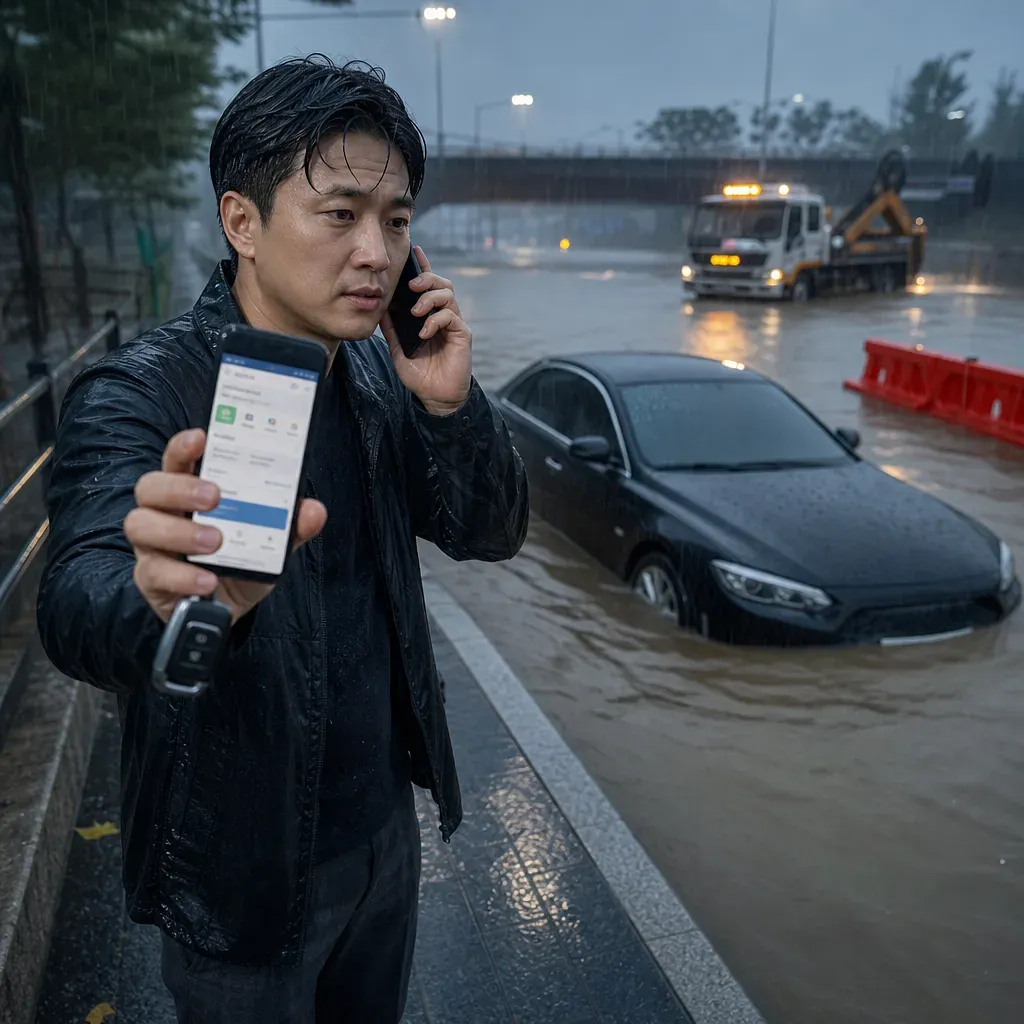
If your vehicle has been flooded by a typhoon or torrential rain, the first step is not to start the engine. After the driver and passengers evacuate to a safe place, preserve photos and information about any access restrictions, and immediately report the incident through your insurer’s official claims channel.
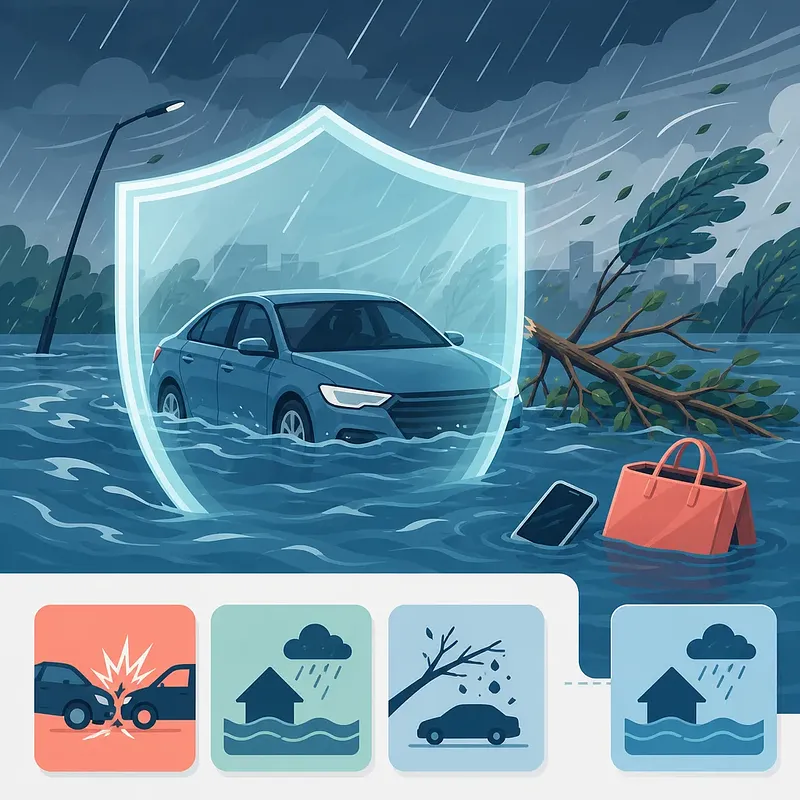
The possibility of coverage depends on whether own-vehicle damage coverage and relevant riders were in effect at the time of the accident, what caused the flooding, and whether the driver acted reasonably to prevent the damage from worsening. If you only have bodily injury and property damage liability coverage, flood damage to your own vehicle is generally not covered.
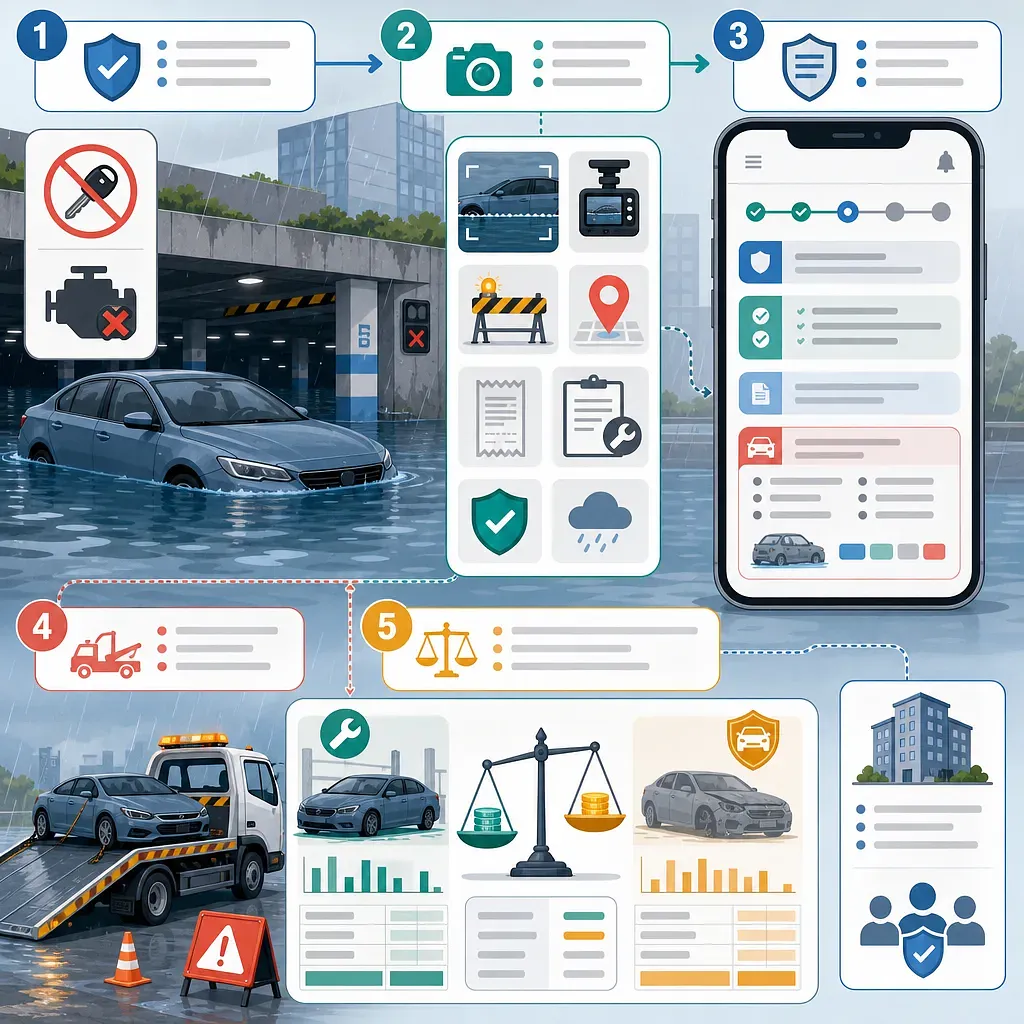
5 Steps to File a Flooded Vehicle Insurance Claim Now
1. Evacuate People First and Do Not Start the Engine
On roads where water is rising or in underground spaces, protecting lives takes priority over the vehicle. If you must abandon the vehicle and leave, lock the doors and take the key with you where possible, but do not approach the vehicle if the current is strong or an underground space is flooding.
Even after the water has receded from the exterior, water may remain in the engine intake system, transmission, wiring, and electronic control units. Starting the engine or repeatedly turning on the power can worsen the damage and may also lead to disputes over the cause of the accident and whether the damage was aggravated.
Because electric and hybrid vehicles have high-voltage systems, do not directly touch a flooded vehicle or submerged charging equipment. Follow the procedures provided by the fire authorities, your insurer’s roadside assistance service, or the manufacturer.
2. Document the Scene and Access Restrictions
Obtain the following materials without compromising your safety.
- Photos showing the entire vehicle and license plate together
- Water marks on the exterior and the height reached by water inside the vehicle
- The exact parking location or location of the flooded road
- No-entry signs, barriers, and whether the road was closed
- Evacuation or relocation text messages sent by the underground parking garage or facility
- Original dashcam footage and the time period before and after the accident
- Towing receipts, storage fee receipts, and inspection reports from the repair shop
- If you reported the incident to the police, fire authorities, or local government, the time of the report and case number
If the vehicle had to be moved first, photograph its condition both before and after it was moved. It is also advisable to preserve the date, time, and location metadata in your mobile phone photos.
3. Check Your Coverage and Policy Terms
Check the following items in your insurance policy or your insurer’s official app.
- Whether you have own-vehicle damage coverage
- The name of and enrollment in any rider that extends coverage to damage from single-vehicle accidents
- Coverage language related to natural disasters such as typhoons, floods, and tsunamis
- The deductible percentage and its minimum and maximum amounts
- The vehicle value and accessories listed in the policy
- Distance and cost conditions for roadside assistance and towing services
Coverage names and structures may vary depending on when the insurance product was sold and the insurer. Do not make a determination based only on the name of the coverage. Review the policy and terms applicable on the accident date, including covered losses, excluded losses, and special provisions.
4. File a Claim With the Insurer and Obtain Towing Instructions
There is no centralized government channel for filing flooded vehicle insurance claims. The actual claim must be filed through your insurer’s official app, website, or claims service center listed in the policy.
When filing the claim, provide the following information.
- Vehicle number and information about the policyholder and driver
- Date, time, and exact location of the accident
- Whether the vehicle was parked or being driven
- Floodwater height and the vehicle’s current condition
- Whether the engine was started or the power was operated
- Whether the incident was reported to the police or fire authorities and whether the road was closed
- The vehicle’s current location for towing
It is safer to move the vehicle only after confirming your insurer’s towing instructions and any conditions for using a designated repair shop. If you first used private towing for an urgent rescue, be sure to obtain a receipt proving the necessity and cost. Whether the full amount is recognized may depend on the policy terms and the reasonableness of the cost.
5. Review the Loss Assessment and Coverage Items Separately
After receiving a claim number from the insurer, request or review the following materials.
- Whether repairs are possible and the repair estimate
- A list of flooded areas and damaged parts
- The basis for calculating the vehicle’s value at the time of the accident
- The reason for determining whether the vehicle is a total or partial loss
- The applicable deductible
- The recognized scope of towing and storage fees
- Ownership and disposal of the salvage
- Excluded items and the policy provisions supporting the exclusions
If you find it difficult to agree with the result, request the estimate, vehicle valuation sheet, and applicable policy provisions in writing rather than settling immediately. First use the insurer’s complaint procedure. If the issue remains unresolved, you may consider consultation, filing a complaint, or dispute resolution through the Financial Supervisory Service.
Basic Conditions That Make Coverage More Likely
The following conditions are generally key.
- Own-vehicle damage coverage and any necessary related riders were valid when the accident occurred
- The vehicle was damaged by an accidental event covered under the policy, such as a typhoon, flood, or torrential rain
- The loss was not intentionally caused by the policyholder or insured
- Reasonable loss-prevention measures, such as rescue and towing, were taken after the accident
- Materials verifying the loss and cause of the accident can be submitted
Simply having own-vehicle damage coverage does not mean every flooding accident is automatically covered. Conversely, an accident is not uniformly excluded merely because the vehicle was flooded while being driven. Both the circumstances of the accident and the policy terms are considered.
Insurance claims are subject to a statutory limitation period. The specific limitation period for an insurance payment claim must be checked against the laws applicable on the accident date and the insurer’s guidance, and this does not mean that reporting the accident may be postponed. Because a delayed notice can make it difficult to investigate the cause or verify the loss and may result in disadvantages, the general rule is to file the claim immediately.
Flood Coverage Criteria by Situation
| Accident situation | General direction of assessment | Evidence and issues to review |
|---|---|---|
| A vehicle parked in a normal location is suddenly flooded | If the relevant own-vehicle damage coverage is valid, it is likely to be considered for coverage | Parking location, time of rainfall and access restrictions, floodwater height |
| Water suddenly rises and floods a vehicle during normal driving | It is not excluded solely because the vehicle was being driven; the suddenness of the event and whether evacuation was possible are considered together | Dashcam footage, road conditions, time when access restrictions began |
| The driver enters a road that is already closed or a no-entry area | Key issues are whether the driver could have known about the restriction and whether the violation contributed to causing or worsening the damage | Restriction signs, police instructions, time of entry |
| Rainwater enters through an open window or sunroof | A distinction is made between simple rainwater intrusion and vehicle flooding caused by surrounding overflow, and whether the opening worsened the damage is reviewed | Whether the opening was open, external water level, route by which water entered the interior |
| The vehicle is left for an extended period near a river or in a low-lying area | Parking there alone does not automatically exclude coverage, but whether prior restrictions or relocation orders were ignored is important | Evacuation text messages, time available to move the vehicle, parking regulations |
| Damage worsens because the engine is restarted after flooding | The initial flood damage may be distinguished from additional damage caused by starting the engine | Time the engine was started, repair diagnosis, driver’s statement |
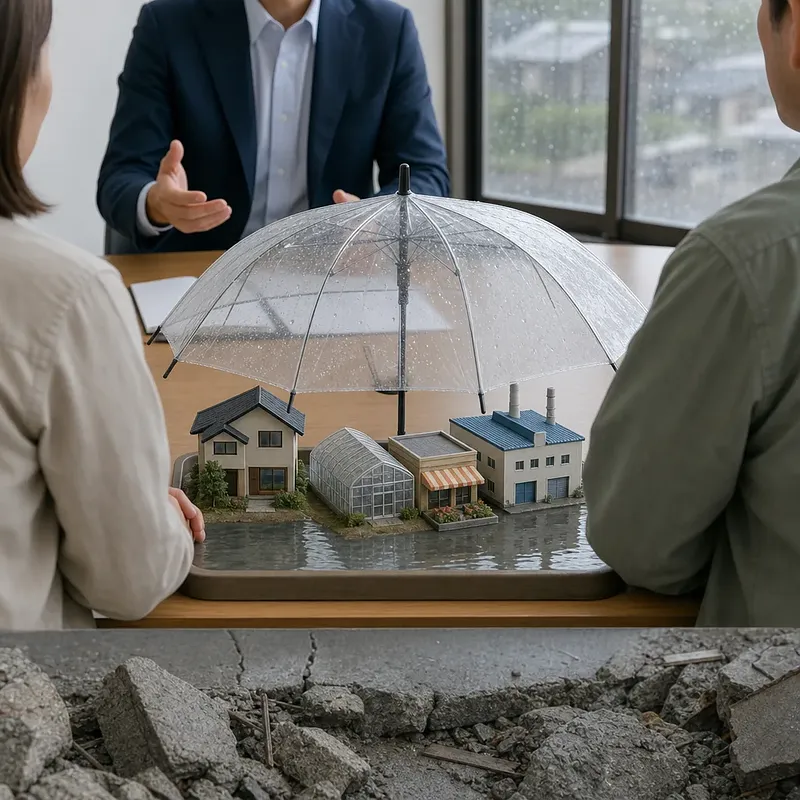
| The vehicle is flooded due to problems with drainage or flood barriers in an underground parking garage | In addition to filing an own-vehicle damage claim, potential negligence by the facility manager or liability for a facility defect may be reviewed | CCTV, maintenance records, condition of flood barriers and drainage pumps |
Entering a restricted area, leaving a window open, or failing to comply with an evacuation order does not necessarily mean that the entire insurance claim will be denied. The outcome depends on the causal relationship between the conduct and the actual loss, whether there was intent or gross negligence, and the wording of the policy.
How Repair Costs, Total Loss, and Vehicle Value Are Classified
Repairable Partial Loss
If repairs can restore the vehicle to a condition close to its pre-accident state and the repair cost is within the coverage limit, the claim is generally handled as a partial loss. The insurer may calculate the payment by applying the agreed deductible to the approved repair cost.
A flooded vehicle must be inspected not only for engine damage but also for the transmission, airbag modules, wiring, sensors, interior contamination, and the possibility of mold. Because additional damage may be discovered after the initial estimate, confirm the procedures for disassembly inspections and approval of additional repairs.
Total Loss Treatment
A vehicle may be deemed a total loss if it is physically difficult to restore or if a reasonable repair cost is close to the vehicle’s value at the time of the accident, making repairs uneconomical. A total loss payment is generally calculated based not on the purchase price of a new vehicle or the used-car market price desired by the driver, but on the vehicle value under the policy at the time of the accident and the coverage limit.
Before agreeing to a total loss, check the following.
- The vehicle value at the time of the accident applied by the insurer
- Whether the trim, model year, mileage, and options were reflected
- The basis for reflecting pre-existing damage or depreciation factors
- Whether a deductible applies
- Delivery of the salvage and responsibility for deregistration and scrapping
- Payment arrangements if an installment balance or auto-secured loan remains
The insurance payment may be less than the remaining installment balance. Auto insurance is not a product that guarantees the full outstanding loan balance, so separately confirm the amount to be settled with the finance company.
Personal Items and Installed Equipment Inside the Vehicle
Personal belongings inside the vehicle, such as mobile phones, laptops, cash, golf equipment, and clothing, are generally treated separately from damage to the vehicle itself. They are unlikely to be covered by own-vehicle damage coverage alone, so check whether separate personal effects or property insurance applies or whether a responsible third party may be liable.
Coverage for dashcams, expensive wheels, audio systems, and modified parts may also depend on whether they were declared under the insurance contract and included in the vehicle value. They are not automatically covered even if purchase receipts and installation records are submitted.