Power Outage: 4-Hour Fridge Storage, Refreezing and Disposal
A refrigerator with its door closed stays cold for about 4 hours, and a full freezer for about 48 hours. Whether food can be refrozen or should be discarded depends on its actual temperature, exposure time, ice crystals and contamination.
A refrigerator with its door closed is estimated to stay cold for about 4 hours.
A freezer is estimated to stay cold for about 48 hours when full and about 24 hours when half full.
Discard high-risk foods if they have been above 4°C for at least 2 hours.
Frozen foods that still contain ice crystals or are at or below 4°C may be refrozen, depending on the type of food.
Food cannot be judged safe simply because it smells normal.
A refrigerator with its door closed stays cold for about 4 hours during a power outage. A full freezer stays cold for about 48 hours, and a half-full freezer for about 24 hours. Decisions about refreezing or discarding food depend on its temperature and thawing condition.
The main storage figures are based on the FoodSafety.gov chart reviewed on August 8, 2024.
Comparing Refrigerator and Freezer Storage Times During a Power Outage
These estimates of how long food stays cold assume that it was stored at normal temperatures before the outage. They also require the doors to remain closed. These figures do not guarantee that every food will remain safe for the entire period.
Storage space | Estimated time it stays cold with the door closed | Points to consider
Refrigerator | About 4 hours | Check high-risk foods that have lost cooling first
Full freezer | About 48 hours | Check each food for ice crystals and temperature
Half-full freezer | About 24 hours | Do not apply the time for a full freezer
Opening the door lets cold air escape. During a power outage, electricity cannot replace the lost cooling. Frozen food and water bottles help slow the rise in internal temperature. The assumptions behind these estimates are specified in the FoodSafety.gov power outage guide.
The Difference Between 4 Hours of Refrigeration and 2 Hours of Temperature Exposure
The 4 hours refer to time elapsed since the outage, while the 2 hours refer to how long food has been warm. FoodSafety.gov disaster guidance sets the discard threshold at temperatures above 4°C for at least 2 hours. This criterion applies to high-risk foods such as meat, fish, eggs, and leftovers.
Criterion | When to count the time | Meaning
About 4 hours | An outage begins under normal refrigeration conditions | Estimated time a refrigerator stays cold with its door closed
At least 2 hours | High-risk food exceeds 4°C | Temperature exposure time used to decide whether to discard food
At least 1 hour | High-risk food is exposed to a hot environment above 32°C | Shortened threshold for food taken out and left at room temperature
This does not mean you can add another 2 hours after a 4-hour power outage. Without temperature records, discard high-risk foods if refrigerator cooling has been interrupted for at least 4 hours. If ice has kept food consistently cold, check its actual storage temperature. The Celsius figures follow the FoodSafety.gov disaster guide.
Criteria for Keeping or Discarding Different Foods
Cooked rice and cut vegetables may need to be discarded, along with meat and dairy products. The table below classifies refrigerated foods that have exceeded the temperature and time thresholds because cooling failed. Flood exposure or contamination from meat juices requires a separate assessment.
Food category | Examples | Decision
Meat and seafood | Raw meat, chicken, fish, cooked seafood | Discard
Refrigerated dairy products | Milk, yogurt, cream, soft cheese | Discard
Eggs and prepared foods | Refrigerated eggs, egg dishes, soups, stews | Discard
Cooked starchy foods | Rice, pasta, cooked potatoes | Discard
Prepared produce | Cut fruit, cut vegetables, packaged salads | Discard
Some fats and cheeses | Butter, margarine, blocks of hard cheese | Items that can be kept
Whole produce and plain bread | Uncut fruit and vegetables, bread without cream | Items that can be kept
The decision for cheese varies by type and processing form. Shredded cheese is not assessed using the same criteria as blocks of hard cheese. Detailed distinctions are provided in the FoodSafety.gov food assessment chart.
Conditions Under Which Frozen Food Can Be Refrozen
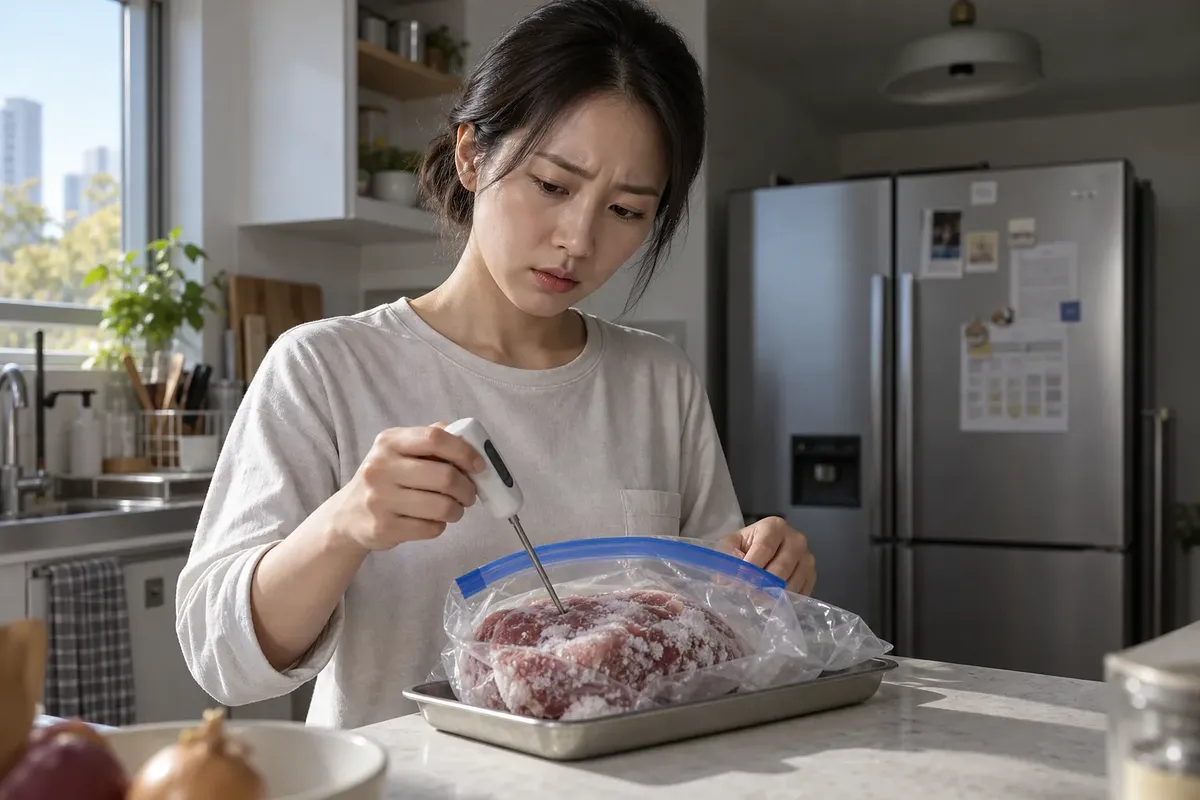
Refreezing decisions do not depend solely on whether food has thawed. Refreezing may be possible if ice crystals remain or the temperature is at most 4°C. However, this excludes items with separate criteria, such as ice cream.
Confirmed condition | Decision | Additional conditions
Meat or fish with ice crystals remaining | Can be refrozen | Must be free of other contamination
Meat that has completely thawed but stayed at at most 4°C | Can be refrozen | Continued cold storage must be confirmed
High-risk food held above 4°C for at least 2 hours | Discard | Do not refreeze for storage
Thawed ice cream or frozen yogurt | Discard | General refreezing conditions do not apply
Completely thawed, with an unclear temperature history | Discard if safety cannot be verified | Do not use smell as a substitute for assessment
Being suitable for refreezing does not mean the original quality will be preserved. Moisture loss during thawing can change the texture. USDA distinguishes between the ability to refreeze refrigerator-thawed food and a decline in quality. The supporting information appears in the USDA freezing and food safety guide.
Comparing Refreezing Options by Routine Thawing Method
Thawing under normal refrigeration and leaving food at room temperature are different conditions. Food thawed in cold water or a microwave should be cooked before refreezing. This rule does not mean that cooking restores the safety of food left out improperly.
Thawing method | Refreezing decision
Thawed at normal refrigerator temperatures | Can be refrozen without cooking within the appropriate storage period
Thawed in cold water | Cook immediately after thawing, then freeze
Thawed in a microwave | Cook immediately after thawing, then freeze
Left at room temperature in the kitchen | Not a recommended thawing method; assess using temperature and time criteria
The conditions for each thawing method follow the USDA safe thawing guide.
Example Decisions for a 2–3-Hour Power Outage
A 2–3-hour power outage alone is no reason to discard all frozen food. If the door stayed closed, this is shorter than the general estimate for how long a freezer stays cold. However, the assessment depends on the temperature before the outage and each food's thawing condition.
Conditions observed during the same outage duration | Decision
The door stayed closed, and ice crystals remain in the meat | Frozen storage can continue if there is no contamination
Frozen food has thawed, but it is confirmed to have stayed at at most 4°C | Apply the refreezing conditions for each item
High-risk food was taken out and left above 4°C for at least 2 hours | Discard even if the outage was short
The refrigerator was already insufficiently cold before the outage | The 4-hour estimate cannot be applied as given
These examples apply storage criteria to different situations. They are not results from experiments measured in actual homes. Even with the same outage duration, foods may have experienced different temperatures.
The Temperature History of Food That Cools After Power Is Restored
A temperature measured long after power is restored cannot establish the conditions during the outage. Food can become cold again once electricity returns. Checks made immediately after power restoration must therefore be distinguished from later checks.
This distinction follows from agencies' requirements to check temperatures when power is restored. If food is known to have been warm for a long time, its current temperature cannot negate that fact. Newly formed ice crystals cannot reverse earlier improper storage either.
The following records can help with the assessment.
· When the outage began and when power was restored
· Food temperatures checked immediately after power was restored
· Ice crystals remaining at the time of the check
· When food was moved to a cooler and how well it stayed cold
· Whether doors were left open for a long time or food was left outside the appliance
Assess Flood Exposure and Meat Juice Contamination Before Storage Time
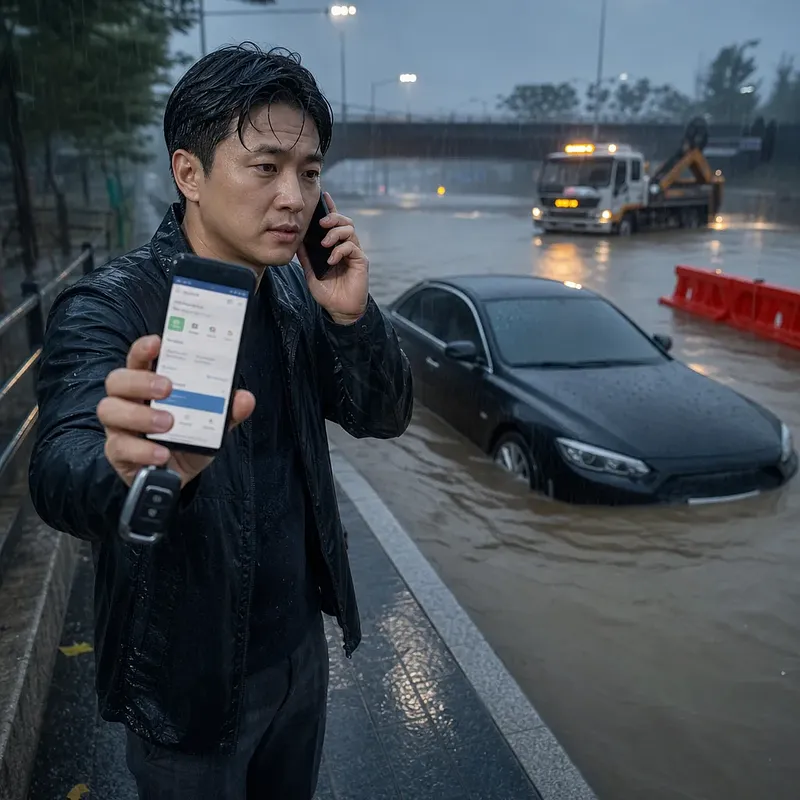
Food contaminated by floodwater cannot be eaten even if it stayed cold. Raw meat juices touching other foods also constitute separate contamination. The cold-storage timetable does not eliminate this contamination.
Contamination situation | Decision
Floodwater has or may have touched the food itself | Discard
Milk cartons or paper packaging were submerged | Discard
Containers with screw-top lids were submerged in floodwater | Do not keep them simply because they appear sealed
The exterior of undamaged commercial metal cans or retort pouches was contaminated | Assess separately according to official cleaning and sanitizing procedures
Raw meat juices touched ready-to-eat food | Discard
The canned-food exception does not apply to ordinary food storage containers. If the refrigerator itself was flooded, the appliance and its interior surfaces are also a concern. Packaging-specific handling criteria appear in the FDA food safety guide after a storm or flooding.
Preparing Before an Outage and Using a Cooler
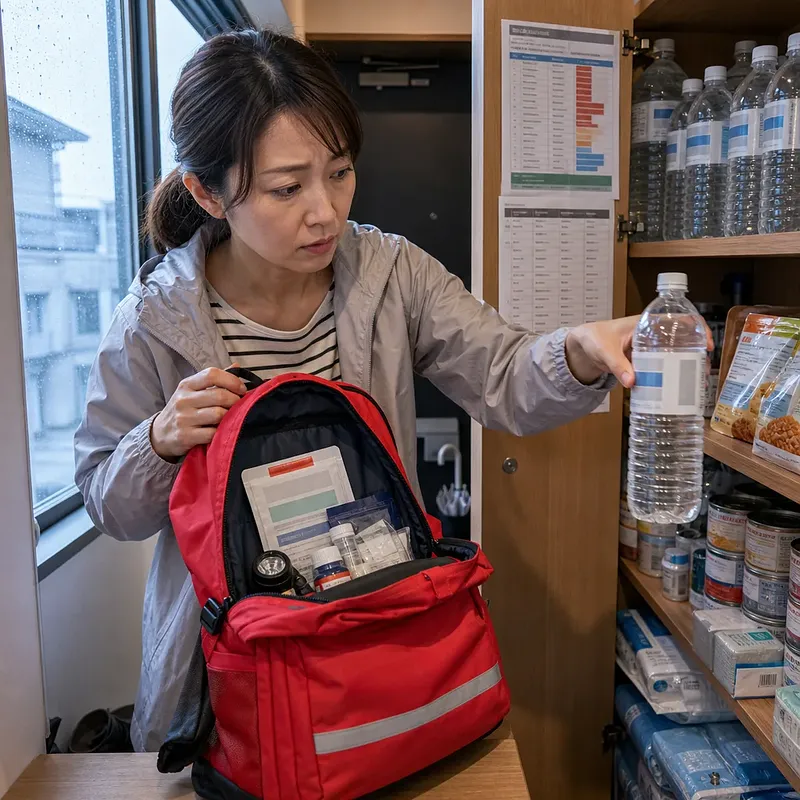
Thermometers and ice packs frozen in advance help both with keeping food cold and assessing it afterward. The standard is to keep the refrigerator at at most 4°C during normal use. The normal freezer storage standard is at most -18°C.
· Place appliance thermometers inside the refrigerator and freezer.
· Freeze ice packs and freezer-safe containers filled with water in advance.
· Group frozen foods together and place frozen water bottles in empty spaces.
· Before the outage, freeze refrigerated meat and similar foods that will not be eaten right away.
· Prepare a cooler and ice if an extended outage is expected.
· Move food to the cooler before it becomes warm.
· Keep food inside the cooler at at most 4°C as well.
Simply placing food in a cooler does not establish that it stayed cold. Once the ice melts, an additional cooling source is needed. These preparation steps are based on the FDA power outage preparation guide.
Common Mistakes: Judging Safety by Smell, Heating, or Use-By Dates
A normal smell does not establish that food is safe. Tasting a small amount is not a way to check safety either. FoodSafety.gov's “Food Safety During Power Outage” states:
Never taste food to determine its safety.
· Eating it because it smells fine: Smell cannot rule out the risk of disease-causing microorganisms.
· Keeping it because it can be boiled: Food that has not been kept properly refrigerated can cause illness even after thorough cooking.
· Eating it because the use-by date has not passed: First check whether the labeled storage conditions were followed.
· Discarding everything once it thaws: Some items can be refrozen if continued cold storage is confirmed.
· Assuming all frozen food is safe before 48 hours: This is an estimate for a full freezer with its door closed.
FDA also explains that heating alone cannot compensate for improper storage. Nor should all the contents of a refrigerator be treated as having the same condition. The final assessment must be made for each individual food.
Frequently Asked Questions
Assessing food after an outage requires considering time, temperature, and food type together. Refrigerator and freezer criteria are not interchangeable. The following questions address conditions that are often confused in practical decisions.
Can I drink refrigerated milk after a 3-hour power outage?
If the milk was properly refrigerated before the outage and the door stayed closed, it is within the general cold-storage window. That condition does not apply if the milk was taken out and left outside the refrigerator. If a temperature rise has been confirmed, assess the exposure time separately.
Why is the time shorter when the freezer is half full?
With fewer frozen contents, there is less cold material to slow the temperature rise. The official estimate for a half-full freezer is about 24 hours. For a full freezer, it is about 48 hours.
Can meat be refrozen even if it has completely thawed?
Refreezing may be possible if it stayed continuously at at most 4°C. Being cold now does not establish its earlier temperature. Moisture loss may change its quality.
Is ice cream okay if some ice remains?
The general refreezing rule does not apply to ice cream. The FoodSafety.gov assessment chart classifies ice cream under thawing conditions as an item to discard. Frozen yogurt has the same classification.
Do I have to discard everything in the refrigerator?
Not all foods have the same discard criteria. Butter and whole fruit are among the items that can be kept. This exception does not apply if there has been flood exposure or other contamination.
Can I check by touch if I do not have a thermometer?
A cold feeling on your hand cannot replace an actual temperature measurement. For frozen food, you can check each package for remaining ice crystals. Discard high-risk food if there is no basis for verifying its safety.
Do I have to discard food even if its use-by date has not passed?
If food has been outside its required storage conditions, the use-by date alone cannot establish safety. Apply the temperature exposure criteria during the outage first. Also check separately whether the package has been opened and whether there is contamination.
Will food stay cold on a balcony or outdoors?
Outdoor areas are not a stable refrigerated space because of temperature changes and contamination. Sunlight can thaw food even on cold days. Using a cooler with ice and a thermometer is more appropriate.
 Injoys