Heo Nanseolheon: Life and How Her Poetry Was Passed Down
Heo Nanseolheon was a poet who wrote classical Chinese poetry in Joseon, where women's literary activity was restricted. Her works were passed down after her death through Heo Gyun's collection and publication of them, a process that must be understood separately from the conditions under which she wrote during her lifetime.
Heo Nanseolheon was a Joseon poet who was born in 1563 and died in 1589.
The educational environment in her family of writers broadened her opportunities for literary activity, which were limited for women.
The compilation of her collected works in 1590 and the publication of a Joseon woodblock edition in 1608 were separate events.
The poor female speaker in “Binnyeoeum” should not be equated with its author, who came from a yangban family.
Heo Gyun's role as compiler, documented in Gyujanggak bibliographic records, is distinct from Heo Nanseolheon's role as author.
Heo Nanseolheon was a Joseon poet who lived from 1563 to 1589. She left poems in literary Chinese despite restrictions on women’s literary activities. After her death, Heo Gyun collected and published her works, which reached China and Japan. Today, she is remembered as an example of women’s literature and literary exchange in East Asia.
This article follows the commentary on Our History Net and the Kyujanggak bibliographic records consulted in November 2026.
Heo Nanseolheon’s Life and Family
Heo Nanseolheon was a writer of the Yangcheon Heo clan, born in Gangneung. Her given name was Chohui, and her courtesy name was Gyeongbeon. Nanseolheon is known as her pen name, though Our History Net also describes it as a hall name.
Her father was the civil official Heo Yeop. Her older brother Heo Bong is described as someone who supported her studies. Her younger brother Heo Gyun compiled her works and passed them down to later generations.
Heo Nanseolheon married Kim Seongnip. Our History Net places her marriage at around age 15. It also records the early deaths of her two children as major events in her life.
Some accounts give her age at death as 27. This reflects the age-counting system used at the time. Her birth and death years should be included to avoid confusion with age calculated by the modern full-year system.
Opportunities to Learn and Constraints on Women Writers
The educational environment of a literary family gave her opportunities to study poetry. Our History Net explains that Heo Bong arranged for her to learn poetry from Yi Dal. Her family’s literary activities provided a setting in which she could encounter and study literary works.
However, access to education did not mean freedom to participate in society. Women at the time faced restrictions even on making their literary reputations known. Our History Net also introduces later assessments that viewed women’s writing negatively.
These conditions should be considered separately from personal misfortune. The deaths of her children were losses within her family. Views that devalued women’s creative work affected how her works were assessed and circulated.
Heo Nanseolheon did not abolish institutional discrimination against women. Since she came from a yangban family, her life is also difficult to describe as a case of upward social mobility. Her literary achievement lies in leaving works despite these constraints.
Timeline of Her Life and the Publication of Her Collected Works
The works were written, collected, and published at different times. In particular, 1590 and 1608 must not be treated as the same publication event. The source names in the timeline below correspond to the source list at the end of this article.
Year | Event | Source
1563 | Born in Gangneung | Our History Net, “Heo Nanseolheon”
1589 | Died | Our History Net, “Heo Nanseolheon”
1590 | Heo Gyun collected his sister’s works and compiled a collection | Our History Net, “Heo Nanseolheon”
1608 | Heo Gyun published a woodblock edition of Nanseolheonjip in Joseon | Our History Net, “Heo Nanseolheon”
Listed as 1632 | Bibliographic date of the woodblock edition published by Dongnaebu | Kyujanggak Original Text Search Service, Nanseolheonjip
1711 | The collected works were published in Japan | Our History Net, “Heo Nanseolheon”
The Kyujanggak bibliographic record places the publication year in square brackets. This table follows the catalog entry for that particular copy. The differing dates for the Dongnaebu reprint are addressed separately under “Records and Interpretation” below.
Heo Gyun’s Compilation Was the Turning Point in Preserving Her Works
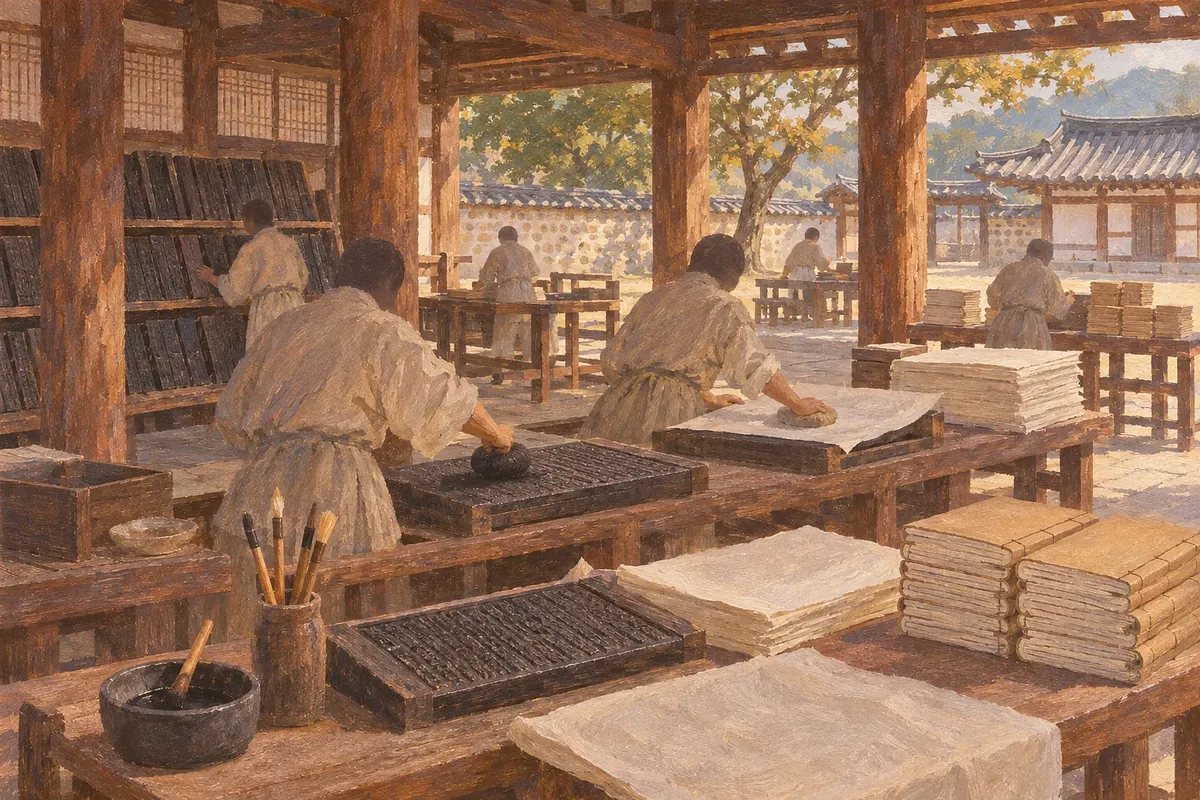
The turning point in bringing her works to readers after her death was their collection and publication. Our History Net recounts a story that her works were burned. It then explains that Heo Gyun gathered poems remaining in her natal family’s home and poems he remembered.
According to this account, the surviving collection was assembled after her death. It cannot be regarded as a book that the writer herself organized and published during her lifetime. Nor should the surviving works be assumed to represent everything she wrote.
Heo Gyun shared his sister’s poetry through exchanges with Chinese writers. Our History Net describes how the manuscript reached Zhu Zhifan. Later woodblock publication in Joseon and publication in Japan expanded the reach of her works.
The achievements evident here are the preservation of her works and the expansion of her readership. Recognition abroad after her death must not be presented as fame she enjoyed during her lifetime. The constraints she faced while alive and the literary recognition she received after death belong to different periods.
Themes in Heo Nanseolheon’s Works and Principles for Reading Them
Her works address family loss, the lives of poor women, and the world of immortals. Poetry in literary Chinese means poems written in the classical Chinese language. The speaker in a poem must be distinguished from the actual writer.
Work | Central subject | Distinctions to make when interpreting
“Binnyeoeum” | A poor woman’s sewing and weaving | Do not assume that the speaker’s way of life was the writer’s means of earning a living.
“Gokja” | Grief over the loss of children | Do not reconstruct the details of the events solely from the poem’s language.
“Gyeonheung” | The loneliness of having no one who understands one’s feelings | Distinguish poetic expression from actual relationships.
“Gamu” | The image of a fragrance that remains after withering | Do not equate the meaning of the image with the writer’s innermost feelings.
“Yuseonsa” | The world of immortals and imagined spaces | Do not read fantastical scenes as actual experiences.
Who Is the Poor Woman in “Binnyeoeum”?
“Binnyeoeum” depicts a poor woman’s labor and circumstances. Weaving cloth and making wedding clothes are concrete details of everyday life. The poem can be read for the distance between those who work and those who enjoy the results.
Deep into the night, she keeps weaving as the cold loom clatters. Whose clothes will the bolt of white silk on the loom eventually become?
These lines come from the second poem in “Binnyeoeum,” a sequence of five-character quatrains in Nanseolheon Sijip.
The speaker in this passage is the poetic persona of a poor woman. Her circumstances differ from those of the writer, who grew up in a yangban literary family. The passage therefore cannot serve as evidence that the writer herself wove cloth to earn a living.
What World Does “Yuseonsa” Depict?
“Yuseonsa” is a group of poems depicting an imagined world inhabited by immortals. Its imagery extends beyond the spaces of everyday life. Reading these poems helps prevent her literary world from being reduced to the tragedies of her family history.
The Encyclopedia of Korean Culture connects these works with a desire to escape reality. This is an interpretation of their meaning. It should be distinguished from records confirming the motives behind the composition of individual poems.
The Compiler in Bibliographic Search Results and the Author of the Poems
The author/compiler field in Kyujanggak search results may identify someone other than the creator. The bibliographic record for Nanseolheonjip lists Heo Gyun’s name and his role as hwisu. Hwisu means collecting and compiling works.
This distinction is useful when searching for or citing classical texts. Copying only the author/compiler field may lead to misidentifying the person who wrote the poems. The roles of those involved in producing and transmitting the book should be recorded separately.
Item to record | Identification in this material | Reason for the distinction
Author of the poems | Heo Nanseolheon | Identifies the person who wrote the works.
Compiler of the collection | Heo Gyun | Identifies the role of collecting and arranging the works.
Publisher | Dongnaebu, as listed in the relevant Kyujanggak bibliographic record | Identifies the body that issued that edition.
Publication year | The 1632 date listed in the relevant record | Distinguishes the year of composition from the date of the edition.
Resource identifier | GI40693_00 | Identifies the bibliographic page for the copy consulted.
The relevant Kyujanggak page states that images of the original text are available. When citing a work, both the poem’s title and its position in the sequence should be given. If a translation is used, its source should also be identified separately.
Records and Interpretation
Verified facts about the transmission of the works must be distinguished from interpretations of them. Biographical commentary is also not the same as the original historical sources themselves. When accounts in different sources conflict, the differences should remain explicit.
Facts Confirmed by the Sources
The relevant sources confirm her birth and death years and Heo Gyun’s role as compiler. The Kyujanggak bibliographic record provides the physical format and publication details of a particular woodblock edition. Our History Net explains her life and the spread of her works after her death.
These sources answer different questions. A bibliographic record is used to verify a book’s existence and physical form. Biographical commentary helps readers understand the relationships between people and events.
Literary-Historical Assessment and Interpretation
Our History Net and the Encyclopedia of Korean Culture recognize her achievement as a woman poet. Her works contain both feelings of loss and imaginings of the world of immortals. Poems addressing the circumstances of poor women are also part of her literary world.
However, it is difficult to explain every poem as the result of an unhappy marriage. A poem’s speaker and subject alone cannot establish the writer’s state of mind at the time of composition. The form and imagination of the works are also subjects for interpretation.
Questions of Authorship and Differences in Edition Dates
“Gyuwonga” cannot readily be presented as a work definitively written by Heo Nanseolheon. The relevant entry in the Encyclopedia of Korean Culture classifies its author as unknown. It introduces both the attribution to Heo Nanseolheon and the attribution to Muok.
There has also been controversy over similarities between Nanseolheonjip and Chinese poetry. The same encyclopedia explains the practice of creating poems by adapting existing yuefu poems. Similarity alone therefore should not be used to make a blanket judgment on the authenticity of all her works.
Sources also give different dates for the Dongnaebu reprint. The specified Kyujanggak bibliographic record lists 1632. The encyclopedia entry for “Nanseolheonjip” mentions a 1692 reprint.
These two dates cannot be combined into one without explanation. The timeline in this article follows the bibliographic record for the specified copy held by Kyujanggak. Identifying the edition precisely requires comparison of publication records with research on editions.
Significance Today and Memorial Spaces
Heo Nanseolheon’s case shows that creation and preservation are separate processes. Besides the person who wrote the poems, others collected and published them. Today, digital bibliographic records offer a way to trace that transmission.
Her case also allows education and constraints to be considered together when examining women’s literature. The learning opportunities she had within her family provided a foundation for her writing. The environment that restricted women’s activities should be examined alongside assessments of her works.
The Heo Gyun and Heo Nanseolheon Memorial Park is in Chodang-dong, Gangneung. The Korea Tourism Organization introduces its birthplace site, memorial hall, and other features. It is a place where literary heritage can be encountered as part of local memory.
Descriptions of memorial spaces and the original texts of literary works serve different purposes. Information about a site shows how commemoration takes place. Specific claims about the works and the writer’s life must be checked against documents and bibliographic records.