Injoys
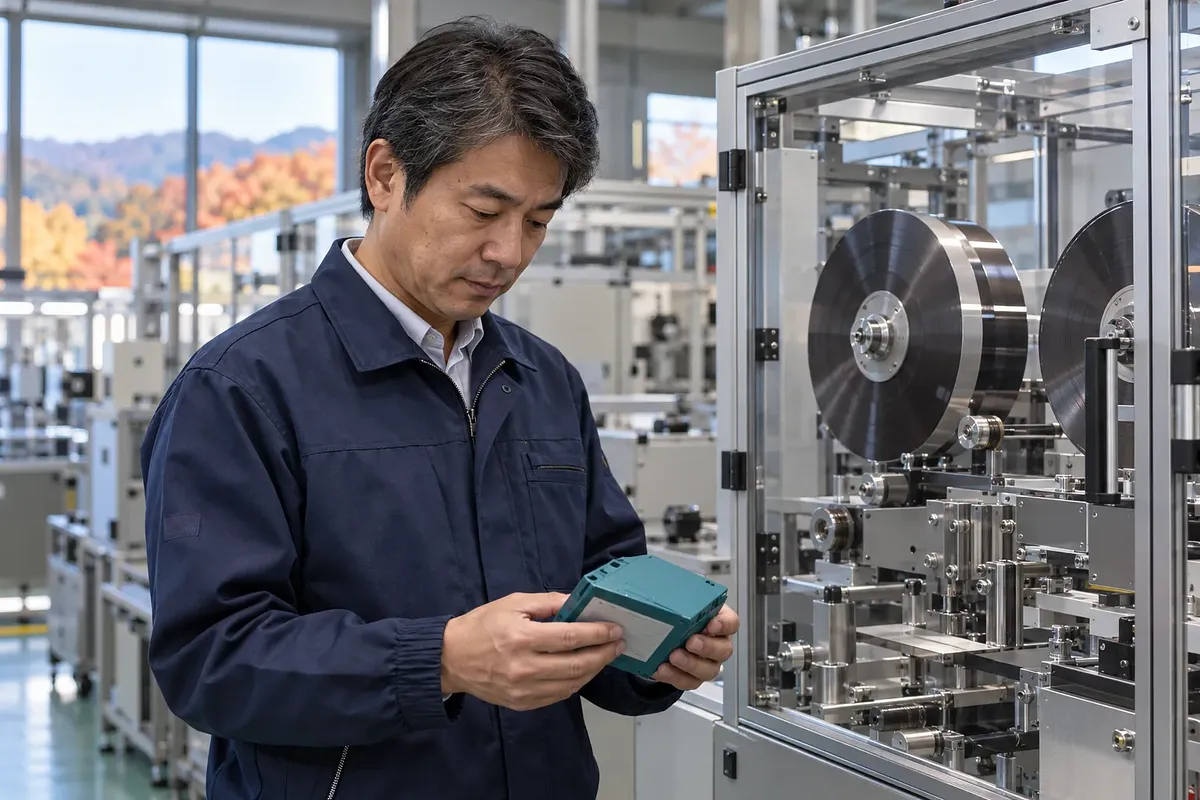
FUJIFILM has announced an expansion of magnetic tape production capacity to supply LTO-10. The approximately 5-fold expansion is measured by shipment capacity compared with fiscal year 2025. Tape can be stored long term, disconnected from the network.
The expansion figures are based on FUJIFILM's announcement dated October 29, 2026.
What has changed in the magnetic tape expansion plan
This announcement concerns a decision to expand manufacturing capacity. It is not a report that the approximately 5-fold expansion has already been completed. The investment includes additional manufacturing equipment and staff.
| Category | Announcement details | Distinction to keep in mind |
|---|---|---|
| Announcement date | October 29, 2026 | Not the completion date of the expansion |
| Investment location | Odawara Site at the Kanagawa facility in Japan | A magnetic tape manufacturing site |
| Total investment | Approximately 10 billion yen | Planned amount for the entire investment period |
| Investment period | Fiscal years 2026~2028 | Based on fiscal years |
| Scale of expansion | Approximately 5-fold | Based on shipment capacity compared with fiscal year 2025 |
| Investment details | Additional manufacturing equipment and staff, among other measures | A plan to strengthen the production system |
Odawara (小田原) is the location of the facility receiving this investment. Shipment capacity is the combined storage capacity of the media shipped. It therefore cannot be interpreted as an increase in the number of cartridges by the same multiple. The announcement does not specify a multiple for expansion in unit count.
A footnote in the English announcement states the comparison basis as follows.
Based on shipment capacity, compared with fiscal years 2025.
FUJIFILM announcement of magnetic tape manufacturing capacity expansion, footnote 1
The announcement states that the investment aims to ensure a stable supply of LTO Ultrium10. Its statements about market share are also based on the manufacturer's own research. They should not be cited as market statistics verified by an independent organization. FUJIFILM expansion announcement
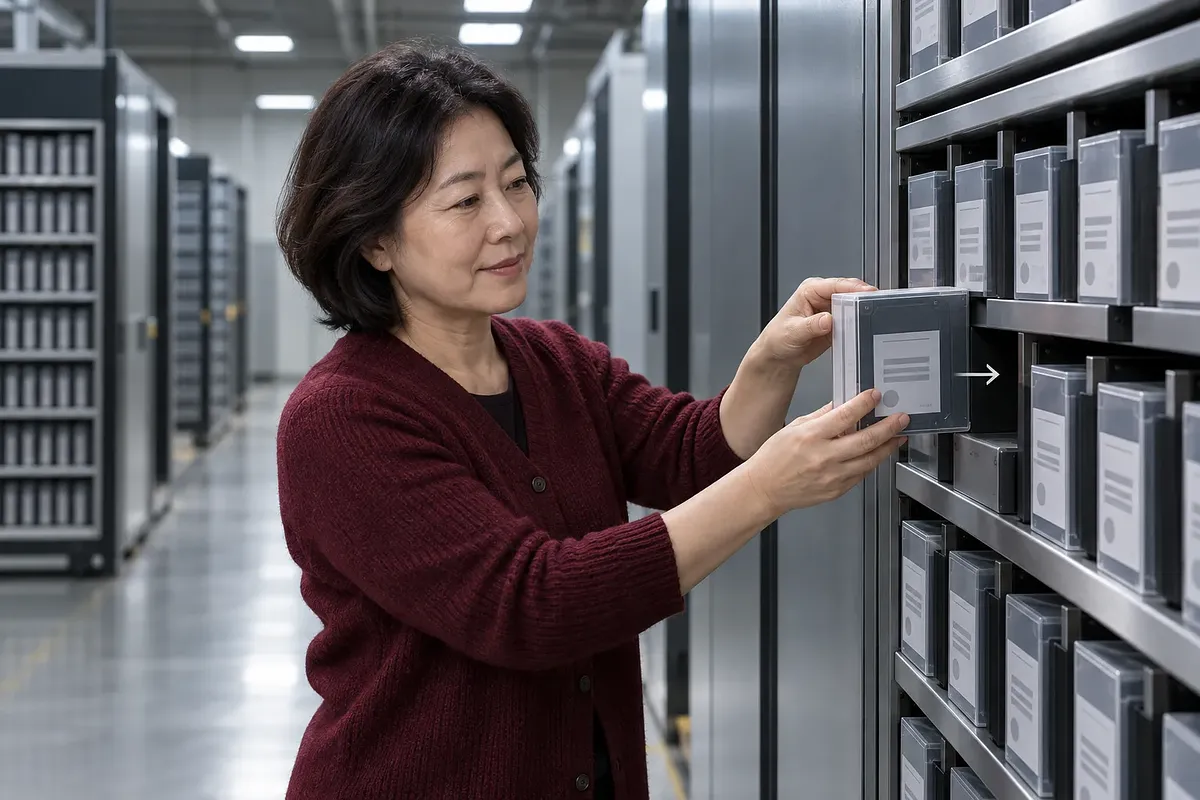
Physically separating tape from the network can reduce access routes for online attacks.
The relationship between LTO-10 and AI data archiving
LTO-10 is the 10th generation of a high-capacity magnetic tape storage standard. LTO stands for Linear Tape-Open. Ultrium is a cartridge format designed for high-capacity storage. A compatible drive is needed to read and write data on tape. LTO Program technical FAQ
FUJIFILM cites the growth of generative AI and cloud computing as the background to the expansion. It explains that data accumulated during training and inference creates demand for storage. This announcement reflects the manufacturer's assessment of archive demand. It does not mean that all AI data is moving to tape. FUJIFILM Japan headquarters announcement
Backups and archives retain data for different purposes. A backup is a copy used for recovery after a failure or deletion. An archive is a way of retaining materials over the long term for later use. Tape can serve both purposes.
| Data use scenario | Storage priority | Role of tape |
|---|---|---|
| Running services and repeated queries | Low access latency | A separate role as a long-term storage tier |
| Backups to prepare for failures | Securing recoverable copies | Storing offline copies |
| Data archives retained for a long time | Storage capacity and long-term retention costs | Storage media read again when needed |
How fine-particle hybrid magnetic material records data
Fine-particle hybrid magnetic material increases recording density within the same area. Recording density is the amount of data that can be stored per unit area. FUJIFILM describes it as a technology for increasing LTO-10 capacity.
This material combines nanoparticle design technologies used in BaFe and SrFe. BaFe is barium ferrite, and SrFe is strontium ferrite. It makes particles smaller while improving the magnetic performance needed for recording. Describing it simply as a mixture of two materials does not adequately explain the technology. FUJIFILM LTO-10 launch announcement
The 40TB model also uses an aramid base film. The base film is the underlying material that supports the magnetic layer. Winding a longer length of thinner tape increases the recording area within the same cartridge. Recording density and tape length therefore both contribute to increased capacity. FUJIFILM 40TB product announcement
LTO-9 and LTO-10 capacity comparison
LTO-10 comes in models with uncompressed capacities of 30TB or 40TB. Compressed capacity depends on how much the data can be reduced. The products' stated compressed capacities assume 2.5:1 compression.
| Item | LTO-9 | LTO-10 30TB | LTO-10 40TB |
|---|---|---|---|
| Uncompressed capacity per cartridge | 18TB | 30TB | 40TB |
| Capacity with 2.5:1 compression | 45TB | 75TB | 100TB |
| Tape length | 1,035m | 1,035m | 1,337m |
| Tape thickness | 5.2μm | 5.2μm | 4.0μm |
| FUJIFILM WORM product option | Available | Available | Not listed in the official specifications |
This comparison is based on FUJIFILM's official Korean specifications. The launch announcement for the 30TB model was dated June 13, 2025. The announcement of U.S. availability for the 40TB model was dated April 2, 2026. The U.S. availability announcement date does not indicate the sales start date in every country. FUJIFILM official specifications
For data that does not compress well, calculations should use uncompressed capacity. Files that are already compressed may gain little from further compression. The 100TB figure is not guaranteed storage space for all data. LTO Program explanation of LTO-10
How air-gapped storage protects data
An air gap physically separates storage media from a network. A disconnected cartridge has no direct access path through the network. Simply recording data on tape does not create an air gap. Whether online equipment can still access it must be assessed separately.
An air gap does not guarantee protection against every cyberattack. There remains a possibility that corrupted data was recorded before disconnection. Disconnecting from the network alone does not address theft or physical damage either. CISA recommends regular recovery testing alongside offline backups. CISA StopRansomware Guide
| Protection measure | Main role | What must be managed separately |
|---|---|---|
| Air gap | Blocking access paths from the network to the media | Managing removal, return, and reconnection |
| WORM | Preventing recorded data from being overwritten | Media damage and storage conditions |
| Drive encryption | Restricting the ability to read data without a key | Encryption keys needed for recovery |
WORM prevents content from being changed once it has been written. FUJIFILM offers a WORM product for LTO-10 30TB. Encryption and WORM provide protection functions distinct from an air gap. FUJIFILM product options and features