Mini Stroke: Sudden Symptoms and Emergency Response
A transient ischemic attack, often called a mini stroke, requires emergency evaluation even if symptoms go away. This explains how to respond to sudden paralysis, speech problems, or vision problems and the limits of self-diagnosis.
Sudden paralysis on one side or speech problems require emergency evaluation even if they have gone away.
A transient ischemic attack and a cerebral infarction cannot be distinguished by symptom duration alone.
Dizziness has many causes, so accompanying symptoms and examination findings are assessed together.
You must tell medical staff when symptoms were first noticed and when the person was last known to be normal.
Treatment to prevent recurrence depends on the condition of the blood vessels and identified causes, such as atrial fibrillation.
A mini-stroke requires emergency assessment even if the symptoms disappear. If you have had sudden paralysis on one side or difficulty speaking, seek help immediately. In Korea, call 119. Dizziness alone is not enough for a diagnosis.
The risk figures are based on the American Heart Association statement released on January 19, 2023.
What is a mini-stroke
Mini-stroke is a common name for a transient ischemic attack. The English abbreviation is TIA. Neurological symptoms appear briefly because of insufficient blood flow to areas such as the brain or retina.
The current definition considers both the resolution of symptoms and the absence of acute infarction. Infarction is tissue damage caused by an interruption in blood flow. Even if symptoms disappear, the diagnosis is cerebral infarction if imaging confirms an infarction.
In the past, symptoms disappearing within 24 hours was the criterion used to distinguish TIA. However, duration alone cannot confirm a TIA. The name “mini” does not mean the condition is mild. The evidence can be found in the American Heart Association scientific statement.
Category | Transient ischemic attack | Cerebral infarction
Key features | Temporary ischemic symptoms without acute infarction | Tissue infarction caused by insufficient blood flow
Symptom recovery | Symptoms disappear | Symptoms may improve or disappear
Can it be distinguished at home? | Cannot be confirmed by symptoms alone | Cannot be ruled out by symptoms alone
Initial response needed | Prompt emergency assessment | Prompt emergency assessment
Sudden symptoms that may signal a stroke
Sudden paralysis, speech difficulties, or vision problems are warning signs of a possible stroke. Not all symptoms occur together. Even a single symptom may require emergency assessment.
· Face: One corner of the mouth droops when smiling.
· Arms and legs: Sudden weakness or reduced sensation on one side.
· Speech: Slurred speech or difficulty understanding speech.
· Vision: Sudden loss of sight in one eye or double vision.
· Balance: Sudden difficulty walking or inability to maintain balance.
The “Stroke” page on the Korea Disease Control and Prevention Agency’s National Health Information Portal advises:
If even one of the symptoms above appears suddenly, call 119 promptly and go to an emergency department.
A sudden, very severe headache also requires emergency assessment. It should not be described simply as a typical symptom of TIA. Other emergencies, such as a brain hemorrhage, must be checked for. Descriptions of symptoms can be found in the Korea Disease Control and Prevention Agency’s stroke guide.
Dizziness and accompanying symptoms
Dizziness alone cannot confirm a TIA. Other causes include problems with the balance organs in the inner ear. However, sudden problems with balance or vision alongside dizziness require an emergency response.
Situation experienced | Assessment and response
Dizziness occurs with paralysis on one side or speech problems | Suspect a stroke and seek emergency help immediately
Sudden difficulty walking or double vision | Emergency assessment is needed even without face or arm symptoms
Paralysis or speech problems appear briefly and then disappear | Emergency assessment is needed regardless of recovery
Dizziness occurs alone | A medical examination is needed because the cause cannot be determined
A sudden, extremely severe headache occurs | Emergency assessment is needed to check for brain hemorrhage and other causes
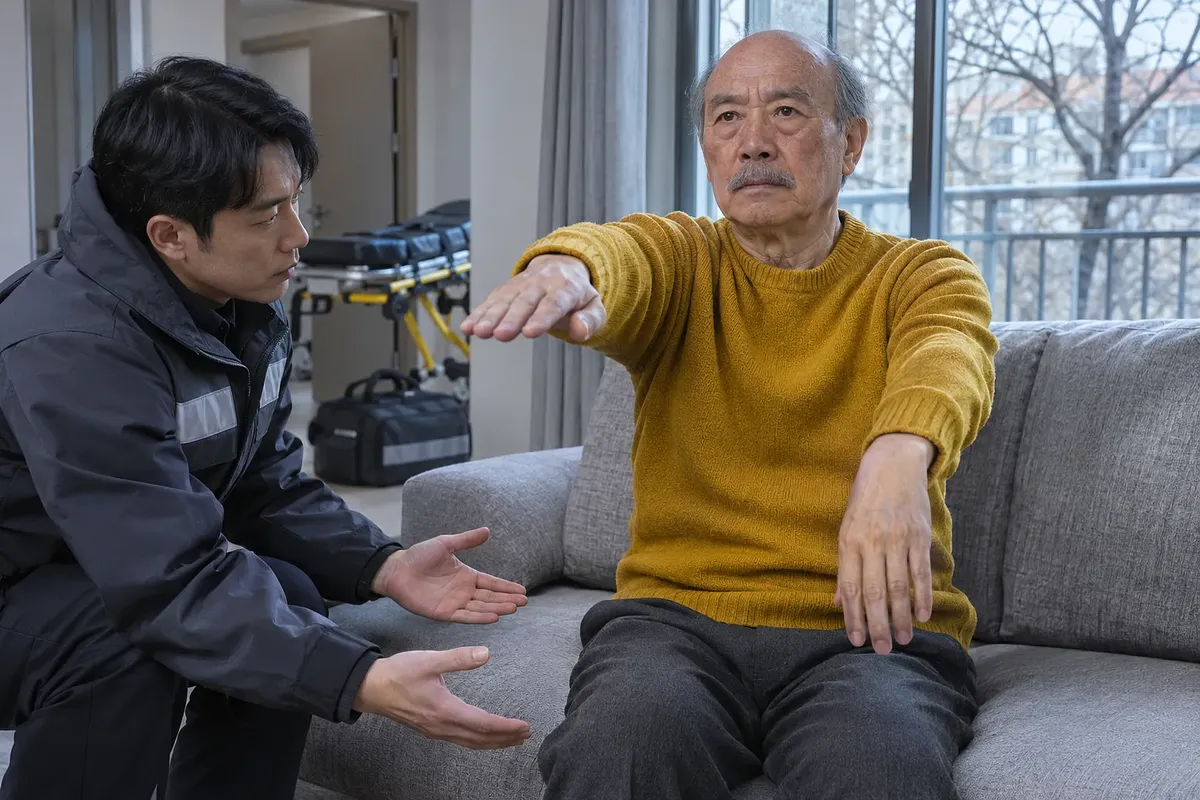
Do not rule out a stroke just because you can raise your arms normally. Checking the face, arms, and speech is a way to identify some warning signs. Vision and balance problems must also be checked. Related symptoms are listed in the NHS guide to TIA symptoms.
Why you need immediate medical attention even if symptoms disappear
The risk of stroke after a TIA may be concentrated in the early period. The 2023 American Heart Association statement reviewed existing studies. The risk of stroke within 90 days after a TIA was reported to be up to 17.8%. Nearly half of those strokes occurred within 2 days of the initial TIA.
This figure cannot be treated as a definite probability for an individual. Risk varies depending on the study population and treatment circumstances. The same probability does not apply to every untreated patient.
The disappearance of symptoms alone does not remove the need for testing. It is also necessary to check whether a cerebral infarction has already occurred. If a TIA is confirmed, preventive treatment tailored to the cause is started. The figures come from the American Heart Association statement summary.
What to do if you suspect symptoms
Seek emergency medical help immediately if you suspect a stroke. Do not wait to see whether the symptoms return. In Korea, call 119; abroad, call the local emergency number.
· Report the sudden symptoms and your current location. If the symptoms have disappeared, report that as well.
· Do not drive yourself. Follow the emergency responders’ instructions for transport.
· Check when the symptoms started. If you do not know, report the last time the person was normal.
· Do not give water, food, or medication without instructions from medical staff. The Korean Stroke Society warns that swallowing difficulties can lead to choking.
· Do not start taking aspirin on your own. The American Stroke Association warns that it may worsen a brain hemorrhage.
Avoid measures such as pricking the fingers or giving Uhwangcheongsimhwan. The Korean Stroke Society advises calling 119 as soon as a stroke is suspected. Receiving a prescription after diagnosis must be distinguished from taking medication on your own. The supporting guidance is available in the Korean Stroke Society treatment guide and the American Stroke Association aspirin guide.
Information to give medical staff after symptoms disappear
After symptoms disappear, an accurate description of what happened helps with diagnosis. There is no need to delay calling for help or leaving to complete a written record. If someone was present, ask them to share what they observed.
· Time: When the symptoms were noticed and the last time the person was normal.
· Symptoms: Which side’s arm or leg was affected.
· Changes: When the symptoms disappeared and whether they recurred.
· Medical history: Previously diagnosed conditions, such as stroke or atrial fibrillation.
· Medication: Current medications, especially whether anticoagulants are being taken.
If you noticed symptoms after waking up, report when you noticed them. Also report the last time you were normal before going to sleep. These two times may differ. The information to report is based on the Canadian Stroke Best Practices emergency transport guidelines.
What tests are done at the hospital
At the hospital, the necessary tests are chosen based on the course of symptoms and examination findings. Checking for brain damage and investigating the cause serve different purposes. Not everyone receives the same set of tests.
Test | What it checks for
Neurological examination | Problems with strength, sensation, language, and coordination
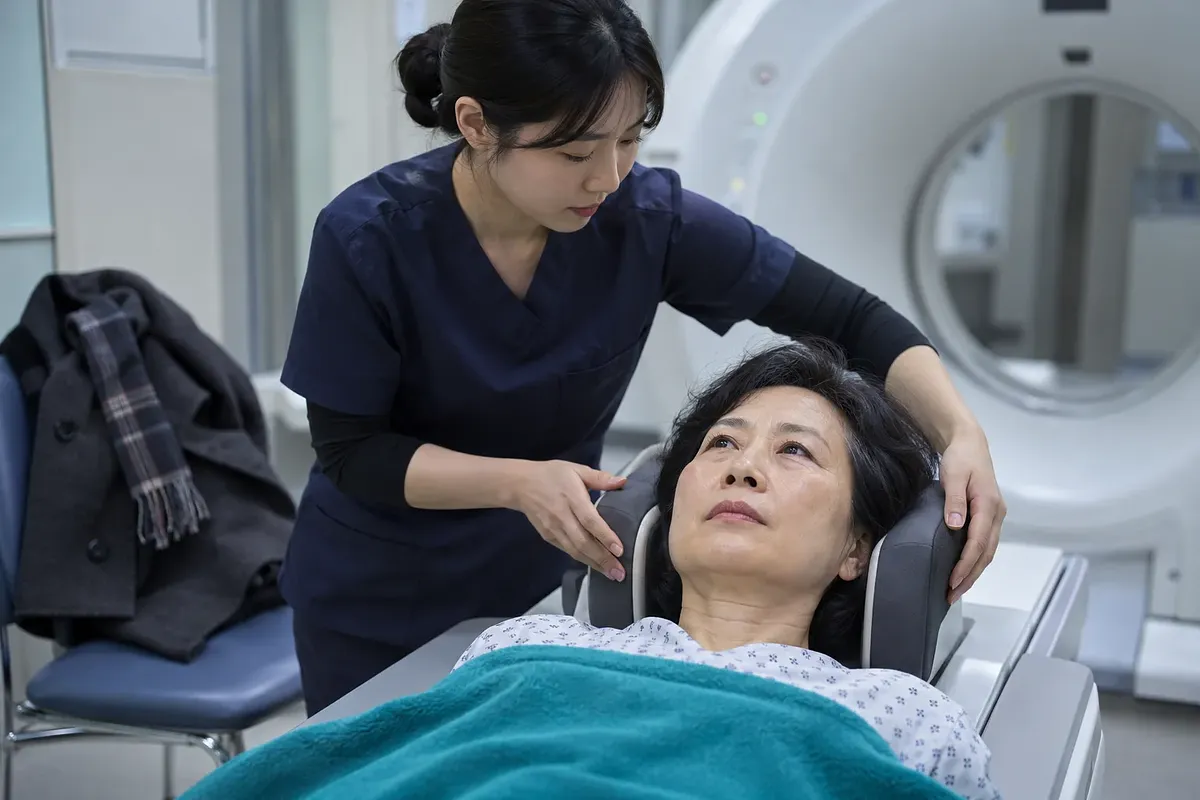
Brain CT or MRI | Brain lesions such as hemorrhage or infarction
Vascular tests such as carotid ultrasound | Narrowing or blockage of blood vessels supplying the brain
Electrocardiogram and additional heart tests if needed | Heart-related causes such as atrial fibrillation
Blood pressure measurement and blood tests | Risk factors such as blood pressure, blood glucose, and cholesterol
MRI does not always show traces of a previous blood vessel blockage. TIA is a condition in which symptoms disappear without acute infarction. Normal imaging alone does not end the assessment of the symptoms that occurred. Descriptions of the tests can be found in the NHS guide to TIA diagnosis.
Comparing causes and treatments to prevent recurrence
Treatment to prevent recurrence depends on the identified cause. Atrial fibrillation must be considered alongside atherosclerosis. Risk factors such as high blood pressure, diabetes, and smoking are also managed.
Cause or factor to manage | Meaning | Treatment and management approach
Atherosclerosis and vascular stenosis | Problems involving narrowed blood vessels or blood clot formation | Antiplatelet medication, lipid management, and vascular treatment if needed
Atrial fibrillation | Risk of blood clots related to an irregular heartbeat | Anticoagulant treatment when indicated
High blood pressure, diabetes, and smoking | Factors that increase the risk of cerebrovascular disease | Blood pressure and blood glucose management, and smoking cessation
Patent foramen ovale | A passage between the atria that remains open | Treatment selection after assessing its role in causing the event
Antiplatelet drugs inhibit platelets from clumping together. Anticoagulants act on the blood-clotting process. Do not switch between these drugs or take them together on your own. Treatment approaches can be found in the NHS guide to TIA treatment.
Does everyone with a patent foramen ovale need a closure procedure
Not everyone found to have a patent foramen ovale undergoes a closure procedure. In some people, a blood clot in a vein can pass through this opening and enter an artery. However, it is first necessary to assess whether the foramen ovale that was found caused the stroke.
The 2024 European Stroke Organisation guidelines limit who should undergo the procedure. The main recommendation applies to selected patients aged 18~60 who have no other identified cause of stroke. The connection between the foramen ovale and the stroke must also be assessed. It cannot be assumed that a suspected TIA alone means a procedure is needed.
The procedure is an option considered alongside medication. It does not completely eliminate the risk of recurrence. Possible complications must also be discussed with medical staff. Detailed criteria can be found in the European Stroke Organisation guidelines on patent foramen ovale.
Common mistakes about mini-strokes
Symptom recovery and normal self-checks do not guarantee safety. Do not use checks at home as a substitute for diagnosis. Medical staff must assess test results together with the symptoms that occurred.
Common assumption | Correction
Brief dizziness means a blood vessel in the brain was blocked | Dizziness alone cannot establish the cause
There is no need to go to the hospital because speech has returned to normal | Emergency assessment is needed even if symptoms disappear
It is not a stroke if both arms can be raised normally | Vision or balance problems may be the main symptoms
Recovery within 24 hours means it was a TIA with no lasting effects | The disappearance of symptoms alone cannot determine whether infarction occurred
MRI can always identify where a blockage occurred | Imaging and the course of symptoms must be assessed together
A foramen ovale in the heart can be fixed with a procedure | Its role in causing the event and the indications for a procedure must be assessed first