Skip to content
Injoys
Knowledge Base

Washing Machine Detergent-Free Cycles: Tub Cleaner Use

Whether to use a tub cleaner depends on the specific model's manual rather than the cycle name. Official manufacturer guidance outlines cleaner ingredients, where and how much to add, and which parts require separate cleaning.

Listen or read this article

15:22

Listen, or read the text only.

Washing Machine Detergent-Free Cycles: Tub Cleaner Use

Kokoro 82M AI-generated voice 16 min read

0:00 15:22

Advertisement

Download audio

File name
washing-machine-tub-cleaning-detergent-rules-en.mp3
Format
MP3 (audio/mpeg)
Duration
15:22
File size
10.5 MB
Engine
Kokoro 82M

This audio was generated by AI.

You may download and use it freely for personal use.

Advertisement

Washing Machine Detergent-Free Cycles: Tub Cleaner Use

12 min read

Washing Machine Detergent-Free Cycles: Tub Cleaner Use
Whether to use a tub cleaner depends on the specific model's manual rather than the cycle name. Official manufacturer guidance outlines cleaner ingredients, where and how much to add, and which parts require separate cleaning.
The name "detergent-free tub cleaning" alone does not establish the conditions for using cleaners on every model.
If a cycle prohibits detergent, do not add even a dedicated tub cleaner at your own discretion.
For models that allow cleaners, check the ingredients, where to add the cleaner, and how much to use against the manual and product label.
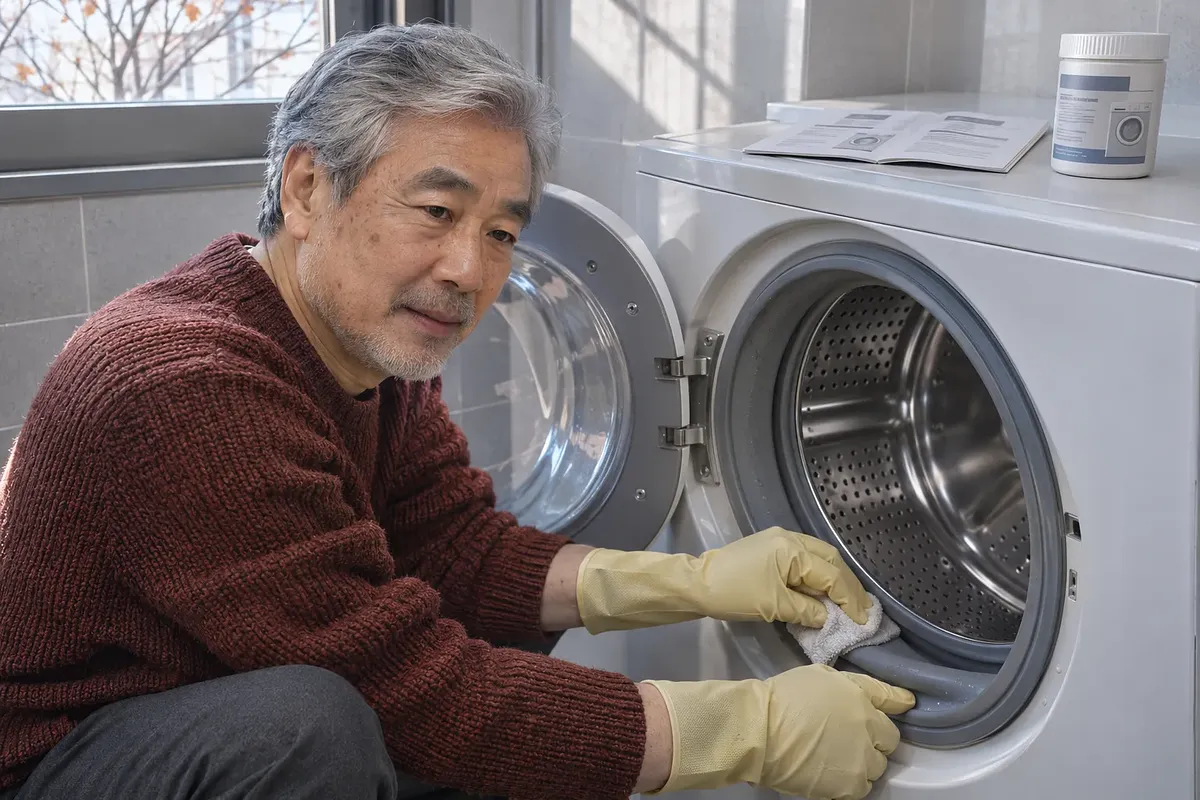
Even after running a tub-cleaning cycle, follow the separate care instructions for the rubber gasket, detergent dispenser, and filter.
Do not mix chlorine bleach with vinegar, citric acid, or oxygen bleach.
Whether to add a cleaner during a washing machine’s tub cleaning cycle must be determined from the manual for that model. Do not add even a dedicated cleaner to a cycle that prohibits detergent. Only if use is allowed should you check the ingredients, where to add it, and how much to use.
Figures and conditions are based on manufacturer guidance from January through October 2026 and the specified manual revisions.
The difference between detergent-free tub cleaning and regular tub cleaning
Tub cleaning is a cycle that cleans the inside of the washer tub rather than washing clothes. It cleans using the methods built into the cycle, such as water movement or heating. Conditions for using cleaners vary by product.
Do not apply another model’s instructions just because a cycle is called detergent-free. Samsung Electronics Service’s FlexWash guidance prohibits adding detergent. The same company’s tub cleaning guidance for fully automatic models includes instructions for using a recommended cleaner.
Official document and scope | Cleaner guidance | What to check before applying it FlexWash section of Samsung Electronics Service’s “END appears on the washing machine display,” October 29, 2026 | Do not add detergent or laundry during Detergent-Free Tub Clean | Warning that adding detergent may cause a malfunction Fully automatic model section of Samsung Electronics Service’s “How do I clean the washer tub?”, May 18, 2026 | Instructions for adding a recommended cleaner to the bottom of the tub | Applicable models and the directions on the back of the cleaner Front-loading washer guidance in LG Electronics’ “How do I use Tub Clean/Tub Sterilization?”, January 6, 2026 | Use the recommended amount of an oxygen-based washer tub cleaner | Warning about discoloration and corrosion from chlorine-based or acidic cleaners
This table does not establish instructions for an entire brand. It summarizes differences between the product groups covered by each document. To apply the guidance, the model name on the machine must match a model covered by the manual.
How product type relates to cleaning requirements
The product type helps identify the parts that need care. It does not, by itself, determine whether a cleaner is allowed. Capacity and whether the product has a drying function are also items to check.
Product type | Basic distinction | What to check for tub cleaning Front-loading washer | Laundry is loaded through the front | Separate care for the door gasket, drain filter, and detergent drawer Top-loading washer | Laundry is loaded from above | Filter inside the tub, where to add cleaner, and conditions for selecting the water temperature Mini washer | Product group for small laundry loads | Cycle controls and conditions for cleaner use in the dedicated manual Washer-dryer combo | Provides both washing and drying functions | Whether there are dryer-related maintenance items in addition to tub cleaning
Do not simply reduce the cleaner amount in proportion to a smaller machine’s size. Check the cleaner label for applicable capacities and machine types. Separate button-operation instructions are also provided for the LG MiniWash F35 series.
The difference between laundry detergent and washer tub cleaner
Laundry detergent is a product for removing dirt from clothes. Washer tub cleaner is a product labeled for cleaning the inside of the machine. Even if both are called detergents, that does not mean they are interchangeable.
Category | Label information to check | How to decide whether to use it for tub cleaning Regular laundry detergent | Laundry types and amounts to use for different load sizes | Do not use it as an arbitrary substitute for a tub cleaning product Dedicated washer tub cleaner | Applicable machine types, ingredients, amount, and cycle | Check whether the machine’s manual also allows its use Bleach | Ingredients, concentration, dilution instructions, and prohibited combinations | Use only under the conditions allowed for that model Fabric softener | Conditions for adding it when washing clothes | Do not use it in place of a tub cleaner
The ingredient classification “oxygen-based” alone is not enough to determine how much to use. A washer tub cleaner and a separate raw-ingredient product may have different labeled instructions. Do not apply measuring instructions from an online answer directly to another product.
Checklist before adding a cleaner
Check together whether the cleaner is allowed, where to add it, and how much to use. Even if it is labeled as a dedicated cleaner, it cannot be added if the machine prohibits its use. If anything remains unconfirmed, it is best to ask the manufacturer before adding it.
Item to check | What to look for in the machine’s manual | What to look for on the cleaner label Whether use is allowed | Wording that prohibits or allows detergent for the cycle | Compatible machine types Ingredients | Prohibited or recommended ingredients | Ingredient information, such as oxygen-based, chlorine-based, or acidic Where to add it | Bottom of the tub, designated dispenser, etc. | Whether to add it directly or dilute it separately Amount | Model-specific amount or instructions to consult the label | g, mL, number of tablets, etc., for each applicable capacity Cycle | Exact cycle name, such as Tub Clean or Tub Sterilization | Recommended cycle and order of use Temperature and soaking | Whether settings can be changed and what the defaults are | Permitted temperatures and soaking conditions After use | Instructions for additional rinsing or drying | How to remove residue
You must also distinguish between the automatic detergent reservoir and the manual dispenser. The place where you normally add detergent is not necessarily where you should add cleaner. Compare it with the dispenser diagram in the manual as well.
How temperature and soaking settings differ
Tub cleaning temperature and soaking must follow the cycle settings for each model. There is no common standard requiring all products to use the same temperature. Stopping the cycle to soak for an arbitrarily long time is not a universal procedure either.
Scope of official guidance | Confirmed temperature or setting | Where it applies Samsung FlexWash guidance, October 29, 2026 | Operates at 70℃; the temperature cannot be changed | The Detergent-Free Tub Clean cycle covered by that guidance LG front-loading washer Tub Sterilization guidance, January 6, 2026 | Heats to maintain 60℃ | The tub sterilization method described in that general guidance LG T18MX7 and other models, owner’s manual MFL71831225, Rev.01_011923 | Cold water or hot and cold water can be selected | Models listed on the manual’s cover
Products without a tub cleaning cycle require a separate check. Samsung’s guidance for fully automatic models also explains models without that cycle separately. Do not add the soaking or water-level settings from those instructions to another product’s tub cleaning cycle.
What to check first when official guidance differs
If official documents differ, first check which models they cover. The manual covering LG T18MX7 and other models mentions liquid chlorine bleach. By contrast, LG’s general guidance for front-loading washers warns of corrosion risks from chlorine-based cleaners.
The two documents cover different products. They therefore do not provide a basis for applying the same ingredient rules to all LG products. Nor should you determine current conditions of use solely from the manual’s publication date.
· Check the full model name on the machine’s label. · Look for the same model name among the models listed on the manual’s cover. · Read both the tub cleaning section and the safety precautions. · If the instructions differ from the general guidance, note the manual’s document number and revision. · Give the manufacturer the model name and cleaner ingredients to confirm the applicable instructions.
When making an inquiry, provide the differing wording from both documents. The directions on the cleaner packaging can also serve as reference material. Until you receive an answer, do not combine only the convenient parts of the differing instructions.
Using an empty tub and cleaner safety precautions
Run tub cleaning with all laundry removed. Samsung Electronics Service warns of clothing damage and discoloration. LG manuals also state that laundry may be severely damaged if left inside.
Do not wash laundry when using the tub cleaning function (may cause fabric damage or discoloration) Samsung Electronics Service, “How do I clean the washer tub?”
When using a cleaner, also follow the warnings for that product group. Do not increase the amount or mix ingredients to improve cleaning results. The following precautions were confirmed in official guidance.
Situation | Warnings to follow | Document Using a cleaner for Tub Sterilization in an LG front-loading washer | Chlorine-based or acidic cleaners may cause discoloration or corrosion | LG Tub Clean/Tub Sterilization guidance Using a cleaner that produces a lot of foam | Excessive foam may cause leaks | LG Tub Clean/Tub Sterilization guidance Using chlorine bleach allowed in a Samsung fully automatic model | Always dilute it and do not add too much | Samsung tub cleaning guidance Using chlorine bleach | Do not mix with vinegar, citric acid, oxygen bleach, etc.; harmful gases may be released | Samsung tub cleaning guidance Opening the door after a high-temperature cycle | Wait for the interior to cool; do not force open a locked door | LG “Why the door will not open and how to fix it”
Distinguishing tub cleaning from parts that need separate cleaning
Running a tub cleaning cycle does not mean every part has been cared for. LG’s maintenance guidance explains gasket, detergent drawer, and filter cleaning separately. Follow the manual for the model when removing parts.
Part | What to check separately | Precautions Rubber gasket | Debris and moisture in the folds | Wear rubber gloves when cleaning, as instructed in LG’s maintenance guidance Detergent drawer and its housing | Leftover detergent and hardened residue | LG manuals warn that spraying water directly inside may cause fire or electric shock Drain filter | Debris caught in the drainage path | Follow Samsung’s guidance to drain the remaining water before removing it and reassemble it correctly Filter inside the tub | Debris in the filter mesh and support | Check the model’s instructions for removal, drying, and assembly
Before opening the drain filter, check whether any hot water remains. If it is hot, wait until it cools. Incorrectly refitting the filter or hose cap may cause leaks.
Safety precautions are also needed when leaving the door open to dry the interior. LG manuals warn against children or pets entering the tub. Entering it may lead to injury or suffocation.
Common tub cleaning mistakes
A common mistake is applying another product’s instructions directly. Even if the cleaner amount is correct, the cycle or ingredients may not be suitable. You must also check what notification indicators mean for each model.
Mistaken assumption | Correct approach Adding cleaner to a detergent-free cycle improves the results | Do not add it to models that prohibit detergent A dedicated cleaner can be used in every machine | Check both the machine’s conditions of use and the cleaner’s compatible machine types Products from the same brand use the same dispenser location | Check the dispenser diagram in the manual for that model Longer soaking is better | Do not add soaking that is not specified in the cycle settings or product label A tub cleaning notification means dirt has been measured directly | Some models issue notifications based on the number of uses If residue appears after cleaning, add more cleaner | Check the manufacturer’s instructions for handling residue, such as additional rinsing
Samsung’s guidance for fully automatic models explains that residue may remain after the first tub cleaning cycle. It recommends additional rinsing in that case. If the problem continues after the prescribed care, the manufacturer needs to inspect the machine.
Frequently asked questions
Is a detergent-free cycle enough for maintenance?
If the manual specifies a detergent-free cycle, use that method. Do not add cleaner on your own. Also follow the separate care instructions for the gasket and filters.
How many g or mL of cleaner should I add?
There is no single amount that applies to all products. Compare the amount specified in the machine’s manual with the cleaner label. If the applicable capacity is unclear, check with the manufacturer.
Can I put the cleaner in the detergent drawer?
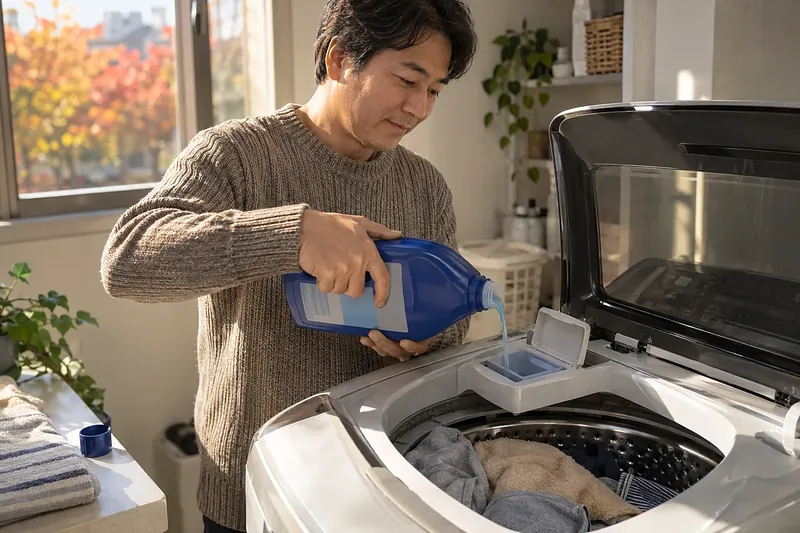
Where to add it varies by model. Some instructions say to add it to the bottom of the tub. Do not put it in the automatic dispensing reservoir without instructions to do so.
Can I add chlorine bleach and citric acid together?
Do not mix chlorine bleach with citric acid. Samsung Electronics Service warns that harmful gases may be released. It also prohibits mixing chlorine bleach with vinegar or oxygen bleach.
Is the tub cleaning interval the same for every product?
Cleaning intervals and notification criteria vary by model. Some products display notifications based on the number of uses. Check both the manual’s recommended interval and the machine’s actual maintenance condition.
What should I check if there is still an odor after tub cleaning?
Check the parts that need care besides tub cleaning. Look for debris or remaining moisture in the gasket, detergent drawer, and filters. If the odor continues after the recommended care, you can consult the manufacturer.
0:00 0:00
1 / 62

Advertisement

Download text

File name
washing-machine-tub-cleaning-detergent-rules-en.txt
Format
TXT (text/plain)
Paragraphs
62

Downloads exactly what you see as a text file.

Please cite the source when quoting.

Advertisement

Large text

Makes the text larger and the colors clearer. Turn it on if the text feels too small.

Running a drum-cleaning cycle does not replace the separate care required for the door seal.

Key points

  • The name "detergent-free tub cleaning" alone does not establish the conditions for using cleaners on every model.
  • If a cycle prohibits detergent, do not add even a dedicated tub cleaner at your own discretion.
  • For models that allow cleaners, check the ingredients, where to add the cleaner, and how much to use against the manual and product label.
  • Even after running a tub-cleaning cycle, follow the separate care instructions for the rubber gasket, detergent dispenser, and filter.
  • Do not mix chlorine bleach with vinegar, citric acid, or oxygen bleach.

Whether to add a cleaner during a washing machine’s tub cleaning cycle must be determined from the manual for that model. Do not add even a dedicated cleaner to a cycle that prohibits detergent. Only if use is allowed should you check the ingredients, where to add it, and how much to use.

Figures and conditions are based on manufacturer guidance from January through October 2026 and the specified manual revisions.

The difference between detergent-free tub cleaning and regular tub cleaning

Tub cleaning is a cycle that cleans the inside of the washer tub rather than washing clothes. It cleans using the methods built into the cycle, such as water movement or heating. Conditions for using cleaners vary by product.

Do not apply another model’s instructions just because a cycle is called detergent-free. Samsung Electronics Service’s FlexWash guidance prohibits adding detergent. The same company’s tub cleaning guidance for fully automatic models includes instructions for using a recommended cleaner.

Official document and scope Cleaner guidance What to check before applying it
FlexWash section of Samsung Electronics Service’s “END appears on the washing machine display,” October 29, 2026 Do not add detergent or laundry during Detergent-Free Tub Clean Warning that adding detergent may cause a malfunction
Fully automatic model section of Samsung Electronics Service’s “How do I clean the washer tub?”, May 18, 2026 Instructions for adding a recommended cleaner to the bottom of the tub Applicable models and the directions on the back of the cleaner
Front-loading washer guidance in LG Electronics’ “How do I use Tub Clean/Tub Sterilization?”, January 6, 2026 Use the recommended amount of an oxygen-based washer tub cleaner Warning about discoloration and corrosion from chlorine-based or acidic cleaners

This table does not establish instructions for an entire brand. It summarizes differences between the product groups covered by each document. To apply the guidance, the model name on the machine must match a model covered by the manual.

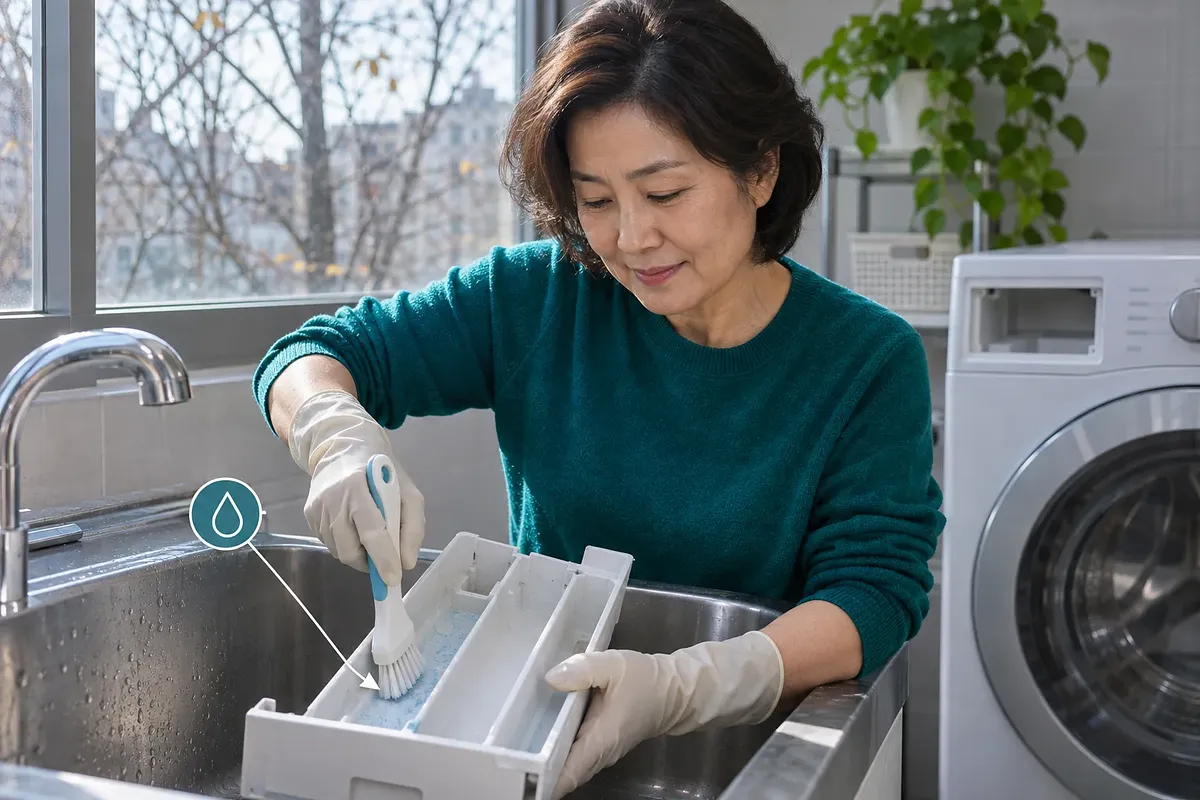
The detergent drawer needs separate cleaning according to the manual, even when a tub-cleaning cycle is used.

How product type relates to cleaning requirements

The product type helps identify the parts that need care. It does not, by itself, determine whether a cleaner is allowed. Capacity and whether the product has a drying function are also items to check.

Product type Basic distinction What to check for tub cleaning
Front-loading washer Laundry is loaded through the front Separate care for the door gasket, drain filter, and detergent drawer
Top-loading washer Laundry is loaded from above Filter inside the tub, where to add cleaner, and conditions for selecting the water temperature
Mini washer Product group for small laundry loads Cycle controls and conditions for cleaner use in the dedicated manual
Washer-dryer combo Provides both washing and drying functions Whether there are dryer-related maintenance items in addition to tub cleaning

Do not simply reduce the cleaner amount in proportion to a smaller machine’s size. Check the cleaner label for applicable capacities and machine types. Separate button-operation instructions are also provided for the LG MiniWash F35 series.

The difference between laundry detergent and washer tub cleaner

Laundry detergent is a product for removing dirt from clothes. Washer tub cleaner is a product labeled for cleaning the inside of the machine. Even if both are called detergents, that does not mean they are interchangeable.

Category Label information to check How to decide whether to use it for tub cleaning
Regular laundry detergent Laundry types and amounts to use for different load sizes Do not use it as an arbitrary substitute for a tub cleaning product
Dedicated washer tub cleaner Applicable machine types, ingredients, amount, and cycle Check whether the machine’s manual also allows its use
Bleach Ingredients, concentration, dilution instructions, and prohibited combinations Use only under the conditions allowed for that model
Fabric softener Conditions for adding it when washing clothes Do not use it in place of a tub cleaner

The ingredient classification “oxygen-based” alone is not enough to determine how much to use. A washer tub cleaner and a separate raw-ingredient product may have different labeled instructions. Do not apply measuring instructions from an online answer directly to another product.

Checklist before adding a cleaner

Check together whether the cleaner is allowed, where to add it, and how much to use. Even if it is labeled as a dedicated cleaner, it cannot be added if the machine prohibits its use. If anything remains unconfirmed, it is best to ask the manufacturer before adding it.

Item to check What to look for in the machine’s manual What to look for on the cleaner label
Whether use is allowed Wording that prohibits or allows detergent for the cycle Compatible machine types
Ingredients Prohibited or recommended ingredients Ingredient information, such as oxygen-based, chlorine-based, or acidic
Where to add it Bottom of the tub, designated dispenser, etc. Whether to add it directly or dilute it separately
Amount Model-specific amount or instructions to consult the label g, mL, number of tablets, etc., for each applicable capacity
Cycle Exact cycle name, such as Tub Clean or Tub Sterilization Recommended cycle and order of use
Temperature and soaking Whether settings can be changed and what the defaults are Permitted temperatures and soaking conditions
After use Instructions for additional rinsing or drying How to remove residue

You must also distinguish between the automatic detergent reservoir and the manual dispenser. The place where you normally add detergent is not necessarily where you should add cleaner. Compare it with the dispenser diagram in the manual as well.

How temperature and soaking settings differ

Tub cleaning temperature and soaking must follow the cycle settings for each model. There is no common standard requiring all products to use the same temperature. Stopping the cycle to soak for an arbitrarily long time is not a universal procedure either.

Scope of official guidance Confirmed temperature or setting Where it applies
Samsung FlexWash guidance, October 29, 2026 Operates at 70℃; the temperature cannot be changed The Detergent-Free Tub Clean cycle covered by that guidance
LG front-loading washer Tub Sterilization guidance, January 6, 2026 Heats to maintain 60℃ The tub sterilization method described in that general guidance
LG T18MX7 and other models, owner’s manual MFL71831225, Rev.01_011923 Cold water or hot and cold water can be selected Models listed on the manual’s cover

Products without a tub cleaning cycle require a separate check. Samsung’s guidance for fully automatic models also explains models without that cycle separately. Do not add the soaking or water-level settings from those instructions to another product’s tub cleaning cycle.

What to check first when official guidance differs

If official documents differ, first check which models they cover. The manual covering LG T18MX7 and other models mentions liquid chlorine bleach. By contrast, LG’s general guidance for front-loading washers warns of corrosion risks from chlorine-based cleaners.

The two documents cover different products. They therefore do not provide a basis for applying the same ingredient rules to all LG products. Nor should you determine current conditions of use solely from the manual’s publication date.

  1. Check the full model name on the machine’s label.
  2. Look for the same model name among the models listed on the manual’s cover.
  3. Read both the tub cleaning section and the safety precautions.
  4. If the instructions differ from the general guidance, note the manual’s document number and revision.
  5. Give the manufacturer the model name and cleaner ingredients to confirm the applicable instructions.

When making an inquiry, provide the differing wording from both documents. The directions on the cleaner packaging can also serve as reference material. Until you receive an answer, do not combine only the convenient parts of the differing instructions.

Using an empty tub and cleaner safety precautions

Run tub cleaning with all laundry removed. Samsung Electronics Service warns of clothing damage and discoloration. LG manuals also state that laundry may be severely damaged if left inside.

Do not wash laundry when using the tub cleaning function (may cause fabric damage or discoloration)

Samsung Electronics Service, “How do I clean the washer tub?”

When using a cleaner, also follow the warnings for that product group. Do not increase the amount or mix ingredients to improve cleaning results. The following precautions were confirmed in official guidance.

Situation Warnings to follow Document
Using a cleaner for Tub Sterilization in an LG front-loading washer Chlorine-based or acidic cleaners may cause discoloration or corrosion LG Tub Clean/Tub Sterilization guidance
Using a cleaner that produces a lot of foam Excessive foam may cause leaks LG Tub Clean/Tub Sterilization guidance
Using chlorine bleach allowed in a Samsung fully automatic model Always dilute it and do not add too much Samsung tub cleaning guidance
Using chlorine bleach Do not mix with vinegar, citric acid, oxygen bleach, etc.; harmful gases may be released Samsung tub cleaning guidance
Opening the door after a high-temperature cycle Wait for the interior to cool; do not force open a locked door LG “Why the door will not open and how to fix it”

Distinguishing tub cleaning from parts that need separate cleaning

Running a tub cleaning cycle does not mean every part has been cared for. LG’s maintenance guidance explains gasket, detergent drawer, and filter cleaning separately. Follow the manual for the model when removing parts.

Part What to check separately Precautions
Rubber gasket Debris and moisture in the folds Wear rubber gloves when cleaning, as instructed in LG’s maintenance guidance
Detergent drawer and its housing Leftover detergent and hardened residue LG manuals warn that spraying water directly inside may cause fire or electric shock
Drain filter Debris caught in the drainage path Follow Samsung’s guidance to drain the remaining water before removing it and reassemble it correctly
Filter inside the tub Debris in the filter mesh and support Check the model’s instructions for removal, drying, and assembly

Before opening the drain filter, check whether any hot water remains. If it is hot, wait until it cools. Incorrectly refitting the filter or hose cap may cause leaks.

Safety precautions are also needed when leaving the door open to dry the interior. LG manuals warn against children or pets entering the tub. Entering it may lead to injury or suffocation.

Common tub cleaning mistakes

A common mistake is applying another product’s instructions directly. Even if the cleaner amount is correct, the cycle or ingredients may not be suitable. You must also check what notification indicators mean for each model.

Mistaken assumption Correct approach
Adding cleaner to a detergent-free cycle improves the results Do not add it to models that prohibit detergent
A dedicated cleaner can be used in every machine Check both the machine’s conditions of use and the cleaner’s compatible machine types
Products from the same brand use the same dispenser location Check the dispenser diagram in the manual for that model
Longer soaking is better Do not add soaking that is not specified in the cycle settings or product label
A tub cleaning notification means dirt has been measured directly Some models issue notifications based on the number of uses
If residue appears after cleaning, add more cleaner Check the manufacturer’s instructions for handling residue, such as additional rinsing

Samsung’s guidance for fully automatic models explains that residue may remain after the first tub cleaning cycle. It recommends additional rinsing in that case. If the problem continues after the prescribed care, the manufacturer needs to inspect the machine.

Key questions in this article

Is a detergent-free cycle enough for maintenance?

If the manual specifies a detergent-free cycle, use that method. Do not add cleaner on your own. Also follow the separate care instructions for the gasket and filters.

How many g or mL of cleaner should I add?

There is no single amount that applies to all products. Compare the amount specified in the machine’s manual with the cleaner label. If the applicable capacity is unclear, check with the manufacturer.

Can I put the cleaner in the detergent drawer?

Where to add it varies by model. Some instructions say to add it to the bottom of the tub. Do not put it in the automatic dispensing reservoir without instructions to do so.

Can I add chlorine bleach and citric acid together?

Do not mix chlorine bleach with citric acid. Samsung Electronics Service warns that harmful gases may be released. It also prohibits mixing chlorine bleach with vinegar or oxygen bleach.

Is the tub cleaning interval the same for every product?

Cleaning intervals and notification criteria vary by model. Some products display notifications based on the number of uses. Check both the manual’s recommended interval and the machine’s actual maintenance condition.

What should I check if there is still an odor after tub cleaning?

Check the parts that need care besides tub cleaning. Look for debris or remaining moisture in the gasket, detergent drawer, and filters. If the odor continues after the recommended care, you can consult the manufacturer.

Open the link

Opens in a new window.

Advertisement

Sign-in required

Sign in with your Google account to like, comment, and save highlights.

FAQ

Can tub cleaner be added to a detergent-free tub-cleaning cycle?

It depends on the manual for the model. Do not add even a dedicated cleaner on your own to a cycle that prohibits detergent.

Can regular laundry detergent be used for tub cleaning?

Do not replace laundry detergent with a tub-cleaning product at your own discretion. Check the appliance manual for the types of cleaners allowed.

How much tub cleaner should be used?

There is no universal dosage. Compare the applicable capacity and dosage listed in the model-specific manual with those on the cleaner's label.

Should the cleaner go in the detergent drawer or the tub?

It depends on the model and product. Check both the placement instructions in the manual and the cleaner's directions for use.

Can the tub-cleaning temperature be increased or a soak added?

Use only the settings allowed for that cycle. Some models do not allow temperature changes, so do not heat the water or add a soak on your own.

Can chlorine bleach be mixed with other cleaners?

Chlorine bleach must not be mixed with vinegar, citric acid, oxygen bleach, or similar substances. Samsung Electronics Service warns that harmful gases may be produced.

Does running a tub-cleaning cycle mean the rubber seal and filter do not need to be cleaned separately?

Follow the separate care instructions. Manufacturer guidance explains that the rubber seal, detergent drawer, and filter should be maintained separately from tub cleaning.

Is the tub-cleaning reminder based on a measurement of internal contamination?

Some models issue reminders based on the number of uses. Check the manual for the model to understand what the reminder means and when it appears.

What should be done if the official manual and customer support guidance differ?

First check which models the two documents apply to and the manual's revision. If different instructions appear to apply to the same model, send the manufacturer the documents along with the cleaner's ingredients for confirmation.

Should more cleaner be added if residue remains after tub cleaning?

Do not add more on your own. Samsung's guidance for fully automatic models recommends an additional rinse for machines that have been used for a long time or for residue left after the first tub-cleaning cycle.

Sources

Data formats

This content is available in several machine-friendly formats.

Data-only languages (machine translated, files only)

Indonesian JSON MD Portuguese JSON MD Chinese (Traditional) JSON MD Deutsch JSON MD

Verification

This article was drafted with AI and then reviewed and edited by a person.

Reviewed by 신익희 · 편집장 · 2026-11-03

Figures in this article were checked against the source material during generation. · 2026-11-03

This translation has been cross-checked by AI. · 2026-11-03

Reuse & AI usage

Search indexing and AI citation with attribution are welcome. See the license policy for details.

CC BY · License

Loading…

Loading…

Loading…

Where this content lives

Related content

From Injoys

Request the content you want and take 70% of what it earns

Just leave the subject. We handle production, review, translation and distribution.

See how revenue sharing works

Comments