Injoys

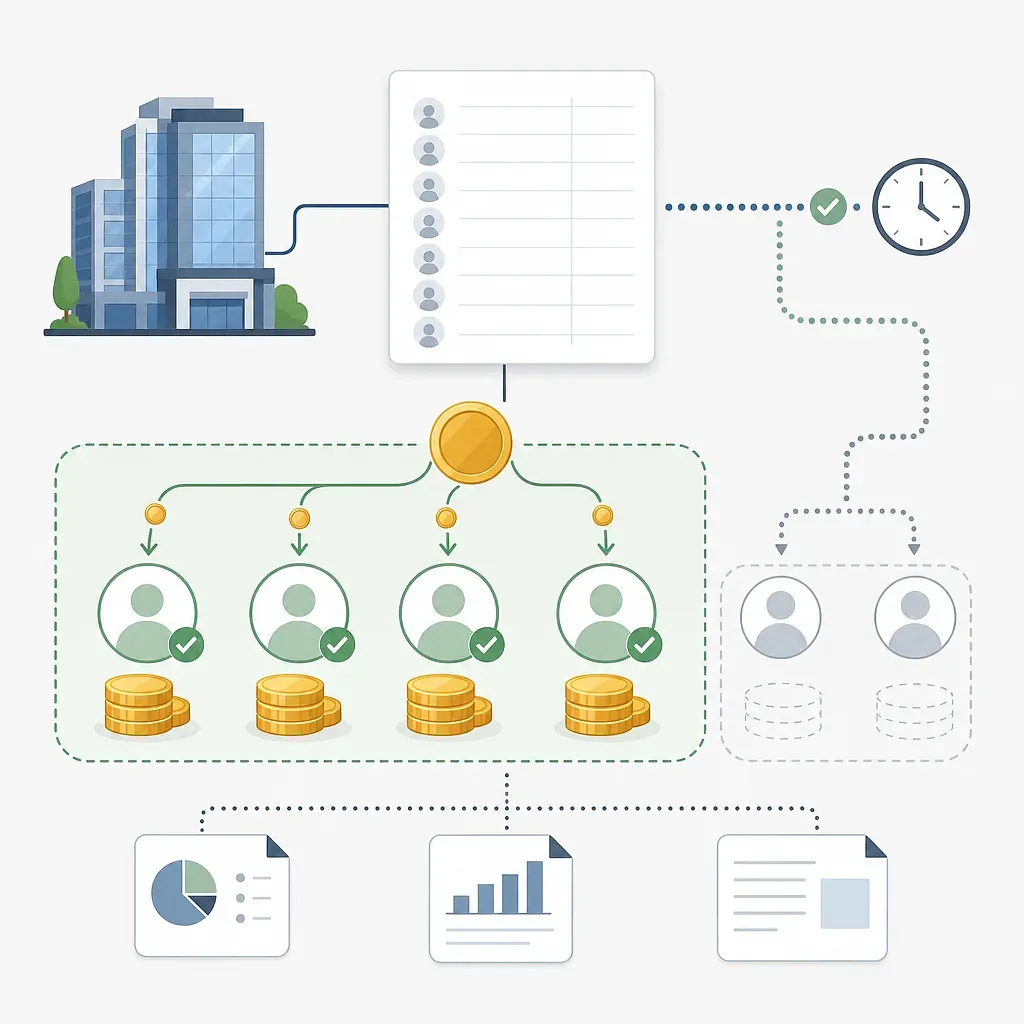
A dividend is money or property distributed to shareholders as a portion of a company’s profits. The most important criterion for investing in dividend stocks is not the holding period, but whether you are “confirmed as a shareholder on the dividend record date.”
Key Answer
- Who receives dividends: Anyone who is confirmed as a shareholder on the record date.
- Deadline for Purchasing Domestically Listed Stocks: Generally, a purchase must be settled at least two business days before the record date. This is because domestically listed stocks follow a T+2 settlement structure, meaning settlement occurs two trading days after the trade date.
- Ex-dividend date: This is the date after which any shares purchased will not carry the right to receive the dividend. It is usually easiest to understand this as the business day following the “last day to buy.”
- Dividend payment date: Dividends are deposited into your securities account on the scheduled payment date announced by the company following the resolution or approval of the dividend.
What Are Dividends?
Dividends are a distribution of a company’s profits to its shareholders. A company is not required to pay dividends simply because it has made a profit; the decision is based on a comprehensive consideration of distributable profits, the articles of incorporation, resolutions by the board of directors or the shareholders’ meeting, and the company’s investment plans and financial condition.
Under the Commercial Act, dividend distributions are generally based on the number of shares held by shareholders. Therefore, for common stock of the same class, the more shares you hold, the larger your dividend will be proportionally.
Major Types of Dividends
| Category | Meaning | What Investors Need to Know |
|---|---|---|
| Cash Dividend | A method of paying dividends to shareholders in cash | This is the most common form; dividends are deposited into the shareholder’s account after taxes are withheld at source. |
| Stock Dividend | A method of paying dividends in the form of newly issued shares | While the number of shares held increases, the total number of shares outstanding also increases, which may dilute the value per share. |
| In-Kind Dividend | A method of distributing dividends in the form of assets other than cash or stock | This is a relatively rare form for investors in publicly traded stocks. |
| Special Dividend | A dividend that is largely one-time in nature, unlike recurring regular dividends | You should not assume that it will be repeated at the same level the following year. |
| Interim/Quarterly Dividends | Dividends paid in the middle of the fiscal year | You must verify the company’s articles of incorporation, board resolutions, and relevant legal requirements. |
When Should You Buy Stocks to Receive Dividends?
The right to receive dividends is determined on the dividend record date. The dividend record date is the day the company determines which shareholders are eligible to receive the current dividend.
However, the date you place an order for shares and the date the transaction is actually settled and you are registered as a shareholder are different. For domestic exchange-traded stocks, settlement is generally on a T+2 basis. In other words, if you execute a purchase on Monday, settlement occurs on Wednesday, assuming there are no public holidays.
Calculation Method for Domestically Listed Stocks
| Item | Meaning | Practical Understanding |
|---|---|---|
| Dividend Record Date | The date on which shareholders eligible for dividends are determined | You must be registered as a shareholder by this date. |
| Last Trading Day | The last day to buy shares to receive the current dividend | Usually two business days before the dividend record date. |
| Ex-Dividend Date | The first day the stock trades without the right to receive the dividend | If you buy on this day, you generally will not receive the current dividend. |
| Payment Date | The date the actual dividend is deposited | Check the scheduled dividend payment date in the company’s public announcement. |
For example, if the ex-dividend date is Friday and there are no market holidays in between, you must complete a purchase by Wednesday to be settled by Friday and qualify as a shareholder of record. Since Thursday is the ex-dividend date, investors who purchase shares on Thursday are generally not eligible for this dividend.
Conversely, if you purchase shares by Wednesday and secure dividend rights, you will generally retain those rights even if you sell after Thursday, the ex-dividend date. However, for special circumstances such as market holidays, settlement exceptions, or securities lending and rights processing, you should check with your brokerage firm and official announcements.
How Much Will You Receive in Dividends?
The basic calculation formula is simple.
Pre-tax dividend = Dividend per share × Number of shares held as of the record date
For example, if a company pays a cash dividend of 1,000 won per share and an investor holds 100 shares as of the record date, the pre-tax dividend is 100,000 won.
Cash dividends from general domestic taxable accounts are taxed as dividend income. For domestic residents, 14% income tax and 1.4% local income tax are typically withheld at source, resulting in a total deduction of 15.4% before the funds are deposited. However, the after-tax amount may vary depending on whether the account is an ISA, a pension account, held by a non-resident, a corporation, or involves foreign stocks, as well as whether a tax treaty applies.
When Will the Dividends Be Deposited?
The dividend payment date varies by company. Year-end dividends are typically paid after the financial statements are approved and a dividend resolution is passed, while interim or quarterly dividends are paid according to the company’s schedule following a board resolution.
The Commercial Act generally stipulates that dividends must be paid within one month of the dividend resolution date; however, the general meeting of shareholders or the board of directors may set a different payment date. Therefore, investors must always check the company’s public disclosures for the actual payment date.
Cash dividends for listed stocks held in a securities account are generally automatically deposited into the account without requiring a separate request. The deposit description may vary by brokerage firm and is often shown as the amount after taxes have been withheld at source.