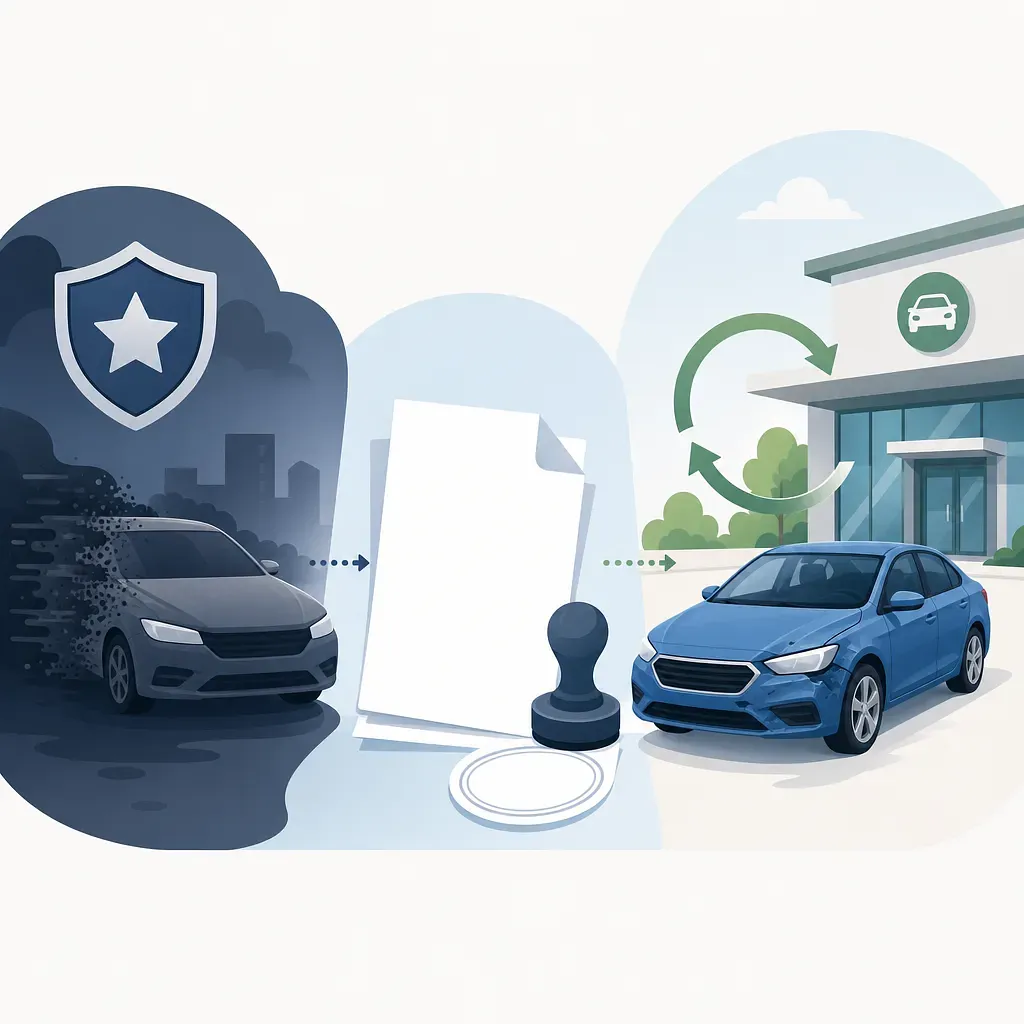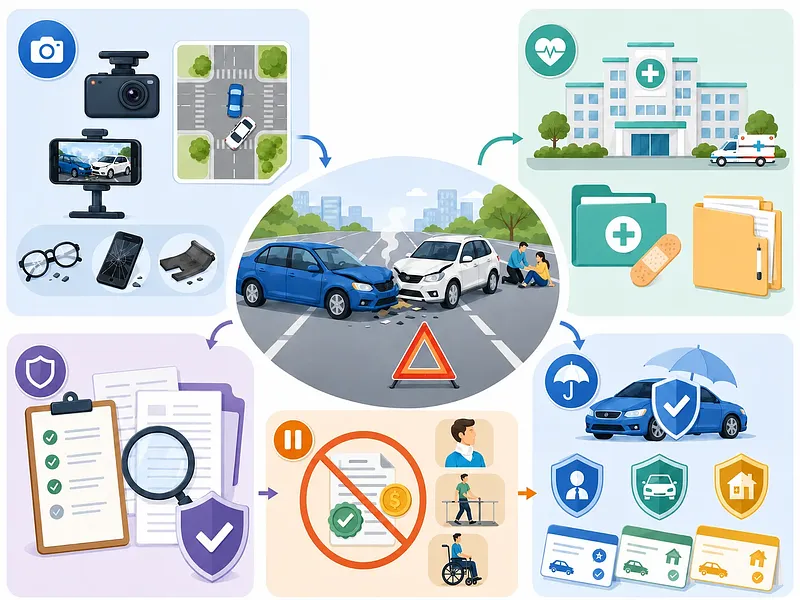
A vehicle theft is not simply a case of loss; it is an incident that involves filing a police report, reporting the incident to your insurance company, and processing the vehicle registration. The key is to report the theft to the police first, check whether you have Collision Coverage, and then handle the 30-day deadline after filing the theft report and the de-registration and re-registration procedures in that order.
Conclusion at a Glance
| Question | Key Answer |
|---|---|
| Is car theft covered by insurance? | Generally, if you have collision coverage and there are no exclusions under the policy terms, the theft of the entire vehicle may be covered by insurance. |
| When can I file an insurance claim? | According to the Standard Auto Insurance Policy, you can file a claim for the theft of an insured vehicle only after 30 days have passed since reporting the theft to the police. |
| What if the vehicle is recovered within 30 days? | A total loss claim for theft is usually not paid. However, if the recovered vehicle is damaged, you may be eligible for compensation for repair costs under the “Collision Coverage.” |
| Are valuables inside the car covered? | Since “Damage to Own Vehicle” coverage primarily addresses direct damage to the vehicle itself, personal belongings such as cash, precious metals, laptops, and golf clubs are not covered unless there is separate coverage. |
| Is it mandatory to deregister the vehicle? | Under the Motor Vehicle Management Act, a stolen vehicle qualifies as grounds for applying for deregistration. If the vehicle remains unrecovered for an extended period or if it is necessary for processing a total loss claim, it is important in practice to proceed with the registration authority’s procedures to obtain a Certificate of Deregistration. |
Definitions of Key Terms
| Term | Meaning |
|---|---|
| Theft Report Confirmation | A document issued by a police station confirming that a report of vehicle theft has been filed. It serves as key evidence for insurance claims and deregistration due to theft. |
| Collision Coverage | A type of auto insurance coverage that compensates for damage directly sustained by the insured vehicle, up to the limit specified in the insurance policy. It is commonly referred to as “collision coverage.” |
| Total Loss | Refers to a total loss of the vehicle where settlement based on the vehicle’s market value is necessary rather than repair. If a stolen vehicle cannot be recovered, the insurance claim may be processed similarly to a total loss case. |
| Deregistration | An administrative procedure that terminates the vehicle’s registration status in the vehicle registration records. For theft-related deregistration, proof of the theft—such as a Theft Report Confirmation Letter—is required. |
| Reinstatement and New Registration | This is the procedure for re-registering a vehicle that was deregistered due to theft after it is later recovered. You must apply for new registration within three months of the date the stolen vehicle was recovered. |
Steps to Take Immediately After Discovering a Vehicle Theft
1. Report it to the police first
Once you confirm that your vehicle is missing, reporting it to the police takes priority over contacting your insurance company. In an emergency, call 112, and then file a theft report at the nearest police station, precinct, or substation, or through the Criminal Investigation Division of the jurisdiction’s police department.
When filing the report, it is best to have the following information organized as much as possible:
- License plate number, VIN, vehicle model, and color
- The location and time you last saw the vehicle
- The time you realized the vehicle was stolen
- Where the car keys are kept and whether you have a spare key
- Availability of dashcam footage, CCTV footage, parking lot entry/exit records, and Hi-Pass data
- A list of items that were inside the vehicle
After reporting the theft to the police, obtain and keep a Theft Report Confirmation or a related statement of facts. These documents can be used to resolve subsequent disputes regarding insurance claims, vehicle deregistration, and fines, tolls, or parking fees.
2. Notify your insurance company without delay
If you have collision coverage, it is safest to notify your insurance company of the theft immediately. The Commercial Code stipulates that you must notify the insurer without delay upon becoming aware of an insured event, and states that if damages increase due to a delay in notification, the insurer may refuse to compensate for those increased damages.
When notifying the insurance company, provide the police report number, whether a theft report confirmation can be issued, whether the vehicle’s location can be tracked, whether the keys were lost, and whether dashcam or CCTV footage is available.
3. Prepare for the Possibility That the Vehicle Will Be Found
The 30 days immediately following the theft report are a period during which the vehicle may be found. During this time, it is more important to confirm whether the vehicle can be recovered, secure evidence, and prevent further damage than to file an insurance claim.
If the vehicle is recovered, it is advisable to notify the insurance company and the police first before repairing it on your own or cleaning the interior. This is because damage, contamination, or damage to parts that occurred during the theft, as well as the condition of the vehicle during towing and storage, can affect the insurance investigation and police inquiry.
Criteria for Processing Auto Theft Insurance Claims
Cases Eligible for Compensation
For an auto theft claim to be processed under insurance, at least the following requirements must be met:
- The insurance policy must include Coverage for Damage to the Insured Vehicle.
- The theft must be confirmed by a police report.
- There must be no grounds for exclusion under the policy terms, such as intentional acts, false reports, fraud, or embezzlement by the insured or the policyholder.
- The loss must involve the theft of the entire vehicle or damage directly incurred to the vehicle itself.
- The necessary documents must be submitted when filing an insurance claim.
The compensation limit for “Vehicle Damage Coverage” is determined based on the insured amount stated in the insurance policy and the insured value. Even if the insured amount exceeds the insured value, compensation may be limited to the insured value.
Cases Where Compensation May Be Denied or Limited
| Situation | Handling Criteria |
|---|---|
| Loss of cash, precious metals, laptops, etc., inside the vehicle | Since this does not constitute damage to the vehicle itself, it is unlikely to be covered under “Damage to Own Vehicle.” You should check whether there is separate coverage for personal belongings. |
| Theft of only certain parts, such as the navigation system, wheels, or battery | Under the Standard Terms and Conditions of Auto Insurance, the theft of only certain parts, accessories, or auxiliary mechanical devices of the insured vehicle is defined as a loss not covered under “Damage to Own Vehicle.” |
| Intentional acts by the policyholder or the insured | Such losses are excluded from coverage under the “Damage to Own Vehicle” provision. |
| Losses resulting from fraud or embezzlement | Unlike theft, these may be defined in the policy terms as losses not covered. |
| False theft reports | This can result not only in denial of insurance benefits but also in criminal penalties, administrative fines, and revocation of the vehicle registration. |
| Leaving the doors unlocked or the keys in the vehicle | While it cannot be assumed that coverage is always denied based on these facts alone, the actual occurrence of theft, as well as gross negligence, intent, or collusion, may be subject to a thorough investigation. |
30-Day Rule: When to File a Claim
The Standard Auto Insurance Policy stipulates that, in the event of theft of the insured vehicle, a claim for collision coverage can be filed only after 30 days have passed since reporting the theft to the police. This requirement should be understood to mean “a claim can be filed after 30 days have passed since the report,” not “payment is made immediately upon reporting.”
| Timing | Action |
|---|---|
| Day of discovery of theft | Report to the police, file an accident report with the insurance company, obtain a theft report confirmation |
| Before 30 days have passed since the report | Confirm whether the vehicle has been recovered, cooperate with the insurance company’s investigation, prepare supporting documents |
| After 30 days have passed since the report | If the vehicle has not been recovered, you can file a claim |
| Vehicle recovered before 30 days | Total loss insurance benefits are generally not paid; compensation for repair costs will be considered if the vehicle is damaged |
| Claim filed after 30 days, but vehicle recovered | According to the policy terms, the payment of insurance benefits and the return of the insured vehicle are subject to the insured’s discretion. If the vehicle is found after the insurance proceeds have already been paid, you must confirm the terms regarding ownership and the disposal of the remains with the insurance company. |