Skip to content
Binder
Insurance and Claims, a guide to what auto, home, disaster, and health cover actually pay when something goes wrong Policy Guide 🇰🇷 South Korea

This content applies specifically to South Korea.

Criteria for Tenants' Home Fire Insurance: Reviewing Coverage and Liability

Listen or read this article

14:14

Listen, or read the text only.

Criteria for Tenants' Home Fire Insurance: Reviewing Coverage and Liability

Kokoro 82M AI-generated voice

0:00 14:14

Advertisement

Download audio

File name
tenant-home-fire-insurance-coverage-guide-en.mp3
Format
MP3 (audio/mpeg)
Duration
14:14
File size
9.77 MB
Engine
Kokoro 82M

This audio was generated by AI.

You may download and use it freely for personal use.

Criteria for Tenants' Home Fire Insurance: Reviewing Coverage and Liability

11 min read

Criteria for Tenants' Home Fire Insurance: Reviewing Coverage and Liability
Although tenants are not uniformly required to carry personal home fire insurance, a landlord's insurance does not necessarily cover all of a tenant's belongings and legal liabilities. Coverage for tenant fire liability, fire liability to neighbors, belongings, and temporary living expenses should be reviewed separately.
Tenants are generally not legally required to carry personal home fire insurance, but it may be separately required under the lease agreement.
A landlord's fire insurance mainly covers losses suffered by the building owner, so it should not be assumed to automatically include the tenant's belongings and liability.
If a fire occurs due to a tenant's negligence, the tenant may be legally liable to the landlord or neighbors, and an insurer that paid the claim may seek recovery from the tenant.
Even group fire insurance for apartment buildings with at least 16 floors should be reviewed for the insured amount, covered parties, deductible, and coverage inside individual units.
If you move or the residential use or structure changes, you must notify the insurer of changes to the insured property's address and risk information and amend the policy.
Tenants are not universally required to purchase individual home fire insurance. However, a landlord’s insurance primarily covers damage to the landlord’s building and does not automatically cover the tenant’s belongings or liability. Whether they have a jeonse or monthly rental agreement, tenants should determine the need for insurance based on the losses they could bear rather than solely on whether it is legally required.
Key Takeaways First
Tenants should examine three main risks.
· Tenant-owned household belongings that could be lost in a fire · Tenant liability for damage to the rented building · Third-party liability that may arise if a fire spreads and causes bodily injury or property damage to neighbors
A landlord’s fire insurance, an apartment complex’s group insurance, and a tenant’s individual insurance may differ in policyholder, insured property, and coverage amount. Therefore, the existence of one policy should not be taken to mean that the other risks are also covered.
Why Tenants May Be Liable for a Fire
A tenant is not always liable simply because a fire occurs. It is necessary to determine who breached what duty of care and whether there is a causal relationship between that conduct and the damage.
· If a fire occurs because the landlord failed to properly repair aging electrical equipment, the landlord’s maintenance responsibility may be at issue. · If the tenant carelessly uses an electric heating appliance or leaves cooking unattended and causes a fire, the tenant may be held liable. · If the fire results from a product defect, a problem with shared facilities, or a fire that began in another unit, the liability of the manufacturer, management entity, or party that actually caused it will be examined. · If the cause is unclear, a determination is made by comprehensively considering the results of the fire investigation, appraisal materials, photographs, and contractual maintenance obligations.
Korea’s Act on Liability for Fire Caused by Negligence does not eliminate all civil liability merely because a fire resulted from slight negligence. In tort claims for a fire not caused by gross negligence, a court may reduce the amount of damages after considering the cause and scale of the fire, the circumstances surrounding the spread of the damage, and the liable party’s ability to pay. Obligations to restore the property and liability for breach of contract under a lease have different legal grounds from tort liability and must therefore be assessed separately.
Why a Landlord’s Insurance Is Not Necessarily Enough
A tenant’s liability does not disappear merely because the landlord’s insurer paid for damage to the building first. If the statutory requirements for insurer subrogation under the Commercial Act are met, the insurer may exercise rights against the third party who caused the damage, up to the amount paid. This means that if the tenant is found negligent, the tenant may face a recourse claim.
However, an insurer does not always claim the full amount from the tenant. The outcome varies depending on the following factors.
· Whether the tenant is actually legally liable · Whether the tenant is included as an insured under the relevant insurance contract · Whether the policy terms contain a waiver of subrogation or a limitation on recourse · The amount actually paid by the insurer and the scope of the damage · Whether other parties, such as the landlord or management entity, were also negligent
Therefore, instead of merely asking the landlord whether insurance exists, it is advisable to review the insurance policy or coverage details for the insured parties, insured property, coverage amount, and provisions concerning subrogation.
Coverage Tenants Should Review Separately
Because the names of basic coverage and riders vary by insurance product, tenants should review what is actually covered under the policy terms rather than relying on coverage names.
Coverage | Risk Covered | Key Points to Check Damage to household belongings | Tenant-owned furniture, clothing, appliances, and similar items | Covered events, coverage amount, whether depreciation applies, limits for valuables Tenant’s fire liability | Damage to the rented building caused by a fire for which the tenant is responsible | Which parts of the landlord-owned building are covered, coverage limit, and deductible Fire liability | Bodily injury or property damage caused to third parties, such as neighbors, by a fire | Whether accidents caused by family members are included, bodily injury and property damage limits, exclusions Temporary living expenses | Costs required for lodging or temporary accommodation while fire damage is repaired | Number of payable days, daily limit, proof of actual expenses, conditions for payments to begin Fire, explosion, and rupture damage | Direct damage caused by events specified in the policy terms | Whether explosions, soot damage, and damage during firefighting activities are included Debris removal and restoration costs | Costs required to dispose of fire debris or prevent further damage | Whether a separate limit applies and whether only actual costs are reimbursed
In particular, tenant’s fire liability and general fire liability protect different parties. The former primarily covers the landlord’s losses involving the rented building, while the latter covers losses suffered by third parties such as neighbors. Purchasing one rider does not mean that the other liability is also covered.
Does the Need Differ Between Jeonse and Monthly Rent?
The basic principles of fire liability do not differ significantly depending on whether the tenancy is based on jeonse or monthly rent. If damage results from the tenant’s negligence, liability may become an issue regardless of the type of rental agreement.
However, the amount of coverage actually needed may vary.
· If the home contains many expensive appliances and pieces of furniture, a higher coverage amount for household belongings may be appropriate. · If furniture and appliances provided in a studio apartment belong to the landlord, the inventory of furnishings and scope of liability in the lease should be reviewed. · If an officetel is used for residential purposes, tenants should confirm that its actual use is accurately reflected in the insurance contract. · A space used for both residential and business or commercial activities may not meet the underwriting conditions or coverage scope of ordinary residential insurance.
Group Fire Insurance for Apartments with at Least 16 Floors
Under the Act on Indemnification for Fire-Caused Loss and the Purchase of Insurance Policies and its Enforcement Decree, apartments with at least 16 floors and their ancillary buildings may fall within the scope of special buildings, and their owners must purchase fire insurance and other insurance prescribed by law. This differs from a provision requiring an individual tenant to purchase separate insurance.
The mere existence of group insurance does not establish that each individual unit has sufficient coverage. Because coverage structures vary by apartment complex and contract year, the following should be checked with the management office or in the insurance policy.
· Which parts of the entire building and interior finishes of individual units are included as insured property · Whether tenant-owned household belongings are included · Coverage amounts and deductibles per unit or per accident · Whether residents’ liability is covered · Whether additional coverage such as temporary living expenses, water leakage, and electrical damage is included · How individual insurance and group insurance share liability for the same accident
Risks excluded from group insurance or subject to insufficient limits can be supplemented through coverage under an individual home fire insurance policy.
An Easily Overlooked Key Point: Whose Property and Liability Are Covered?
Home fire insurance is not simply a contract that insures a single address. Even within the same home, the building, the landlord’s furnishings, and the tenant’s belongings have different owners and involve different economic interests in the event of damage.
For example, a refrigerator purchased by the tenant may qualify as a household belonging, while a built-in refrigerator included in the lease may be a landlord-owned fixture. Wallpaper, flooring, and built-in closets may also be classified as part of the building or as fixtures, so the definitions in the insurance policy and its terms should be reviewed.
If these distinctions are unclear, the following disputes may arise after an accident.
· Whether the building insurance or household belongings insurance should provide compensation · Whether the landlord’s furnishings are included in the tenant’s liability coverage · Whether the actual owner matches the insured named in the insurance policy · Whether repair costs are paid based on the price of a new item or an amount reduced for depreciation
When beginning a lease, photographing the inventory and condition of the landlord’s furnishings and retaining receipts or purchase records for the tenant’s expensive belongings can help establish the loss after an accident.
Duplicate Insurance Does Not Pay Twice the Insurance Proceeds
The principle of non-life insurance is to compensate for actual losses. Even if the same property and risk are insured under multiple policies, the insured cannot receive duplicate payments exceeding the actual loss. Liability for compensation may be apportioned among the insurance contracts.
Therefore, rather than indiscriminately adding multiple policies, tenants should compare the following.
· Whether coverage for the same household belongings or building damage is duplicated · Which liability coverage is excluded from the group insurance · Whether the actual property value is excessively high or low compared with the coverage limit · How the deductibles and exclusions differ
Because liability limits and property damage coverage amounts serve different purposes, each should be reviewed separately.
What to Do When Moving or Changing the Use of the Property
Home fire insurance is contracted based on a specific address, building structure, use, and insured property. Tenants should not assume that an existing policy automatically applies to a new address after moving.
In the following circumstances, the insurer should be notified of the change, and the address, insured property, and risk information in the contract should be corrected.
· The insured address changes due to moving in or relocating · The occupancy arrangement changes from owner-occupied to rented, or from rented to owner-occupied · Commercial or business activities begin in the residential space · The building structure or use changes significantly · A change in household members or the rental relationship affects the scope of insured parties
Notification deadlines and amendment procedures vary according to the policy terms. Failure to report a change may, depending on its relationship to the accident and the policy terms, result in contract termination, a reduction in insurance benefits, or restrictions on coverage.
Checklist Before Purchasing Insurance
· Obtain the existing fire insurance policy or coverage details from the landlord or management office. · Estimate the approximate replacement cost of the tenant-owned household belongings. · Check whether both tenant’s fire liability and third-party fire liability are included. · Review the number of days, daily limit, and receipt submission requirements for temporary living expenses. · Check the coverage limits or exclusions for expensive items, cash, precious metals and jewelry, and business-use property. · Compare deductibles, excluded losses, and the method used to calculate insurance benefits. · If duplicate policies exist, supplement only the coverage that is actually insufficient. · When moving, ask the insurer about address changes and contract amendment procedures.
In conclusion, what tenants need is not simply to determine whether to purchase fire insurance, but to combine coverage for damage to household belongings, liability to the landlord, and liability to neighbors according to their own circumstances. They should first review the actual coverage provided by the landlord’s insurance or group insurance and then use individual insurance to fill any gaps in protection.

0:00 0:00
1 / 53

Advertisement

Download text

File name
tenant-home-fire-insurance-coverage-guide-en.txt
Format
TXT (text/plain)
Paragraphs
53

Downloads exactly what you see as a text file.

Please cite the source when quoting.

Large text

Makes the text larger and the colors clearer. Turn it on if the text feels too small.

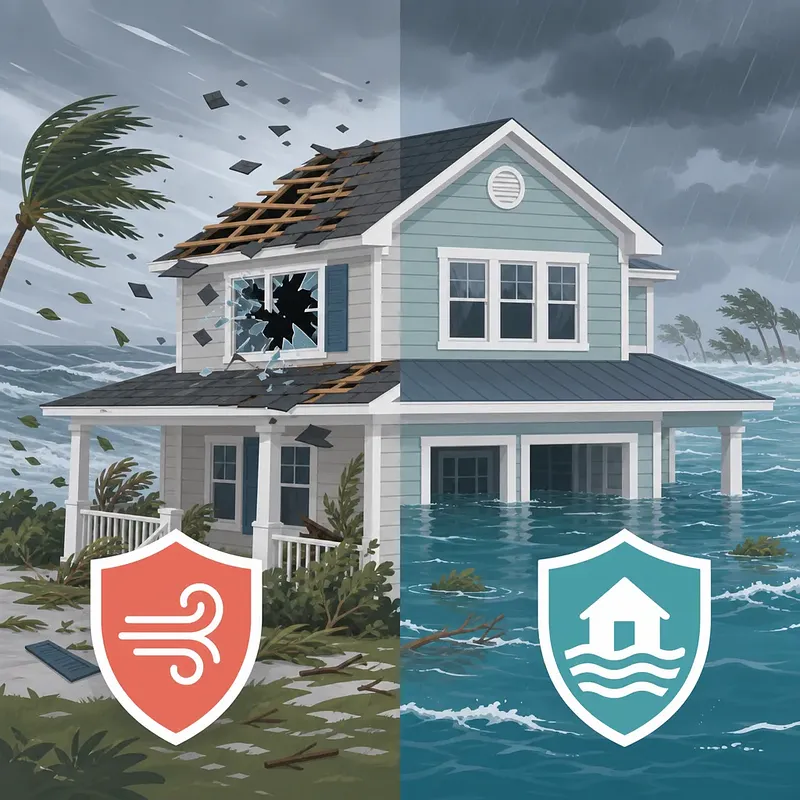
The shields represent insurance protection for a tenant’s home and belongings during a fire.

Key points

  • Tenants are generally not legally required to carry personal home fire insurance, but it may be separately required under the lease agreement.
  • A landlord's fire insurance mainly covers losses suffered by the building owner, so it should not be assumed to automatically include the tenant's belongings and liability.
  • If a fire occurs due to a tenant's negligence, the tenant may be legally liable to the landlord or neighbors, and an insurer that paid the claim may seek recovery from the tenant.
  • Even group fire insurance for apartment buildings with at least 16 floors should be reviewed for the insured amount, covered parties, deductible, and coverage inside individual units.
  • If you move or the residential use or structure changes, you must notify the insurer of changes to the insured property's address and risk information and amend the policy.

Tenants are not universally required to purchase individual home fire insurance. However, a landlord’s insurance primarily covers damage to the landlord’s building and does not automatically cover the tenant’s belongings or liability. Whether they have a jeonse or monthly rental agreement, tenants should determine the need for insurance based on the losses they could bear rather than solely on whether it is legally required.

Key Takeaways First

Tenants should examine three main risks.

  1. Tenant-owned household belongings that could be lost in a fire
  2. Tenant liability for damage to the rented building
  3. Third-party liability that may arise if a fire spreads and causes bodily injury or property damage to neighbors

A landlord’s fire insurance, an apartment complex’s group insurance, and a tenant’s individual insurance may differ in policyholder, insured property, and coverage amount. Therefore, the existence of one policy should not be taken to mean that the other risks are also covered.

Why Tenants May Be Liable for a Fire

A tenant is not always liable simply because a fire occurs. It is necessary to determine who breached what duty of care and whether there is a causal relationship between that conduct and the damage.

  • If a fire occurs because the landlord failed to properly repair aging electrical equipment, the landlord’s maintenance responsibility may be at issue.
  • If the tenant carelessly uses an electric heating appliance or leaves cooking unattended and causes a fire, the tenant may be held liable.
  • If the fire results from a product defect, a problem with shared facilities, or a fire that began in another unit, the liability of the manufacturer, management entity, or party that actually caused it will be examined.
  • If the cause is unclear, a determination is made by comprehensively considering the results of the fire investigation, appraisal materials, photographs, and contractual maintenance obligations.

Korea’s Act on Liability for Fire Caused by Negligence does not eliminate all civil liability merely because a fire resulted from slight negligence. In tort claims for a fire not caused by gross negligence, a court may reduce the amount of damages after considering the cause and scale of the fire, the circumstances surrounding the spread of the damage, and the liable party’s ability to pay. Obligations to restore the property and liability for breach of contract under a lease have different legal grounds from tort liability and must therefore be assessed separately.

Why a Landlord’s Insurance Is Not Necessarily Enough

A tenant’s liability does not disappear merely because the landlord’s insurer paid for damage to the building first. If the statutory requirements for insurer subrogation under the Commercial Act are met, the insurer may exercise rights against the third party who caused the damage, up to the amount paid. This means that if the tenant is found negligent, the tenant may face a recourse claim.

However, an insurer does not always claim the full amount from the tenant. The outcome varies depending on the following factors.

  • Whether the tenant is actually legally liable
  • Whether the tenant is included as an insured under the relevant insurance contract
  • Whether the policy terms contain a waiver of subrogation or a limitation on recourse
  • The amount actually paid by the insurer and the scope of the damage
  • Whether other parties, such as the landlord or management entity, were also negligent

Therefore, instead of merely asking the landlord whether insurance exists, it is advisable to review the insurance policy or coverage details for the insured parties, insured property, coverage amount, and provisions concerning subrogation.

Coverage Tenants Should Review Separately

Because the names of basic coverage and riders vary by insurance product, tenants should review what is actually covered under the policy terms rather than relying on coverage names.

Coverage Risk Covered Key Points to Check
Damage to household belongings Tenant-owned furniture, clothing, appliances, and similar items Covered events, coverage amount, whether depreciation applies, limits for valuables
Tenant’s fire liability Damage to the rented building caused by a fire for which the tenant is responsible Which parts of the landlord-owned building are covered, coverage limit, and deductible
Fire liability Bodily injury or property damage caused to third parties, such as neighbors, by a fire Whether accidents caused by family members are included, bodily injury and property damage limits, exclusions
Temporary living expenses Costs required for lodging or temporary accommodation while fire damage is repaired Number of payable days, daily limit, proof of actual expenses, conditions for payments to begin
Fire, explosion, and rupture damage Direct damage caused by events specified in the policy terms Whether explosions, soot damage, and damage during firefighting activities are included
Debris removal and restoration costs Costs required to dispose of fire debris or prevent further damage Whether a separate limit applies and whether only actual costs are reimbursed

In particular, tenant’s fire liability and general fire liability protect different parties. The former primarily covers the landlord’s losses involving the rented building, while the latter covers losses suffered by third parties such as neighbors. Purchasing one rider does not mean that the other liability is also covered.

Does the Need Differ Between Jeonse and Monthly Rent?

The basic principles of fire liability do not differ significantly depending on whether the tenancy is based on jeonse or monthly rent. If damage results from the tenant’s negligence, liability may become an issue regardless of the type of rental agreement.

However, the amount of coverage actually needed may vary.

  • If the home contains many expensive appliances and pieces of furniture, a higher coverage amount for household belongings may be appropriate.
  • If furniture and appliances provided in a studio apartment belong to the landlord, the inventory of furnishings and scope of liability in the lease should be reviewed.
  • If an officetel is used for residential purposes, tenants should confirm that its actual use is accurately reflected in the insurance contract.
  • A space used for both residential and business or commercial activities may not meet the underwriting conditions or coverage scope of ordinary residential insurance.

Group Fire Insurance for Apartments with at Least 16 Floors

Under the Act on Indemnification for Fire-Caused Loss and the Purchase of Insurance Policies and its Enforcement Decree, apartments with at least 16 floors and their ancillary buildings may fall within the scope of special buildings, and their owners must purchase fire insurance and other insurance prescribed by law. This differs from a provision requiring an individual tenant to purchase separate insurance.

The mere existence of group insurance does not establish that each individual unit has sufficient coverage. Because coverage structures vary by apartment complex and contract year, the following should be checked with the management office or in the insurance policy.

  • Which parts of the entire building and interior finishes of individual units are included as insured property
  • Whether tenant-owned household belongings are included
  • Coverage amounts and deductibles per unit or per accident
  • Whether residents’ liability is covered
  • Whether additional coverage such as temporary living expenses, water leakage, and electrical damage is included
  • How individual insurance and group insurance share liability for the same accident

Risks excluded from group insurance or subject to insufficient limits can be supplemented through coverage under an individual home fire insurance policy.

An Easily Overlooked Key Point: Whose Property and Liability Are Covered?

Home fire insurance is not simply a contract that insures a single address. Even within the same home, the building, the landlord’s furnishings, and the tenant’s belongings have different owners and involve different economic interests in the event of damage.

For example, a refrigerator purchased by the tenant may qualify as a household belonging, while a built-in refrigerator included in the lease may be a landlord-owned fixture. Wallpaper, flooring, and built-in closets may also be classified as part of the building or as fixtures, so the definitions in the insurance policy and its terms should be reviewed.

If these distinctions are unclear, the following disputes may arise after an accident.

  • Whether the building insurance or household belongings insurance should provide compensation
  • Whether the landlord’s furnishings are included in the tenant’s liability coverage
  • Whether the actual owner matches the insured named in the insurance policy
  • Whether repair costs are paid based on the price of a new item or an amount reduced for depreciation

When beginning a lease, photographing the inventory and condition of the landlord’s furnishings and retaining receipts or purchase records for the tenant’s expensive belongings can help establish the loss after an accident.

Duplicate Insurance Does Not Pay Twice the Insurance Proceeds

The principle of non-life insurance is to compensate for actual losses. Even if the same property and risk are insured under multiple policies, the insured cannot receive duplicate payments exceeding the actual loss. Liability for compensation may be apportioned among the insurance contracts.

Therefore, rather than indiscriminately adding multiple policies, tenants should compare the following.

  • Whether coverage for the same household belongings or building damage is duplicated
  • Which liability coverage is excluded from the group insurance
  • Whether the actual property value is excessively high or low compared with the coverage limit
  • How the deductibles and exclusions differ

Because liability limits and property damage coverage amounts serve different purposes, each should be reviewed separately.

What to Do When Moving or Changing the Use of the Property

Home fire insurance is contracted based on a specific address, building structure, use, and insured property. Tenants should not assume that an existing policy automatically applies to a new address after moving.

In the following circumstances, the insurer should be notified of the change, and the address, insured property, and risk information in the contract should be corrected.

  • The insured address changes due to moving in or relocating
  • The occupancy arrangement changes from owner-occupied to rented, or from rented to owner-occupied
  • Commercial or business activities begin in the residential space
  • The building structure or use changes significantly
  • A change in household members or the rental relationship affects the scope of insured parties

Notification deadlines and amendment procedures vary according to the policy terms. Failure to report a change may, depending on its relationship to the accident and the policy terms, result in contract termination, a reduction in insurance benefits, or restrictions on coverage.

Checklist Before Purchasing Insurance

  • Obtain the existing fire insurance policy or coverage details from the landlord or management office.
  • Estimate the approximate replacement cost of the tenant-owned household belongings.
  • Check whether both tenant’s fire liability and third-party fire liability are included.
  • Review the number of days, daily limit, and receipt submission requirements for temporary living expenses.
  • Check the coverage limits or exclusions for expensive items, cash, precious metals and jewelry, and business-use property.
  • Compare deductibles, excluded losses, and the method used to calculate insurance benefits.
  • If duplicate policies exist, supplement only the coverage that is actually insufficient.
  • When moving, ask the insurer about address changes and contract amendment procedures.

In conclusion, what tenants need is not simply to determine whether to purchase fire insurance, but to combine coverage for damage to household belongings, liability to the landlord, and liability to neighbors according to their own circumstances. They should first review the actual coverage provided by the landlord’s insurance or group insurance and then use individual insurance to fill any gaps in protection.


Sign-in required

Sign in with your Google account to like, comment, and save highlights.

Images

The shields represent insurance protection for a tenant’s home and belongings during a fire.
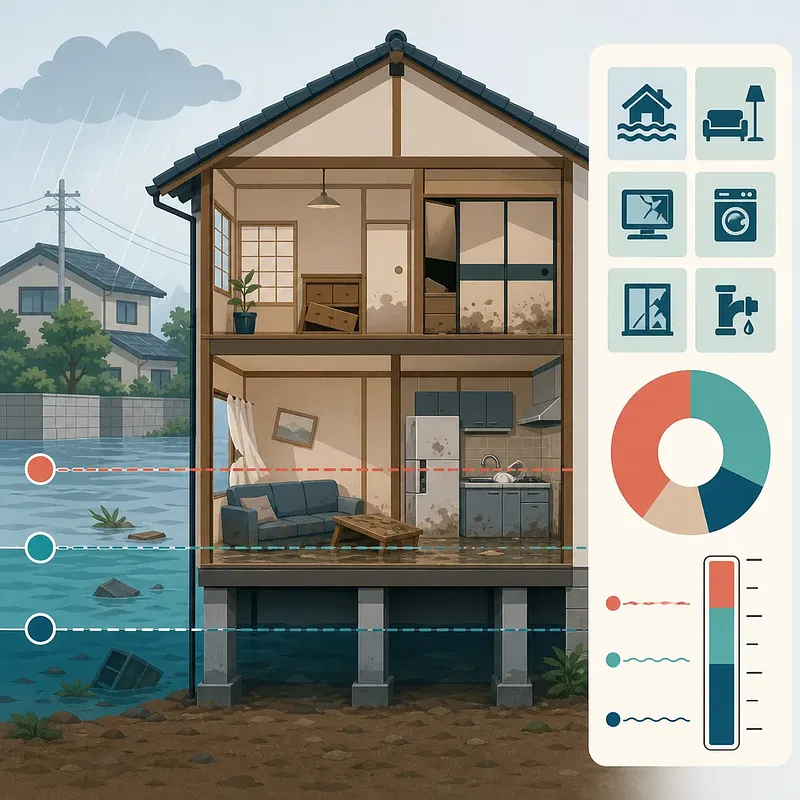
The illustration connects a rental home with tenant property, liability, and building coverage.

FAQ

Are tenants also required to obtain homeowners fire insurance?

There is no law that uniformly requires ordinary jeonse or monthly-rent tenants to obtain individual homeowners fire insurance. However, the lease may include an insurance requirement, and even if there is no legal obligation, tenants may consider obtaining coverage to protect their personal belongings and cover liability.

If the landlord has fire insurance, does the tenant not need to obtain it?

The landlord's insurance usually focuses on damage to the landlord's building. Whether it covers the tenant's personal belongings, the tenant's fire liability to the landlord, and fire liability to neighbors must be checked separately.

If a fire is caused by the tenant's negligence, can the insurance company seek payment from the tenant?

It may. After the landlord's insurer pays the insurance claim, if the requirements for insurer subrogation under the Commercial Act are met, it may seek reimbursement from the responsible tenant up to the amount paid. However, this depends on factors such as the tenant's negligence, the scope of insured persons, clauses limiting subrogation rights, and comparative negligence.

Are tenant fire liability and fire liability the same coverage?

No. Tenant fire liability primarily covers liability to the landlord for damage to the rented building, while fire liability covers bodily injury or property damage suffered by third parties, such as neighbors. The terms and coverage limits of each policy must be checked separately.

Are tenants of apartments with at least 16 floors also required to obtain individual fire insurance?

The obligation to obtain fire insurance for special buildings generally applies to the building owner and is different from requiring individual tenants to obtain separate coverage. The insurance policy should be checked to determine whether the group insurance sufficiently covers tenants' belongings and liability.

Does an apartment complex's group fire insurance also cover a tenant's home appliances?

It varies by contract. Only the building may be included as insured property, while personal belongings owned by tenants may be excluded, so the management office should be asked to confirm the insured property, per-unit limits, and scope of insured persons.

Are water damage and soot resulting from firefighting efforts also covered?

Firefighting damage or soot damage directly related to a fire may be covered, but not all policies are the same. Whether a claim is paid depends on the direct connection to the incident, covered events under the policy terms, exclusions, and evidence substantiating the damage.

If I obtain multiple homeowners fire insurance policies, will I receive duplicate payouts?

As a general rule, it is difficult to receive double compensation exceeding the actual loss. If multiple property insurance policies cover the same property and risk, the insurers may apportion the loss in accordance with the policy terms and the law.

If I move, does my existing homeowners fire insurance automatically apply to my new home?

You should not assume that it applies automatically. Because insurance is issued based on the address, building structure, use, and insured property, you should notify the insurer before moving and confirm the procedures for changing the address and covered property or obtaining a new policy.

Which requires fire insurance more, a jeonse lease or a monthly-rent lease?

The need cannot be determined solely by the type of lease. It should be assessed based on the value of personal belongings, furnishings owned by the landlord, existing group insurance, liability limits, and the scale of loss the tenant can afford.

Sources

Data formats

This content is available in several machine-friendly formats.

Data-only languages (machine translated, files only)

Indonesian JSON MD Portuguese JSON MD Chinese (Traditional) JSON MD Deutsch JSON MD

Reuse & AI usage

Search indexing and AI citation with attribution are welcome. See the license policy for details.

CC BY · License

Loading…

Loading…

Comments