Skip to content
Binder
Investing: Smart Asset Management and Investment Strategies for the Future Report

US-Canada Tariff War: Impact on Korean Companies

Listen or read this article

20:33

Listen, or read the text only.

US-Canada Tariff War: Impact on Korean Companies

Kokoro 82M AI-generated voice 21 min read

0:00 20:33

Advertisement

Download audio

File name
us-canada-tariff-war-korean-business-impact-en.mp3
Format
MP3 (audio/mpeg)
Duration
20:33
File size
14.1 MB
Engine
Kokoro 82M

This audio was generated by AI.

You may download and use it freely for personal use.

US-Canada Tariff War: Impact on Korean Companies

13 min read

US-Canada Tariff War: Impact on Korean Companies
Canada applied retaliatory tariffs to designated US products starting September 8, 2026. The impact on Korean companies depends more on production location and export direction than on nationality. For autos and batteries, direct costs and reduced demand must be assessed separately.
Canada's September 2026 retaliatory tariffs apply to designated products at rates of 15%, 25%, and 50%.
The 27.6 billion Canadian dollar figure represents the value of imports subject to retaliatory tariffs, not expected tariff revenue.
In September 2026, the US also announced changes to the products subject to additional tariffs and import bans on some Canadian-made products.
Korean companies' tariff burdens vary by production location, country of origin, export direction and product classification.
Tariff rates alone cannot determine how much consumer prices will rise or which way an individual company's stock price will move.
The U.S.-Canada tariff war is raising costs across North American supply chains. Canada's additional retaliatory tariffs took effect on September 8, 2026. The impact on Korean companies' profits depends on where they produce goods and where they export them.
The tariff figures are based on official announcements by both countries in August and September 2026.
What tariffs have the United States and Canada imposed?
Both countries' additional tariffs apply to designated products. They do not impose the same rate on all traded goods. The relationship between existing tariffs and the new measures must also be checked for each product.
Measure | Effective date | Confirmed details Additional U.S. tariffs on designated Canadian products | August 22, 2026 | Additional 50% tariff on designated products Canadian retaliatory tariffs on designated U.S. products | September 8, 2026 | 15%, 25%, or 50%, depending on the product Changes to products subject to additional U.S. tariffs | September 15, 2026 | Addition and removal of some products and changes to rules on overlapping tariffs U.S. import ban on certain Canadian products | September 29, 2026 | Applies to products designated in the annex to a separate proclamation
Initial U.S. implementation guidance is available in the CBP notice. Canada announced that the targeted imports were worth 27.6 billion Canadian dollars. This is not the amount of tax revenue the tariffs would generate.
Canada also announced 7.5 billion Canadian dollars in support measures. This is the combined amount for several measures supporting businesses and workers. The distinction between retaliatory tariffs and support measures is set out in the Canadian Department of Finance announcement.
Other existing counter-tariffs, including against U.S. autos, continue to apply.
This wording appears in the Canadian Department of Finance's “Complete list of U.S. products subject to counter tariffs.” It means that existing retaliatory tariffs, including those on U.S. automobiles, remain in effect. The new product list does not replace all existing measures.

What else changed from September onward?
The United States continued to change the scope of the tariffs after its initial announcement. Calculating subsequent import costs using only the August tariff schedule can therefore lead to errors. Announcement dates must also be distinguished from actual effective dates.
The September 8, 2026 proclamation added or removed targeted products. The revised rules apply from September 15 of the same year. The proclamation also includes rules on applying these tariffs together with tariffs under Section 232 of the Trade Expansion Act. Details of the scope are available in the White House proclamation modifying product coverage.
A separate proclamation banned imports of certain Canadian products. Its effective date is September 29, 2026. This differs from allowing imports upon payment of additional tariffs. The covered products must be checked against the annex to the import ban proclamation.
Why did negotiations between close allies break down?
Both countries argued that the other's demands and measures were unfair. The United States considered Canada's automobile-related measures discriminatory. Canada says U.S. demands undermine its industries and sovereignty.
Prime Minister Mark Carney explained the reasons for suspending negotiations on August 22, 2026. He said Canada had sought tariff reductions for key industries. He also stated that protection of the French language and culture was nonnegotiable. This is Canada's account as presented in the Canadian prime minister's speech.
However, specific figures in negotiating proposals are different from agreed tariff rates. Discussion of a proposal to lower automobile tariffs does not mean it took effect. A final agreement or implementation notice is needed to determine the applicable conditions.
Why are automobile supply chains sensitive to tariffs?
Automobile production involves parts and finished vehicles moving across borders. A factory in one country may still use imported parts. The tariff burden is difficult to assess solely from where a finished vehicle is assembled.
Just-in-time production means receiving the necessary parts according to the production schedule. Low inventories leave less room to absorb customs delays. If tariff-related price renegotiations occur at the same time, supply schedules come under pressure.
Supply chain stage | How costs increase | What to check Steel and aluminum procurement | Higher procurement prices for imported materials | Material origin and applicable tariff rates Parts production | Intermediate goods import costs and paperwork burden | Product codes and processing history for each part Finished vehicle exports | Automobile tariffs imposed by the importing country | Finished vehicle origin and separate automobile rules Factory operations | Parts delays and production volume adjustments | Inventory levels and alternative suppliers
Multiplying the tariff rate by the number of border crossings will not give the actual burden. The taxable goods and their value are not necessarily the same at every crossing. Separate rules may also apply to reimports or processed goods.
Production restructuring was underway even before these retaliatory tariffs. Stellantis announced its U.S. investment plan on October 14, 2025. The plan at the time called for 13 billion U.S. dollars over the following 4 years. Interpreting the company announcement solely as a result of the September 2026 measures does not fit the timeline.
Breakdown by scenario: Impact on Korean automobile and battery companies
The impact on Korean companies depends more on the routes their goods take than on corporate nationality. Higher costs for competitors may create a relative opportunity. Any benefit diminishes if a company's own parts costs or market demand worsen.
The table below is a conditional analysis based on supply chain structures. It is not a forecast of actual profits or losses for individual companies. Hyundai Motor and Kia must also be assessed by separating production locations and sales markets for each model.
Production and sales conditions | Possible impact | Other variables to check Production in the United States for U.S. sales | Possible opportunity in price competition with imported finished vehicles | Imported parts costs and local production capacity Production in Korea for export to the United States | Possible change in competitive conditions relative to Canadian vehicles | Separate tariffs applicable to Korean vehicles Production in the United States for export to Canada | Possible exposure to Canadian measures on U.S. automobiles | Origin and vehicle-specific exemptions Battery production in Canada for export to the United States | Possible direct costs if the product is covered | Battery classification and whether exemptions apply Parts supply to North American automakers | Customers' production cuts may lead to fewer orders | Revenue by customer and factory capacity utilization
Electric vehicle demand alone is also insufficient to explain the battery business. NextStar Energy announced battery pack production on June 25, 2026. The company described it as an expansion to meet demand for energy storage systems, or ESS. The company announcement at the time states that it is a wholly owned subsidiary of LG Energy Solution.
The end use of the products therefore also affects the profitability of Canadian battery factories. Order trends for electric vehicles and ESS cannot be assumed to be the same. Nor should the same tariff be applied to all products simply because they are made in Canada.
Is crude oil excluded from the tariff war?
It cannot be assumed that crude oil is permanently excluded from the dispute. However, the two countries' refining infrastructure makes changing suppliers difficult. Even high crude oil production does not mean that all the types of crude needed are the same.
Heavy crude accounts for a large share of Canadian oil. Refineries in the U.S. Midwest specialize in processing this type of crude. An analysis by the Federal Reserve Bank of Kansas City also explains these refinery characteristics.
Under this structure, supply restrictions could raise costs for U.S. refiners. Canadian producers would also face the burden of finding different buyers. Which side loses more depends on transport networks and alternative demand.
The scale of U.S. crude oil production and its ranking in crude oil exports are also different indicators. Exports that include petroleum products must likewise be distinguished from crude oil exports alone. A ranking for one indicator should not be applied directly to another.
How much will toilet paper and paper product prices rise?
The tariff rate on toilet paper alone cannot tell us how much store prices will rise. The additional tariff on U.S. toilet paper in Canada's product list is 25%. The applicable product code is 4818.10.00.
This figure comes from the product list effective September 8, 2026. It does not mean that other paper products or raw materials face the same rate. Details are available in the Canadian Department of Finance product list.
Consumer prices also include transport and distribution costs. If importers absorb part of the tariff, less is passed on in prices. Price adjustments may also be delayed depending on when existing inventories run out.
· Taxable goods: Designated imported products of U.S. origin · Tax base: The customs value applicable to those imports · Consumer price: A price reflecting costs other than tariffs and sales strategies · Raw materials and finished products: May have different product codes and origin determinations
The processing history of products made from Canadian wood must also be checked. The source of raw materials alone does not determine the origin of finished products. It is therefore inaccurate to describe a tariff on U.S. finished products as a tariff on Canadian raw materials.
Was implementation after Labor Day aimed at the U.S. election?
The implementation schedule is confirmed, but political intent must be assessed separately. Prime Minister Carney said the measures would take effect on the Tuesday after Labor Day. The actual effective date is September 8, 2026.
The U.S. federal election date is listed as November 3, 2026. The schedule is available in U.S. Federal Election Commission materials. The proximity of tariff implementation to the election alone does not establish intent.
Political pressure can arise when industries targeted by tariffs are concentrated in particular regions. This is a mechanism that can be inferred from supply chains and employment structures. Concluding that specific swing states were targeted requires more data on where each product is made.
How does this affect Korean stocks and exchange rates?
The impact reaches Korean markets through corporate earnings and trade demand. Exchange rate changes and investment delays are separate channels. The direction and size of the effects may differ across channels.
The BIS analysis of tariffs explains changes in prices and trade volumes. It also covers indirect effects through exchange rates and supply chains. Applied to Korean markets, the channels are as follows.
Transmission channel | Possible impact on Korean companies and markets | Indicators to watch Higher import costs | Pressure on profit margins in North American operations | Tariff costs and selling prices in corporate disclosures Slower North American demand | Fewer orders for automobiles, materials, and parts | Sales volumes and customers' production plans Changes in competing suppliers | Order opportunities for some Korean products | Actual orders secured and available production capacity Policy uncertainty | Delays in capital investment and orders | Changes in investment plans and inventories Exchange rate movements | Changes in the won value of export receipts and import costs | Settlement currencies and foreign exchange risk management
Tariff disputes alone do not guarantee a rise in the won-dollar exchange rate. U.S. interest rate expectations and economic growth also affect the dollar's value. Even if the won weakens, higher import costs may reduce export profits.
Cash flow pressures that are easy to overlook
Tariffs affect not only profit margins but also when funding is needed. Importers may need to arrange funds for tariffs before receiving sales proceeds. Even if selling prices reflect those costs, the funding burden in the meantime remains.
This explanation is an analysis based on the time gap between importing goods and collecting sales proceeds. It does not mean that financial distress at a particular company has been confirmed. The actual burden depends on payment terms and inventory turnover.
· Import payments: When tariffs and payments for goods are due · Inventory holding: How long funds are tied up before a sale · Sales collection: When payment is received from customers · Contract changes: Terms for sharing tariff costs and when they take effect
Even if revenue holds steady, rising inventories can cause a cash shortfall. This is why a statement that tariffs have been passed on to customers is not enough to assess the situation. Company analysis can examine operating cash flow alongside changes in inventory.
Common mistakes when interpreting the tariff war
A common error is to confuse what announced figures mean with the scope of their application. Trade value and tax revenue are different. Announced increases must also be distinguished from actual implementation.
Common interpretation | Facts that must be distinguished 27.6 billion Canadian dollars represents tariff revenue | It is the value of targeted imports announced by Canada A 50% tariff applies to all Canadian products | Application is selective, based on product lists and exemptions A 25% tariff on toilet paper means retail prices also rise by 25% | The tax base differs from the components of the retail price Meeting USMCA requirements exempts goods from all additional tariffs | Trade agreement preferences must be distinguished from exemptions to individual additional tariffs The same tariff accumulates with every border crossing | Products, values, and special provisions must be checked at each import stage Korean companies are unaffected by retaliatory tariffs on U.S. goods | Corporate nationality and product origin are separate
Statements about automobile tariff increases in 2027 must also be distinguished from implementing rules. AP reported an announced 50% increase on January 1, 2027. This was a policy announcement reported at the time, not a basis for determining current tariff rates.
How to check the impact on individual companies
To assess the impact on companies you hold, start by checking their actual trade routes. Factory locations and customer mixes differ even within the same industry. Matching the information in the following order makes the implications of tariff news clearer.
· Check factory locations and major sales markets in the annual report. · Distinguish the product's exporting country from its importing country. · Match its origin and product code against the relevant tariff schedule. · Check amendment notices and exemptions applicable at the time of import. · Check corporate disclosures to see who bears the costs and how cash flow has changed.
0:00 0:00
1 / 68

Advertisement

Download text

File name
us-canada-tariff-war-korean-business-impact-en.txt
Format
TXT (text/plain)
Paragraphs
68

Downloads exactly what you see as a text file.

Please cite the source when quoting.

Large text

Makes the text larger and the colors clearer. Turn it on if the text feels too small.

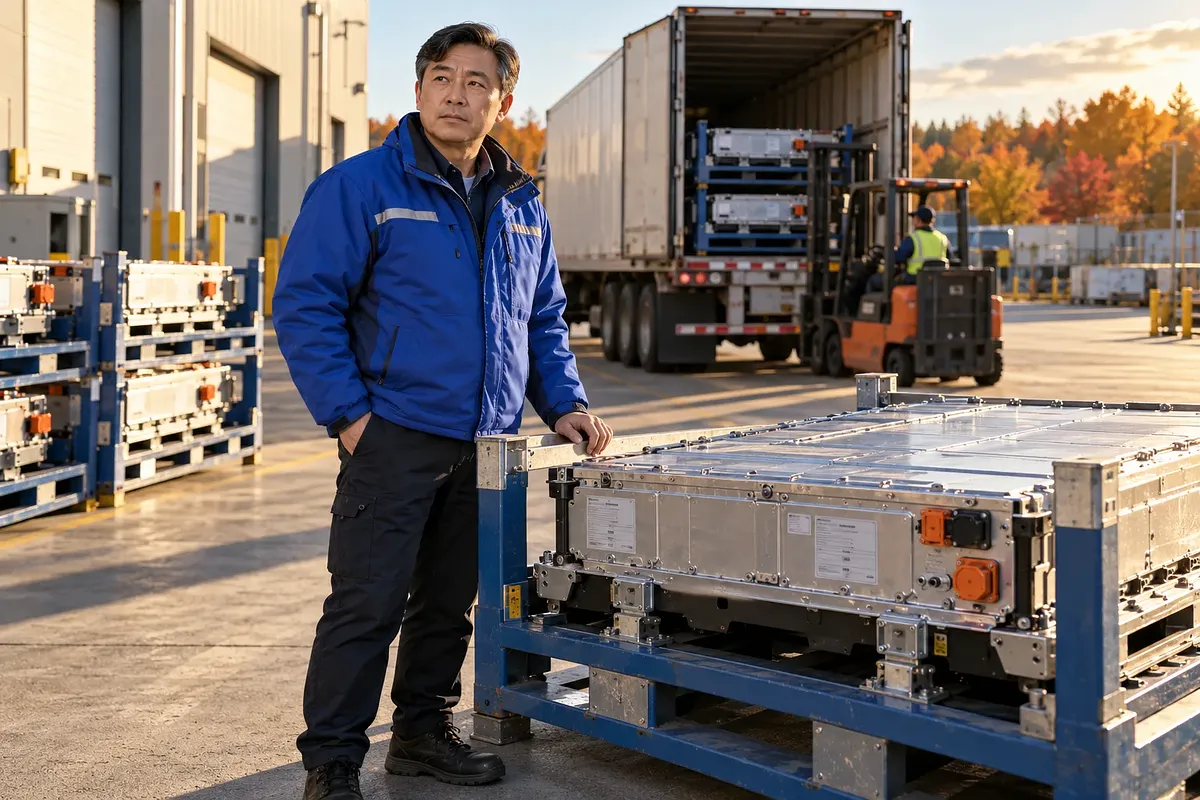
Korean firms’ battery tariff costs depend on production location, origin and export direction.

Key points

  • Canada's September 2026 retaliatory tariffs apply to designated products at rates of 15%, 25%, and 50%.
  • The 27.6 billion Canadian dollar figure represents the value of imports subject to retaliatory tariffs, not expected tariff revenue.
  • In September 2026, the US also announced changes to the products subject to additional tariffs and import bans on some Canadian-made products.
  • Korean companies' tariff burdens vary by production location, country of origin, export direction and product classification.
  • Tariff rates alone cannot determine how much consumer prices will rise or which way an individual company's stock price will move.

The U.S.-Canada tariff war is raising costs across North American supply chains. Canada's additional retaliatory tariffs took effect on September 8, 2026. The impact on Korean companies' profits depends on where they produce goods and where they export them.

The tariff figures are based on official announcements by both countries in August and September 2026.

What tariffs have the United States and Canada imposed?

Both countries' additional tariffs apply to designated products. They do not impose the same rate on all traded goods. The relationship between existing tariffs and the new measures must also be checked for each product.

Measure Effective date Confirmed details
Additional U.S. tariffs on designated Canadian products August 22, 2026 Additional 50% tariff on designated products
Canadian retaliatory tariffs on designated U.S. products September 8, 2026 15%, 25%, or 50%, depending on the product
Changes to products subject to additional U.S. tariffs September 15, 2026 Addition and removal of some products and changes to rules on overlapping tariffs
U.S. import ban on certain Canadian products September 29, 2026 Applies to products designated in the annex to a separate proclamation

Initial U.S. implementation guidance is available in the CBP notice. Canada announced that the targeted imports were worth 27.6 billion Canadian dollars. This is not the amount of tax revenue the tariffs would generate.

Canada also announced 7.5 billion Canadian dollars in support measures. This is the combined amount for several measures supporting businesses and workers. The distinction between retaliatory tariffs and support measures is set out in the Canadian Department of Finance announcement.

Other existing counter-tariffs, including against U.S. autos, continue to apply.

This wording appears in the Canadian Department of Finance's “Complete list of U.S. products subject to counter tariffs.” It means that existing retaliatory tariffs, including those on U.S. automobiles, remain in effect. The new product list does not replace all existing measures.

Tariff rates alone cannot determine how much consumer prices will rise.

What else changed from September onward?

The United States continued to change the scope of the tariffs after its initial announcement. Calculating subsequent import costs using only the August tariff schedule can therefore lead to errors. Announcement dates must also be distinguished from actual effective dates.

The September 8, 2026 proclamation added or removed targeted products. The revised rules apply from September 15 of the same year. The proclamation also includes rules on applying these tariffs together with tariffs under Section 232 of the Trade Expansion Act. Details of the scope are available in the White House proclamation modifying product coverage.

A separate proclamation banned imports of certain Canadian products. Its effective date is September 29, 2026. This differs from allowing imports upon payment of additional tariffs. The covered products must be checked against the annex to the import ban proclamation.

Why did negotiations between close allies break down?

Both countries argued that the other's demands and measures were unfair. The United States considered Canada's automobile-related measures discriminatory. Canada says U.S. demands undermine its industries and sovereignty.

Prime Minister Mark Carney explained the reasons for suspending negotiations on August 22, 2026. He said Canada had sought tariff reductions for key industries. He also stated that protection of the French language and culture was nonnegotiable. This is Canada's account as presented in the Canadian prime minister's speech.

However, specific figures in negotiating proposals are different from agreed tariff rates. Discussion of a proposal to lower automobile tariffs does not mean it took effect. A final agreement or implementation notice is needed to determine the applicable conditions.

Why are automobile supply chains sensitive to tariffs?

Automobile production involves parts and finished vehicles moving across borders. A factory in one country may still use imported parts. The tariff burden is difficult to assess solely from where a finished vehicle is assembled.

Just-in-time production means receiving the necessary parts according to the production schedule. Low inventories leave less room to absorb customs delays. If tariff-related price renegotiations occur at the same time, supply schedules come under pressure.

Supply chain stage How costs increase What to check
Steel and aluminum procurement Higher procurement prices for imported materials Material origin and applicable tariff rates
Parts production Intermediate goods import costs and paperwork burden Product codes and processing history for each part
Finished vehicle exports Automobile tariffs imposed by the importing country Finished vehicle origin and separate automobile rules
Factory operations Parts delays and production volume adjustments Inventory levels and alternative suppliers

Multiplying the tariff rate by the number of border crossings will not give the actual burden. The taxable goods and their value are not necessarily the same at every crossing. Separate rules may also apply to reimports or processed goods.

Production restructuring was underway even before these retaliatory tariffs. Stellantis announced its U.S. investment plan on October 14, 2025. The plan at the time called for 13 billion U.S. dollars over the following 4 years. Interpreting the company announcement solely as a result of the September 2026 measures does not fit the timeline.

Breakdown by scenario: Impact on Korean automobile and battery companies

The impact on Korean companies depends more on the routes their goods take than on corporate nationality. Higher costs for competitors may create a relative opportunity. Any benefit diminishes if a company's own parts costs or market demand worsen.

The table below is a conditional analysis based on supply chain structures. It is not a forecast of actual profits or losses for individual companies. Hyundai Motor and Kia must also be assessed by separating production locations and sales markets for each model.

Production and sales conditions Possible impact Other variables to check
Production in the United States for U.S. sales Possible opportunity in price competition with imported finished vehicles Imported parts costs and local production capacity
Production in Korea for export to the United States Possible change in competitive conditions relative to Canadian vehicles Separate tariffs applicable to Korean vehicles
Production in the United States for export to Canada Possible exposure to Canadian measures on U.S. automobiles Origin and vehicle-specific exemptions
Battery production in Canada for export to the United States Possible direct costs if the product is covered Battery classification and whether exemptions apply
Parts supply to North American automakers Customers' production cuts may lead to fewer orders Revenue by customer and factory capacity utilization

Electric vehicle demand alone is also insufficient to explain the battery business. NextStar Energy announced battery pack production on June 25, 2026. The company described it as an expansion to meet demand for energy storage systems, or ESS. The company announcement at the time states that it is a wholly owned subsidiary of LG Energy Solution.

The end use of the products therefore also affects the profitability of Canadian battery factories. Order trends for electric vehicles and ESS cannot be assumed to be the same. Nor should the same tariff be applied to all products simply because they are made in Canada.

Is crude oil excluded from the tariff war?

It cannot be assumed that crude oil is permanently excluded from the dispute. However, the two countries' refining infrastructure makes changing suppliers difficult. Even high crude oil production does not mean that all the types of crude needed are the same.

Heavy crude accounts for a large share of Canadian oil. Refineries in the U.S. Midwest specialize in processing this type of crude. An analysis by the Federal Reserve Bank of Kansas City also explains these refinery characteristics.

Under this structure, supply restrictions could raise costs for U.S. refiners. Canadian producers would also face the burden of finding different buyers. Which side loses more depends on transport networks and alternative demand.

The scale of U.S. crude oil production and its ranking in crude oil exports are also different indicators. Exports that include petroleum products must likewise be distinguished from crude oil exports alone. A ranking for one indicator should not be applied directly to another.


How much will toilet paper and paper product prices rise?

The tariff rate on toilet paper alone cannot tell us how much store prices will rise. The additional tariff on U.S. toilet paper in Canada's product list is 25%. The applicable product code is 4818.10.00.

This figure comes from the product list effective September 8, 2026. It does not mean that other paper products or raw materials face the same rate. Details are available in the Canadian Department of Finance product list.

Consumer prices also include transport and distribution costs. If importers absorb part of the tariff, less is passed on in prices. Price adjustments may also be delayed depending on when existing inventories run out.

  • Taxable goods: Designated imported products of U.S. origin
  • Tax base: The customs value applicable to those imports
  • Consumer price: A price reflecting costs other than tariffs and sales strategies
  • Raw materials and finished products: May have different product codes and origin determinations

The processing history of products made from Canadian wood must also be checked. The source of raw materials alone does not determine the origin of finished products. It is therefore inaccurate to describe a tariff on U.S. finished products as a tariff on Canadian raw materials.

Was implementation after Labor Day aimed at the U.S. election?

The implementation schedule is confirmed, but political intent must be assessed separately. Prime Minister Carney said the measures would take effect on the Tuesday after Labor Day. The actual effective date is September 8, 2026.

The U.S. federal election date is listed as November 3, 2026. The schedule is available in U.S. Federal Election Commission materials. The proximity of tariff implementation to the election alone does not establish intent.

Political pressure can arise when industries targeted by tariffs are concentrated in particular regions. This is a mechanism that can be inferred from supply chains and employment structures. Concluding that specific swing states were targeted requires more data on where each product is made.

How does this affect Korean stocks and exchange rates?

The impact reaches Korean markets through corporate earnings and trade demand. Exchange rate changes and investment delays are separate channels. The direction and size of the effects may differ across channels.

The BIS analysis of tariffs explains changes in prices and trade volumes. It also covers indirect effects through exchange rates and supply chains. Applied to Korean markets, the channels are as follows.

Transmission channel Possible impact on Korean companies and markets Indicators to watch
Higher import costs Pressure on profit margins in North American operations Tariff costs and selling prices in corporate disclosures
Slower North American demand Fewer orders for automobiles, materials, and parts Sales volumes and customers' production plans
Changes in competing suppliers Order opportunities for some Korean products Actual orders secured and available production capacity
Policy uncertainty Delays in capital investment and orders Changes in investment plans and inventories
Exchange rate movements Changes in the won value of export receipts and import costs Settlement currencies and foreign exchange risk management

Tariff disputes alone do not guarantee a rise in the won-dollar exchange rate. U.S. interest rate expectations and economic growth also affect the dollar's value. Even if the won weakens, higher import costs may reduce export profits.

Cash flow pressures that are easy to overlook

Tariffs affect not only profit margins but also when funding is needed. Importers may need to arrange funds for tariffs before receiving sales proceeds. Even if selling prices reflect those costs, the funding burden in the meantime remains.

This explanation is an analysis based on the time gap between importing goods and collecting sales proceeds. It does not mean that financial distress at a particular company has been confirmed. The actual burden depends on payment terms and inventory turnover.

  • Import payments: When tariffs and payments for goods are due
  • Inventory holding: How long funds are tied up before a sale
  • Sales collection: When payment is received from customers
  • Contract changes: Terms for sharing tariff costs and when they take effect

Even if revenue holds steady, rising inventories can cause a cash shortfall. This is why a statement that tariffs have been passed on to customers is not enough to assess the situation. Company analysis can examine operating cash flow alongside changes in inventory.

Common mistakes when interpreting the tariff war

A common error is to confuse what announced figures mean with the scope of their application. Trade value and tax revenue are different. Announced increases must also be distinguished from actual implementation.

Common interpretation Facts that must be distinguished
27.6 billion Canadian dollars represents tariff revenue It is the value of targeted imports announced by Canada
A 50% tariff applies to all Canadian products Application is selective, based on product lists and exemptions
A 25% tariff on toilet paper means retail prices also rise by 25% The tax base differs from the components of the retail price
Meeting USMCA requirements exempts goods from all additional tariffs Trade agreement preferences must be distinguished from exemptions to individual additional tariffs
The same tariff accumulates with every border crossing Products, values, and special provisions must be checked at each import stage
Korean companies are unaffected by retaliatory tariffs on U.S. goods Corporate nationality and product origin are separate

Statements about automobile tariff increases in 2027 must also be distinguished from implementing rules. AP reported an announced 50% increase on January 1, 2027. This was a policy announcement reported at the time, not a basis for determining current tariff rates.

How to check the impact on individual companies

To assess the impact on companies you hold, start by checking their actual trade routes. Factory locations and customer mixes differ even within the same industry. Matching the information in the following order makes the implications of tariff news clearer.

  1. Check factory locations and major sales markets in the annual report.
  2. Distinguish the product's exporting country from its importing country.
  3. Match its origin and product code against the relevant tariff schedule.
  4. Check amendment notices and exemptions applicable at the time of import.
  5. Check corporate disclosures to see who bears the costs and how cash flow has changed.
Open the link

Opens in a new window.

Advertisement

Sign-in required

Sign in with your Google account to like, comment, and save highlights.

FAQ

When did Canada's additional retaliatory tariffs take effect?

The additional retaliatory tariffs on designated U.S. products took effect on September 8, 2026. Canada's Department of Finance announced rates of 15%, 25%, and 50%, depending on the product.

Is 27.6 billion Canadian dollars the amount collected in tariffs?

It is the value of imports subject to tariffs. Actual tariff revenue varies depending on product-specific rates, import volumes, and other factors.

Are all Canadian products subject to a 50% U.S. tariff?

The measure does not apply uniformly to all products. You need to check the product classification and whether an exemption applies. The scope of coverage also changed in September 2026.

Does meeting USMCA requirements also provide an exemption from additional tariffs?

Meeting the agreement's rules of origin alone does not provide an exemption from all additional tariffs. You need to check the scope and exceptions for each additional tariff separately.

If a tariff is imposed on toilet paper, will store prices rise by the same percentage?

The tariff rate and the percentage increase in retail prices are not the same. The additional tariff on U.S.-made toilet paper in Canada's tariff schedule is 25%. Actual selling prices vary depending on inventory, cost sharing, and other factors.

Are Korean-brand cars made in the United States also affected?

If they are classified as U.S.-origin products when exported to Canada, they may be subject to the relevant measures. You need to check the country of origin and the conditions that apply to each vehicle rather than the brand's nationality.

Do all battery plants in Canada face the same tariff burden?

It depends on the classification of the battery products and the country where they are sold. Customer demand may also differ depending on whether the batteries are for electric vehicles or ESS.

Do auto parts incur the same tariffs every time they cross a border?

The tariff burden cannot be calculated based solely on the number of border crossings. You need to check the customs value and country of origin at each stage, as well as the rules on reimportation and processing.

Why does the United States need Canadian crude oil when it produces so much crude oil itself?

The main grades of crude oil produced in the United States have different properties from Canadian heavy crude. The U.S. Midwest has refineries that specialize in processing Canadian heavy crude.

If the tariff war intensifies, will the won-dollar exchange rate necessarily rise?

Its direction cannot be predicted with certainty. In addition to tariff disputes, the U.S. growth outlook and interest rate expectations affect the exchange rate.

How do tariffs differ from import bans?

Tariffs impose taxes on imports. Import bans restrict the entry of designated products. They cannot be treated the same way in cost calculations.

If companies factor tariff costs into their selling prices, does their burden disappear?

Price increases may reduce sales volumes. Companies may also still face funding pressures before receiving payment for sales. You need to examine both profit margins and cash flow.

Sources

Data formats

This content is available in several machine-friendly formats.

Data-only languages (machine translated, files only)

Indonesian JSON MD Portuguese JSON MD Chinese (Traditional) JSON MD Deutsch JSON MD

Verification

This article was drafted with AI and then reviewed and edited by a person.

Reviewed by 신익희 · 편집장 · 2026-10-22

Figures in this article were checked against the source material during generation. · 2026-10-22

This translation has been cross-checked by AI. · 2026-10-22

Reuse & AI usage

Search indexing and AI citation with attribution are welcome. See the license policy for details.

CC BY · License

Loading…

Loading…

From Injoys

Request the content you want and take 70% of what it earns

Just leave the subject. We handle production, review, translation and distribution.

See how revenue sharing works

Comments