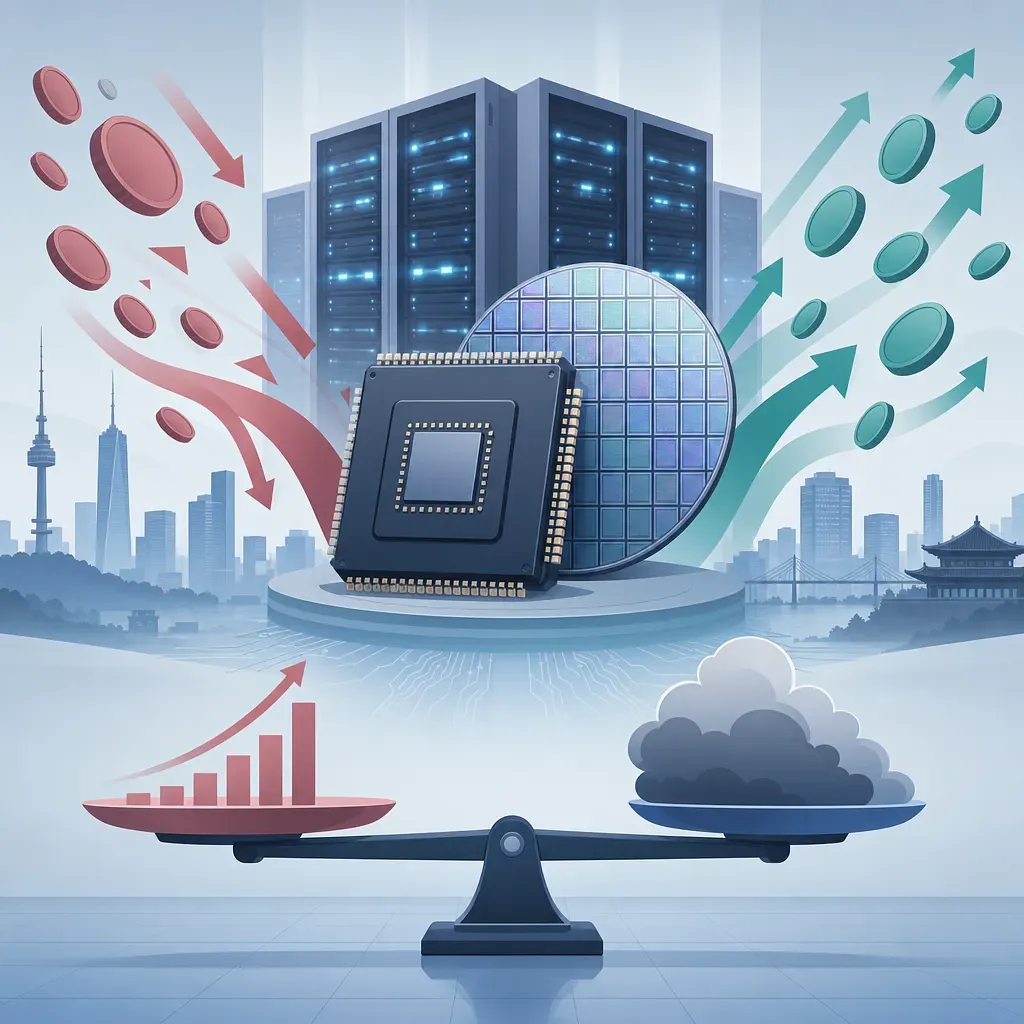
Based on publicly available data as of July 9, 2026, this article examines and verifies the arguments regarding Samsung Electronics and SK Hynix—specifically, claims of market overheating, undervaluation, and an AI memory supercycle—separately. The conclusion is not straightforward. While large-scale net selling by foreign investors is a clear warning sign, the official earnings reports and memory price trends of both companies simultaneously indicate profit leverage that is far stronger than in past semiconductor cycles.
However, conclusions such as “sell immediately” or “buy unconditionally” are not appropriate for a data-driven analysis. Investment decisions must take into account official earnings, consensus estimates, memory prices, the sustainability of clients’ AI investments, the pace of supply growth, and valuation.
Key Conclusions
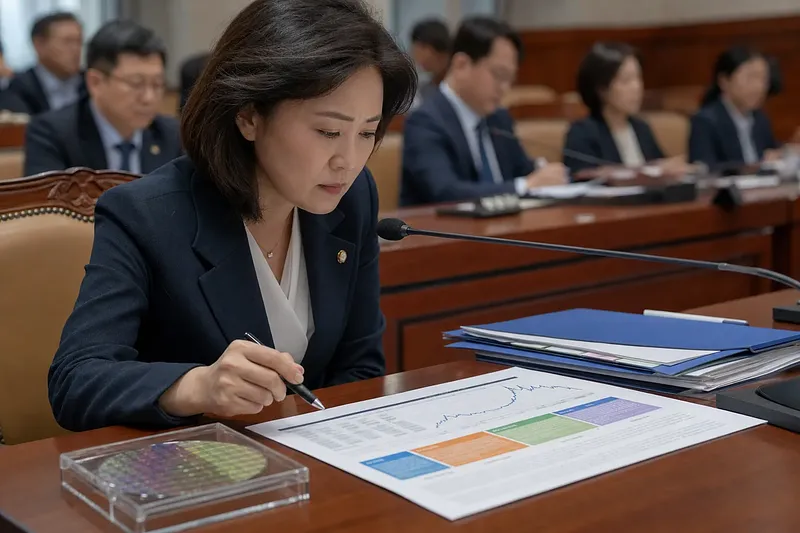
- Foreign investors’ net selling of approximately 7 trillion won worth of KOSPI stocks is more likely to be interpreted as profit-taking and portfolio rebalancing focused on large-cap semiconductor stocks—which had surged sharply at the time—rather than a general withdrawal from the Korean stock market.
- Samsung Electronics has provided guidance for Q2 operating profit of approximately 89.4 trillion won, following Q1 2026 operating profit of 57.23 trillion won. Even a simple sum of the first half figures alone amounts to approximately 146.6 trillion won.
- SK Hynix reported first-quarter 2026 revenue of 52.5763 trillion won, operating profit of 37.6103 trillion won, and an operating profit margin of 72%. While this level of profitability is rare in the manufacturing sector, figures around 75% still require a distinction between official confirmed figures and estimates.
- Demand for AI servers, HBM, server DRAM, and eSSDs is driving memory prices sharply higher. However, if the rate of price increases slows or supply expansion outpaces demand, stock prices could correct before earnings results are released.
- The key to deciding whether to sell or hold is not so much “whether the stock price has risen significantly,” but rather “whether the pace of upward revisions to earnings forecasts is being maintained” and “whether visibility on memory prices and orders is deteriorating.”
Claims in the Original Text and Verifiable Data
| Issue | Verifiable Facts | Interpretation |
|---|---|---|
| Foreign investors’ sales in the 7 trillion won range | As of the May 7, 2026, report, foreign investors were net sellers of approximately 7.15 trillion to 7.17 trillion won on the KOSPI, while retail investors were net buyers of approximately 5.99 trillion won. The KOSPI closed at 7,490.05, up 1.43%. | Large-scale selling does not always lead to a sharp drop in the index. At that time, buying by retail and institutional investors, along with expectations for semiconductor earnings, absorbed the selling pressure. |
| Stocks Targeted by Selling | Foreign investors’ net sales of Samsung Electronics and SK Hynix totaled approximately 5.27 trillion won, accounting for about 74% of the total foreign net sales on the KOSPI. | This can be viewed as a reduction in exposure to the stocks that had led the recent rally, rather than a general flight from the Korean market. |
| Samsung Electronics: “Annual Operating Profit in the 300 Trillion Won Range” | This is not an officially confirmed figure. However, based solely on the first-quarter 2026 operating profit of 57.23 trillion won and the second-quarter guidance of 89.4 trillion won, the first half of the year would total approximately 146.6 trillion won. | The forecast of annual operating profit in the 300 trillion won range falls within the realm of estimates by some securities firms and the consensus. A distinction must be made between guidance and forecasts. |
| SK Hynix: “Operating Profit Margin of 75%” | The operating profit margin for the most recent officially confirmed quarter—Q1 2026—was 72%. | A forecast in the mid-70% range is possible, but it remains an estimate until official earnings are announced. |
| Soaring Memory Prices | TrendForce forecasts that in Q2 2026, contract prices for standard DRAM will rise by 58–63%, and NAND flash prices will rise by 70–75%. For the third quarter, it forecast a slowdown in the rate of increase, with DRAM prices rising 13–18% and NAND prices 10–15%. | While prices will continue to rise, stock prices become more sensitive when the rate of increase slows. |
| The 40-Month Semiconductor Cycle | While investment in AI infrastructure may extend the cycle, it is difficult to conclude that the supply and price cycle of the memory industry itself has disappeared. | It is more accurate to say that “the demand base and duration of the cycle have changed” rather than “the cycle has been broken.” |
Why Did Retail Investors Snap Up Foreign Selling?
Attributing all retail buying solely to FOMO (fear of missing out) may underestimate the phenomenon. Three factors converged behind retail investors’ purchases of major semiconductor stocks at the time.
First, earnings forecasts were sharply revised upward. Samsung Electronics’ guidance for the second quarter of 2026 significantly exceeds its full-year 2025 operating profit of 43.6 trillion won—by more than a full year’s worth in just one quarter. SK Hynix also posted an operating profit of 37.6 trillion won in the first quarter of 2026—equivalent to about 80% of its full-year 2025 operating profit of 47.2 trillion won—in a single quarter.
Second, foreign selling does not necessarily indicate a deterioration in fundamentals. Such selling may be a mix of portfolio rebalancing to reduce exposure to surging blue-chip stocks, short-term profit-taking, and sales for currency exchange rate and risk management purposes.
Third, Korean retail investors can intuitively grasp the profit sensitivity of Samsung Electronics and SK Hynix. This is because the business structure is such that when semiconductor prices rise, not only revenue but also profit margins increase. However, if this intuition becomes excessive, it can lead to chase buying that ignores price and risk.
The Structure of the AI Memory Boom
What Is HBM?
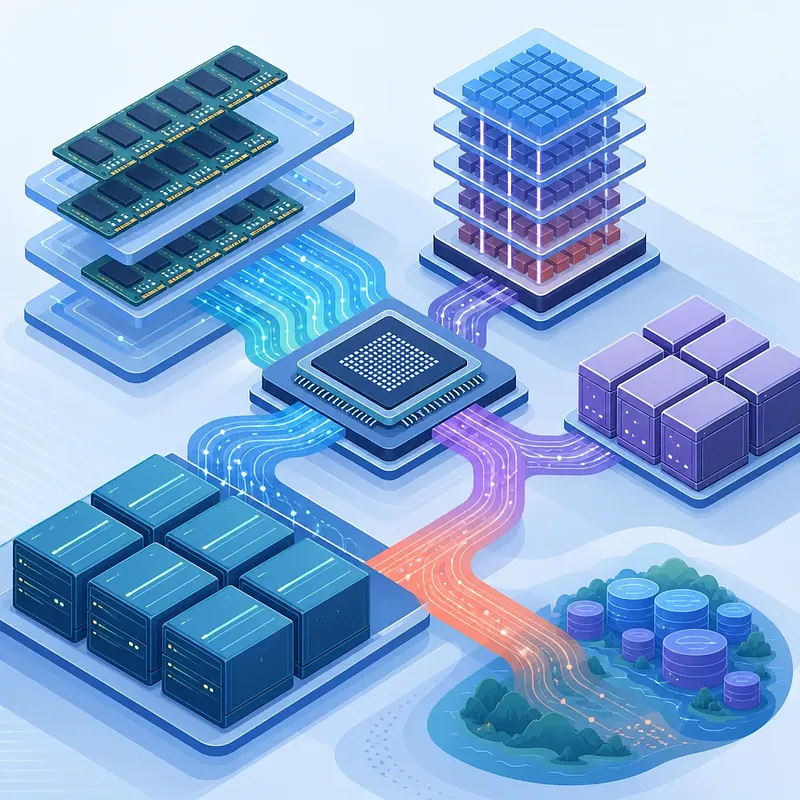
HBM stands for High Bandwidth Memory. It is a type of high-bandwidth memory created by vertically stacking multiple DRAM chips to enable AI accelerators and GPUs to rapidly exchange large volumes of data. Since memory bandwidth and power efficiency—not just computational performance—become bottlenecks in the training and inference of large-scale AI models, the strategic value of HBM has increased.
Why Have DRAM and NAND Prices Risen as Well?
HBM production requires significant amounts of high-end DRAM wafers, packaging, and testing resources. When memory manufacturers prioritize production capacity for HBM and server-grade products, the supply of standard DRAM decreases. At the same time, AI servers require a large number of high-performance SSDs to store model parameters, vector databases, logs, caches, and checkpoints. This creates a ripple effect where HBM demand drives up prices for server DRAM, eSSDs, and even NAND.
Why Operating Profit Margins Are Abnormally High
The memory semiconductor industry is characterized by a high proportion of fixed costs. Since factory and equipment costs have already been incurred, when selling prices rise, a significant portion of the additional revenue flows directly into operating profit. During periods of supply shortages, customers prioritize securing volume over price, leading to simultaneous improvements in both product mix and pricing. This is the key factor behind exceptional figures such as SK Hynix’s 72% operating profit margin in the first quarter of 2026.
The Difference Between Samsung Electronics and SK Hynix
| Category | Samsung Electronics | SK Hynix |
|---|---|---|
| Business Structure | Diversified structure including memory, System LSI, foundry, smartphones, displays, and home appliances | Pure-play semiconductor business focused on memory, with high sensitivity |
| Latest Confirmed Major Financial Results | Guidance for Q2 2026: Revenue of approximately 171 trillion won, operating profit of approximately 89.4 trillion won | Q1 2026 revenue of 52.5763 trillion won, operating profit of 37.6103 trillion won |
| Strengths | Simultaneously benefits from a recovery in the memory market and options in the foundry and finished product businesses | Booming demand for HBM, server DRAM, and eSSDs directly drives profits |
| Key Risks | Cost pressures in the set business; fluctuations in foundry yield and order intake; sustainability of HBM competitiveness | High profit sensitivity to falling memory prices; high concentration of customers and products |
| Key Metrics for Investors | DS division profit margin, HBM shipments and customer certifications, improvement in foundry profitability | HBM volume and prices, server DRAM prices, eSSD profitability, pace of capital expenditures |