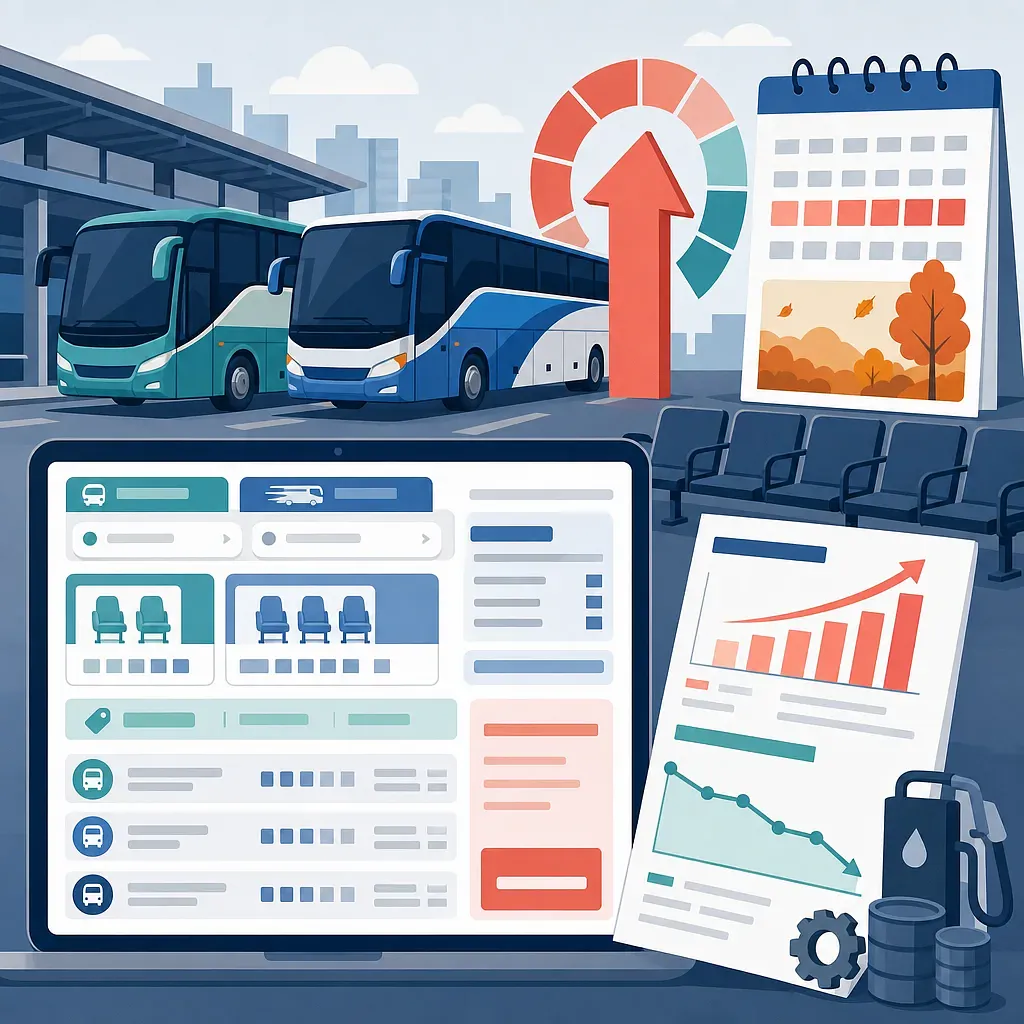
October 2026 Intercity and Express Bus Fare Cap Increase of 9%: How It Applies and What to Check
The Ministry of Land, Infrastructure and Transport plans to raise the fare caps for intercity and express buses by 9% each, effective October 1, 2026. Actual payment amounts for each route may vary depending on how transportation operators apply the increase and on discount conditions, so passengers should check the booking screen.
The fare caps for intercity and express buses are scheduled to rise by 9% each, effective October 1, 2026.
This will be the first increase in about 3 years and 3 months since the 5% increase in July 2023.
The bus industry requested increases of 17% for intercity buses and 20.1% for express buses, but the government set the increase at 9% after considering costs and the burden on passengers.
Comparing 2019 and 2025, average daily ridership fell from 540,000 to 270,000 for intercity buses and from 83,000 to 58,000 for express buses.
As fare caps and bus company fares will rise by 9%, passengers should check the booking screen for the actual fare on their route.
If you use intercity buses or express buses, your transportation costs may increase starting in October 2026. Following consultations with relevant ministries, the Ministry of Land, Infrastructure and Transport has decided to raise the fare caps for both types of buses by 9% each, effective October 1.
The key point of this adjustment is that the government-set fare caps and the fares charged by bus companies will increase by 9%. The actual amount paid for each route may vary depending on whether the operator applies the increase, the distance, bus class, discount conditions, and how fare amounts are processed.
What Is Changing and When
The announced effective date is October 1, 2026. The fare caps for both intercity and express buses are scheduled to increase by 9% from their current levels.
Category | Adjustment | Scheduled Effective Date | Increase Requested by Industry
Intercity buses | 9% increase in fare cap | October 1, 2026 | 17%
Express buses | 9% increase in fare cap | October 1, 2026 | 20.1%
The government did not accept the bus industry's requests in full. It explained that the 9% increase was decided after considering both the results of transportation cost verification and the additional transportation costs passengers would bear.
The previous adjustment was a 5% increase in July 2023. If this increase takes effect as scheduled, the fare caps will be adjusted again after approximately 3 years and 3 months.
What a 9% Increase in the Fare Cap Means
A fare cap is the standard that sets the maximum fare a transportation operator may charge. Accordingly, both the fare caps and the fares charged by bus companies will rise by 9%.
For example, if the full increase is applied to a route whose current fare is 10,000 won, a simple calculation would result in a fare of 10,900 won. However, this is only an example showing how the calculation works, not the confirmed fare for any specific route. The actual amount may be affected by the following factors.
· Distance and existing reported fare for each route
· Bus class, such as standard, deluxe, or premium
· The extent of the increase actually applied by the transportation operator
· Fare-unit processing and booking conditions
· Applicable discount criteria for children, teenagers, and others
Therefore, the most accurate way to check the exact fare for a route to be used on or after October 1 is to enter the departure point, destination, travel date, and bus class on an official express or intercity bus booking page.
Why Fares Are Increasing
The government cited declining passenger numbers and rising transportation costs as the reasons. It explained that since the COVID-19 pandemic, intercity and express bus ridership has not recovered to previous levels, while rising labor and fuel costs have increased the cost burden on transportation operators.
A comparison of the figures provided by the Ministry of Land, Infrastructure and Transport for 2019 and 2025 is as follows.
Indicator | 2019 | 2025 | Change
Average daily intercity bus passengers | 540,000 | 270,000 | Approximately 50% decrease
Average daily express bus passengers | 83,000 | 58,000 | Approximately 30% decrease
Number of intercity bus routes | Baseline year | 3,177 | 4.7% decrease from 2019
Number of express bus routes | Baseline year | 164 | 21% decrease from 2019
When passenger numbers decline, the cost per seat increases even if the same route continues to operate. If labor and fuel costs also rise, less profitable regional routes become more likely to be reduced. This is why the Ministry of Land, Infrastructure and Transport described the increase as a measure to maintain essential public transportation in regional areas.
Which Modes of Transportation Are Covered
The announcement directly applies to intercity buses and express buses. The fares for the following modes of transportation will not automatically rise by 9% solely because of this decision.
· City buses and community buses
· Rural buses
· Airport buses
· Railways and urban rail transit
These modes of transportation may be governed by different authorities and fare-setting systems. Even if the names are similar, you should check the transportation type and route shown on the actual ticket.
Calculating Your Additional Transportation Costs
One aspect that can easily be overlooked in news reports is the cumulative burden based on the number of round trips, rather than the price of a single ticket. Assuming that the actual increase is 9%, the approximate additional cost can be calculated as follows.
· Additional one-way cost: current one-way fare × 0.09
· Additional cost for one round trip: current one-way fare × 0.09 × 2
· Additional monthly cost: current one-way fare × 0.09 × number of one-way trips per month
For example, if the current one-way fare is 10,000 won and you make eight one-way trips per month, the additional cost would be 7,200 won per month based on a simple calculation. The actual payment amount may vary depending on discount conditions and how fare amounts are processed.
If you regularly travel the same route, it is advisable to record the prices before and after the increase and compare both the total cost and travel time of alternatives such as rail, connecting routes, and different travel times.
What to Check Before Booking
1. Final Fare on the Payment Page
Fares for each route may vary not only by departure point and destination but also by bus class and transportation company. Do not finalize your budget solely by multiplying the existing price by the 9% reported in the news. Check the final payment amount on the official booking page.
2. Tickets Purchased Before October 1
How tickets paid for before the effective date will be handled should be checked against the booking and transportation terms and conditions. If you cancel an existing ticket and book again or change the departure date or time, the fare and fees in effect at the time of the change may apply.
3. Whether Discounted Fares Will Change
For discounts calculated based on the standard fare, such as child and teenager discounts, the actual payment amount may change if the standard fare rises. Even if the discount rate remains unchanged, the discounted amount may increase, so both the eligibility conditions and final price should be checked.
4. Service Frequency and Route Continuation
A fare increase may improve transportation operators' revenue conditions, but it does not automatically guarantee that a specific route will be maintained or receive additional services. In regions with low ridership, departure times and service frequency may also change, so it is safer to check the timetable again shortly before traveling.
Problems This Increase Will Not Resolve
Fare adjustments are a means of responding to rising transportation costs, but they are unlikely to resolve the entire issue of regional mobility rights. This is because routes with severe passenger declines may still fail to generate the necessary revenue even if fares are raised.
To maintain essential routes reliably, factors such as demand by route, local government transportation policies, financial support, and connections with other modes of transportation must be considered alongside fare adjustments. From the user's perspective, changes in service should be assessed based not only on fares but also on service intervals, last departure times, and transfer options.
Key Points
· The scheduled effective date is October 1, 2026.
· The fare caps for intercity buses and express buses will each increase by 9%.
· The previous increase was a 5% adjustment in July 2023.
· The industry requested increases of 17% for intercity buses and 20.1% for express buses, but the government's decision was 9%.
· Actual ticket prices may vary depending on the route, class, discounts, and how each operator applies the increase.
· Exact fares and timetables should be checked again through the official booking system based on the travel date.
 Injoys