Skip to content
Injoys
Knowledge Base

Misconceptions About Dietary Restrictions for Kidney Disease: Why Eating Right Matters More Than Eating Less

Indiscriminately cutting back on all foods and protein because of chronic kidney disease can increase the risks of malnutrition, muscle loss, and frailty. Dietary adjustments should be based on kidney function, dialysis status, blood test results, weight, and muscle condition, with only the necessary nutrients restricted.

Listen or read this article

15:50

Listen, or read the text only.

Misconceptions About Dietary Restrictions for Kidney Disease: Why Eating Right Matters More Than Eating Less

Kokoro 82M AI-generated voice

0:00 15:50

Advertisement

Download audio

File name
ckd-diet-restriction-malnutrition-sarcopenia-en.mp3
Format
MP3 (audio/mpeg)
Duration
15:50
File size
10.9 MB
Engine
Kokoro 82M

This audio was generated by AI.

You may download and use it freely for personal use.

Misconceptions About Dietary Restrictions for Kidney Disease: Why Eating Right Matters More Than Eating Less

11 min read

Misconceptions About Dietary Restrictions for Kidney Disease: Why Eating Right Matters More Than Eating Less
Indiscriminately cutting back on all foods and protein because of chronic kidney disease can increase the risks of malnutrition, muscle loss, and frailty. Dietary adjustments should be based on kidney function, dialysis status, blood test results, weight, and muscle condition, with only the necessary nutrients restricted.
A chronic kidney disease diet should not indiscriminately reduce overall food intake; it should provide sufficient energy while adjusting only the necessary nutrients.
Insufficient calorie and protein intake can cause the body to use muscle as an energy source, increasing the risks of sarcopenia and protein-energy wasting.
Protein restriction for people with chronic kidney disease who are not on dialysis and protein supplementation for dialysis patients require different approaches, so the same diet should not be applied to both.
Potassium and phosphorus should not be uniformly restricted for all patients but adjusted based on blood test results, medications, bowel habits, and food sources.
If weight loss, reduced appetite, decreased muscle strength, or reduced food intake persists, an evaluation by a nephrologist and clinical nutrition specialist is necessary.
Dietary management is important for patients with chronic kidney disease, but this should not be interpreted simply as “eating as little as possible.” Excessive restriction can prevent adequate intake of calories and essential nutrients, leading to muscle loss, reduced physical function, vulnerability to infection, and frailty.
Conversely, this does not mean that protein or sodium can be consumed without restriction. The key is to distinguish between what should be restricted and what should be consumed adequately according to the stage of kidney function, dialysis status, blood test results, comorbidities, and nutritional status.
Key Conclusion: What Is Restricted Matters More Than the Overall Amount of Food
A chronic kidney disease diet has two distinct goals.
· Adjust sodium, protein, and other nutrients within the necessary range to reduce the burden on the kidneys and metabolic abnormalities. · Provide sufficient energy and nutrients to maintain body weight, muscle, and physical activity.
Focusing on only one goal can cause problems. Excessively reducing the types and amounts of food can lead to insufficient calorie intake, causing even the protein consumed to be used as an energy source. Conversely, indiscriminate consumption of high-protein meals, salty foods, and processed foods can make kidney disease more difficult to manage in some patients.
Therefore, the term individualized balanced diet is closer to the actual principle than “restrictive diet.”
Why Eating Less Leads to Muscle Loss
When Calories Are Insufficient, the Body Breaks Down Stored Tissue
When food does not provide enough energy, the body breaks down not only fat but also muscle protein to obtain energy and amino acids. If protein intake has also been reduced, it becomes even more difficult to replace these losses.
In chronic kidney disease, the following factors can further accelerate muscle loss:
· Poor appetite, nausea, or changes in taste · Inflammation and infection · Metabolic acidosis · Reduced physical activity · Comorbidities such as diabetes or cardiovascular disease · Nutrient losses and metabolic burden during dialysis · Overly complex dietary restrictions
Protein-Energy Wasting Is Not Simply Being Underweight
“Protein-energy wasting,” as used in kidney disease, refers to a state in which the body’s stores of protein and energy have decreased. It is assessed comprehensively based not only on weight loss but also on loss of muscle mass, reduced food intake, low body mass index, and certain blood markers.
When edema is present, fluid can make body weight appear stable or increased even while muscle is being lost. Therefore, nutritional status should not be assumed to be adequate based on the number on the scale alone.
Protein Restriction Is Not the Same Prescription for Everyone
International guidelines generally recommend that patients with chronic kidney disease who are not on dialysis avoid excessive high-protein intake. The KDIGO 2024 guideline suggests a protein intake of approximately 0.8g per kilogram of body weight per day for adults with stage 3–5 chronic kidney disease and advises adults at risk of progression to avoid high protein intake exceeding 1.3g per kilogram per day.
However, these numbers are not an individual prescription. Actual requirements vary depending on age, body size, nutritional status, diabetes, inflammation, physical activity, pregnancy status, and dialysis status. In people with obesity or edema, current body weight may not be used directly in the calculation.
When a Low-Protein Diet May Be Appropriate
For some metabolically stable patients who are not on dialysis, a lower-protein diet may be used under the supervision of medical and nutrition professionals. In this case, sufficient calories must be ensured, and nutritional status and blood test results must be continuously monitored. A patient arbitrarily reducing both rice and side dishes is not the same as following a guideline-based low-protein diet.
Conditions Change After Dialysis Begins
During hemodialysis or peritoneal dialysis, protein loss and catabolism may occur, so protein requirements are generally higher than for patients who are not on dialysis. Continuing the same low-protein diet followed before dialysis may result in insufficient intake, so the diet must be readjusted according to the prescription from the dialysis center.
What Should Be Adjusted for Each Nutrient?
Item | Basic principle | Problems caused by excessive restriction | Why individualization is needed Total calories | Ensure enough to maintain weight and muscle | May cause weight loss, muscle breakdown, fatigue, and frailty | Age, activity level, body size, and weight goals differ Protein | Patients not on dialysis should avoid excess and meet the prescribed amount | Excessive restriction can reduce muscle and physical function | Stage of kidney disease, nutritional status, and dialysis status are important Sodium | Reducing salty foods and processed foods is generally recommended | If food becomes too unpalatable, overall intake may decrease | Blood pressure, edema, heart failure, and medications must be considered together Potassium | Adjust food sources when blood potassium is high or there is a risk of it rising | Unnecessary restriction reduces intake of fruits, vegetables, and dietary fiber | Medications, acidosis, constipation, blood glucose, and residual kidney function also have an effect Phosphorus | Adjust according to blood phosphorus levels and food sources | Avoiding all protein foods can cause nutritional deficiencies | Phosphate additives and animal- and plant-based sources have different absorption rates Fluids | Follow the target amount when fluid restriction is prescribed by the medical team | Unnecessary restriction can increase the risk of dehydration | Requirements vary according to urine output, edema, heart failure, and dialysis method
Daily energy requirements in nutrition guidelines are often individualized within a range of approximately 25–35kcal per kilogram of body weight, but this is not a prescription for self-calculation. Requirements vary according to age, activity level, weight changes, and disease status, and a professional must also determine which body weight should be used for the calculation.
Why Potassium and Phosphorus Should Not Be Avoided Unconditionally
Potassium Should Be Assessed Alongside Test Results and Causes
Reduced kidney function can make potassium excretion more difficult, but not every patient with chronic kidney disease develops hyperkalemia. Blood potassium can also be affected by certain blood pressure medications, metabolic acidosis, constipation, blood glucose control, and errors during the testing process.
If test results are normal, broadly eliminating fruits and vegetables can lead to inadequate dietary fiber and vitamin intake and reduced dietary variety. If potassium is high, the actual sources should first be identified, followed by adjustments to food types, amounts, and cooking methods.
For Phosphorus, the Absorbed Form Matters as Well as the Amount
Processed meats, processed cheese, instant foods, and some beverages may contain phosphate additives. Phosphorus in additive form is absorbed relatively well. Phosphorus in plant-based foods is present in the form of phytate and tends to have a lower absorption rate.
Therefore, rather than eliminating all protein foods to reduce phosphorus, it is necessary to check ingredient lists for phosphate additives and compare both nutritional value and absorption rates.
Differences According to the Stage of Kidney Function and Dialysis Status
Situation | Focus of dietary management Early-stage chronic kidney disease | Manage blood pressure and blood glucose, limit excess sodium, and maintain a balanced diet and appropriate weight Advanced chronic kidney disease without dialysis | Prevent excess protein intake, ensure adequate calories, and monitor potassium, phosphorus, acidosis, and nutritional status Hemodialysis | Ensure adequate protein, manage weight gain between dialysis sessions and sodium and fluid intake, and control potassium and phosphorus Peritoneal dialysis | Replace protein losses and consider glucose absorbed from dialysis fluid, body weight, and blood glucose Older or frail patients | Prioritize preserving muscle and function while assessing both the benefits of restriction and the risk of nutritional loss
Even with the same “kidney disease diet,” the goals change as the stage changes. It is not safe to follow an online diet plan without checking kidney function and dialysis status.
How to Review the Actual Diet
1. First, Record Current Intake and Weight Changes
Record all food and beverages consumed, meal portions, and appetite for about 3 days. Also review weight changes over the past 1–6 months, while distinguishing whether edema or fluid changes before and after dialysis are involved.
2. Separate Foods That Should Be Reduced From Foods That Should Be Maintained
Rather than reducing the entire diet at once, identify priorities for adjustment, such as salty broths, ultra-processed foods, high-protein supplements, and phosphate additives. Unconditionally reducing rice or other energy sources can lead to insufficient calorie intake.
3. Consider Blood Test Results Together With Comorbidities
Review potassium, bicarbonate, phosphorus, blood glucose, lipid levels, and other results with the medical team, in addition to glomerular filtration rate and albuminuria. Rather than imposing long-term restrictions based on a single result, check trends and underlying causes.
4. Monitor Muscle Function Along With Body Weight
Check whether walking has become slower than usual, standing up from a chair has become difficult, or climbing stairs has become harder. Healthcare facilities may use grip strength, walking speed, body composition, and nutritional assessments.
5. Readjust the Prescription Regularly
Kidney function, medications, dialysis status, and appetite change over time. Rather than continuing a diet prescribed at an earlier stage, the level of restriction should be reassessed according to test results and nutritional status.
An Easily Overlooked Problem: The Complexity of Restrictions Can Itself Be Risky
If a patient separately follows instructions such as “no meat,” “no vegetables because of potassium,” “no dairy products or beans because of phosphorus,” and “no rice because of blood sugar,” there may be almost nothing left that the patient can actually eat. This can be viewed as the burden of dietary restrictions.
Safe counseling prioritizes the following steps instead of continuing to expand the list of prohibited foods.
· First manage potentially life-threatening hyperkalemia or severe fluid overload. · Identify clear sources of excess intake, such as sodium, added phosphorus, and excessive protein. · Suggest foods that can replace calories and essential nutrients at the same time. · Regularly compare the benefits of restriction with the risks of weight and muscle loss.
Instructions about “what not to eat” should always be accompanied by guidance on “what to eat instead and how much.”
Can Kidney Function Recover Through Diet?
Acute kidney injury can substantially improve when its cause is treated, but structural damage caused by chronic kidney disease often cannot be completely reversed. A healthy diet or exercise should not be presented as a specific treatment that will necessarily regenerate the kidneys.
However, managing blood pressure and blood glucose while combining appropriate medications with diet and exercise may reduce albuminuria or slow the decline in kidney function. A realistic goal for patients is not the “complete cure” of a single test result, but slowing progression, preventing complications, and maintaining physical function.
Signs That Should Be Reported Promptly to the Medical Team
If any of the following changes occur, it is best not to dismiss them as a simple appetite problem and to inform a nephrologist or clinical nutrition professional.
· Unintentional weight loss continues. · There are consecutive days when only about half of the usual amount of food can be eaten. · Nausea, vomiting, severe changes in taste, or difficulty swallowing occurs. · Walking or climbing stairs suddenly becomes difficult, or muscle strength clearly declines. · Edema or shortness of breath worsens, and weight changes rapidly. · Severe lethargy, palpitations, or a feeling of muscle paralysis occurs.
Severe difficulty breathing, chest pain, changes in consciousness, or a sudden feeling of paralysis may require emergency evaluation.
Summary
For patients with chronic kidney disease, the danger is not restriction itself but excessive restriction without evidence or a replacement plan. During the non-dialysis stage, excess protein intake should be avoided, but sufficient calories and nutrients must be ensured; once dialysis begins, protein requirements change. Potassium and phosphorus should also be adjusted only after reviewing blood test results and actual food sources.
Protecting the kidneys and protecting muscle are not opposing goals. By assessing test results, current intake, weight changes, and physical function together, both goals can be pursued at the same time.
0:00 0:00
1 / 68

Advertisement

Download text

File name
ckd-diet-restriction-malnutrition-sarcopenia-en.txt
Format
TXT (text/plain)
Paragraphs
68

Downloads exactly what you see as a text file.

Please cite the source when quoting.

Large text

Makes the text larger and the colors clearer. Turn it on if the text feels too small.

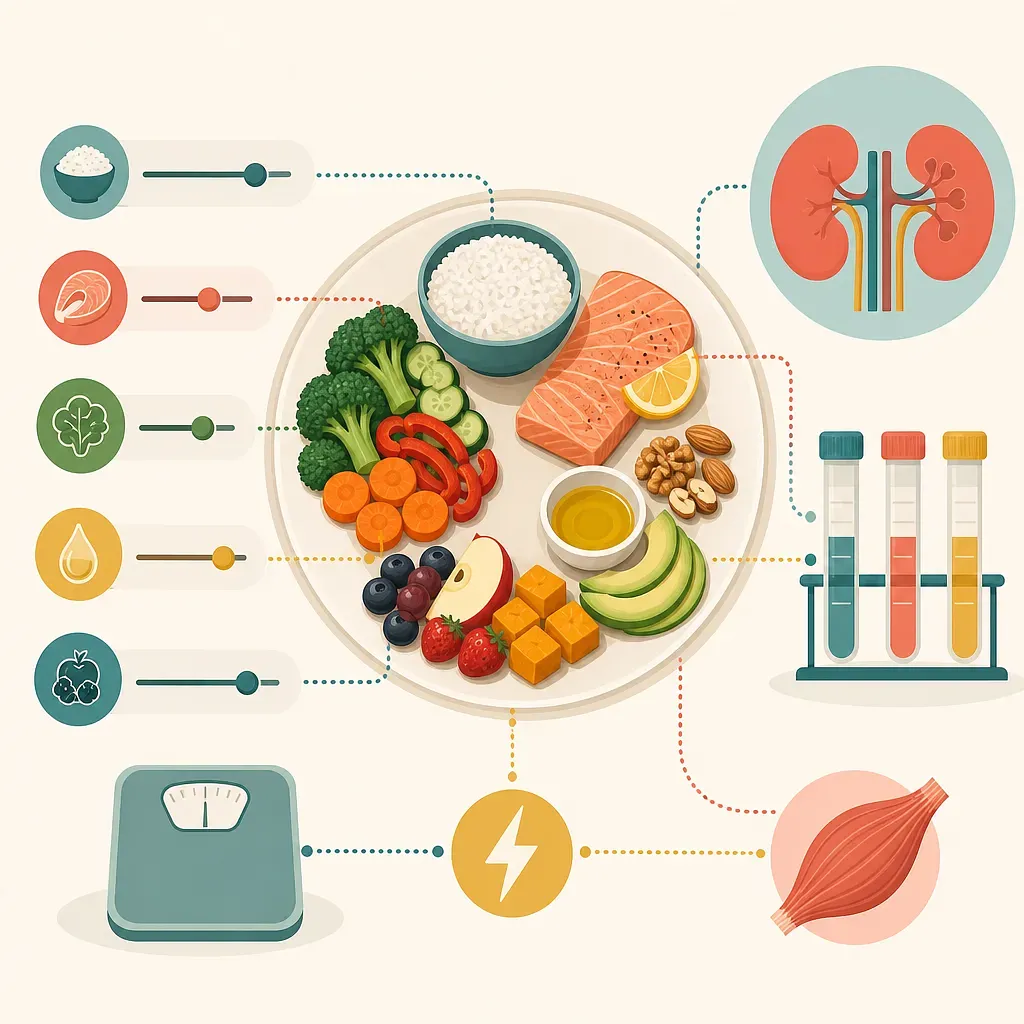
The graphic connects a balanced diet with kidney tests, body weight and muscle health.

Key points

  • A chronic kidney disease diet should not indiscriminately reduce overall food intake; it should provide sufficient energy while adjusting only the necessary nutrients.
  • Insufficient calorie and protein intake can cause the body to use muscle as an energy source, increasing the risks of sarcopenia and protein-energy wasting.
  • Protein restriction for people with chronic kidney disease who are not on dialysis and protein supplementation for dialysis patients require different approaches, so the same diet should not be applied to both.
  • Potassium and phosphorus should not be uniformly restricted for all patients but adjusted based on blood test results, medications, bowel habits, and food sources.
  • If weight loss, reduced appetite, decreased muscle strength, or reduced food intake persists, an evaluation by a nephrologist and clinical nutrition specialist is necessary.

Dietary management is important for patients with chronic kidney disease, but this should not be interpreted simply as “eating as little as possible.” Excessive restriction can prevent adequate intake of calories and essential nutrients, leading to muscle loss, reduced physical function, vulnerability to infection, and frailty.

Conversely, this does not mean that protein or sodium can be consumed without restriction. The key is to distinguish between what should be restricted and what should be consumed adequately according to the stage of kidney function, dialysis status, blood test results, comorbidities, and nutritional status.

Key Conclusion: What Is Restricted Matters More Than the Overall Amount of Food

A chronic kidney disease diet has two distinct goals.

  1. Adjust sodium, protein, and other nutrients within the necessary range to reduce the burden on the kidneys and metabolic abnormalities.
  2. Provide sufficient energy and nutrients to maintain body weight, muscle, and physical activity.

Focusing on only one goal can cause problems. Excessively reducing the types and amounts of food can lead to insufficient calorie intake, causing even the protein consumed to be used as an energy source. Conversely, indiscriminate consumption of high-protein meals, salty foods, and processed foods can make kidney disease more difficult to manage in some patients.

Therefore, the term individualized balanced diet is closer to the actual principle than “restrictive diet.”

Why Eating Less Leads to Muscle Loss

When Calories Are Insufficient, the Body Breaks Down Stored Tissue

When food does not provide enough energy, the body breaks down not only fat but also muscle protein to obtain energy and amino acids. If protein intake has also been reduced, it becomes even more difficult to replace these losses.

In chronic kidney disease, the following factors can further accelerate muscle loss:

  • Poor appetite, nausea, or changes in taste
  • Inflammation and infection
  • Metabolic acidosis
  • Reduced physical activity
  • Comorbidities such as diabetes or cardiovascular disease
  • Nutrient losses and metabolic burden during dialysis
  • Overly complex dietary restrictions

Protein-Energy Wasting Is Not Simply Being Underweight

“Protein-energy wasting,” as used in kidney disease, refers to a state in which the body’s stores of protein and energy have decreased. It is assessed comprehensively based not only on weight loss but also on loss of muscle mass, reduced food intake, low body mass index, and certain blood markers.

When edema is present, fluid can make body weight appear stable or increased even while muscle is being lost. Therefore, nutritional status should not be assumed to be adequate based on the number on the scale alone.

Protein Restriction Is Not the Same Prescription for Everyone

International guidelines generally recommend that patients with chronic kidney disease who are not on dialysis avoid excessive high-protein intake. The KDIGO 2024 guideline suggests a protein intake of approximately 0.8g per kilogram of body weight per day for adults with stage 3–5 chronic kidney disease and advises adults at risk of progression to avoid high protein intake exceeding 1.3g per kilogram per day.

However, these numbers are not an individual prescription. Actual requirements vary depending on age, body size, nutritional status, diabetes, inflammation, physical activity, pregnancy status, and dialysis status. In people with obesity or edema, current body weight may not be used directly in the calculation.

When a Low-Protein Diet May Be Appropriate

For some metabolically stable patients who are not on dialysis, a lower-protein diet may be used under the supervision of medical and nutrition professionals. In this case, sufficient calories must be ensured, and nutritional status and blood test results must be continuously monitored. A patient arbitrarily reducing both rice and side dishes is not the same as following a guideline-based low-protein diet.

Conditions Change After Dialysis Begins

During hemodialysis or peritoneal dialysis, protein loss and catabolism may occur, so protein requirements are generally higher than for patients who are not on dialysis. Continuing the same low-protein diet followed before dialysis may result in insufficient intake, so the diet must be readjusted according to the prescription from the dialysis center.

What Should Be Adjusted for Each Nutrient?

Item Basic principle Problems caused by excessive restriction Why individualization is needed
Total calories Ensure enough to maintain weight and muscle May cause weight loss, muscle breakdown, fatigue, and frailty Age, activity level, body size, and weight goals differ
Protein Patients not on dialysis should avoid excess and meet the prescribed amount Excessive restriction can reduce muscle and physical function Stage of kidney disease, nutritional status, and dialysis status are important
Sodium Reducing salty foods and processed foods is generally recommended If food becomes too unpalatable, overall intake may decrease Blood pressure, edema, heart failure, and medications must be considered together
Potassium Adjust food sources when blood potassium is high or there is a risk of it rising Unnecessary restriction reduces intake of fruits, vegetables, and dietary fiber Medications, acidosis, constipation, blood glucose, and residual kidney function also have an effect
Phosphorus Adjust according to blood phosphorus levels and food sources Avoiding all protein foods can cause nutritional deficiencies Phosphate additives and animal- and plant-based sources have different absorption rates
Fluids Follow the target amount when fluid restriction is prescribed by the medical team Unnecessary restriction can increase the risk of dehydration Requirements vary according to urine output, edema, heart failure, and dialysis method

Daily energy requirements in nutrition guidelines are often individualized within a range of approximately 25–35kcal per kilogram of body weight, but this is not a prescription for self-calculation. Requirements vary according to age, activity level, weight changes, and disease status, and a professional must also determine which body weight should be used for the calculation.

Why Potassium and Phosphorus Should Not Be Avoided Unconditionally

Potassium Should Be Assessed Alongside Test Results and Causes

Reduced kidney function can make potassium excretion more difficult, but not every patient with chronic kidney disease develops hyperkalemia. Blood potassium can also be affected by certain blood pressure medications, metabolic acidosis, constipation, blood glucose control, and errors during the testing process.

If test results are normal, broadly eliminating fruits and vegetables can lead to inadequate dietary fiber and vitamin intake and reduced dietary variety. If potassium is high, the actual sources should first be identified, followed by adjustments to food types, amounts, and cooking methods.

For Phosphorus, the Absorbed Form Matters as Well as the Amount

Processed meats, processed cheese, instant foods, and some beverages may contain phosphate additives. Phosphorus in additive form is absorbed relatively well. Phosphorus in plant-based foods is present in the form of phytate and tends to have a lower absorption rate.

Therefore, rather than eliminating all protein foods to reduce phosphorus, it is necessary to check ingredient lists for phosphate additives and compare both nutritional value and absorption rates.


Differences According to the Stage of Kidney Function and Dialysis Status

Situation Focus of dietary management
Early-stage chronic kidney disease Manage blood pressure and blood glucose, limit excess sodium, and maintain a balanced diet and appropriate weight
Advanced chronic kidney disease without dialysis Prevent excess protein intake, ensure adequate calories, and monitor potassium, phosphorus, acidosis, and nutritional status
Hemodialysis Ensure adequate protein, manage weight gain between dialysis sessions and sodium and fluid intake, and control potassium and phosphorus
Peritoneal dialysis Replace protein losses and consider glucose absorbed from dialysis fluid, body weight, and blood glucose
Older or frail patients Prioritize preserving muscle and function while assessing both the benefits of restriction and the risk of nutritional loss

Even with the same “kidney disease diet,” the goals change as the stage changes. It is not safe to follow an online diet plan without checking kidney function and dialysis status.

How to Review the Actual Diet

1. First, Record Current Intake and Weight Changes

Record all food and beverages consumed, meal portions, and appetite for about 3 days. Also review weight changes over the past 1–6 months, while distinguishing whether edema or fluid changes before and after dialysis are involved.

2. Separate Foods That Should Be Reduced From Foods That Should Be Maintained

Rather than reducing the entire diet at once, identify priorities for adjustment, such as salty broths, ultra-processed foods, high-protein supplements, and phosphate additives. Unconditionally reducing rice or other energy sources can lead to insufficient calorie intake.

3. Consider Blood Test Results Together With Comorbidities

Review potassium, bicarbonate, phosphorus, blood glucose, lipid levels, and other results with the medical team, in addition to glomerular filtration rate and albuminuria. Rather than imposing long-term restrictions based on a single result, check trends and underlying causes.

4. Monitor Muscle Function Along With Body Weight

Check whether walking has become slower than usual, standing up from a chair has become difficult, or climbing stairs has become harder. Healthcare facilities may use grip strength, walking speed, body composition, and nutritional assessments.

5. Readjust the Prescription Regularly

Kidney function, medications, dialysis status, and appetite change over time. Rather than continuing a diet prescribed at an earlier stage, the level of restriction should be reassessed according to test results and nutritional status.

An Easily Overlooked Problem: The Complexity of Restrictions Can Itself Be Risky

If a patient separately follows instructions such as “no meat,” “no vegetables because of potassium,” “no dairy products or beans because of phosphorus,” and “no rice because of blood sugar,” there may be almost nothing left that the patient can actually eat. This can be viewed as the burden of dietary restrictions.

Safe counseling prioritizes the following steps instead of continuing to expand the list of prohibited foods.

  1. First manage potentially life-threatening hyperkalemia or severe fluid overload.
  2. Identify clear sources of excess intake, such as sodium, added phosphorus, and excessive protein.
  3. Suggest foods that can replace calories and essential nutrients at the same time.
  4. Regularly compare the benefits of restriction with the risks of weight and muscle loss.

Instructions about “what not to eat” should always be accompanied by guidance on “what to eat instead and how much.”

Can Kidney Function Recover Through Diet?

Acute kidney injury can substantially improve when its cause is treated, but structural damage caused by chronic kidney disease often cannot be completely reversed. A healthy diet or exercise should not be presented as a specific treatment that will necessarily regenerate the kidneys.

However, managing blood pressure and blood glucose while combining appropriate medications with diet and exercise may reduce albuminuria or slow the decline in kidney function. A realistic goal for patients is not the “complete cure” of a single test result, but slowing progression, preventing complications, and maintaining physical function.

Signs That Should Be Reported Promptly to the Medical Team

If any of the following changes occur, it is best not to dismiss them as a simple appetite problem and to inform a nephrologist or clinical nutrition professional.

  • Unintentional weight loss continues.
  • There are consecutive days when only about half of the usual amount of food can be eaten.
  • Nausea, vomiting, severe changes in taste, or difficulty swallowing occurs.
  • Walking or climbing stairs suddenly becomes difficult, or muscle strength clearly declines.
  • Edema or shortness of breath worsens, and weight changes rapidly.
  • Severe lethargy, palpitations, or a feeling of muscle paralysis occurs.

Severe difficulty breathing, chest pain, changes in consciousness, or a sudden feeling of paralysis may require emergency evaluation.

Summary

For patients with chronic kidney disease, the danger is not restriction itself but excessive restriction without evidence or a replacement plan. During the non-dialysis stage, excess protein intake should be avoided, but sufficient calories and nutrients must be ensured; once dialysis begins, protein requirements change. Potassium and phosphorus should also be adjusted only after reviewing blood test results and actual food sources.

Protecting the kidneys and protecting muscle are not opposing goals. By assessing test results, current intake, weight changes, and physical function together, both goals can be pursued at the same time.

Sign-in required

Sign in with your Google account to like, comment, and save highlights.

Images

The graphic connects a balanced diet with kidney tests, body weight and muscle health.
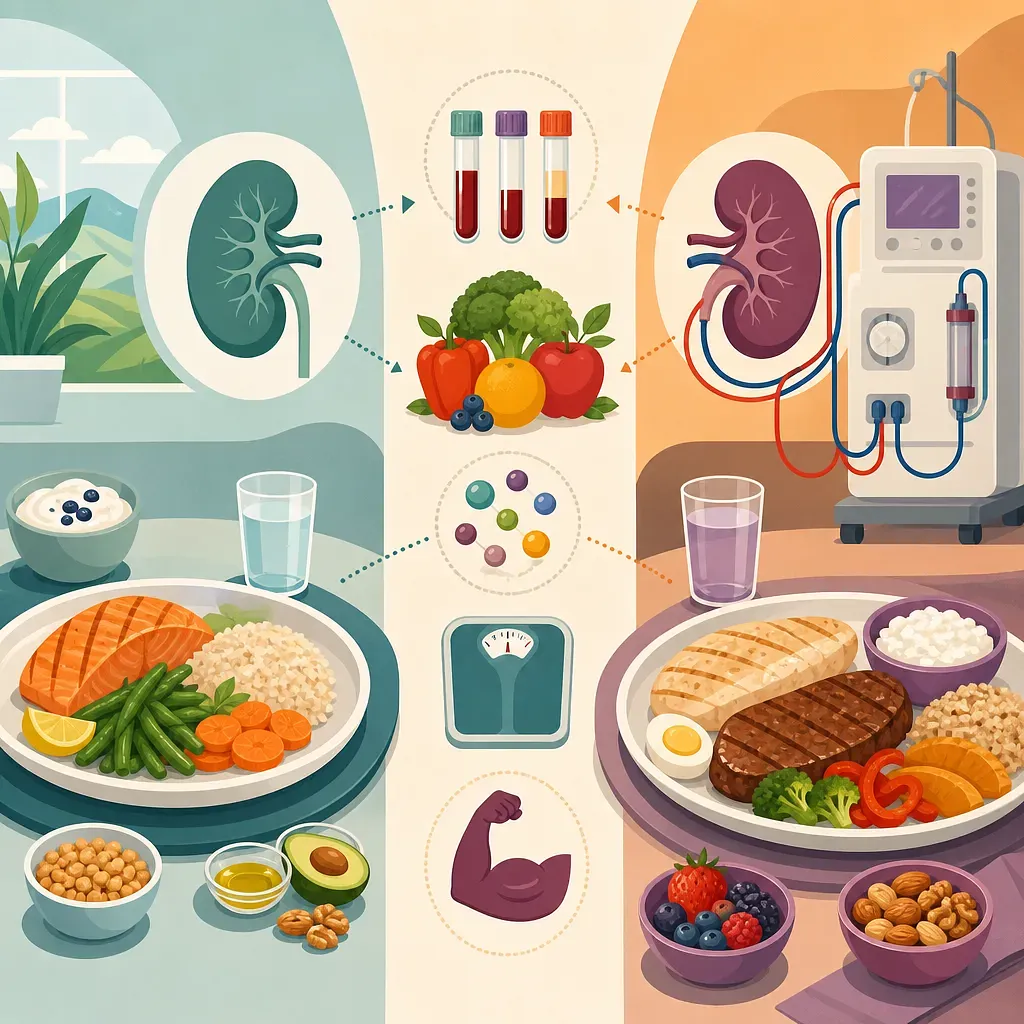
The illustration emphasizes choosing suitable nutrients and portions rather than simply eating less.

FAQ

If I have chronic kidney disease, do I need to stop eating meat completely?

No. Patients who are not on dialysis may need to avoid excessive protein intake, but eliminating it completely can lead to nutritional deficiencies and muscle loss. The appropriate amount and sources should be determined based on kidney function, body weight, nutritional status, and whether the patient is on dialysis.

Does eating less protein necessarily improve kidney function?

It cannot be said that it necessarily does. A supervised low-protein diet may help some stable patients who are not on dialysis, but adequate calorie intake and nutritional monitoring are essential. Arbitrarily reducing overall food intake may instead lead to loss of muscle and strength.

Should I continue a low-protein diet after starting dialysis?

In general, patients on dialysis need more protein than those who are not on dialysis. Because protein loss and catabolism during dialysis must be taken into account, they should not simply continue their pre-dialysis diet and should be reassessed at their dialysis center.

Should people with kidney disease avoid all fruits and vegetables?

No. Potassium restriction should be individualized when blood potassium levels are high or a risk of elevation has been identified. Broadly eliminating fruits and vegetables when test results are normal can lead to inadequate intake of dietary fiber and micronutrients.

If I am not losing weight, does that mean my nutritional status is fine?

Not necessarily. Edema or fluid gain can mask muscle loss. In addition to body weight, food intake, grip strength, walking ability, muscle mass, and blood test results should be assessed together.

Is it enough to use low-protein foods made for people with kidney disease?

Low-protein products may help some patients control protein intake while obtaining enough calories, but they are not necessary for everyone. Sodium, sugars, the overall diet, and nutritional status must also be reviewed, and these products should not excessively replace regular meals.

Can exercise repair damaged kidneys?

It cannot be concluded that exercise directly reverses chronic structural damage. However, aerobic and strength exercises suited to the individual may help maintain fitness and muscle and manage blood pressure and blood sugar. Exercise intensity should be determined with consideration of cardiovascular status, the dialysis schedule, and other factors.

If I have both diabetes and chronic kidney disease, do I also need to greatly reduce carbohydrates?

Blood sugar management is necessary, but excessively reducing carbohydrates and total calorie intake can lead to inadequate nutrition. Sugary drinks and refined foods should be adjusted first, and energy sources and food intake should be determined while considering blood sugar, body weight, and kidney function together.

If blood tests show high phosphorus levels, should I stop consuming all dairy products and beans?

Uniform, across-the-board restriction is difficult to recommend. First, processed foods high in phosphate additives should be identified, and the nutritional value of each food, phosphorus absorption rates, protein needs, and instructions for taking prescribed phosphate binders should be reviewed together.

Can chronic kidney disease be cured through diet alone?

Most cases of chronic kidney disease cannot be considered curable through diet alone. Appropriate diet, exercise, blood pressure and blood sugar management, and medication are intended to slow the decline in kidney function and reduce the risk of complications.

Sources

Data formats

This content is available in several machine-friendly formats.

Data-only languages (machine translated, files only)

Indonesian JSON MD Portuguese JSON MD Chinese (Traditional) JSON MD Deutsch JSON MD

Reuse & AI usage

Search indexing and AI citation with attribution are welcome. See the license policy for details.

CC BY · License

Loading…

Loading…

Related content

From Injoys

Request the content you want and take 70% of what it earns

Just leave the subject. We handle production, review, translation and distribution.

See how revenue sharing works

Comments