Injoys

The claim that people with poor kidney function should avoid meat as much as possible is overly simplistic. Conversely, the claim that people with kidney disease can continue eating meat as usual does not apply to every patient either. The key is not to ban meat itself, but to adjust total daily protein intake according to disease stage, dialysis status, and nutritional status.
The Misconception That Meat Must Be Avoided Entirely
Meat provides high-quality protein, iron, vitamin B12, and other nutrients. However, protein metabolism produces nitrogenous waste that must be processed through the kidneys, so excessive protein intake can burden some patients whose kidney function has significantly declined.
The following distinctions are important.
- This does not mean that meat is a toxic food. An appropriate amount can be included in the diet.
- Nor is there any guarantee that the usual intake is appropriate. If the existing diet was high in protein, intake may need to be reduced.
- The target is not the same for every patient with kidney disease. It varies according to chronic kidney disease stage, proteinuria, diabetes, age, weight changes, and dialysis status.
- Do not start an extremely low-protein diet on your own. Insufficient calories and essential nutrients can lead to weight loss and muscle loss.
Therefore, the accurate statement is: “People with kidney disease can eat meat within their prescribed total protein range.”
Protein Targets Vary by Disease Stage and Dialysis Status
The KDIGO guidelines provide protein intake standards for adults with chronic kidney disease who are not on dialysis, but the specific disease stages covered and target amounts should be confirmed with the relevant guidelines and healthcare professionals. These are population-level standards and do not replace an individualized prescription.
| Situation | General dietary approach | What must be checked |
|---|---|---|
| Early-stage chronic kidney disease | Preventing excessive intake takes priority over banning meat unconditionally | Proteinuria, diabetes, current eating habits |
| G3–G5 without dialysis | Adjust total protein while ensuring adequate calorie intake | The weight basis and target amount determined by the healthcare team |
| Undergoing hemodialysis or peritoneal dialysis | Protein requirements may be higher than for patients not on dialysis | Dialysis method, test results, nutritional status |
| Older age, low body weight, or risk of sarcopenia | Prioritize guarding against malnutrition caused by excessive restriction | Weight loss, muscle strength, appetite, serum albumin, etc. |
| Acute kidney injury, nephrotic syndrome, or post-transplant | A general chronic kidney disease diet may be difficult to apply as-is | Separate instructions from the healthcare professionals treating the condition |
The type of body weight used to calculate intake per kilogram is also important. For people with edema, obesity, or low body weight, standard weight or adjusted weight may be used rather than simply applying current body weight, so this should be confirmed with a healthcare professional or clinical dietitian.
Why Reducing Meat Alone Does Not Make the Calculation Work
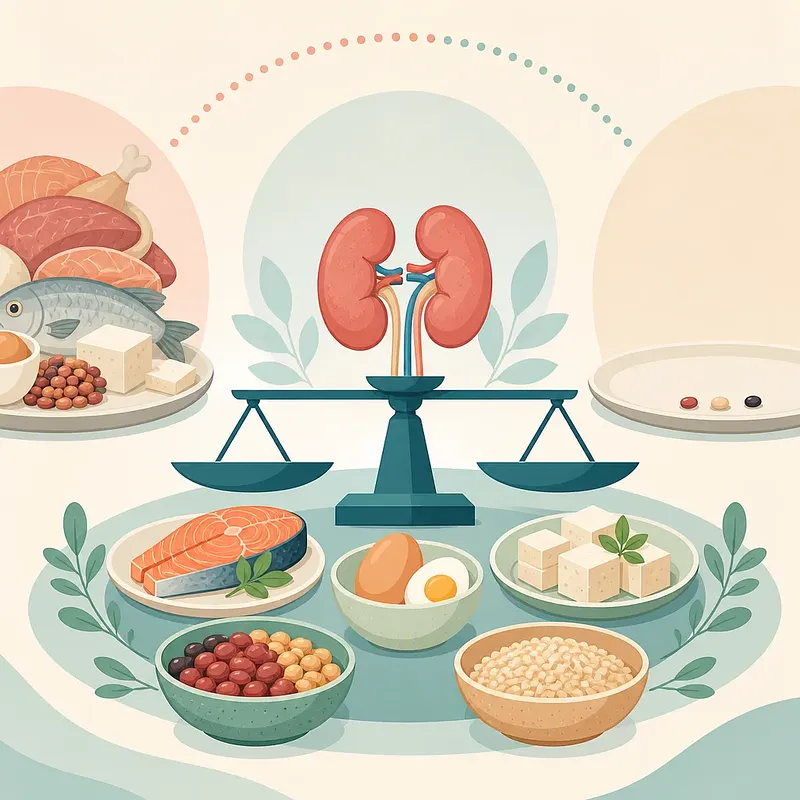
Protein is not found only in meat, fish, and eggs. Protein from the following foods must also be included in the daily total.
- Grains such as white rice, multigrain rice, bread, and noodles
- Beans, tofu, and nuts
- Milk, yogurt, and cheese
- Fish, eggs, and meat
- Protein drinks and workout supplements
- Some convenience foods and nutritional supplements
Even if no meat is eaten at a meal, protein adds up when rice, tofu side dishes, milk, and nuts are eaten together. Conversely, when eating meat, adjusting the protein from grains and other side dishes can create room to compose a meal within the prescribed range.
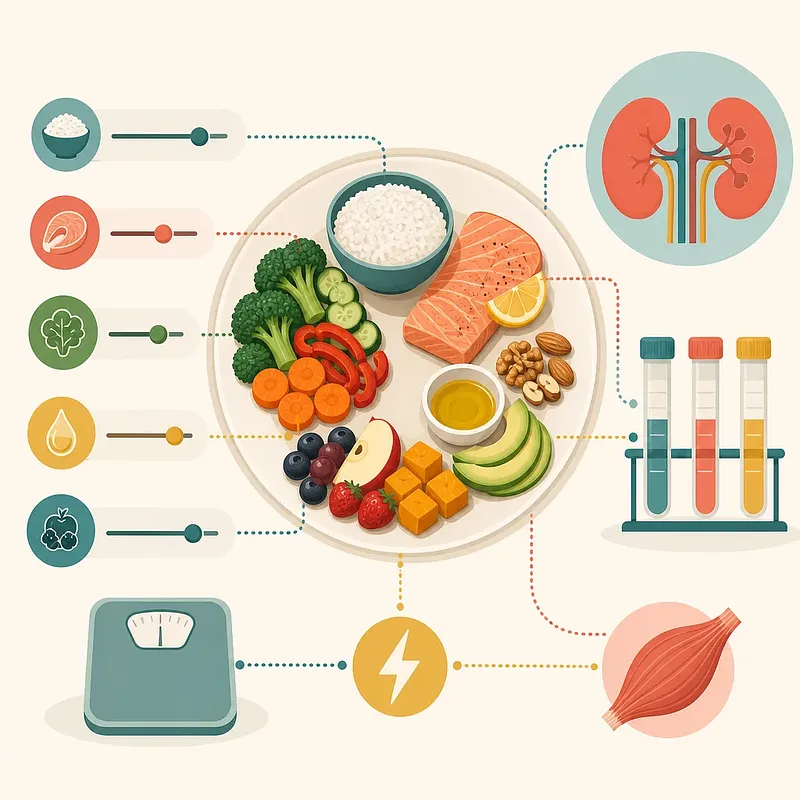
It is safer to calculate actual intake in the following order.
- Confirm the daily protein target with a healthcare professional.
- For packaged foods, distinguish between the serving size shown in the nutrition information and the amount actually consumed.
- Record protein from rice, noodles, tofu, and dairy products as well as meat.
- Divide the daily total among meals without concentrating too much in a single meal.
- If weight and appetite continue to decline, seek medical care rather than tightening the restriction.
When Can Low-Protein Rice Help?
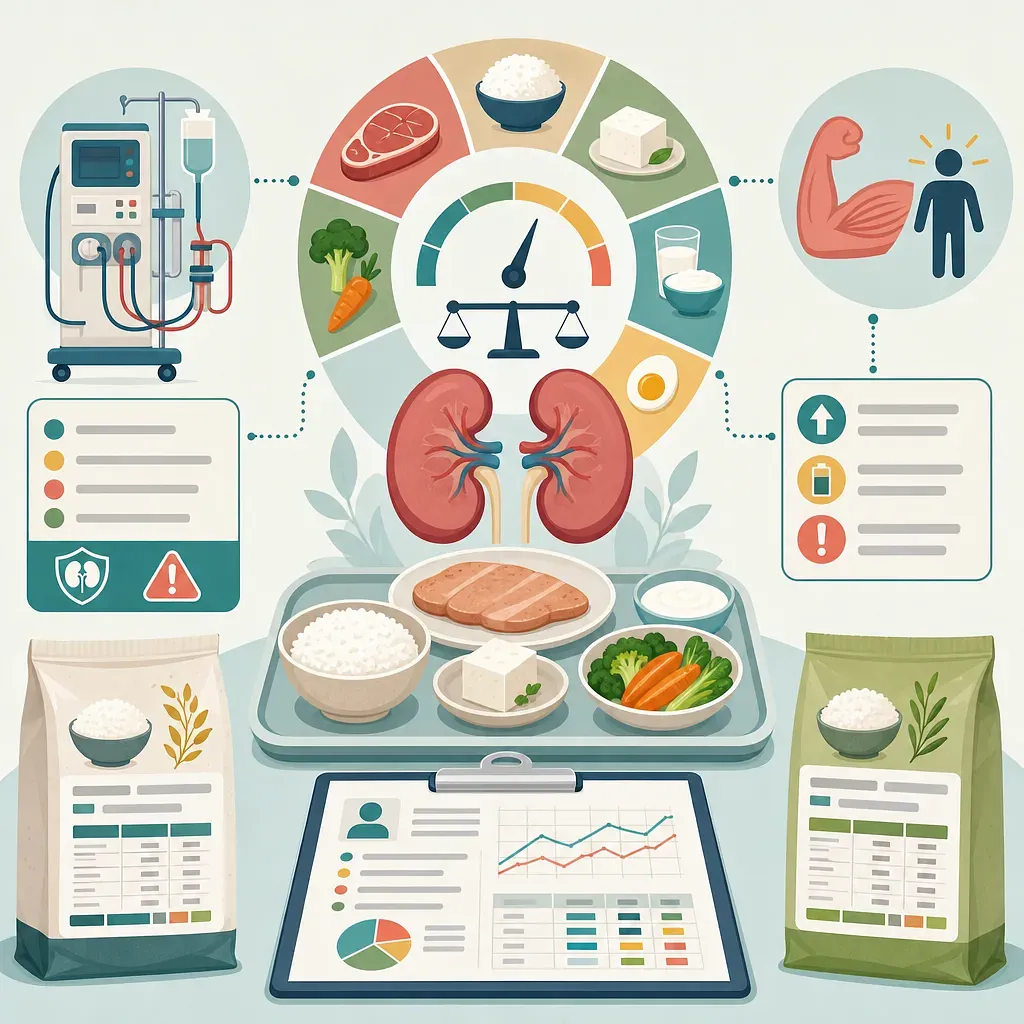
Regular white rice also contains protein. Therefore, if someone prescribed protein restriction by a healthcare professional wants to eat a certain amount of preferred side dishes such as meat or fish, low-protein rice or low-protein instant rice can be used to reduce the protein coming from grains.
However, not every low-protein product contains exactly one-tenth the protein of a regular product. Because ingredients, manufacturing methods, and serving sizes differ, the figures shown on product packaging must be compared directly.
What to Look for When Comparing Products
| Item to check | Why it should be checked |
|---|---|
| Serving size | One package may differ from the reference amount used in the nutrition information |
| Protein | Needed to determine the actual reduction achieved in a meal |
| Calories | Necessary energy must still be obtained while reducing protein |
| Sodium | Seasoned products or convenience foods may be high in sodium |
| Potassium and phosphorus | Management may be needed depending on individual test results |
| Phosphate additives | Checking the ingredient list is useful because they can increase phosphorus intake from processed foods |
Low-protein rice is not a treatment but a tool for dietary management. Eating this product does not mean that the amount of meat can be increased without limit or that protein from other side dishes can be excluded from the calculation.