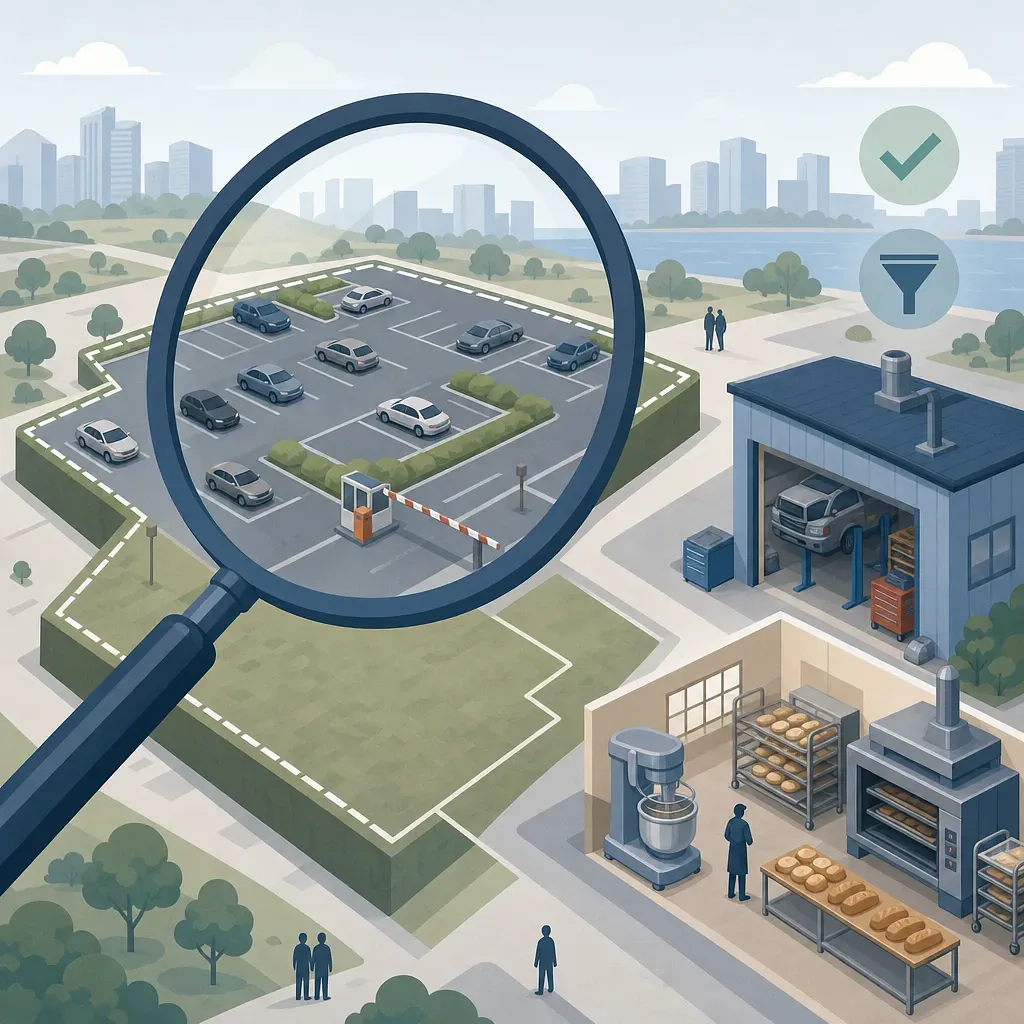
Controversy Over the Family Business Inheritance Tax Exemption and Inheritance Tax Evasion: Key Issues with the System as Seen Through the Examples of a Bakery Café and a Parking Lot
The Family Business Inheritance Tax Exemption is a system designed to assist small and medium-sized enterprises (SMEs) and mid-sized companies with succession planning; however, it has repeatedly been the subject of controversy over tax avoidance through industries with high real estate values. This article provides a fact-based overview of the system’s purpose, its current structure, case studies involving bakery cafes and parking lots, and key issues for improvement.
The family business inheritance tax deduction is a system that allows for a deduction from the taxable base for inheritance tax on assets inherited as part of a family business by small and medium-sized enterprises and mid-sized companies that meet certain requirements.
Under the current system, the deduction limit varies depending on the length of time the family business has been in operation, and businesses that have been in operation for a longer period are eligible for larger deductions.
The crux of the controversy is that when a business—whose land and building values exceed its actual business value—is recognized as a family business, the resulting inheritance tax savings may be excessive.
The cases of the bakery café and the parking lot highlight the issue of how to determine the business format, the nature of the business, and the scope of business assets.
The goal of the reform is to protect genuine family business succession while excluding from tax deductions the transfer of assets that are unrelated to the business or have little substantive value.
Overview
The Family Business Inheritance Tax Deduction is a system designed to prevent businesses from ceasing operations due to the inheritance tax burden when heirs—such as children—take over small and medium-sized enterprises (SMEs) that have been operated by their parents for a long time, or mid-sized enterprises that meet certain criteria. The policy objectives of this system are to maintain employment, ensure the succession of technology and business relationships, and foster long-standing enterprises.
However, as the deduction limit has increased and the criteria for determining eligible industries and assets have become more complex, a practice has sparked controversy in which inheritance tax is significantly reduced by utilizing businesses where the value of land and buildings outweighs the actual profitability of the business. Notable examples include large bakery cafes and parking lot businesses operating on expansive vacant lots.
This article does not make any definitive judgments regarding the legality of specific individuals or companies. Instead, it summarizes how the family business inheritance tax deduction works, why controversies over tax avoidance have arisen, and what aspects should be considered for system improvements.
What Is the Family Business Inheritance Tax Deduction?
The family business inheritance tax deduction is a provision under the Inheritance and Gift Tax Act. When an heir succeeds to the family business of a decedent who met certain requirements, all or part of the value of the inherited family business assets is deducted from the taxable estate value, within statutory limits.
Simply put, unlike the inheritance of general assets, this is a mechanism designed to reduce the inheritance tax burden on assets intended to keep a business running. However, not all businesses or assets automatically qualify for the deduction. Certain conditions must be met, including the size of the business, the industry, the decedent’s period of management, the heir’s employment requirements, and post-inheritance management obligations.
The Original Purpose of the System
The original intent of the family business inheritance deduction is as follows:
· To prevent situations where viable businesses are sold or shut down due to the inheritance tax burden
· To support the succession of technology, know-how, business relationships, and employment at small and medium-sized enterprises
· To enhance the sustainability of long-standing businesses and community-based enterprises
· To alleviate temporary liquidity pressures arising during the family business succession process
Therefore, the core of the system is not “supporting the gratuitous transfer of wealth” but “protecting business continuity.”
Basic Structure of the Current System
Since specific requirements may change depending on amendments to laws and regulations, actual applicability must be determined based on the laws and regulations in effect on the date of inheritance and a review by a tax professional. However, the general structure can be understood as follows.
Category | Key Details
Eligibility | Succession of family businesses by small and medium-sized enterprises (SMEs) or certain mid-sized enterprises that meet specific requirements
Key Requirements | Long-term management by the decedent, the heir’s involvement in and succession of the family business, industry requirements, equity requirements, etc.
Eligible Assets | Business-related assets recognized by law as family business inheritance assets
Deduction Limit | Applied on a sliding scale based on the duration of business operation; under current laws, the maximum is reportedly around 60 billion won
Post-Inheritance Compliance | The business sector, shareholding, employment or wages, and assets used for the family business must be maintained for a certain period after inheritance
Consequences of Violation | If post-inheritance compliance requirements are violated, the tax deduction may be subject to recovery
Why Does the Controversy Over Inheritance Tax Avoidance Arise?
The controversy arises not simply because it reduces tax liability, but because it is difficult to distinguish between “genuine business succession” and “businesses established solely for the purpose of asset succession.”
For example, if land worth 30 billion won is inherited as-is, it generally results in a significant inheritance tax burden. Since inheritance tax varies depending on several factors—such as the taxable base, personal deductions, debts, appraised value, and tax credit for filing—simple calculations can be risky; however, in cases of high-value asset inheritance, the tax liability can range from several billion to 10 billion won.
However, if the same land is recognized as a business asset in a specific industry and that business meets the requirements for the family business inheritance tax deduction, the inheritance tax burden can be significantly reduced. This raises the following issues:
· Cases where the value of the land and buildings is disproportionately high compared to the economic substance of the business itself
· Cases where a business is formally recognized as a family business despite minimal sales, employment, facilities, or technological accumulation
· When the industry code or the name on the business registration differs from the actual business operations
· When there is suspicion that the business structure was established immediately before the inheritance or a certain period prior solely to reduce inheritance tax
· When there is an incentive to dispose of the business after merely fulfilling the post-inheritance management period
Case 1: Controversy Surrounding Large Bakery Cafés
Large bakery cafés often utilize spacious land and large buildings in suburban areas. A normal bakery café would have substantive business elements such as baking equipment, baking staff, in-house production, sales, and employment. It would be unfair to label all such businesses as problematic.
The problem arises when a business is, in reality, closer to a coffee shop, a leased space, or a vehicle for holding real estate, yet it is formally registered as a bakery or classified under that business category. In particular, critics argue that it runs counter to the intent of the tax deduction if the total value of the land and building is treated as family business inheritance property—even when the business does not bake bread in-house or merely purchases finished products from outside suppliers to display.
Key Issues
Issue | Why It Matters
Whether Products Are Manufactured In-House | Can serve as a basis for determining whether the business operates as a genuine bakery
Revenue Composition | If revenue from coffee, space rental, and merchandise sales exceeds that from bread, the business’s actual nature must be assessed
Equipment and Staff | Ovens, dough mixers, and baking staff indicate whether the business is actually engaged in manufacturing or operating as a bakery
Land Size | The question arises as to whether land exceeding the area necessary for business operations should be included in the deduction
Business Purpose | It must be determined whether the business is a long-term family business or a nominal business established solely to reduce inheritance tax
Case 2: Controversy Over the Parking Lot Business
A parking lot business can be operated with relatively few staff by installing lane markings, barriers, and unmanned payment terminals on a large plot of land. In areas with high land values, the value of the land often far exceeds the business’s revenue.
Consequently, in situations where the parking lot business could be interpreted as or included among industries eligible for the family business inheritance tax deduction, the practice of structuring the inheritance of vacant land to resemble the succession of a parking lot business has become a point of controversy. This is particularly problematic when revenue is very low, employment is minimal, and the primary purpose is land ownership rather than the business’s intrinsic value, as this conflicts with the policy objectives of the family business inheritance tax exemption.
Issues with the Parking Lot Model
· The effect on job retention may be limited.
· It may be far removed from the concept of a family business, which emphasizes the succession of technology and know-how.
· Land ownership and appreciation may be the primary economic benefits.
· Since unmanned operation is possible, it is difficult to determine whether the heir is actually participating in management.
· The asset deduction effect may be far greater than the business’s revenue.
Criteria for Distinguishing Form from Substance
To prevent the abuse of the family business inheritance tax deduction, one must look not only at the business category listed on the business registration but also at the substance of the business. The assessment criteria can be summarized as follows.
Assessment Criteria | Examples of Documents to Review | Interpretation
Revenue Structure | Revenue by item, credit card sales, tax invoices | Verify whether the primary source of revenue falls under an eligible industry
Facilities | Manufacturing equipment, machinery, kitchen and factory facilities | Verify actual production and operational capacity
Workforce | Number of employees, payroll records, four major social insurance records | Verify employment stability and the substantive nature of the business
Space Usage | Building registry, lease agreements, blueprints | Verify the area actually used for the business eligible for the deduction
Nature of Assets | Land, buildings, financial assets, rental assets | Verify whether assets are unrelated to the business or held in excess
Operating Period | Business start date, representative’s background, decision-making records | Verify whether it is a long-standing family business or merely a formal setup
Key Directions for Improvement
Apart from discussions calling for the abolition of the family business inheritance tax deduction, it is necessary to design the eligibility criteria more precisely to uphold the system’s original intent. The improvement directions currently under discussion are generally as follows.
1. Refining Industry Requirements
Industries that are heavily focused on real estate ownership or asset management could be excluded from the family business inheritance tax deduction or subject to strict additional requirements. Examples under consideration include parking lot operations, businesses with structures similar to real estate leasing, and space management operations with limited substantive business activity.
2. Strengthening the Exclusion of Non-Business-Related Assets
Assets within the family business inheritance that are not actually used in the business should be excluded from the deduction. While the intent to exclude non-business-related assets is already reflected in the law, further discussion could focus on methods to more closely examine the usable area of land and buildings and their contribution to sales.
3. Expansion of Pro Rata Calculations
A pro rata calculation is a method used when a single asset or business entity serves multiple purposes, allowing deductions only in proportion to the contribution made to the business actually eligible for the deduction.
For example, consider a café that owns land and buildings worth 30 billion won; if 20% of that value corresponds to revenue from in-house baking or pastry sales, only 6 billion won—not the full 30 billion won—would be eligible for the deduction. In the actual design of the system, it is crucial to determine how to combine factors such as sales ratio, floor area ratio, asset utilization ratio, and labor input ratio.
4. Strengthening Post-Approval Oversight
Post-approval oversight requirements are essential to prevent businesses from merely maintaining a nominal presence for a set period after receiving the deduction before disposing of their assets. Requirements such as maintaining the business sector, retaining ownership stakes, sustaining employment or wages, and restricting the disposal of assets used for the family business must be effectively enforced.
5. Ensuring Predictability for Legitimate Family Businesses
While preventing abuse is important, companies that actually operate factories or have sustained local businesses for a long time should not be forced to abandon succession due to uncertainty. Therefore, any amendments must be accompanied by clear criteria, transitional provisions, and procedures for prior consultation or authoritative interpretations.
Comparison with Overseas Systems
Systems supporting family business succession also exist overseas. However, restrictions are often imposed on investment assets unrelated to the business, real estate holdings, and businesses that exist in name only.
Country | Institutional Features | Implications
Germany | There is a tax relief system for business succession, but the holding period, total wage requirements, and administrative requirements are strictly defined | Tax benefits are linked to employment and business continuity
United Kingdom | The Business Relief scheme grants inheritance tax relief on certain business assets, but investment companies and assets held for investment purposes are restricted | The criteria for distinguishing between business assets and investment assets are crucial
OECD Discussion | Analysis indicates that the design of inheritance and gift taxes is crucial for mitigating wealth concentration and ensuring tax equity | Relief schemes require a balance between equity and efficiency
Points for Taxpayers and Businesses to Verify
Businesses preparing for the family business inheritance tax deduction should review the following items in advance.
· Verify whether the current industry is eligible for the deduction under applicable laws and regulations.
· Organize books and supporting documentation by distinguishing between business assets and non-business assets.
· Secure objective evidence to prove the area of land and buildings actually used for business operations.
· Review the requirements for the heir’s actual employment, participation in management, and appointment as a representative.
· Determine whether the business can comply with restrictions on industry, shareholding, employment, and asset disposal during the post-inheritance monitoring period.
· If there is a possibility of regulatory changes, be sure to verify the effective date of the inheritance and any transitional provisions.
· Seek a preliminary review from professionals such as tax accountants, certified public accountants, and attorneys.
Conclusion
The family business inheritance tax deduction can be a beneficial system. If a healthy business were to close and employees lose their jobs due to inheritance taxes, it would be a loss for society as a whole. However, if the system becomes a conduit for transferring high-value real estate virtually tax-free through nominal business entities, its legitimacy is undermined.
The key is distinguishing between genuine family businesses and fake ones. Businesses that meet substantive criteria—such as direct production, employment, sales, facilities, long-term management, and business assets—should be protected, while structures created solely to meet the formal requirements of a specific industry for the purpose of transferring land and buildings should be excluded from the deduction. To ensure that honest taxpayers do not feel disadvantaged, the family business inheritance tax deduction must be administered according to more precise and transparent criteria.
 Injoys