Warm Mist Humidifier Descaling: Citric Acid Guidelines
Whether you can use citric acid in a warm mist humidifier depends on the model and the part being cleaned. The manufacturer's manual specifies when to use a cleaning mode, when to soak with the unit unplugged, and when acidic cleaners are prohibited.
Check the product's model name, then look up the cleaning agents and the parts they can be used on in the manufacturer's manual.
Unplug the unit, let it cool completely, then discard any remaining water.
Clean using the amounts and methods specified in the manual, and use heat only in the designated cleaning mode.
Discard the cleaning solution, then rinse thoroughly with clean water.
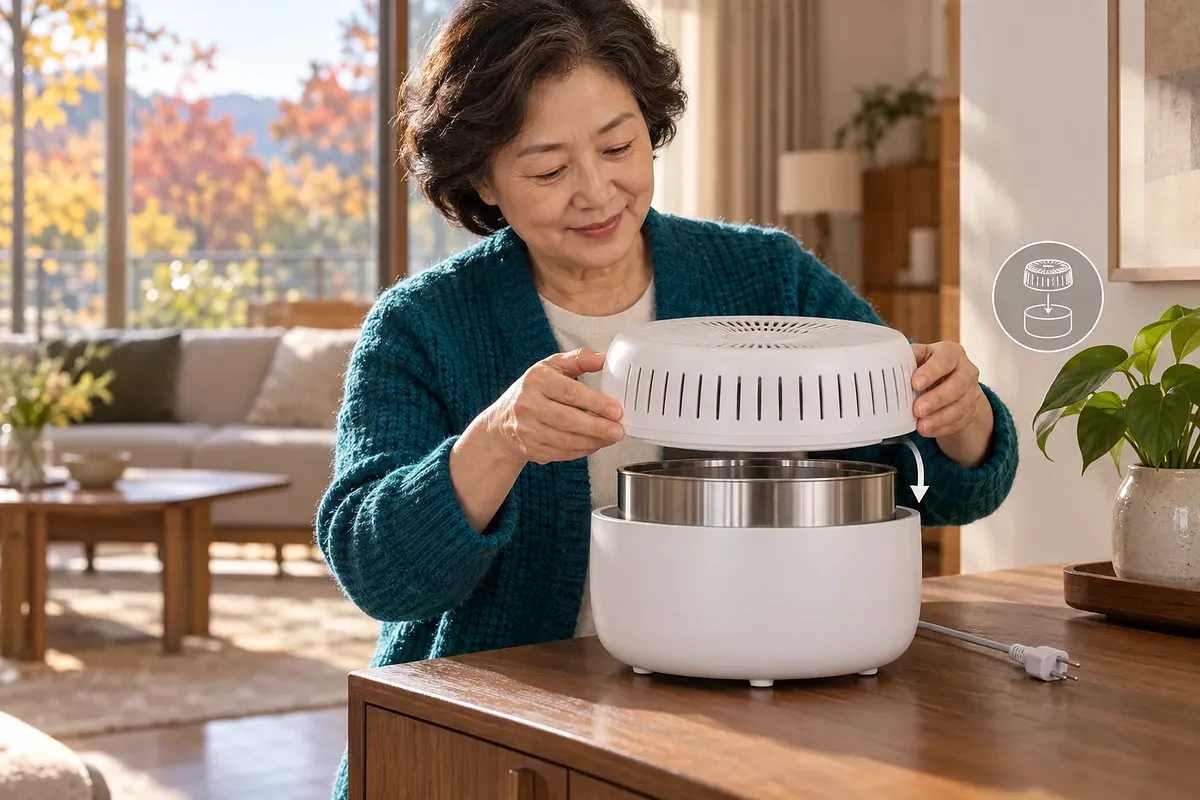
Dry the parts, reassemble them according to the manual, and fill with fresh water before use.
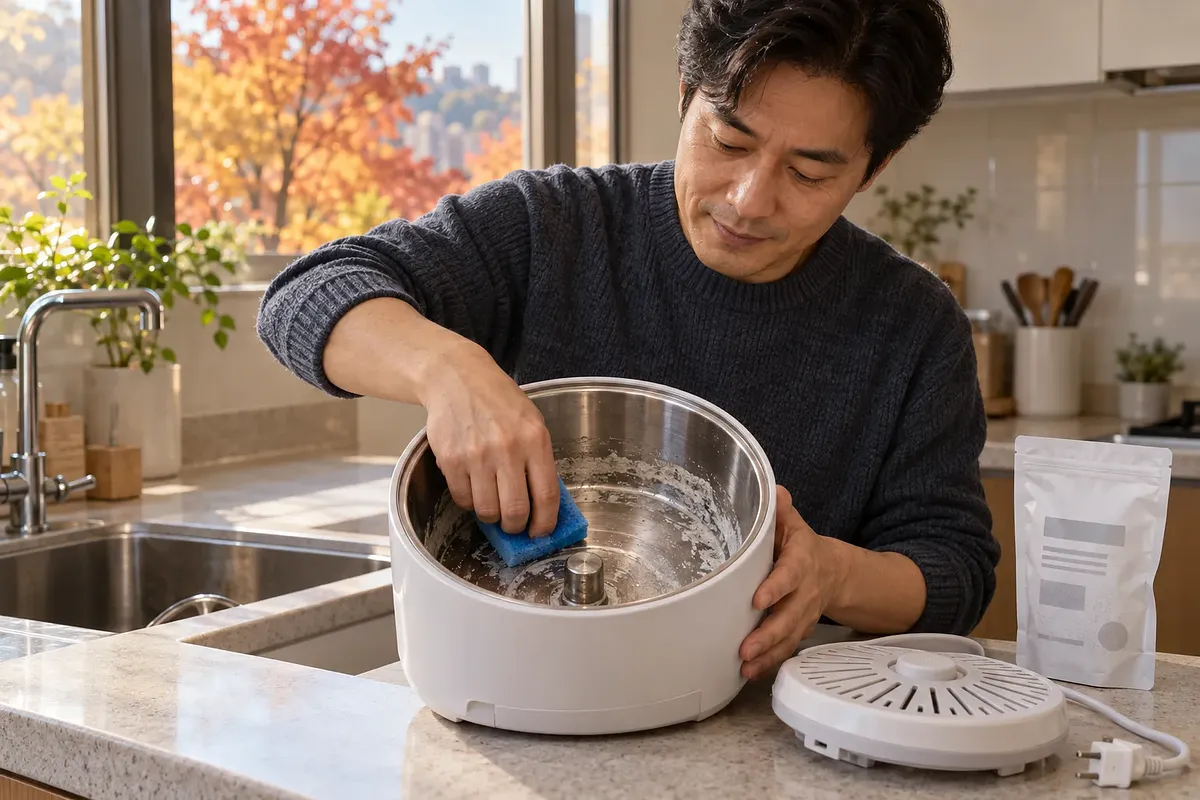
To remove scale from a steam humidifier, first check whether your model's manual allows citric acid. The method differs between products that must be unplugged for soaking and those that heat the water in a cleaning mode. Prepare an approved cleaner and soft cleaning tools.
The figures are based on Zojirushi's FAQ dated January 13, 2026, and Hanil Electric manuals.
Preparation and checks before cleaning
First, confirm the model name and the part you plan to clean. The tank that stores water may be separate from the chamber that heats it. Use the parts diagram in the manufacturer's manual to tell them apart.
· Check the full model name on the product label or in your purchase records.
· Find the manual for the same model on the manufacturer's website.
· Check the cleaner type, where it can be used, dilution amount, and operating instructions.
· Prepare approved tools, such as a soft cloth or sponge.
· Unplug the unit, let it cool, and empty any remaining water.
Hanil Electric manuals are available in the resource library on its website. For Zojirushi, check the user guides and FAQs under customer support. If the model name differs, do not apply another model's cleaning method unchanged, even within the same brand.
The difference between routine care and deposit removal
Distinguish between changing the water daily and removing hardened deposits. White, rough deposits may be minerals left behind by the water. A stain's color alone cannot determine its composition or the unit's hygiene.
Condition | Care objective | Action to check
Water remains after use | Manage water left standing | Empty the remaining water and check the tank care instructions
Hard deposits form in the heating chamber | Remove mineral deposits | Check whether cleaners are allowed on that part
Odors or slimy buildup develop | Remove buildup | Clean according to the manual and check the condition before reuse
The surface is peeling or damage is suspected | Check the condition of the part | Do not scrape further or increase the concentration; contact the manufacturer
CDC guidance on caring for household devices that use water advises emptying any remaining water daily. It recommends air drying after cleaning. Do not skip tank care even for products that boil water.
Comparing citric acid cleaning requirements by model
Decide whether to use citric acid based on the manual for your model, not the humidification method. The table below gives examples of different cleaning requirements. For models not listed, check the included manual.
Model or scope of official guidance | Part to clean | Cleaner and amount | Operating or soaking conditions
EE-D example in the Zojirushi FAQ | Inner container | 30g of a single-ingredient, 100% food-grade citric acid product; water up to the maximum fill line | Dedicated citric acid cleaning mode, about 1 hour 30 minutes
Hanil Electric SSVAM-4000BT·SSVAM-H4350BT | Heating chamber | Warm water and vinegar at 1:1; separate instructions to dilute 1 spoonful of food-grade citric acid | Soak in the diluted vinegar solution for 10~30 minutes; unplug when cleaning
Hanil Electric HGSP-30SW | Main unit's water chamber and heating chamber | Citric acid and vinegar prohibited; lukewarm water and soft tools | Clean after the unit cools; warning that acidic substances can damage the heater
Zojirushi's cleaning time varies with the amount of water, water temperature, and room temperature. The EE-D example instructs users to hold the “Quiet Heating” button for at least 3 seconds. For other models, compare the Zojirushi cleaning FAQ with the included manual.
You can check Hanil Electric's model-specific requirements in its official manual library. For SSVAM models, read pages 9 and 14 together. For HGSP-30SW, pages 3 and 12 contain precautions about acidic cleaners.
The HGSP-30SW manual states:
Do not clean using citric acid or vinegar.
The mistake of converting spoonfuls into a universal concentration
“1 spoonful” alone cannot establish a dilution ratio for all humidifiers. The citric acid instructions in the SSVAM manual do not specify the amount of water. They also do not separately state the spoon's capacity or the mass of citric acid.
Manual wording | What can be confirmed | What must not be inferred
30g of citric acid, add water to the maximum fill line | The amount and water level for that product | A concentration per 1L of water applicable to all products
Dilute 1 spoonful of food-grade citric acid | That instructions for citric acid use are provided | An amount converted from spoonfuls to g, or a soaking time
Warm water and vinegar at 1:1, 10~30 minutes | The vinegar soaking conditions for that model | Applying the same ratio and time to citric acid
Acidic cleaners prohibited | The restriction for that model | Interpreting this as allowing a small amount
If the amount is unclear, contact the manufacturer with the model name and the part to be cleaned. Do not fill in missing details with figures from another model. Do not independently add steps such as increasing the concentration or soaking overnight.
The difference between heated cleaning and unplugged soaking
Use heat during cleaning only when the manufacturer specifies a cleaning cycle. A dedicated cleaning mode and normal humidification are different procedures. Do not press the normal humidification button simply because you have added citric acid.
Manual instruction | How to proceed | Action to avoid
Run the dedicated cleaning mode | Follow the specified water level and button instructions | Applying another model's button instructions
Unplug and soak | Keep the unit unplugged and follow the specified soaking time | Heating without instructions to clean faster
Citric acid and vinegar prohibited | Follow the specified water-cleaning method | Assuming food-grade citric acid is acceptable
A food-grade label does not mean a substance can be used on every part. Check separately whether citric acid is allowed and whether the unit can operate with cleaning solution inside. Do not use cleaning solution as you would normal humidification water.
Rinsing, drying, and reuse
After cleaning, remove the cleaning solution, then rinse and dry the unit. Finishing a dedicated cycle does not mean rinsing is automatically complete. You must separately check whether the entire main unit can be submerged in water.
· If you used a heating cycle, wait for the unit to cool.
· Unplug the unit, then discard the cleaning solution in the specified draining direction.
· Rinse the cleaned parts several times with clean water.
· Let the parts dry thoroughly, disassembling them only as permitted by the manual.
· Reassemble the parts in their proper positions, then fill with fresh water and use.
Rinsing removes cleaner residue. EPA guidance on the use and care of home humidifiers recommends thorough rinsing after using a cleaner. Protect power connections and controls that must not get wet.
The SSVAM manual instructs users to stop using the unit if water enters the controls or heater section. If this happens, do not turn it on immediately after drying; contact a service center. Before long-term storage, remove all moisture from the parts.
Assessing stains and noise that remain after cleaning
Marks remaining after cleaning do not mean you need to add more cleaner. The SSVAM manual notes that heating marks may remain in the heating chamber. Do not treat surface marks and unremoved deposits as the same problem.
Zojirushi's FAQ on inner container discoloration describes mineral buildup as a possible cause. Deposits may be associated with boiling noises or odors. However, do not extend this explanation to mean that all stains are harmless.
· Take photos of the same area before and after cleaning to compare.
· If the surface is peeling or you see leaks, ask the manufacturer to inspect the unit.
· If problems continue after approved cleaning, contact the manufacturer with the model name and symptoms.
What to check about the humidification method and operating environment
Steam humidifiers heat water to produce steam. They work differently from ultrasonic or evaporative humidifiers. Different methods also mean different parts need care.
Method | How it raises humidity | Care priorities
Steam | Heats water to produce steam | Deposits on heating components and handling hot water
Ultrasonic | Uses vibration to produce fine water droplets | Caring for the tank and vibrating components, and checking the water used
Evaporative | Evaporates moisture from a wet filter or similar material | Filter care and replacement, and tank cleanliness
EPA warns of burns from hot water and steam in steam humidifiers. In spaces with children, choose a location out of their reach. If windows or surrounding areas become wet, reduce the humidification output or operating time.
When choosing a replacement product, compare how it is designed for cleaning, too. A stainless steel tank does not mean all cleaners are allowed. For capacity, power consumption, and noise, also check the conditions for that model.
Comparison item | What to check before buying
Tank material and coating | Cleaner restrictions and surface care methods
Cleaning removable parts | Which parts are removable and which cannot be submerged
Water tank capacity | Whether the design makes it practical to empty and wash
Power consumption and electricity costs | Power consumption by mode, operating time, and applicable rates
Noise | Measurement mode and conditions, and deposit care instructions
The stated power consumption alone cannot determine monthly electricity costs. Check actual usage and applicable rates. Compare purchase prices using the same model name and included components.
 Injoys